Marrakech Travel Guide: What to Know Before You Go
Nobody finds Marrakech relaxing on the first afternoon. Motorbikes squeeze past you in lanes a metre wide, a stranger insists the square is "closed, this way", and every stallholder has a cousin with a better price. By day two you'll have your bearings. This guide is meant to get you there faster.
How the city is laid out
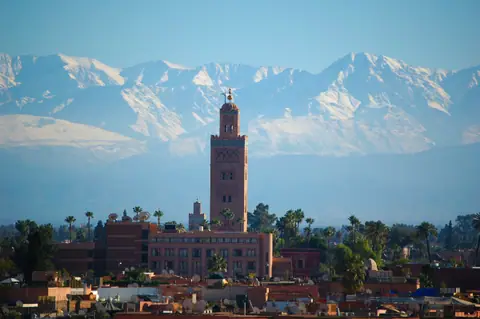
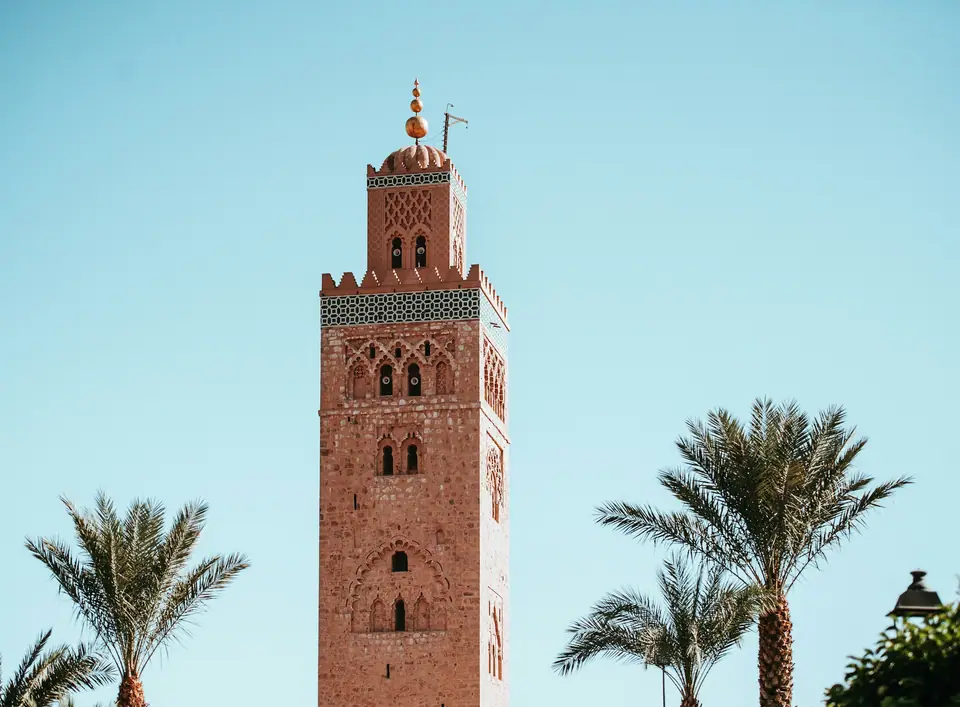
The medina, the walled old city, is a rough oval about 3 km across. Jemaa el-Fna, the main square, sits near its south-west corner with the Koutoubia minaret just beyond it. The souks spread north of the square. The Kasbah, the Saadian Tombs, the Bahia Palace and the Mellah (the old Jewish quarter) lie to the south. Outside the walls, Gueliz is the French-built new town of the 1910s and 1920s, with the train station, Jardin Majorelle and most offices. When you're lost in the medina, the Koutoubia is your compass: head for it and you'll reach the square.
Riad life
A riad is a traditional house built around a courtyard garden, with blank outer walls and all the windows facing inwards. Many are now small guesthouses. They're often reached down an unmarked alley, so ask your hosts to meet you at the nearest taxi drop-off on arrival. Their directions are better than any map app in the medina.
Haggling and faux guides
In the souks prices are a starting point, not a fixed figure. Decide what an item is worth to you, offer well below the first price, and stay friendly. Walking away is part of the game and nobody takes offence. Unofficial "guides" will offer to lead you somewhere, then ask for payment or deliver you to a cousin's shop. A polite "la, shukran" (no, thank you) and walking on is enough. If you want a guide, book a licensed one through your riad.
Money
The dirham is a closed currency, so you can only get it once you arrive. Change or withdraw what you need locally. ATMs are common in Gueliz and around the square. Big hotels and restaurants take cards. The souks, taxis and small cafés want cash.
Ramadan
During the holy month many Moroccans fast from dawn to sunset. The dates move about 11 days earlier each year, so check them when you plan. Sights stay open, some cafés close by day, and the evenings after the fast is broken (the ftour) are warm and lively. Visitors aren't expected to fast, but eating, drinking or smoking openly in the street during daylight is disrespectful.
Etiquette
Non-Muslims can't enter the city's working mosques, including the Koutoubia. Ask before photographing people, and expect performers in the square to want a tip if you do. Use your right hand to eat and pass things. Dress is covered in our what to wear guide.