A detailed walking and metro route through Moscow’s concentric rings: the fifteenth-century brick Kremlin, Red Square, Kitay-Gorod, Zamoskvorechye, and the Boulevard Ring.
Borovitsky Hill Timber Fort to Italian-Built Kremlin Walls and Ring Boulevards
First recorded in chronicles of 1147 when Prince Yuri Dolgoruky hosted a feast atop Borovitsky Hill at the confluence of the Moskva and Neglinnaya rivers, Moscow rose in the fourteenth and fifteenth centuries under Ivan I Kalita and Ivan III the Great to unite the Russian principalities. In the 1480s and 1490s, Ivan III invited Renaissance engineers and architects from Milan and Bologna, led by Aristotele Fioravanti and Pietro Antonio Solari, to construct the Kremlin's swallowtail-crenellated red brick walls and golden-domed Cathedral Square.
Growing outward in concentric rings, Kitay-Gorod, the White City (Boulevard Ring), and the Earthen City (Garden Ring), Moscow rebuilt in Empire style after the Fire of 1812 and added palatial subterranean Metro stations and Seven Sisters skyscrapers in the twentieth century.
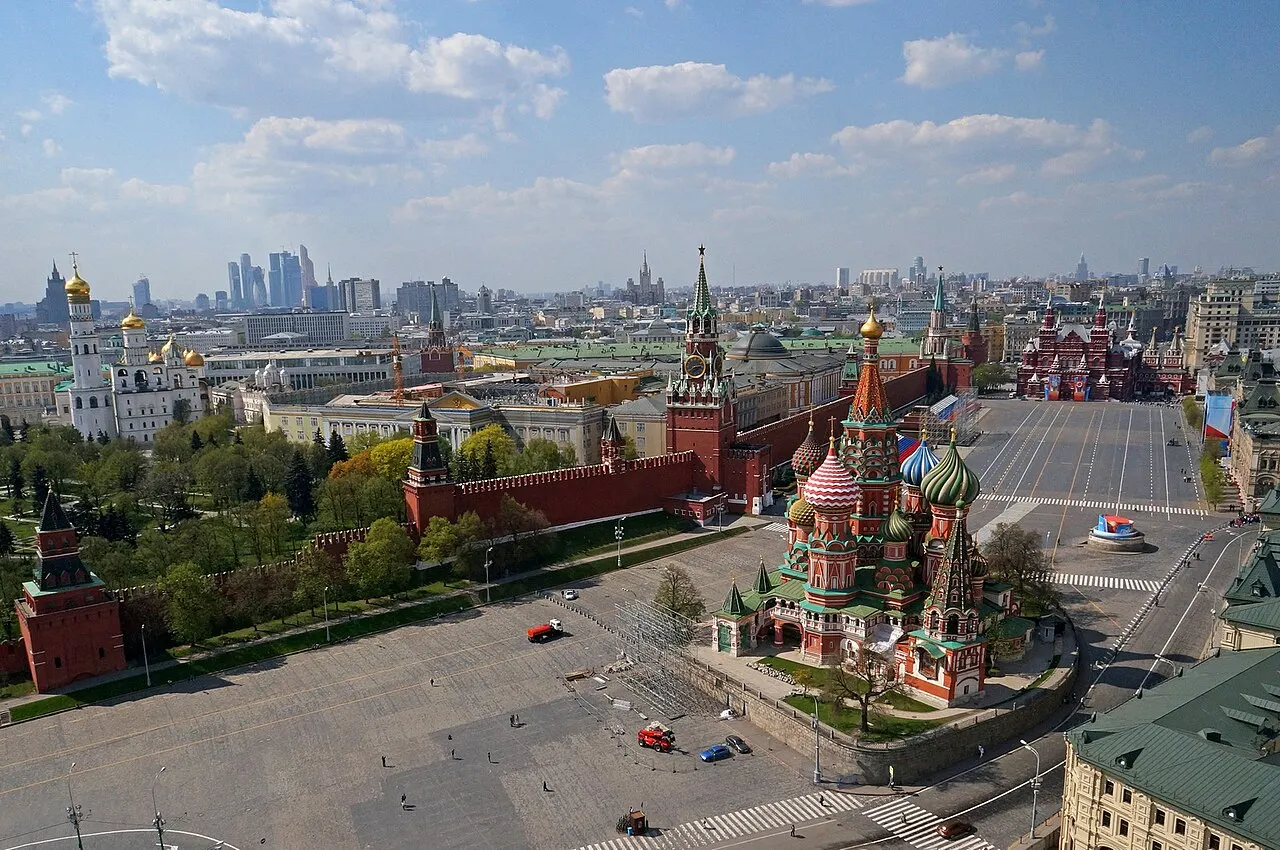
Red Square, St Basil’s Cathedral & Kitay-Gorod
Red Square, Saint Basil’s Cathedral (Cathedral of Vasily the Blessed), Spasskaya Tower, State Historical Museum, GUM Department Store Glass Arcades, Kazan Cathedral Moscow, Iberian Gate, Nikolskaya Street, Old English Court, and Zaryadye Park Floating Bridge
Red Square
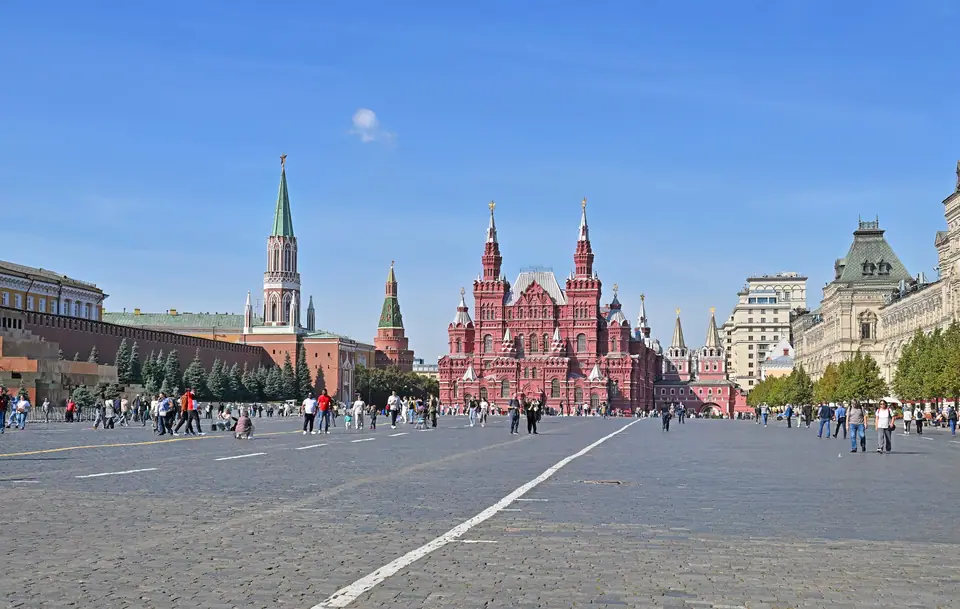
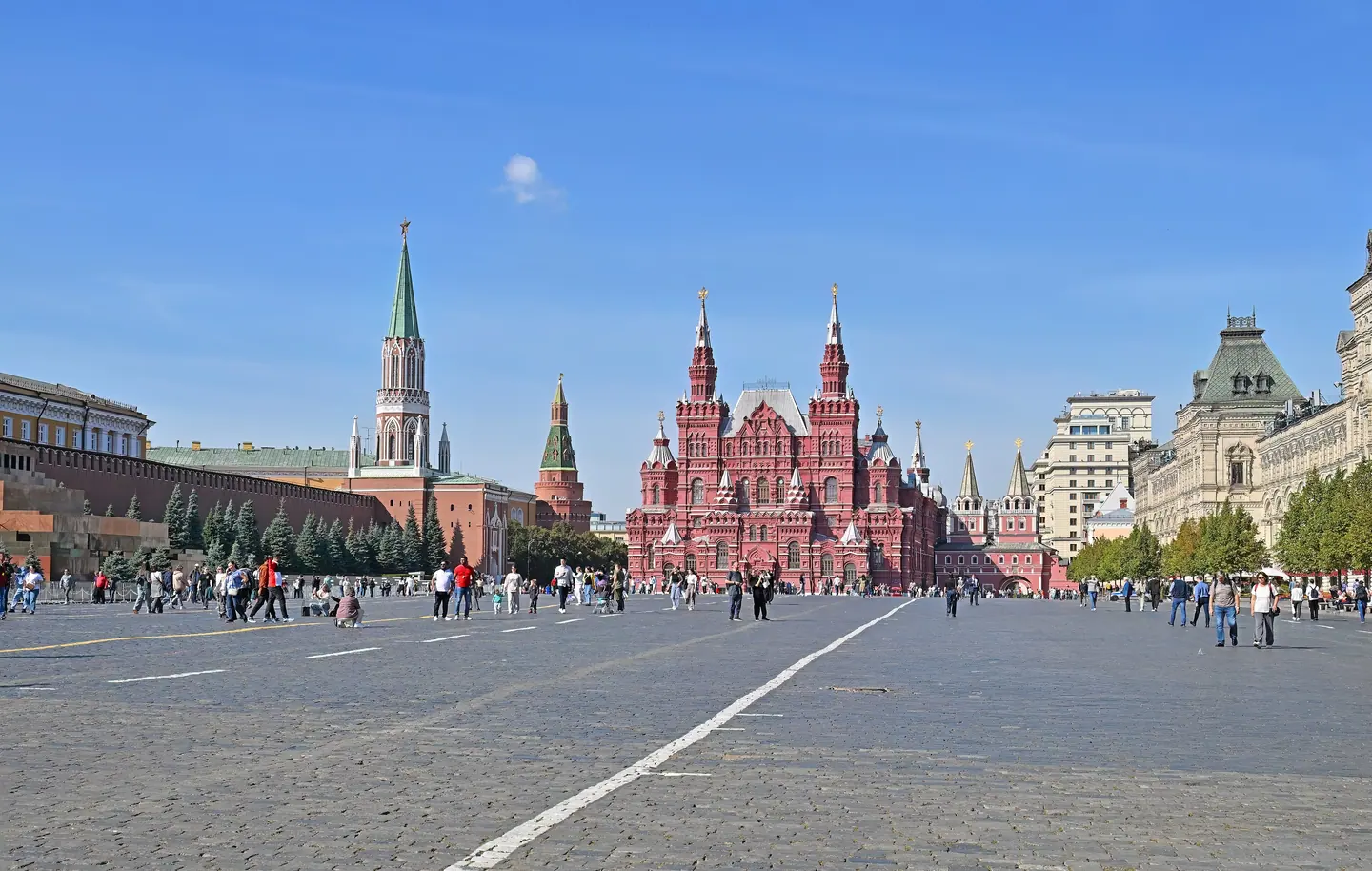
Originally cleared as an open marketplace in the late fifteenth century, this vast cobblestone plaza has hosted state proclamations, coronations and military parades for centuries. We observe the red brick Kremlin walls on its western flank and the ornate facades of merchant rows on the east. The surface retains historical stone pavers that witnessed Russia's most dramatic political transitions.
Saint Basil's Cathedral
Commissioned in 1555 to commemorate the capture of Kazan and Astrakhan, this landmark comprises nine distinct chapels arranged around a central core. The exterior displays distinctive patterned onion domes painted in vivid colours during the seventeenth and eighteenth centuries. Inside, narrow corridors connect intimate vaulted sanctuaries covered in rare medieval frescoes and floral brick patterns.
Spasskaya Tower
Constructed in 1491 by Italian architect Pietro Antonio Solari, this monumental tower serves as the ceremonial entrance to the Kremlin from Red Square. The upper gothic crown was added in 1625 by Christopher Galloway, housing the famous Kremlin chimes that ring out across the plaza. Travellers can examine the massive clock faces that measure over six metres in diameter.
State Historical Museum
Designed by Vladimir Sherwood and opened in 1883, the building echoes traditional sixteenth-century Russian brick architecture with ornate roof gables and towers. The museum houses millions of artefacts spanning prehistoric nomadic cultures to royal imperial treasures. Inside, painted vaulted ceilings trace the lineage of Russian monarchs through heraldic and biblical iconography.
GUM Department Store
Built between 1890 and 1893 by Alexander Pomerantsev, this building replaced the old Upper Trading Rows with a modern shopping arcade. Its remarkable iron and glass barrel-vaulted roof was engineered by Vladimir Shukhov, flooding three long interior tiers with natural daylight. Stone carvings and decorative Romanesque details adorn the sweeping frontage opposite the Kremlin.
Kazan Cathedral
Prince Dmitry Pozharsky founded this church in the 1630s to celebrate the liberation of Moscow from Polish-Lithuanian forces. Demolished on Soviet orders in 1936, the cathedral was meticulously reconstructed between 1990 and 1993 using detailed pre-revolutionary architectural measurements. Its compact red and white exterior features tiers of decorative kokoshnik gables leading up to a single gilded cupola.
Iberian Gate and Chapel
Originally erected in 1535 as part of the Kitay-Gorod defensive walls, the gate was rebuilt in 1680 with twin green tented roofs. A small chapel was placed between the arches in the eighteenth century to house the venerated Panagia Portaitissa icon. Rebuilt in 1995 following Soviet-era demolition, the gate preserves the traditional northern approach to the square.
Nikolskaya Street
Running northeast from Red Square, this ancient avenue historically linked the Kremlin to commercial trade routes. It was the original site of the Moscow Print Yard and the Slavic Greek Latin Academy, where pioneer Mikhail Lomonosov studied. Today, the pedestrianised street retains historic merchant estates alongside ornamental overhead light installations.
Old English Court
Granted to English merchants by Ivan the Terrible in 1556, this complex is one of the oldest surviving secular stone structures in Moscow. The building features thick whitewashed masonry walls, deep vaulted cellars and steep timber hip roofs designed to resist severe winters. Restored in the late twentieth century, the interior displays maritime navigational instruments and Tudor trade documents.
Zaryadye Park Floating Bridge
Constructed in 2017 as the architectural centrepiece of Zaryadye Park, this 70-metre cantilevered concrete loop suspends visitors directly over the river embankment. The design lacks vertical supports above the water, providing clear sightlines toward Saint Basil's Cathedral, the Kremlin embankment and the Kotelnicheskaya Embankment Building. Glass balustrades allow travellers uninterrupted views of passing riverboats.
Lobnoye Mesto
First mentioned in historical chronicles in 1549, this elevated stone rostrum served as the public forum where imperial decrees were read aloud. Tsars and patriarchs addressed gathered assemblies from this platform during key religious festivities and national crises. Constructed from white limestone, the dais features a carved parapet approached by a flight of stone steps.
Monument to Minin and Pozharsky
Sculpted by Ivan Martos and unveiled in 1818, this monument celebrates Prince Dmitry Pozharsky and merchant Kuzma Minin, who rallied an army to expel invaders in 1612. The bronze figures rest upon a granite plinth adorned with classical bas-reliefs depicting citizen volunteers donating goods for the war effort. Originally standing in the square centre, it was relocated in front of Saint Basil's in 1931.
Church of Saint Barbara
Constructed between 1796 and 1804 by architect Rodion Kazakov, this church replaced an earlier sixteenth-century stone sanctuary funded by wealthy merchants. The edifice displays balanced neoclassical proportions, including Corinthian porticos and a domed rotunda finished in soft pink render. It marks the western entrance to Varvarka Street, the primary historical artery of the Kitay-Gorod merchant district.
Church of the Conception of Saint Anne
Dating from the early sixteenth century, this compact stone church survived numerous urban fires and the complete redevelopment of the Zaryadye quarter. Its architecture features smooth whitewashed exterior walls, corner pilasters and a tiered roofline crowned by a modest cupola. Architectural restoration in the 1960s removed later imperial additions, returning the building to its original medieval form.
Palace of the Romanov Boyars
This sixteenth-century estate served as the residence of boyar Nikita Romanov, whose grandson Mikhail became the first Romanov tsar in 1613. The building combines a whitewashed stone basement used for storage with upper wooden living quarters restored in the nineteenth century under royal direction. Inside, visitors observe traditional boyar chambers decorated with glazed ceramic tiled stoves, leather wall hangings and carved furniture.
Church of Saint George on Pskov Hill
Built in the mid-seventeenth century by local merchants from Pskov, this church exhibits classical Moscow baroque styling. The structure features five slender cupolas set above layered rows of kokoshnik arches, alongside an adjoining classical bell tower added in 1818. Its exterior displays decorative red brickwork complemented by intricately carved white stone window surrounds.
Kitay-Gorod Wall
Constructed between 1535 and 1538 by Italian engineer Petrok Maly, these fortifications were designed specifically to resist heavy artillery fire. The thick brick and rubble walls once encircled the entire merchant quarter, featuring gun loops, rounded artillery towers and broad battlement walkways. A restored section alongside Teatralny Proezd and the river provides tangible evidence of sixteenth-century urban military engineering.
Synodal Printing House
Occupying the site where Ivan Fyodorov printed Russia's first dated book in 1564, the current building was designed by Ivan Mironovsky in 1814. The striking Gothic Revival facade features pointed lancet windows, twisted stone columns, and carved stone reliefs of a lion and a unicorn. The complex historically produced government decrees, liturgical books and the nation's earliest newspapers.
Church of Saint Maximus the Confessor
Financed by wealthy merchant Maxim Bobrovnikov, this church was completed in 1699 following a fire that destroyed the earlier sixteenth-century chapel. The building showcases Naryshkin baroque influences, characterised by symmetric stone window trims, carved cornices and an octagonal bell tower added in the eighteenth century. It sits on the northern terrace of Varvarka Street overlooking the park.
Epiphany Monastery
Founded around 1296 by Prince Daniil of Moscow, this monastery is one of the oldest religious foundations in the capital. The present main cathedral, consecrated in the 1690s, presents a tall, tiered example of the Moscow baroque style with open galleries and decorative balustrades. It stands tucked behind Nikolskaya Street, serving as a reminder of early monastic life within Kitay-Gorod.
The Moscow Kremlin, Cathedral Square & Alexander Garden
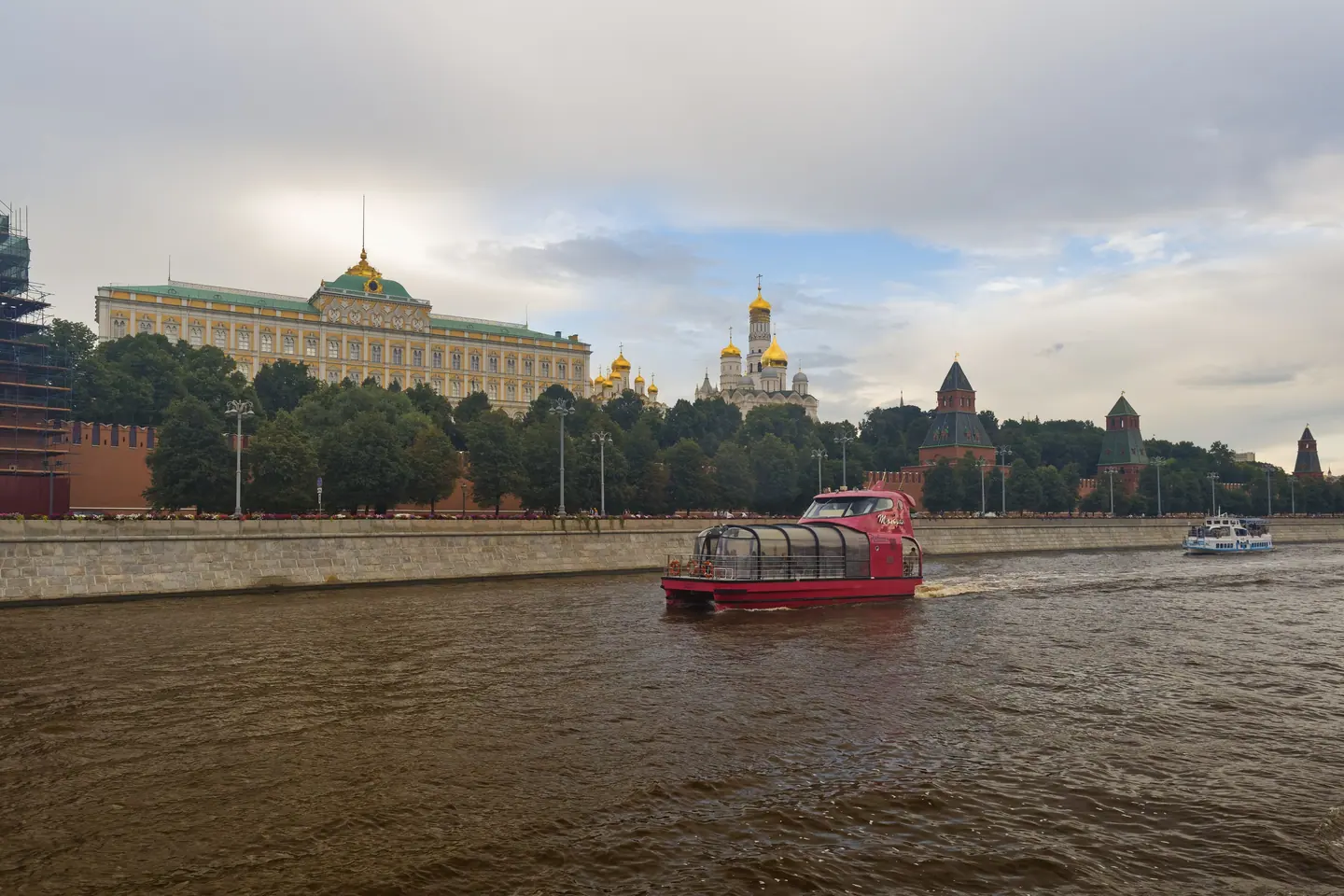
Kutafya & Trinity Towers, Kremlin Armoury Chamber, Diamond Fund, Cathedral of the Dormition (Uspensky Sobor), Cathedral of the Archangel, Cathedral of the Annunciation, Ivan the Great Bell Tower, Tsar Bell & Tsar Cannon, and Alexander Garden
Kutafya Tower
Constructed in 1516 under Italian architect Aloisio da Milano, this fortress barbican defended the bridge over the Neglinnaya River. Travellers pass through its white stone arcaded crown, which was added during the late seventeenth century, to access the modern visitor security gates.
Trinity Tower
Rising eighty metres above the Alexander Garden, this western gate tower was erected in 1495 by architect Aloisio da Milano. Its multi-tiered brick silhouette features deep royal basements, seventeenth-century decorative tent roofing, and the crimson glass Kremlin star illuminating its summit.
Kremlin Armoury
Housed within an ornate Neoclassical building designed by Konstantin Thon in 1851, the museum showcases centuries of tsarist craftsmanship. The collection contains the historic Cap of Monomakh, coronation robes, ceremonial silver gifts from European embassies, and fabulously decorated royal carriages.
Diamond Fund
Established by Peter the Great in 1719, this sovereign depository resides inside the Armoury building complex. Its secure vaults display raw Siberian diamonds, natural gold nuggets, and imperial treasures such as the Imperial Crown of Russia and the legendary Orlov Diamond.
Dormition Cathedral
Italian master Aristotele Fioravanti engineered this limestone cathedral between 1475 and 1479, blending Renaissance symmetry with Russian medieval forms. Inside, gilded murals cover circular stone columns, flanking the carved Monomakh Throne and the holy tombs of historic Moscow metropolitans.
Cathedral of the Archangel
Erected by Aloisio the New between 1505 and 1508, the cathedral served as the burial place for Muscovite rulers from Ivan Kalita to Tsar Feodor III. Visitors can observe distinct Venetian scallop-shell gables along the exterior walls and dozens of bronze-encased stone sarcophagi inside.
Annunciation Cathedral
Pskov craftsmen completed this intimate palace chapel in 1489, perching it atop fourteenth-century limestone cellars. The interior boasts jasper floor tiles presented by the Persian shah, together with an impressive multi-tiered iconostasis featuring paintings attributed to Theophanes the Greek and Andrei Rublev.
Ivan the Great Bell Tower
Architect Bon Fryazin erected the original octagonal tiers in 1508, which Boris Godunov raised to eighty-one metres in 1600. The whitewashed brick tower withstood French demolition attempts in 1812 and houses twenty-four historic liturgical bells across its open arcades and neighbouring belfry annex.
Tsar Bell
Cast in 1735 by bronze masters Ivan and Mikhail Motorin, this two-hundred-tonne giant cracked during a major fire before ever ringing. It rests on a circular granite pedestal beside Cathedral Square, with its broken eleven-tonne fragment placed beside fine bas-relief portraits of sovereign rulers.
Tsar Cannon
Master caster Andrey Chokhov created this massive defensive weapon in 1586 on orders from Tsar Feodor Ivanovich. While built to fire heavy grapeshot rather than solid stones, it sits on an elaborate nineteenth-century cast-iron carriage alongside four decorative, hollow iron cannonballs.
Church of the Deposition of the Robe
Constructed in 1486 by builders from Pskov, this modest brick church commemorates the deliverance of Moscow from a fifteenth-century siege. The intimate worship space retains its historic carved wooden iconostasis from 1627 and now houses an exhibition of ecclesiastical wood carvings.
Patriarch's Palace and the Twelve Apostles Church
Erected in the 1650s for Patriarch Nikon, this sprawling complex reflects traditional Russian residential architecture. The impressive Cross Chamber features an enormous columnless vaulted ceiling where the Holy Synod met, which today exhibits antique church vestments, precious silverware, and ceremonial clocks.
Grand Kremlin Palace
Commissioned by Emperor Nicholas I and designed by Konstantin Thon, this palatial edifice was completed in 1849 over older medieval chambers. Its interior incorporates ceremonial halls named after imperial orders of chivalry, including Saint George Hall with its towering white columns and marble commemorative plaques.
Senate Palace
Constructed between 1776 and 1787, this grand complex originally accommodated the Moscow departments of the Governing Senate. Its grand rotunda, Catherine Hall, spans nearly twenty-five metres beneath a Neoclassical dome, while the surrounding wings function as the official working residence of Russia's president.
Alexander Garden
Designed by Osip Bove following the Napoleonic destruction of Moscow, the park opened in the 1820s above the culverted Neglinnaya River. Divided into Upper, Middle, and Lower sections, it offers tree-lined promenades, formal flower beds, and direct views of ancient brick fortification towers.
Tomb of the Unknown Soldier
Inaugurated in 1967 within the Upper Alexander Garden, the memorial honours fallen defenders of the Soviet Union. A bronze helmet and soldier banner rest upon a red quartzite plinth beside the Eternal Flame, guarded continuously by soldiers of the elite Kremlin Regiment.
Four Seasons Fountain
Installed in 1997 during the redesign of Manezhnaya Square, this dynamic fountain depicts four bronze horses representing the seasons. It anchors a simulated canal that retraces the historical course of the subterranean Neglinnaya River along the edge of the Alexander Garden.
Italian Grotto
Architect Osip Bove designed this decorative folly in 1821 as a physical monument to the rebuilding of Moscow after the 1812 fire. Embedded into the earth of the Corner Arsenal Tower bastion, its arch incorporates rubble and dressed stone fragments salvaged from destroyed historic structures.
Romanov Obelisk
Erected in 1913 in the Upper Alexander Garden to celebrate the Romanov dynasty tercentenary, this grey granite spire has a complex political history. Soviet authorities recarved it in 1918 to honour socialist philosophers before restorers reinstated the original imperial coats of arms and tsarist names in 2013.
Corner Arsenal Tower
Constructed in 1492 by Pietro Antonio Solari, this robust cylindrical tower features massive stone foundations designed to resist undermining. A secret water spring inside ensured a reliable water supply during medieval sieges, while its upper tiers afford direct prospects across Red Square and the Alexander Garden.
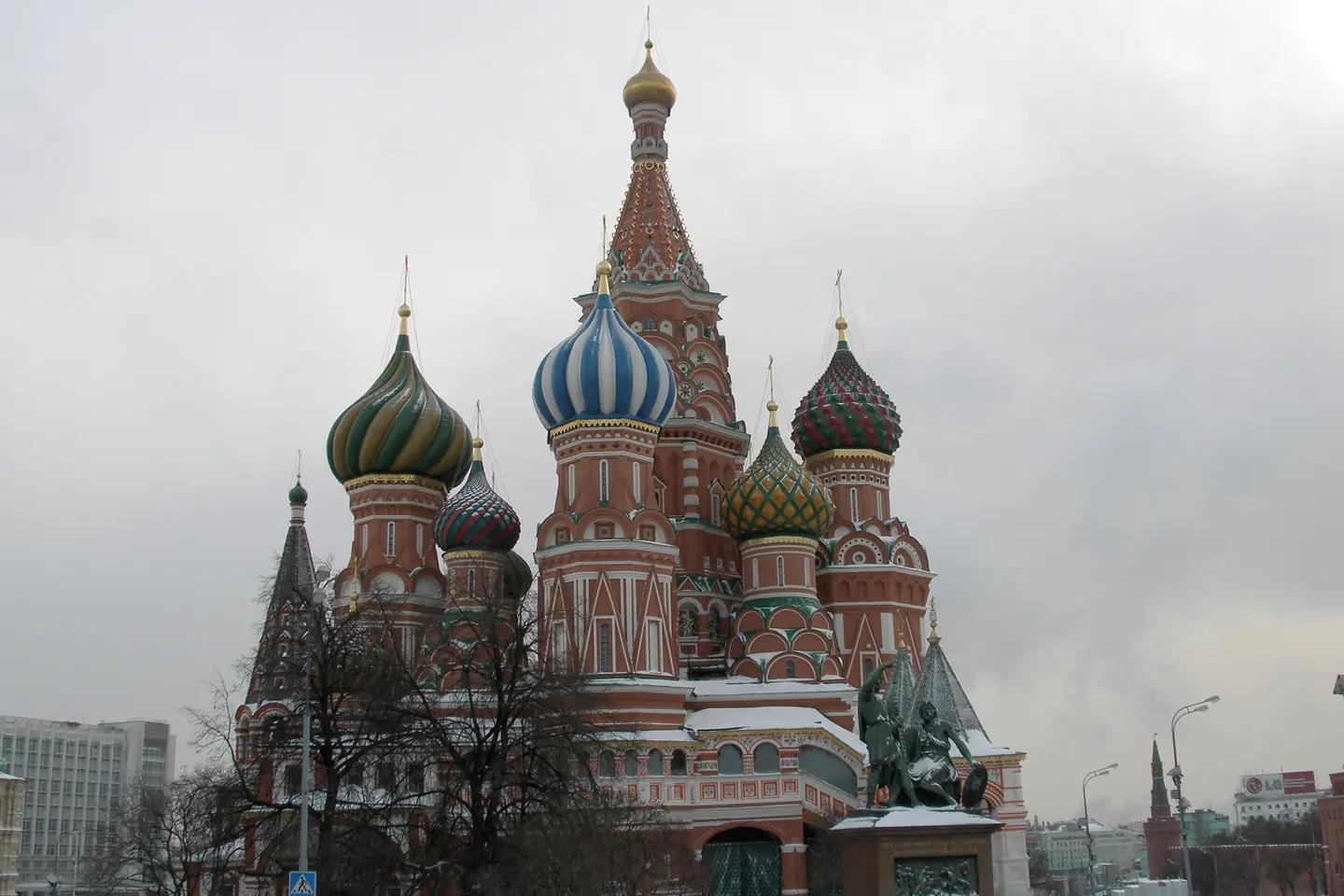
Theatre Square, Tverskaya & Boulevard Ring
Bolshoi Theatre, Maly Theatre, Hotel Metropol Majolica Murals, Tverskaya Street, Eliseevsky Emporium, Sanduny Baths, Patriarch’s Ponds, Chistye Prudy, and High-Petrovsky Monastery
Bolshoi Theatre
Designed by architect Joseph Bové following the fire of 1812, the theatre features an imposing eight-column portico topped by Apollo driving a bronze quadriga. It has hosted landmark Russian opera and ballet premieres since the nineteenth century. Visitors can admire the lavish red-and-gold auditorium with its crystal chandelier.
Maly Theatre
Established in the early nineteenth century across from the Bolshoi, the Maly focuses on classic Russian dramatic repertoire. Its yellow neoclassical facade blends quietly into the urban ensemble of Theatre Square. Inside, the traditional tiered auditorium preserves an intimate atmosphere dedicated to traditional theatrical craft.
Hotel Metropol Majolica Murals
Constructed around the turn of the twentieth century by William Walcot, this grand hotel stands as a triumph of Moscow Modern style. The crowning glory of its exterior is the large majolica mosaic titled The Princess of the Dream, designed by Mikhail Vrubel. Intricate wrought-iron balconies and relief friezes line the facades.
Sanduny Baths
Founded in 1808 by actor Sila Sandunov and rebuilt in the 1890s by Boris Freidenberg, this historic banya complex remains operational today. Its lavish public halls combine Beaux-Arts, Gothic, and Moorish architectural styles. The Roman swimming pool hall features high vaulted ceilings, marble columns, and statues of classical figures.
High-Petrovsky Monastery
Positioned along Petrovka Street, this monastery was founded in the fourteenth century by Metropolitan Peter. Most surviving stone buildings, including the Church of Saint Peter and the multi-tiered bell tower, were funded by the Naryshkin family in the late seventeenth century. Visitors can walk through secluded courtyards paved with stone.
Eliseevsky Emporium
Opening in 1901 within an aristocratic residence formerly owned by Princess Zinaida Volkonskaya, this shop became famous for rare delicacies. The interior features gilded plasterwork, carved wooden counters, and massive crystal chandeliers hanging from vaulted ceilings. Stained glass windows and classical pilasters complete the palatial setting.
Patriarch's Ponds
Originally part of the Patriarchal settlement with several fishponds, only a single rectangular pond remains, surrounded by mature trees and walkways. The setting serves as the opening backdrop for Mikhail Bulgakov's celebrated novel The Master and Margarita. The surrounding streets display an array of early twentieth-century residential architecture.
Stanislavski and Nemirovich-Danchenko Theatre
Originating from the opera studios of Konstantin Stanislavski and Vladimir Nemirovich-Danchenko, this venue occupies an eighteenth-century urban estate along Bolshaya Dmitrovka. It played a central role in revolutionising operatic acting techniques. The neoclassical complex houses two stages that host opera and classical ballet performances.
Moscow Art Theatre
Founded in 1898, the theatre moved to Kamergersky Lane into a premises redesigned by Art Nouveau architect Fyodor Schechtel. The auditorium features subdued green and wood tones, deliberately chosen to avoid distracting from the actors on stage. The entrance displays a low-relief plaster wave sculpture symbolising creative energy.
Pushkin Square
Situated at the junction of Tverskaya Street and the Boulevard Ring, this square is a historic gathering place. The central monument, sculpted by Alexander Opekushin in 1880, depicts Alexander Pushkin in a contemplative pose. Nearby stands the constructivist headquarters of the former newspaper Izvestia, built in 1927.
Museum of Modern Art on Petrovka
Occupying the former mansion of industrialist Mikhail Gubin, designed by Matvey Kazakov, this museum opened in 1999. The classical facade with six Ionic columns contrasts with the open sculpture courtyard filled with modern bronze monuments by Zurab Tsereteli. Inside, galleries display twentieth-century avant-garde and contemporary Russian artworks.
Strastnoy Boulevard
Named after the demolished Strastnoy Convent, this is the widest boulevard along Moscow's green pedestrian ring. The central promenade features cast-iron benches, flowerbeds, and monuments dedicated to composer Sergei Rachmaninoff and poet Alexander Tvardovsky. Elegant nineteenth-century townhouses and educational buildings line both roadways.
Chistye Prudy
Originally known as Pagan Ponds when local butchers dumped offal into the water, the site was dredged and purified under Prince Menshikov. Today, the park provides an open pedestrian mall shaded by linden trees, with boats in summer and ice skaters in winter. Neoclassical and modern residential buildings line the shores.
Church of the Archangel Gabriel
Commissioned in 1707 by Alexander Menshikov and designed by Ivan Zarudny, this multi-tiered church was once Moscow's tallest structure before its spire was struck by lightning. Its exterior features classical pilasters, carved fruit garlands, and stone statuary rare in Russian ecclesiastical design. It stands near the Chistye Prudy parkland.
Tverskoy Boulevard
Laid out in 1796, this green avenue served as a fashionable promenade for Moscow aristocracy throughout the nineteenth century. The central pathway passes by the Pushkin Drama Theatre and the celebrated Gorky Institute of World Literature. A statue of pioneering botanist Kliment Timiryazev anchors the southern end of the boulevard.
Yermolova Theatre
Founded in 1925 and named after the celebrated actress Maria Yermolova, this company resides inside the Postnikov shopping passage building. The facade incorporates neoclassical details integrated into the streetscape of Tverskaya Street. The repertoire balances modern interpretations of European classics with original contemporary Russian dramas.
Gorky Apartment Museum
Built in 1902 for banker Stepan Ryabushinsky, this house later became the residence of writer Maxim Gorky. The structure is celebrated for its flowing glazed-brick exterior, mosaic friezes of orchids, and carved limestone capitals. Inside, a dramatic carved-marble staircase resembles an oceanic wave cresting towards an jellyfish chandelier.
Church of Saint Louis of the French
Built between 1833 and 1835 to designs by Domenico Gilardi, this church features a prominent Doric colonnade and low central dome. It was one of the only Catholic churches in Moscow to remain open throughout the Soviet period. The interior houses classical altar oil paintings and statues of patron saints.
Russian State Library for the Arts
Located on Bolshaya Dmitrovka, this institution traces its origins to the 1920s Maly Theatre library. The building features an elegant classical facade with decorative window surrounds. It stores extensive collections of stage designs, vintage costume sketches, theatrical programmes, and photographs tracing the history of Russian performance.
Teatralnaya Square
Designed by Joseph Bové after the 1812 fire, this vast open plaza anchors the Bolshoi, Maly, and Russian Academic Youth Theatres. A bronze fountain created by sculptor Ivan Vitali in 1835 stands in the central landscaped gardens. The open square provides unobstructed views across the neoclassical facades.
Cathedral of Christ the Savior, Arbat, Pushkin Museum & Metro
Cathedral of Christ the Savior & Patriarchal Footbridge, Pushkin State Museum of Fine Arts, Old Arbat Street, Melnikov Constructivist House, Novodevichy Convent & Pond, and Historic Moscow Metro Stations (Komsomolskaya, Mayakovskaya, Kievskaya)
Cathedral of Christ the Saviour
Originally conceived to commemorate the Russian victory over Napoleon, the cathedral was demolished under Stalin in 1931 to clear ground for the unbuilt Palace of the Soviets. The current structure, reconstructed during the late 1990s, follows Konstantin Thon's original Byzantine revival design. Inside, vast gilded iconostases and painted domes overlook bronze reliefs detailing military campaigns.
Patriarshy Bridge
Constructed in 2004, this steel pedestrian bridge links the Cathedral of Christ the Saviour with the opposite embankment and the Red October district. Designed by architect Mikhail Posokhin, it incorporates openwork railings and period-style lampposts reminiscent of nineteenth-century engineering. It offers elevated views of the Kremlin walls, Bersenevskaya Embankment, and passing riverboats.
Pushkin State Museum of Fine Arts
Founded by professor Ivan Tsvetaev and opened in 1912, this museum occupies a classical revival building designed by Roman Klein with an imposing Ionic colonnade. The interior houses extensive collections of European painting, Dutch masters, and ancient Mediterranean plaster casts. Visitors can study monumental Renaissance copies alongside Egyptian funerary relics and classical marble sculptures.
Gallery of 19th and 20th Century European and American Art
Housed in the restored left wing of the Golitsyn manor estate, this branch of the Pushkin Museum displays works assembled by collectors Sergei Shchukin and Ivan Morozov. The rooms display extensive canvases by Monet, Renoir, Degas, Cézanne, Gauguin, and early cubist works by Picasso. The layout allows travellers to trace the evolution of modern painting across two centuries.
Arbat Street
Dating back to the fifteenth century, this paved street evolved from a tradesmen quarter into a fashionable address for Russian nobility and intelligentsia. Paved as a pedestrian precinct in the 1980s, it retains numerous restored eighteenth- and nineteenth-century merchant houses, antique stores, and small squares. Notable features include antique cast-iron streetlamps and street musicians performing along the route.
Pushkin Memorial Apartment on Arbat
Occupying a blue empire-style townhouse on the Arbat, this museum preserves the rooms rented by poet Alexander Pushkin in early 1831 following his wedding to Natalia Goncharova. The ground floor displays documents, sketches, and literary artifacts related to Pushkin's Moscow circle, while the upper floor recreates the drawing rooms and personal chambers of the nineteenth-century poet.
Vakhtangov Theatre
Established in 1921 as a studio of the Moscow Art Theatre, this venue became renowned for blending Stanislavski's realism with theatrical expressionism. The original neoclassical structure was rebuilt after sustaining damage during the Second World War. Outside stands a fountain adorned with a gilded statue of Princess Turandot, referencing the theatre's defining historical production.
Melnikov House
Architect Konstantin Melnikov designed this residential studio in Krivoarbatsky Lane between 1927 and 1929 as an experimental prototype for mass housing. The building consists of two interlocking vertical cylinders pierced by over sixty hexagonal windows that distribute natural daylight throughout the studio. Now an official museum, it preserves the architect's original furniture, drawings, and innovative honeycomb brickwork.
Church of the Saviour on the Sands
Constructed around 1711, this traditional five-domed stone church with a tent-roof bell tower sits just off the Arbat in Spasopeskovsky Square. It achieved cultural fame as the central subject of Vasily Polenov's 1878 landscape painting 'Moscow Courtyard'. The restored whitewashed facade, red-brick detailing, and tranquil churchyard offer a rare surviving glimpse of pre-industrial residential Moscow.
Ministry of Foreign Affairs Main Building
Completed in 1953 under architects Vladimir Gelfreikh and Adolf Minkus, this 27-storey tower marks the western end of the Arbat district at Smolenskaya-Sennaya Square. Its soaring central mass features gothic-influenced vertical pilasters, stone carvings, and a prominent metal spire added during late construction. The building serves as the operational headquarters of the Russian foreign diplomatic service.
Novodevichy Convent
Founded in 1524 by Grand Prince Vasili III to mark the recapture of Smolensk, this fortified cloister served as a defensive stronghold and noble sanctuary. Its enclosure includes the five-domed Smolensky Cathedral, red-brick curtain walls crowned with openwork swallowtail merlons, and an octagonal bell tower. Royal women, including Peter the Great's sister Sophia, were historically confined within its walls.
Novodevichy Cemetery
Inaugurated in 1898 outside the southern walls of the convent, this cemetery developed into Russia's most prestigious secular burial ground. Elaborate sculptural monuments mark the graves of authors Anton Chekhov and Mikhail Bulgakov, composer Sergei Prokofiev, and filmmaker Sergei Eisenstein. The grounds function as an open-air gallery of Russian and Soviet funerary sculpture spanning the twentieth century.
Novodevichy Ponds
This park surrounds two linked artificial ponds created along an ancient oxbow of the Moskva River beneath the walls of Novodevichy Convent. Paved perimeter paths provide clear views of the monastery's baroque battlements reflected across the water. A bronze sculpture group by Nancy Schön, depicting a mother duck and ducklings from Robert McCloskey's children's book, stands beside the northern shore.
Komsomolskaya Metro Station
Designed by master architect Alexey Shchusev and opened in 1952 on the Ring Line, this deep-level platform represents the apex of Soviet monumental architecture. Massive octagonal marble pylons support a yellow barrel-vaulted ceiling detailed with intricate plaster flora and chandeliers. Eight large ceiling mosaics made of smalt and semi-precious stones illustrate historic Russian military commanders and wartime victories.
Mayakovskaya Metro Station
Opened in 1938 and designed by Alexey Dushkin, this station was an engineering achievement utilizing aircraft-grade stainless steel to produce slender load-bearing columns. The hall is lined with red quartzite and grey Ufalei marble, creating an airy subterranean perspective. Travellers looking upward into the ceiling vaults discover thirty-four mosaic panels by Alexander Deyneka portraying twenty-four hours in the Soviet sky.
Kievskaya Metro Station
Constructed in 1954 to mark the tercentenary of the Pereyaslav Agreement, this station platform features white marble pylons bordered by elaborate plaster mouldings in the Ukrainian baroque manner. Eighteen large mosaic panels created from smalt depict rural harvest scenes, folk dancers, and historical alliances between Russia and Ukraine. The platform terminates at a marble portrait bust of Vladimir Lenin.
Ploshchad Revolyutsii Metro Station
Designed by Alexey Dushkin and opened in 1938 beneath Revolution Square, this station platform is framed by red and black marble arches. Sculptor Matvey Manizer cast seventy-six life-sized bronze figures positioned in the corners of the pylons, portraying workers, soldiers, farmers, and athletes representing the Soviet state. A popular local tradition involves rubbing the snout of the frontier guard's bronze dog for good fortune.
Novokuznetskaya Metro Station
Opened in late 1943 during the height of wartime hostilities, this station commemorates Soviet military resolve through classical architecture. The platform features white marble benches taken from the demolished Cathedral of Christ the Saviour and a vaulted ceiling lined with bas-relief plaster friezes of armed forces. Octagonal ceiling mosaics designed by Alexander Deyneka honour industrial production and civilian labour.
Kropotkinskaya Metro Station
Constructed in 1935 by Alexey Dushkin and Yakov Lichtenberg, this station was originally planned as the ceremonial subterranean entrance to the Palace of the Soviets. The interior departs from later Soviet ornamentation, utilising two rows of ten-sided flared columns topped with concealed light fixtures to resemble Egyptian lotus blooms. Grey marble from the Urals covers the walls, producing a restrained, spacious aesthetic.
Smolenskaya Metro Station
Serving the western section of the Arbatsko-Pokrovskaya line, this station opened in 1953 at a depth of fifty metres beneath the Garden Ring. The main platform displays fluted white marble pylons with decorative corners, crystal chandeliers, and chequered grey granite flooring. At the end of the central hall, a large plaster relief by sculptor Georgy Motovilov depicts defending soldiers under the banner of the Soviet state.
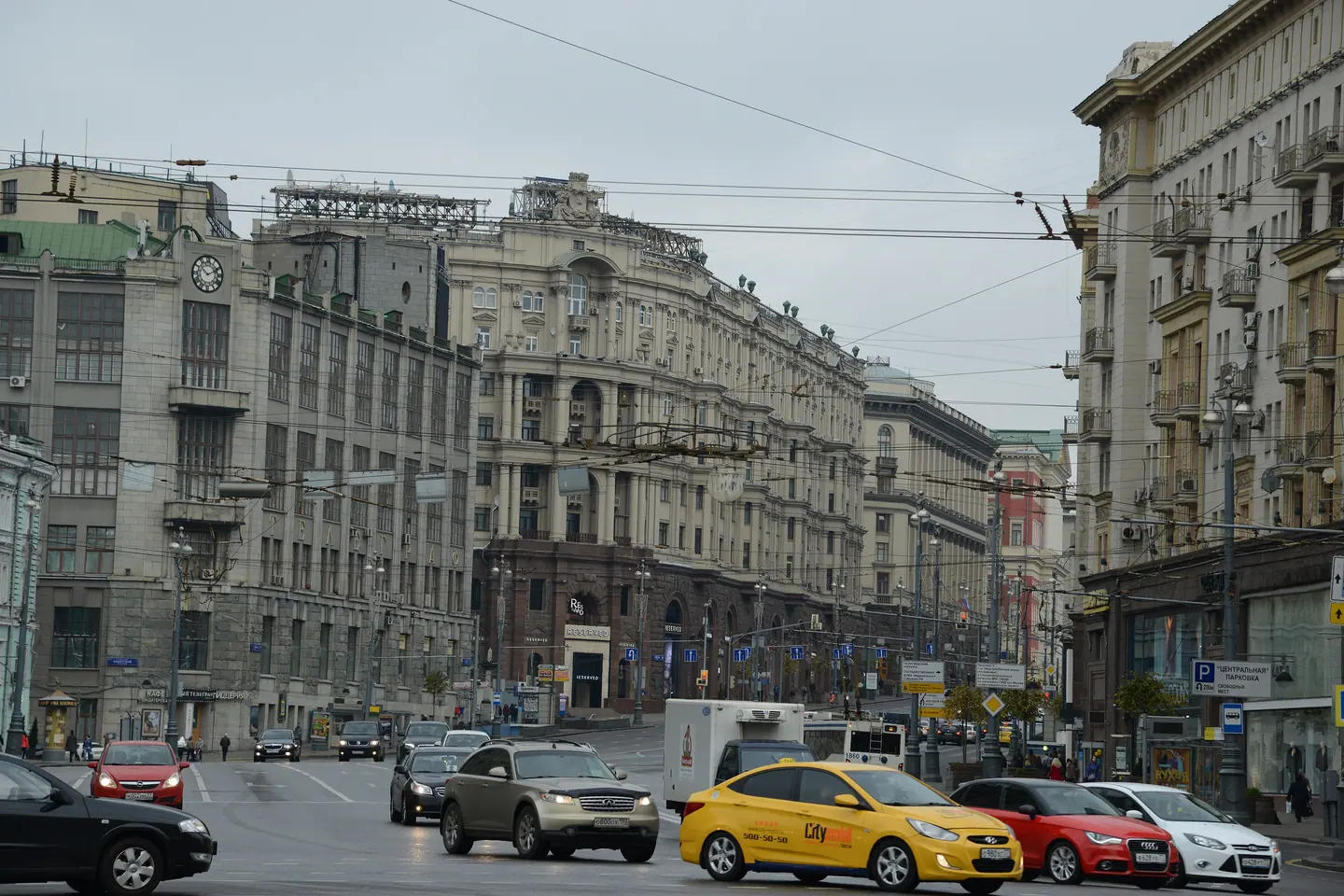
Zamoskvorechye, Tretyakov Gallery, Gorky Park, VDNKh & Kolomenskoye
State Tretyakov Gallery in Lavrushinsky Lane, Marfo-Mariinsky Convent, GES-2 House of Culture, New Tretyakov & Muzeon Park, Gorky Park, Sparrow Hills & MSU Main Building, VDNKh Fountain of Friendship of Peoples & Cosmonautics Museum, and Kolomenskoye Ascension Church
State Tretyakov Gallery
Founded by merchant Pavel Tretyakov in 1856, this gallery occupies a complex fronted by Viktor Vasnetsov's fairy-tale fairy facade. Within its halls, travellers encounter a comprehensive survey of Russian painting, ranging from Andrei Rublev's medieval icons to nineteenth-century masterworks by the Peredvizhniki. The collection highlights Ilya Repin, Vasily Surikov, and Ivan Shishkin.
Marfo-Mariinsky Convent
Established in 1909 following the assassination of Grand Duke Sergei Alexandrovich, this working convent was designed by architect Alexey Shchusev. The Pokrovsky Cathedral combines traditional medieval Novgorod revival elements with delicate Art Nouveau flourishes. Mikhail Nesterov created the interior frescoes, which survive alongside quiet cloisters and a secluded garden.
Church of St Clement, Pope of Rome
Constructed between 1762 and 1769, this five-domed red-and-white church stands as the most elaborate example of late Elizabethan Baroque architecture in the Zamoskvorechye district. Attributed to Pietro Antonio Trezzini, the building retains a lavish multi-tiered iconostasis. The preserved eighteenth-century gilded woodwork and ornate stucco ceilings illustrate the wealth of the merchant families who financed its construction.
Church of the Resurrection in Kadashi
Built between 1687 and 1695 in the Kadashy weavers settlement, this multi-tier church exemplifies the Naryshkin Baroque style. Carved white stone details adorn the red brick facades, framing elaborate openwork pediments and slender cupolas. The freestanding bell tower, built in 1695, stands as an unmistakable focal point in the quiet lanes south of the Moskva River.
GES-2 House of Culture
Originally designed by Vasily Bashkirov in 1907 to power the Moscow tram network, this industrial complex underwent transformation by Renzo Piano Building Workshop. Opened in 2021, the facility features striking steel framework, broad skylights, and bright blue chimneys. The interior houses galleries, artist studios, and community spaces set against a backdrop of preserved industrial architecture.
New Tretyakov Gallery
Situated on Krymsky Val, this expansive late-Soviet structure completed in 1983 displays Russian avant-garde and Soviet realism. Visitors can study monumental paintings by Kazimir Malevich, Wassily Kandinsky, and Marc Chagall alongside official socialist realist canvases. The airy, rectilinear exhibition spaces host major retrospectives and contemporary installations throughout the calendar year.
Muzeon Art Park
Established in 1992 on the grounds surrounding the New Tretyakov Gallery, this park serves as a repository for discarded Soviet statuary. Relocated effigies of Vladimir Lenin, Joseph Stalin, and Felix Dzerzhinsky sit alongside post-war and contemporary sculptures. The surrounding riverside pathways and landscaping provide a leafy corridor connecting Krymsky Val to the central Moskva embankments.
Krymsky Bridge
Completed in 1938 as part of the General Plan for the Reconstruction of Moscow, this steel suspension bridge was engineered by Boris Knoblok and architect Alexander Vlasov. Its distinctive towers and sweeping steel cables link Krymskaya Square directly with Gorky Park. The wide walkways offer unobstructed views over the central river loop and neighbouring riverside promenades.
Gorky Central Park of Culture and Leisure
Opened in 1928 and planned by avant-garde architect Konstantin Melnikov, this public park served as the prototype for leisure spaces across the Soviet Union. The grand neoclassical entrance propylaea was added in 1955. Today, extensive landscaped gardens, recreational ponds, cycling tracks, and open-air pavilions run parallel to the riverbank toward the Vorobyovy Gory nature reserve.
Garage Museum of Contemporary Art
Founded in 2008, the museum moved in 2015 into a renovated 1960s modernist restaurant designed by Rem Koolhaas and OMA. The structure retains its original prefabricated concrete panels and Soviet wall tiles beneath an innovative double-skin polycarbonate facade. The institution presents rotating contemporary exhibitions, international art installations, and a vast archive of Russian art history.
Neskuchny Garden
Formed by amalgamating the eighteenth-century estates of the Golitsyn, Trubetskoy, and Demidov families, this forested park borders Gorky Park to the south. Visitors find picturesque stone bridges spanning ravines, neoclassical pavilions, and the summer palace of Catherine the Great. Ancient oak and linden trees shade winding paths leading downhill toward the Moskva River.
Sparrow Hills Viewpoint
Perched on a high bluff approximately eighty metres above the river, this observation platform delivers vistas spanning central Moscow. From the balustrade, viewers can survey Luzhniki Stadium directly opposite, alongside the seven Stalinist skyscrapers and the glass towers of Moscow City. The wooded slopes below accommodate funicular trails down to the riverside embankment.
Moscow State University Main Building
Designed by architect Lev Rudnev and completed in 1953, this monumental tower stands 240 metres high to the tip of its central star. The building incorporates classical symmetry, tiered wings, and elaborate socialist realist sculpture depicting workers and scholars. Situated on an expansive campus axis, it remains the administrative and ceremonial centre of the university.
Fountain of Friendship of Peoples
Erected in 1954 on VDNKh's central square, this grand fountain was designed by architect Konstantin Topuridze. Sixteen gilded bronze statues of young women in national dress encircle a central sheaf of wheat, sunflowers, and hemp. The octagonal granite basin houses hundreds of water jets, reflecting the surrounding neoclassical exhibition pavilions across the central promenade.
Pavilion No. 1 Central at VDNKh
Built between 1951 and 1954 under architects Georgy Shchuko and Yevgeny Stolyarov, this spire-topped palace anchors the entrance axis of the exhibition grounds. The tiered composition rises nearly one hundred metres, crowned by a gilded spire and Soviet emblem. Its monumental colonnades, relief panels, and white-stone pediments exemplify the triumphant classical style of late Stalinist architecture.
Cosmonautics and Aviation Centre
Originally built in 1939 as the Mechanisation Pavilion and renovated in 1954, this structure features an immense glass-and-steel parabolic dome. It now holds full-scale models of the Mir space station, rocket engines, satellites, and interplanetary descent modules. Visitors explore the history of Soviet rocketry within one of the largest architectural spaces on the exhibition grounds.
Memorial Museum of Cosmonautics
Tucked directly inside the sloping granite base of the 107-metre titanium space obelisk, this museum opened in 1981 to commemorate Yuri Gagarin's orbital flight. The collection preserves spacesuits, lunar rovers, and original space capsules alongside the taxidermied space dogs Belka and Strelka. Dynamic exhibits chart the technical milestones of the twentieth-century space race.
Church of the Ascension, Kolomenskoye
Commissioned by Grand Prince Vasily III in 1532 to celebrate the birth of his son Ivan the Terrible, this church broke with Byzantine tradition by pioneering the Russian tent-roof style. Constructed from brick and limestone, it rises sixty-two metres on a cruciform base above the riverbank. The low-slung galleries provide vistas over the Kolomenskoye parklands.
Palace of Tsar Alexei Mikhailovich
Rebuilt from detailed surviving historical blueprints between 2008 and 2010, this wooden complex recreates the sprawling country residence constructed by Tsar Alexei Mikhailovich in 1667. Featuring hundreds of intricately carved chambers, bulbous green roofs, and brightly painted shingle towers, it reflects traditional Russian joinery. Inside, travellers can view opulent recreations of the royal dining halls and private bedchambers.
Church of Our Lady of Kazan, Kolomenskoye
Erected around 1650 during the reign of Tsar Alexei Mikhailovich, this brick church served as the sovereign's private chapel within the Kolomenskoye royal compound. Five sky-blue onion domes studded with gilded stars crown the cubic structure, which is connected to adjacent palace gates via covered walkways. Its interior houses significant icons, including the revered sovereign icon of the Mother of God.
Metro Architecture and River Embankments in Moscow
You can combine these stops with the district-by-district where-to-stay notes and seasonal planning tables on our Moscow destination page, or explore further regional and neighbourhood guides.