All 100 essential sights across the Real Alcázar, Seville Cathedral, Barrio Santa Cruz, Arenal, Plaza de España, Macarena and Triana mapped in walking order.
Roman Hispalis, Almohad Minarets and the Indies Trade Monopoly
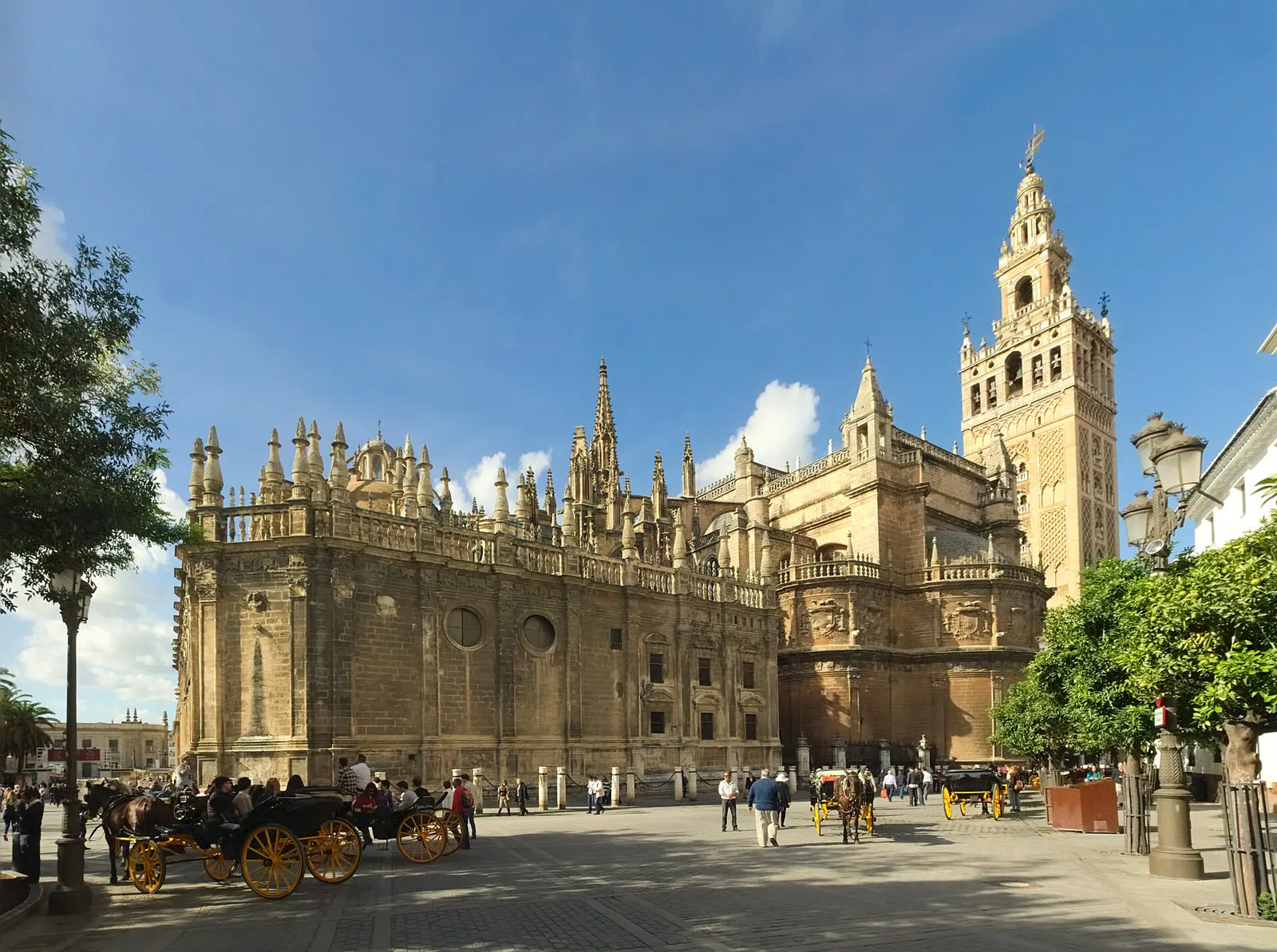
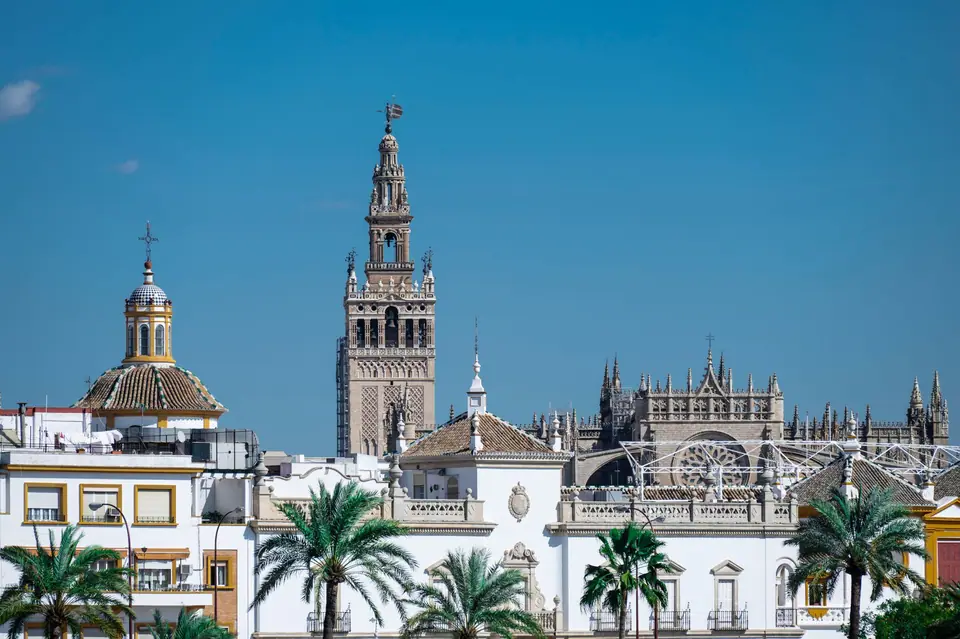
Known to the Romans as Hispalis beside the navigable Guadalquivir River (and adjoining the imperial city of Italica, birthplace of Emperors Trajan and Hadrian), Seville flourished under Moorish rule as Ishbiliya and reached monumental splendour in the late twelfth century as the Iberian capital of the Almohad Caliphate, which erected the Great Mosque whose brick minaret survives today as the Giralda bell tower. After King Ferdinand III of Castile captured the city in 1248, Christian monarchs commissioned Moorish craftsmen to build the lace-like Mudéjar courtyards of the Real Alcázar and began in 1401 the largest Gothic cathedral in the world.
In 1503, the Crown established the Casa de la Contratación (House of Trade) in Seville, granting the river port an exclusive royal monopoly over all commerce and silver fleets arriving from the Americas, a golden age that inspired the paintings of Diego Velázquez, Bartolomé Esteban Murillo and Francisco de Zurbarán and is preserved inside the General Archive of the Indies.
Seville Cathedral, La Giralda, Real Alcázar & Archive of the Indies
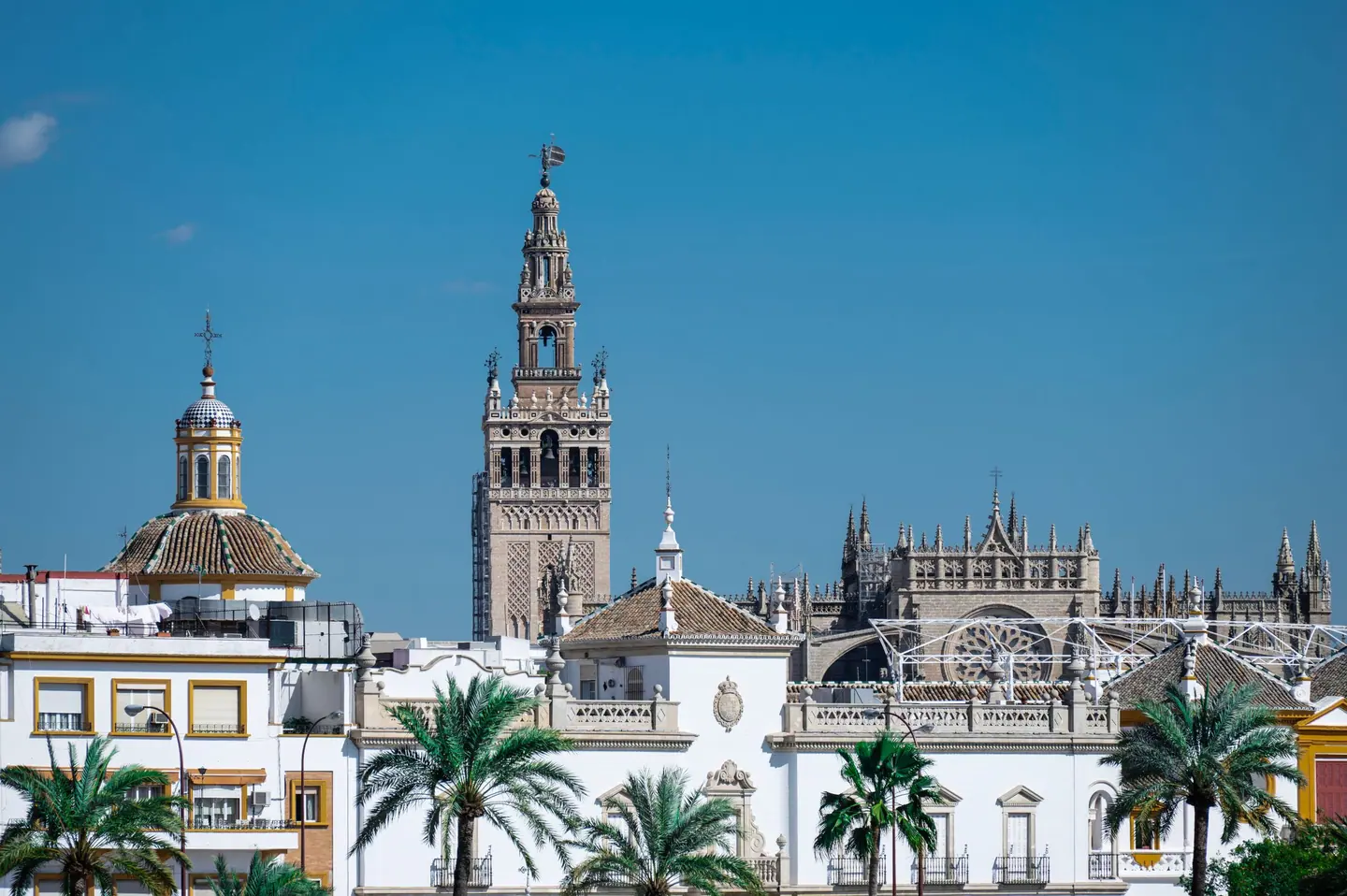
Begin in the UNESCO World Heritage triangle of Seville Cathedral, the Giralda ramp, the Mudéjar palaces and gardens of the Real Alcázar, and the Archive of the Indies.
Seville Cathedral
Begun in the early fifteenth century, this immense Gothic church ranks among the largest in Christendom. Inside, travellers can view the colossal gilded retablo mayor in the central nave and the monumental bronze tomb of Christopher Columbus. The perimeter chapels display notable works by Murillo, Zurbarán, and Goya amidst soaring vaulted stonework.
Giralda
Erected in the late twelfth century as the minaret for Seville's grand mosque, the tower was later crowned with a Renaissance belfry. Instead of stairs, thirty-five inclined ramps lead to the upper viewing platform, originally designed so guards could ascend on horseback. The exterior brickwork exhibits intricate sebka patterns characteristic of Almohad architecture.
Patio de los Naranjos
This spacious rectangular courtyard originally served as the Islamic prayer hall courtyard where worshippers washed before entering the mosque. Today, dozens of grid-aligned citrus trees flourish above an ancient stone drainage system. At its centre sits a Visigothic stone fountain basin, salvaged and repurposed during the medieval building campaign.
Puerta del Perdón
Dating from the Almohad period, this monumental gateway provides entry from Calle Alemanes into the Patio de los Naranjos. The horseshoe arch features original twelfth-century bronze-plated wooden doors with Arabic script. Renaissance plaster reliefs by Bartolomé López and terracotta statues by Miguel Perrin frame the exterior portal.
Columbus Tomb
Created by sculptor Arturo Mélida, this ornate sepulchre holds the verified remains of the Genoese navigator. Four towering allegorical figures representing Castile, León, Aragon, and Navarre hoist the bronze casket on their shoulders. Installed in 1899 following repatriation from Havana, the monument anchors the south transept near the Puerta de San Cristóbal.
General Archive of the Indies
Designed by Juan de Herrera and completed in 1646, this austere Renaissance building originally operated as the Casa Lonja de Mercaderes. In 1785, King Charles III converted the premises into the primary repository for Spanish imperial documents. The vaulted halls house tens of thousands of historic maps, logbooks, and official correspondence.
Puerta del León
Bearing a nineteenth-century tile panel depicting a crowned lion clutching a cross, this gateway pierces the ancient Almohad defensive walls. It serves as the primary visitor threshold into the vast royal compound. The exterior retains massive military ramparts constructed from rammed earth and ashlar stone.
Palacio Mudéjar
Constructed between 1364 and 1366, this palace stands as a pre-eminent example of Iberian Mudéjar residential architecture. Moorish artisans from Toledo and Granada crafted the intricate plaster arabesques and polychrome ceramic friezes. The central reception rooms open off tranquil courtyards beneath grand coffered timber ceilings.
Patio de las Doncellas
Forming the heart of Peter I's palace, this courtyard features a recessed rectangular pool bordered by sunken garden beds. Multifoil arches adorned with delicate plaster latticework rest on marble columns. Archaeologists uncovered the original fourteenth-century Moorish sunken ground level beneath Renaissance marble flags in the early 2000s.
Salón de Embajadores
This square ceremonial hall functioned as the official throne room of the Castilian monarchy. Above the triple horseshoe arches sits a spectacular half-orange wooden cupola, carved by Diego Ruiz in 1427 from gilded cedar. Balconies added during the Renaissance overlook the chamber from the upper residential level.
Patio de las Muñecas
Reserved for the private quarters of the monarch and royal family, this smaller courtyard features slender antique marble columns. The surrounding walls present fine carved stucco detailing, including tiny faces hidden within the pillar capitals. The upper glazed galleries were added in the nineteenth century for royal residential use.
Palacio Gótico
Commissioned in the 1250s to assert Christian dominion over the captured city, this palace displays ribbed Gothic cross-vaulting. Following damage in the 1755 Lisbon earthquake, parts were remodelled with neoclassical elements. The great hall displays massive eighteenth-century tapestries celebrating the conquest of Tunis by Emperor Charles V.
Baños de Doña María de Padilla
Located directly beneath the Patio del Crucero, these cool underground chambers hold a serene reflective pool. Named after the royal mistress of King Peter I, the space is vaulted with pointed brick arches. The stone basin functioned historically as a temperature-regulating reservoir for the Alcázar.
Jardín de las Damas
Laid out during the seventeenth century, this garden features neat boxwood parterres and a central fountain dedicated to Neptune. It was designed as an open-air promenade for noble women of the royal court. The nearby Galería de Grutescos offers an elevated walkway overlooking the greenery.
Galería de Grutescos
Architect Vermondo Resta converted an ancient Almohad curtain wall into this elongated mannerist loggia in the early seventeenth century. The rusticated stonework incorporates porous volcanic rock to resemble natural grottoes. Visitors walking along the upper terrace can enjoy elevated perspectives across the citrus orchards.
Plaza del Triunfo
This paved historic square separates the cathedral, the Archive of the Indies, and the Alcázar walls. At its centre stands the Triunfo monument, erected in 1757 to thank the Virgin Mary for sparing Seville from greater damage during the Lisbon earthquake. Traditional horse-drawn carriages line the cobbles.
Plaza de la Virgen de los Reyes
Bordering the east facade of the cathedral, this pedestrian plaza provides primary views of the Giralda tower. The central stone fountain, designed by José Lafita y Díaz, incorporates an ornamental street lamp. The square serves as a historic crossroads between the historic Santa Cruz quarter and the cathedral complex.
Palacio Arzobispal
Dating primarily from the seventeenth and eighteenth centuries, this grand palace stands out for its deep red and ochre facade. The baroque portal, designed by Lorenzo Fernández de Iglesias, leads into serene columned courtyards. The interior houses an extensive ecclesiastical art collection, including masterworks by Bartolomé Esteban Murillo.
Plaza de Santa Marta
Reached through an easily overlooked passage off Calle Mateos Gago, this compact square offers quiet respite close to the cathedral. At its centre stands a sixteenth-century cross carved by Hernán Ruiz the Younger. Whitewashed residential facades and fragrant orange trees complete the enclosed precinct.
Hospital de los Venerables
Founded by Canon Justino de Neve, this complex accommodated aged and retired Catholic clergy. The baroque chapel is covered in striking frescoes painted by Juan de Valdés Leal and his son Lucas Valdés. Today, the building houses the Focus Foundation and a gallery celebrating painter Diego Velázquez.
Barrio Santa Cruz, Hospital de los Venerables, Casa de Pilatos & Alfalfa
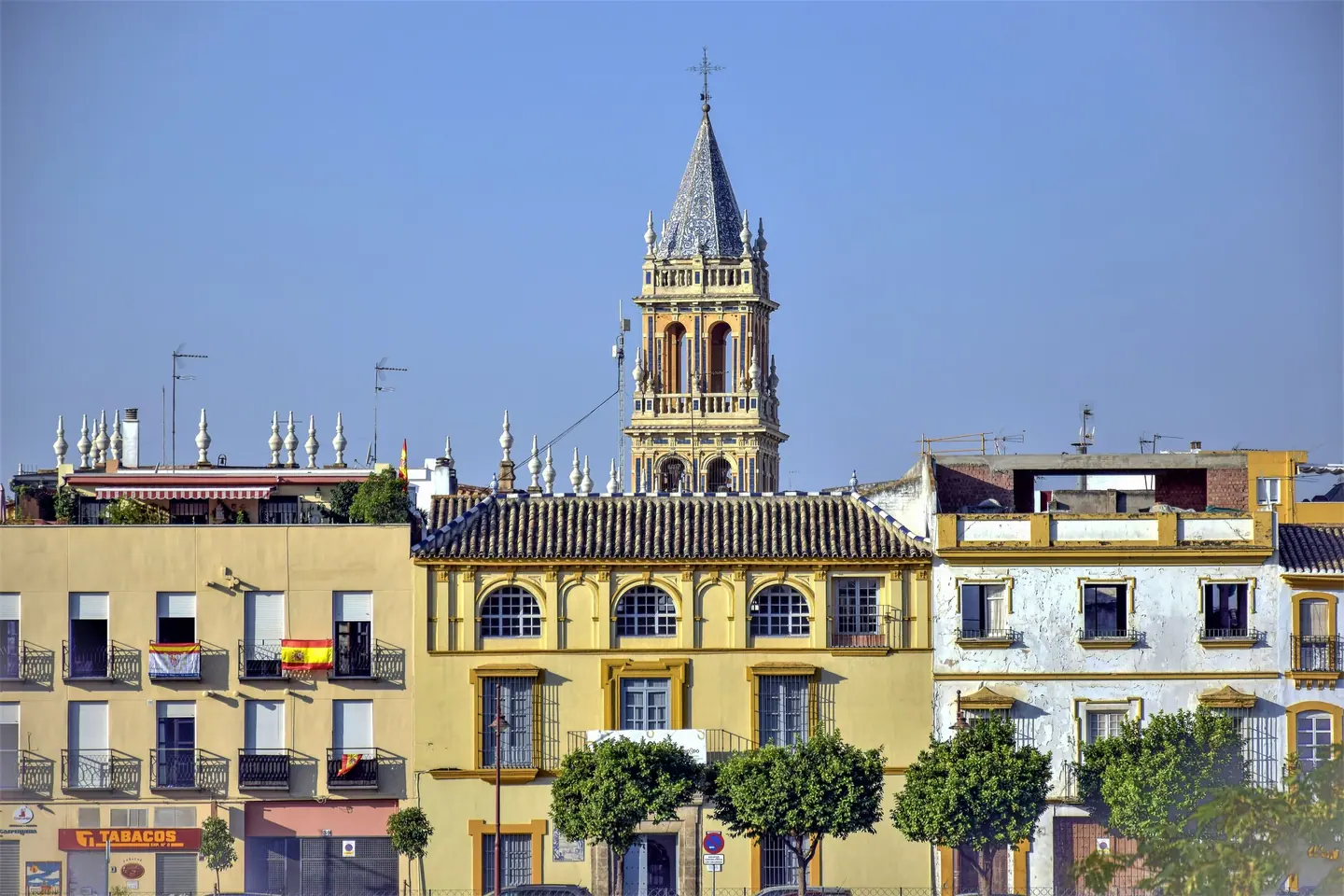
Wander the orange-scented alleys and plazas of the old Jewish quarter (Barrio Santa Cruz) north to the tiled Renaissance courtyards of Casa de Pilatos and Palace of the Dueñas.
Hospital de los Venerables
Founded in 1675 by Canon Justino de Neve, this former residence showcases classic Sevillian Baroque architecture designed by Leonardo de Figueroa. The complex centres on a sunken courtyard bordered by Tuscan columns, leading into a chapel covered in vivid frescoes by Valdés Leal and his son Lucas Valdés. Visitors can inspect fine paintings and intricate plasterwork celebrating religious devotion.
Plaza de Santa Cruz
Occupying the former site of a medieval synagogue and parish church, this shaded square serves as the symbolic heart of the Jewish quarter. At its centre stands the ornate Cruz de la Cerrajería, an intricate wrought-iron cross crafted by Sebastián Conde in 1692. The square also marks the burial ground of painter Bartolomé Esteban Murillo, remembered on a commemorative wall plaque.
Calle Agua
Running along the outer wall of the Royal Alcázar, this picturesque lane took its name from the water conduits feeding the palace gardens. Tile markers commemorate the nineteenth-century American author Washington Irving, who lodged in a private house here during his travels. We can observe ancient masonry, overhanging wrought-iron balconies, and fragrant citrus trees flanking the path.
Plaza de Doña Elvira
Encircled by whitewashed residences and orange trees, this square was laid out during the city redesigns of the early twentieth century. Tradition identifies the spot as the ancestral home of Doña Elvira, a prominent figure in the Don Juan theatrical legend. Tiled ceramic benches and a central bubbling fountain provide a classic example of Regionalist town planning.
Jardines de Murillo
Created on grounds ceded from the Alcázar royal orchard in 1911, these gardens border the eastern edge of the old quarter. Designed by municipal architect Juan Talavera y Heredia, the pathways feature elevated brick planters and enormous century-old Moreton Bay fig trees. A grand stone monument honours Christopher Columbus, adorned with bronze caravel bows and intricate armillary spheres.
Calle de los Suspiros
This diminutive alleyway exemplifies the irregular medieval street plan that protected residents from Seville's intense summer heat. Local legends recount romantic encounters and clandestine departures during the fifteenth-century expulsion of the Jewish population. Today, whitewashed walls and colourful flowerpots frame tight perspective views characteristic of the district.
Calle Judería
Connecting the Patio de Banderas to the outer Jewish quarter, this passage leads beneath ancient structural arches and residential houses. An ornate ceramic fountain set into the stonework commemorates historical water conduits that supplied the adjacent palaces. Passing through its shaded tunnel, travellers enter a succession of cobblestone bends paved with local river stones.
Church of Santa Cruz
Built between 1655 and 1728 on the grounds of a former convent, this church assumed the parish duties of an earlier demolished temple nearby. The sober exterior conceals an expansive Baroque interior featuring a gilded main retable and dramatic processional sculptures. It houses the headquarters of the Hermandad de Santa Cruz, which participates prominently in annual Holy Week ceremonies.
Plaza de las Cruces
Tucked away behind the central arteries of the neighbourhood, this diminutive clearing takes its name from three crosses mounted on stone columns. Red brick details and bougainvillaea vines stand out against the plain lime-washed houses that enclose the square. The site provides a quiet study of vernacular residential design dating from the early modern era.
Convento de San José del Carmen
Founded in 1575 by Saint Teresa of Ávila, this cloistered monastery preserves significant religious manuscripts and personal effects of the reformer. The church interior possesses altarpieces attributed to the circle of Juan de Mesa and paintings by Francisco de Zurbarán. Travellers can admire the seventeenth-century facade and historical ceramic plaques detailing Teresa's foundational work across Andalusia.
Palacio de Altamira
Erected during the late medieval period, this palace demonstrates the integration of Islamic craftsmanship into Christian aristocratic residences. It features an ornate courtyard with horseshoe arches, elaborate plaster relief panels, and wooden coffered ceilings known as artesonado. Careful restoration has preserved defensive brick battlements along the exterior walls facing Calle Santa María la Blanca.
Church of Santa María la Blanca
Originally functioning as a thirteenth-century synagogue, this site was converted into a Christian church in 1391 and redesigned in 1659. The interior displays an explosion of plasterwork and swags sculpted by the Borja brothers, completely transforming the medieval nave. It preserves red jasper columns from earlier construction phases, alongside narrative paintings depicting early church foundations.
Plaza de la Alfalfa
Serving as the intersection of major thoroughfares since the Roman era, this historic marketplace once held the city animal and feed exchange. The surrounding multi-storey apartment buildings feature typical iron railings and street-level cafes that foster communal life. It remains an active neighbourhood junction linking the old Jewish quarter with the commercial districts to the north.
Church of San Isidoro
Constructed in the fourteenth century over ancient foundations, this parish church reflects the transition from Gothic layout to Mudejar structural detailing. Inside, the Chapel of the Maestro features the monumental painting 'The Death of Saint Isidore', executed by Juan de Roelas in 1613. The building also houses prominent processional sculptures created by celebrated Baroque artists.
Church of San Esteban
Erected on the footprint of an early mosque, San Esteban presents two remarkable Gothic stone portals adorned with carved biblical relief figures. The single-nave hall exhibits an elaborate Mudejar timber roof frame above a gilded seventeenth-century main retable. Notable artworks within the chapels include canvasses by Francisco de Zurbarán and the revered Christ of Health sculpture.
Casa de Pilatos
Begun in 1483 by the Enríquez de Ribera family, this palace is among the finest private residences in Spain. The main courtyard incorporates classical marble busts collected in Italy alongside walls lined with colourful azulejo tiles and intricate stucco plasterwork. The upper floor exhibits grand coffered ceilings, antique furnishings, and frescoes attributed to Francisco Pacheco.
Convento de Santa María de Jesús
Founded in 1502, this monastery belonging to the Poor Clares displays a modest exterior masking rich interior devotional architecture. The chapel features a single nave covered by a vaulted timber roof and houses an elaborate wooden retable crafted in the seventeenth century. Visitors regularly gather at the convent tornel to purchase traditional artisanal pastries baked by the resident nuns.
Church of San Ildefonso
Designed by Julián Barcenilla and built between 1794 and 1841, this monumental church displays an impressive Neoclassical facade painted in traditional Sevillian ochre. Twin bell towers dominate the small square, housing bells that ring across the parish. The classical interior contains notable sculptures by Juan Martínez Montañés, including an esteemed relief of the Virgin Mary.
Iglesia de la Anunciación
Completed in 1579 for the Jesuit Order, this church served as the university chapel following the Jesuit expulsion in 1767. Its classical Renaissance facade and circular dome set an architectural standard across the city during the Counter-Reformation. Below the church lies the Pantheon of Illustrious Sevillians, housing the funerary tombs of literary and artistic figures including Gustavo Adolfo Bécquer.
Palacio de las Dueñas
Constructed between the fifteenth and sixteenth centuries, this noble residence balances Gothic-Mudejar arcades with classical Renaissance motifs. The palace preserves an extensive private collection of tapestries, antique furniture, and twentieth-century paintings across its salons. Poet Antonio Machado was born in an outbuilding here, spending his earliest childhood wandering around the shaded citrus cloisters.
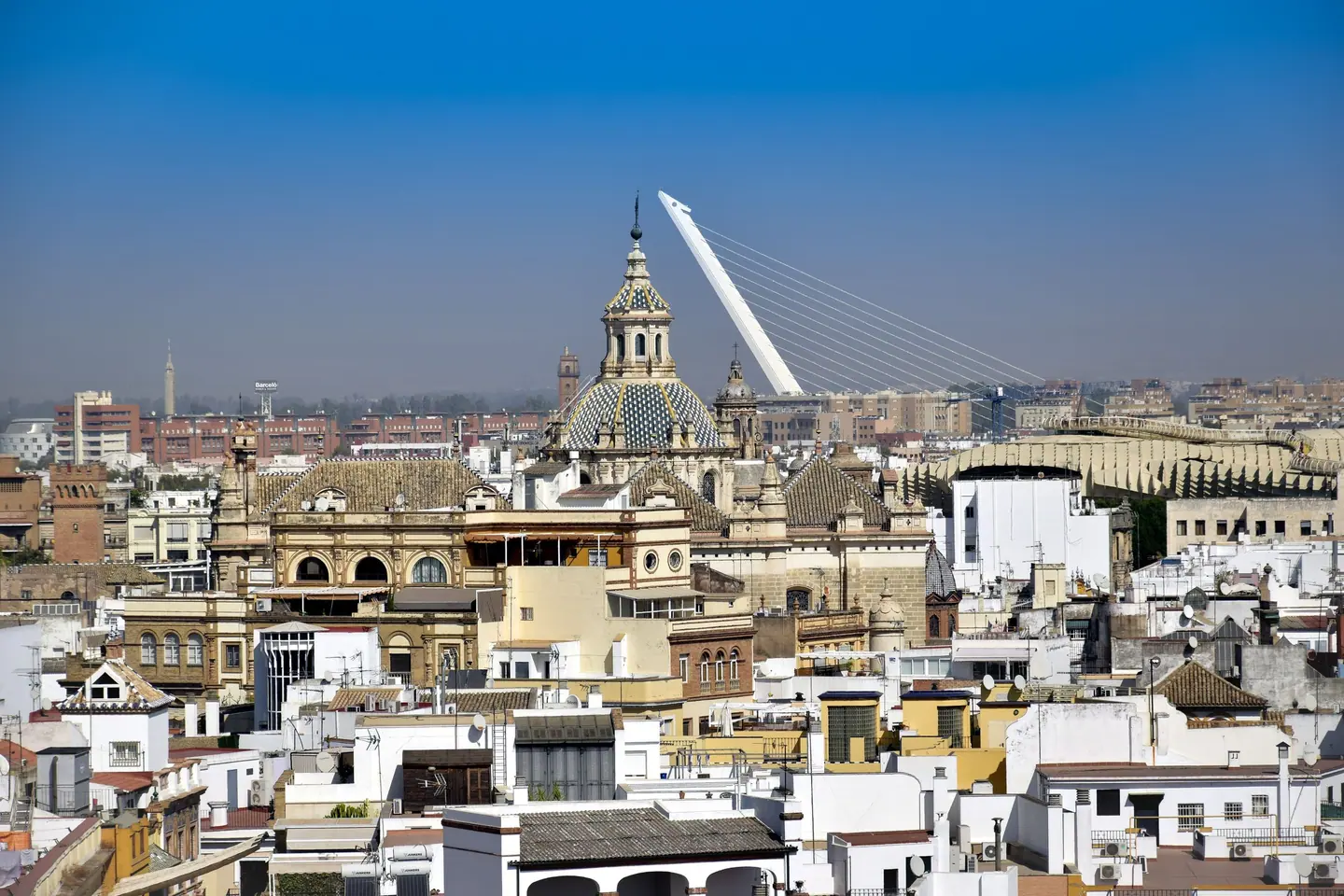
El Arenal, Torre del Oro, Maestranza, Plaza Nueva & Museum of Fine Arts
Follow the Guadalquivir riverfront from the twelfth-century Torre del Oro and Real Maestranza through El Arenal to the Salvador Church and Museum of Fine Arts.
Torre del Oro
Constructed in the early thirteenth century by the Almohad Caliphate, this dodecagonal military tower anchored the southern river defences of medieval Seville. A heavy chain once stretched across the water from its base to bar hostile shipping. Today the stone tower houses a modest naval museum detailing the city's maritime heritage.
Torre de la Plata
Standing tucked behind Calle Santander, this octagonal Almohad tower formed an integral part of the fortified curtain wall linking the Alcazar to the Torre del Oro. Restored in modern decades, its stone and brick fabric reveals centuries of urban encroachment. Travellers can view the medieval masonry from the adjacent courtyard.
Hospital de la Caridad
Founded by the penitent nobleman Miguel Manara in the seventeenth century, this complex provided shelter and burial for the destitute. Its chapel represents a high point of Sevillian baroque art, containing dramatic moral paintings by Bartolome Esteban Murillo and Juan de Valdes Leal. The carved main altarpiece by Pedro Roldan commands the interior.
Atarazanas de Sevilla
Erected in 1252 on the orders of King Alfonso X, these cavernous Gothic-Mudejar shipyards constructed galleys for the Castilian crown during wars against the Moors. The surviving monumental brick bays and soaring arches reflect the industrial scale of medieval Seville. Comprehensive restoration programmes have prepared the site for cultural exhibitions.
Plaza de Toros de la Real Maestranza
Constructed in stages between 1749 and 1881, this arena ranks among the oldest bullrings in Spain. Its distinct ovoid ring features a stately neo-baroque inner facade finished in brilliant yellow and white lime wash. The site incorporates an extensive museum illustrating the aristocratic equestrian guild that continues to manage the grounds.
Teatro de la Maestranza
Inaugurated for the 1992 Universal Exposition, this premier opera house sits behind the preserved facade of an old military artillery barracks. The vast cylindrical auditorium hosts classical concerts, operas, and ballet performances throughout the cultural season. Its riverside terrace provides clear views across the water towards the neighbouring Triana district.
Postigo del Carbon
Once known as the Postigo de los Azacanes, this portal historically permitted water carriers and coal merchants direct entry into Seville from the port. While the gate structure itself was largely demolished in the nineteenth century, the surrounding street plan marks the historic line of the defensive walls. Nearby plaques commemorate its economic role.
Postigo del Aceite
Rebuilt in 1572 by architect Benvenuto Tortello, this stone archway stands as one of the few surviving gates of the ancient city fortifications. It gained its name from the olive oil unloaded at the nearby wharves and inspected here before market distribution. An upper niche encloses an eighteenth-century chapel dedicated to the Virgin Mary.
Capilla de la Piedad
Commonly known as the chapel of El Baratillo, this intimate place of worship has served local bullfighters and market traders since the late seventeenth century. The building displays a restrained baroque portal surmounted by a delicate belfry. Inside, visitors encounter revered processional images that form a central feature of the Holy Week parades.
Mercado del Arenal
Erected in 1947 on the site of the former Populo prison, this public market serves the riverside neighbourhood with fresh produce, fish, and meats. Designed by architect Juan Talavera y Heredia, the building retains arched access bays and classical Andalusian plaster detailing. It offers an authentic slice of daily community commerce.
Iglesia de San Jorge
Serving as the church of the Hospital de la Caridad, this structure features an ornate facade adorned with blue ceramic tiles representing Saint George and Saint James. The interior contains famous paintings commissioned from Bartolome Esteban Murillo that preach the spiritual corporal works of mercy. Intricate gilded plasterwork frames the cavernous nave.
Plaza de San Francisco
Dating from the Christian reconquest of Seville, this open space was long the political, commercial, and judicial heart of the city. The square was once the site of public executions, tournament jousts, and major religious celebrations. The eastern facade of the town hall provides a magnificent backdrop with its elaborate Plateresque stonework.
Ayuntamiento de Sevilla
Commissioned by Emperor Charles V and designed by Diego de Riano, this municipal palace exemplifies sixteenth-century Plateresque design. The exterior displays dense relief carvings depicting mythological figures, local heroes, and the founding emperors of Seville. The neoclassical west facade, facing Plaza Nueva, contrasts sharply with the intricate Renaissance stonework facing Plaza de San Francisco.
Plaza Nueva
Laid out in the nineteenth century over the demolished monastery of San Fernando, this broad public square forms the municipal centre of Seville. Shaded by orange trees and lined with marble benches, it centres on a monument to King Ferdinand III of Castile. Trams terminate here, connecting the modern shopping avenues with the historic centre.
Monument to Ferdinand III of Castile
Unveiled in 1924, this imposing equestrian bronze commemorates the monarch who recaptured Seville from Muslim rule in 1248. Sculptor Joaquin Bilbao depicted the king holding his sword upright in triumph atop a limestone base designed by Juan Talavera y Heredia. Surrounding stone figures honour notable historical figures, including Bishop Isidore and Alfonso X.
Iglesia del Salvador
Erected between 1674 and 1712, this grand red-brick collegiate church stands on the foundations of Seville's former ninth-century main mosque. The surviving Romanesque patio and minaret base reveal its Islamic ancestry. Inside, towering golden retablos carved by Cayetano de Acosta and famous statues by Juan Martinez Montanes create a remarkable interior.
Plaza del Salvador
This historic public space sits directly in front of the collegiate church steps, serving as a social focal point for the historic district. A central bronze monument honours the seventeenth-century master sculptor Juan Martinez Montanes. Traditional cafes and stone facades line the perimeter, where residents gather for drinks and conversation.
Iglesia de la Magdalena
Constructed around the turn of the eighteenth century, this former Dominican convent church represents one of Leonardo de Figueroa's finest baroque designs. The interior showcases triple naves crowned by rich plasterwork, polychrome figures, and frescoes by Lucas Valdes. The baptistery houses the marble font where the painter Bartolome Esteban Murillo was baptised.
Plaza del Museo
Surrounded by historic townhouses, this peaceful cobbled square provides the immediate setting for the Museum of Fine Arts. Centuries-old ficus trees with sprawling root systems dominate the garden, providing generous shade from the Andalusian sun. At its centre stands a bronze statue of Murillo erected in 1864 by public subscription.
Museum of Fine Arts of Seville
Occupying the seventeenth-century Convent of the Merced Calzada, this institution ranks second only to the Prado for classical Spanish painting. Its sunlit cloisters and former convent chapel house masterworks by Bartolome Esteban Murillo, Francisco de Zurbaran, and Juan de Valdes Leal. The carved Mudejar ceilings and ceramic tiles enrich the architectural surroundings.
Royal Tobacco Factory, Parque de María Luisa & Plaza de España
Walk south past the eighteenth-century Royal Tobacco Factory into the tiled pavilions of Parque de María Luisa and Aníbal González semicircular Plaza de España.
Royal Tobacco Factory
Engineered during the Enlightenment, this massive stone edifice was Europe's first large industrial tobacco factory. Designed with deep protective moats, classical portals and vaulted drying rooms, it famously inspired Prosper Mérimée's Carmen. Today, it serves as the rectorate of the University of Seville, welcoming visitors into its spacious central courtyards.
Chapel of the Royal Tobacco Factory
Built during the mid-eighteenth century to serve factory employees, this chapel stands near the main entrance gates. It houses the venerated images of the Hermandad de los Estudiantes, which take part in Holy Week processions. Visitors can admire the compact Baroque altar and classical stone ornamentation lining the peaceful interior nave.
Hotel Alfonso XIII
Commissioned by King Alfonso XIII for the 1929 Ibero-American Exposition, this luxury landmark exemplifies regionalist architecture. Architect José Espiau y Muñoz incorporated wrought-iron grilles, ceramic tiles and elaborate brick arches into the design. The central courtyard features a classical Andalusian fountain framed by pointed arches and opulent plasterwork.
Puerta de Jerez
This open pedestrian plaza occupies the site of an ancient gateway in the city walls that led south toward Jerez. At its centre stands the Fountain of Híspalis, sculpted by Manuel Delgado Brackembury with allegorical figures representing Seville. The square acts as a prominent transport hub connecting old quarters with leafy southern boulevards.
Palacio de San Telmo
Constructed in 1682 as a naval training school for orphaned boys, this palatial complex later served as the royal residence of the Montpensier family. The Churrigueresque front portal by Leonardo de Figueroa displays carved stone figures, columns and allegorical marine motifs. It now accommodates the presidency of the Andalusian Autonomous Government.
Costurero de la Reina
Architect Juan Talavera de la Vega designed this small castle-like building in 1893 as a gardener's lodge for the Montpensier estate. Popular lore associates the turreted structure with Queen María de las Mercedes sewing inside to improve her frail health. Its striped brickwork and crenellated towers now serve as a municipal tourist information office.
Monumento a San Fernando
Located within the broader southern avenue approaching the park, this monumental bronze commemorates the monarch who conquered Seville in 1248. The king is represented on horseback, surrounded by allegorical figures and relief carvings celebrating the medieval Christian city. The surrounding stone terrace offers views toward the historic university grounds and park promenades.
Plaza de España
Designed by master architect Aníbal González, this semicircular brick and tile ensemble served as the centrepiece of the 1929 exposition. A navigable moat spanned by four bridges representing ancient Spanish kingdoms lines the sweeping gallery. Along the base of the palace walls, 48 tiled alcoves depict historical events from Spain's provinces.
Vicente Traver Fountain
Positioned at the geographical centre of Plaza de España, this imposing stone fountain was designed by architect Vicente Traver. Traver succeeded Aníbal González after his resignation, adding the fountain to punctuate the vast open-air paved expanse. The splashing waters provide relief during warm afternoons, reflecting the red brickwork of the flanking towers.
North Tower of Plaza de España
Rising eighty metres into the southern Seville skyline, this Baroque-inspired tower mirrors its southern counterpart to frame the semicircular palace. Its detailed multi-tiered structure blends exposed brickwork, stone balustrades and colourful ceramic revetments influenced by the Giralda. The ground level connects directly to long colonnades containing government offices and military headquarters.
South Tower of Plaza de España
This towering brick structure terminates the southern wing of Plaza de España, matching the northern tower in scale and ornamental treatment. Its tiered bell-tower silhouette draws inspiration from classical Spanish Baroque architecture while incorporating Andalusian ceramic details. The adjacent covered gallery offers sheltered walkways lined with coffered timber ceilings and marble columns.
Military Historical Museum of Seville
Occupying several rooms inside the northern gallery of Plaza de España, this collection traces Spanish military history through regional conflicts. Exhibits include antique firearms, engineering tools, hand-painted maps and detailed scale models of Andalusian fortifications. The museum preserves the original 1929 interior architecture, including carved wooden ceilings and glazed tile floors.
Parque de María Luisa
Originally part of the private gardens of San Telmo Palace, this land was donated to the city in 1893 by Infanta María Luisa Fernanda. French landscape architect Jean-Claude Nicolas Forestier transformed the grounds into a romantic Mediterranean park featuring palm alleys, orange groves and tiled benches. Today, it remains Seville's primary green open space.
Glorieta de Bécquer
Sculpted by Lorenzo Coullaut Valera in 1911, this marble monument commemorates Seville's famed romantic poet beneath a sprawling swamp cypress. Three seated female figures carved in marble portray the progression of love: illusion, possession and lost love. Bronze statues representing wounded love and Cupid stand alongside the central bust of Bécquer.
Monte Gurugú
Constructed as part of Forestier's park design, this small artificial hill features a rocky cascade tumbling down into a shaded pool. Stone steps wind up the knoll through thick pine and eucalyptus trees to a small domed gazebo at the crest. The summit provides quiet perspectives over the tree canopy and winding pathways of the surrounding park.
Isleta de los Patos
This central pond within María Luisa Park is named for its resident ducks, swans and free-roaming peacocks that nest near the water. Surrounded by weeping willows and reed beds, the lake features a small island accessible across low footbridges. In the centre sits a stone pavilion where King Alfonso XII famously courted María de las Mercedes.
Plaza de América
Aníbal González laid out this formal square at the southern tip of the park, framing it with three buildings of differing architectural styles. Flowerbeds, tall palm trees and large pools filled with white doves create a tranquil promenade between the structures. The space was created for the 1929 exposition to celebrate cultural connections with the Americas.
Museum of Popular Arts and Traditions
Constructed as the Mudéjar Pavilion for the 1929 fair, this brick building showcases traditional ceramics, leatherwork and rural agricultural implements. The exterior displays glazed tiles, pointed horseshoe arches and intricate geometric brickwork patterns. Inside, exhibitions examine regional costume, metal smithing, traditional tile-making techniques and historical Holy Week workshops.
Archaeological Museum of Seville
Facing Plaza de América, this grand Neo-Renaissance building housed fine art exhibitions during the 1929 exposition. The museum holds major regional antiquities, including the Tartessian Treasure of Carambolo and classical marble sculptures recovered from nearby Roman Italica. Its imposing facade features rusticated stone, fluted columns and grand classical pediments.
Pabellón Real
Completing the architectural trio around Plaza de América, the Royal Pavilion was built in the Neo-Gothic style using carved stone and white glazed ceramic. Aníbal González incorporated pinnacles, traceried pointed windows and heraldic crests into its facade. Originally intended to display royal decorative art collections, it now houses administrative offices for municipal authorities.
Metropol Parasol (Las Setas), Alameda, Macarena Walls & Triana Across the River
Explore the rooftop walkways of Las Setas and the Almohad walls of La Macarena before crossing Puente de Isabel II into the ceramic workshops and flamenco lanes of Triana.
Metropol Parasol
Designed by German architect Jürgen Mayer, this enormous timber monument stands over Plaza de la Encarnación. Visitors can walk along elevated skyways that present expansive panoramas across the tiled roofs of the historic quarter. Beneath the modern canopies lie archaeological remains that ground the contemporary development in ancient heritage.
Antiquarium de Sevilla
Discovered during the construction of Metropol Parasol, this subterranean archaeological museum preserves extensive remnants of Roman city life. Walking paths lead past first-century mosaic floors, private patio foundations, and later Islamic dwellings. The site illustrates continuous urban habitation through protective glass enclosures and detailed historical displays.
Mercado de la Encarnación
Constructed beneath the soaring canopies of Las Setas, this central market replaces an earlier nineteenth-century market hall. Traders supply fresh produce, cured meats, and Atlantic seafood to local residents each morning. It remains an active civic space that connects modern civic design with traditional Andalusian commerce.
Alameda de Hércules
Drained and laid out in 1574, this broad tree-lined square was one of the earliest public pleasure parks in Europe. Two Roman columns from the temple at Mármoles stand at its southern end, topped by sculptures of Hercules and Julius Caesar. The perimeter features numerous historic townhouses and outdoor café terraces.
Casa de las Sirenas
Standing beside the Alameda de Hércules, this French classical palace dates to the late nineteenth century. Named after mythological sirens sculpted on its iron entry gate, the residence fell into ruin before civic restoration saved it in the 1990s. Today, it functions as a municipal cultural pavilion hosting community events.
Basílica de la Macarena
Constructed in the mid-twentieth century, this prominent neo-baroque church houses the revered sixteenth-century image of the Virgen de la Esperanza Macarena. The interior shines with ornate golden altarpieces, crystal chandeliers, and lavish processional treasures. It acts as the emotional heart of local Holy Week processions and attracts pilgrims from across Spain.
Murallas de Sevilla
This fortified perimeter presents the longest remaining segment of Seville's medieval fortifications, built from rammed earth by the Almohad Caliphate. Square watchtowers punctuate the walls, displaying protective ramparts that guarded the northern approaches of the Islamic metropolis. It serves as an impressive monument to medieval military engineering in Andalusia.
Arco de la Macarena
Positioned beside the Macarena basilica, this gate represents one of only three historic entrances that survived nineteenth-century wall demolitions. Rebuilt in neoclassical style in 1795, it previously admitted monarchs and travellers arriving from northern roads. The gateway maintains a pivotal role in civic ceremonies and neighbourhood identity.
Hospital de las Cinco Llagas
Initiated in 1546 by architect Martín de Gainza, this imposing Renaissance complex served as a charity hospital for centuries. Symmetrical courtyards and an Italianate church design define the massive stone layout. Following comprehensive restorations in the late twentieth century, the monumental halls now host the regional parliament.
Puente de la Barqueta
Erected between 1989 and 1992, this striking steel bowstring bridge connects the Macarena district directly with the Isla de la Cartuja. The central white arch spans 168 metres across the Guadalquivir without intermediate river piers. Pedestrians enjoy broad sidewalks that afford clear perspectives over the river and the modern pavilions beyond.
Puente de Isabel II
Constructed between 1845 and 1852 under Queen Isabel II, this cast-iron structure replaced an ancient Moorish bridge of boats. French engineers modelled its three circular spans after the Pont du Carrousel in Paris. Today, it remains the principal pedestrian and vehicular link across the river to the independent district of Triana.
Capilla del Carmen
Designed by celebrated regionalist architect Aníbal González, this charming brick chapel was finished in 1928 beside the Triana bridgehead. A delicate dome crowned with glazed ceramics surmounts the octagonal structure, accompanied by an open campanile. Inside, a revered ceramic altar honours the Virgen del Carmen, the traditional patroness of mariners.
Mercado de Triana
Standing directly at the Triana bridgehead, this historic civic hall provides fresh produce, charcuterie, cheeses, and regional specialities. The stalls sit directly over excavated ruins, lending the daily trade a unique historical foundation. Visitors find traditional market sellers alongside artisan lunch counters that showcase local Andalusian gastronomy.
Castillo de San Jorge
This Almohad fortress guarded the river crossing for centuries before becoming the dreaded headquarters and prison of the Spanish Inquisition in 1481. Rediscovered during market renovations, the subterranean stone remnants now house an interpretation centre on religious persecution and human rights. Visitors walk across wooden catwalks over the excavated dungeons.
Calle San Jacinto
Forming the historic spine of Triana, this pedestrianised avenue extends from the bridge into the residential heart of the suburb. Lined with palm trees, outdoor café seating, and ornamental tile frontages, the street offers authentic neighbourhood atmosphere. Historical landmarks along the route include the Baroque Church of San Jacinto, founded by Dominican friars.
Iglesia de Santa Ana
Commissioned in 1276 by King Alfonso X, this venerable sanctuary is the oldest purpose-built Christian parish church in Seville. The exterior features brick portals and crenellations, while the interior displays ribbed vaults and a rich sixteenth-century painted retable by Pedro de Campaña. It has long served as the baptismal cathedral for Triana families.
Centro Cerámica Triana
Housed within the former Santa Ana pottery complex, this informative museum chronicles the centuries-old tile and pottery heritage of Triana. Visitors can inspect intact historical kilns, potters' wheels, and drying racks alongside displays of glazed Renaissance and Baroque azulejos. The facility highlights the craft that supplied decorative tiles across Spain and the Americas.
Callejon de la Inquisicion
This secluded passageway connects Calle Castilla directly to the riverbank beside the ancient fortress walls. In past centuries, prisoners and accused heretics were marched along this paved lane to the Inquisition tribunal. Today, whitewashed walls and climbing vines frame serene views over the Guadalquivir toward central Seville.
Calle Betis
Running parallel to the Guadalquivir River, this famous waterfront street takes its name from the ancient Roman name for the river. The colourful eighteenth and nineteenth-century townhouse façades house traditional restaurants and riverside terraces. From here, walkers take in commanding views of the Torre del Oro, the Plaza de Toros, and Seville Cathedral.
Capilla de los Marineros
Constructed in 1759 on Calle Pureza, this devotional chapel serves as the sanctuary of the Hermandad de la Esperanza de Triana. The guild chapel maintains an exquisite altarpiece enshrining the crowned Madonna that sailors revered before transatlantic voyages. The sanctuary displays rich silverwork, brocade vestments, and maritime motifs that honour Seville's nautical past.
Timing Your Walks Through Seville’s Plazas
You can combine these stops with the district-by-district where-to-stay notes and seasonal planning tables on our Seville destination page, or explore further regional and neighbourhood guides.