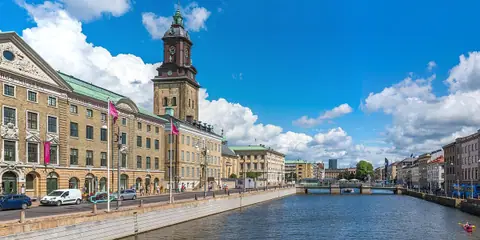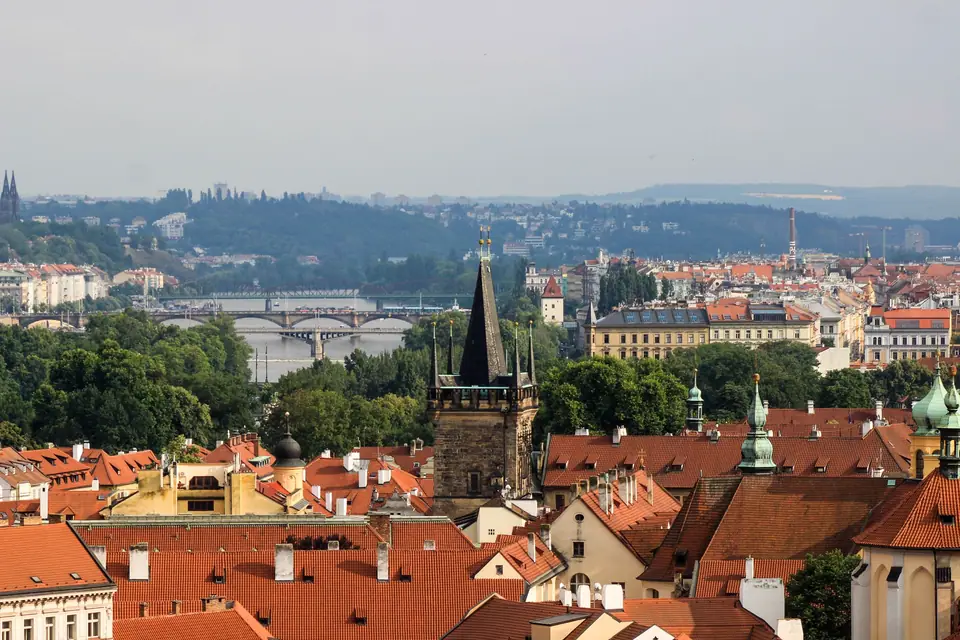
A 100-stop island-hopping walking and ferry route across Stockholm, linking medieval Gamla Stan, the Vasa warship on Djurgården, Brick Expressionist City Hall, and Södermalm cliffs.
Birger Jarl’s Timber Lock Between Lake Mälaren and the Baltic
Where sweet-water Lake Mälaren flows into the brackish Baltic Sea archipelago across fourteen islands, Birger Jarl founded Stockholm around 1252 as a fortified island town on Stadsholmen (Gamla Stan) to guard Sweden's heartland and partner with Hanseatic League merchants from Lübeck. In 1523 Gustav Vasa marched into the city after the Stockholm Bloodbath, ending the Kalmar Union and establishing an independent hereditary Swedish monarchy.
During Sweden's seventeenth-century Stormaktstiden (Great Power Era), aristocratic palaces and Baroque churches rose across Riddarholmen and Norrmalm, while the 1628 flagship Vasa sank in the harbour on its maiden voyage, preserved in cold Baltic mud for 333 years until its recovery as the world's only intact seventeenth-century warship.
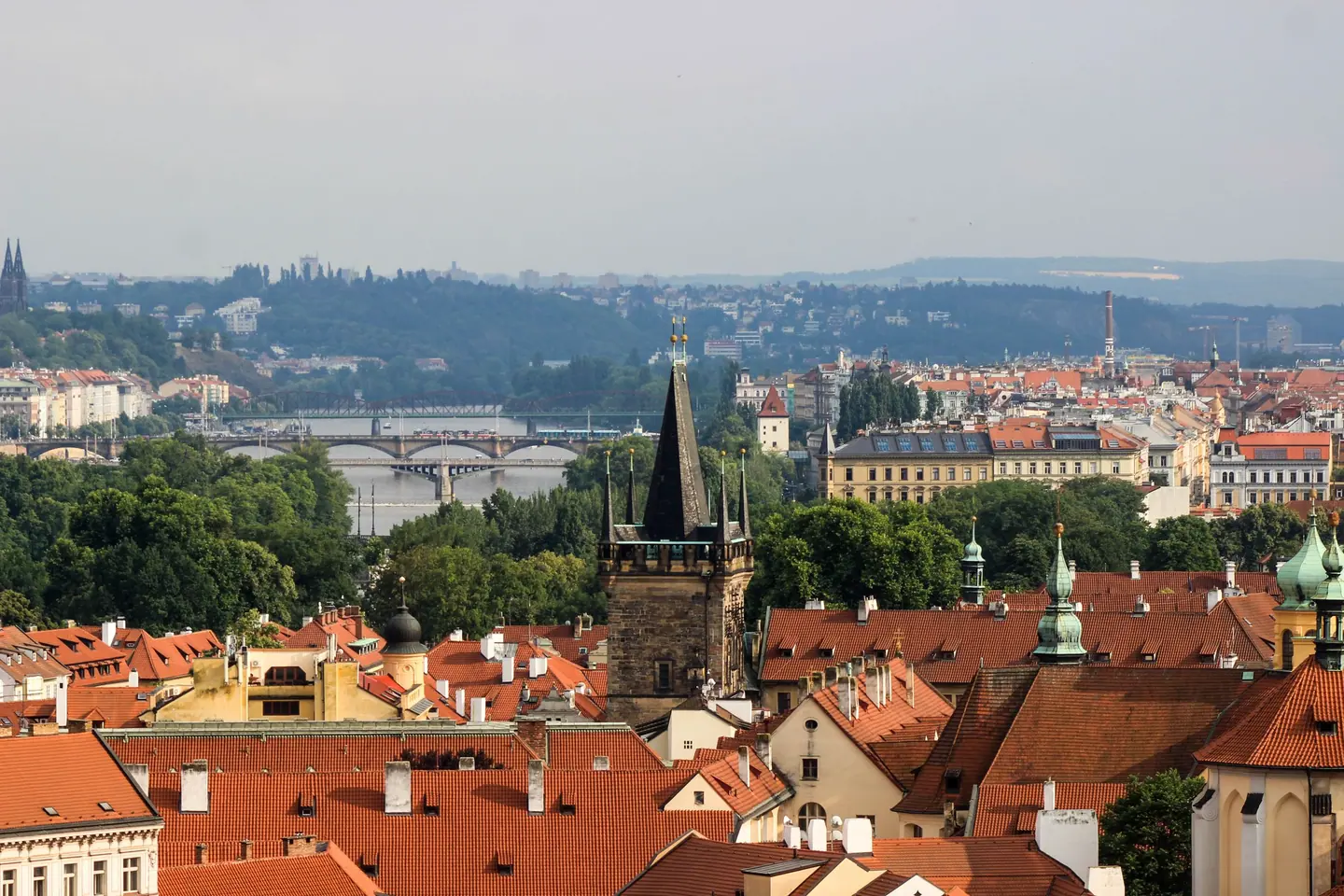
Gamla Stan, Royal Palace & Riddarholmen
Stockholm Palace Kungliga Slottet, Storkyrkan Stockholm Cathedral, Stortorget, Nobel Prize Museum, Mårten Trotzigs Gränd, Iron Boy Järnpojken, German Church Tyska Kyrkan, House of Nobility Riddarhuset, and Riddarholmen Church
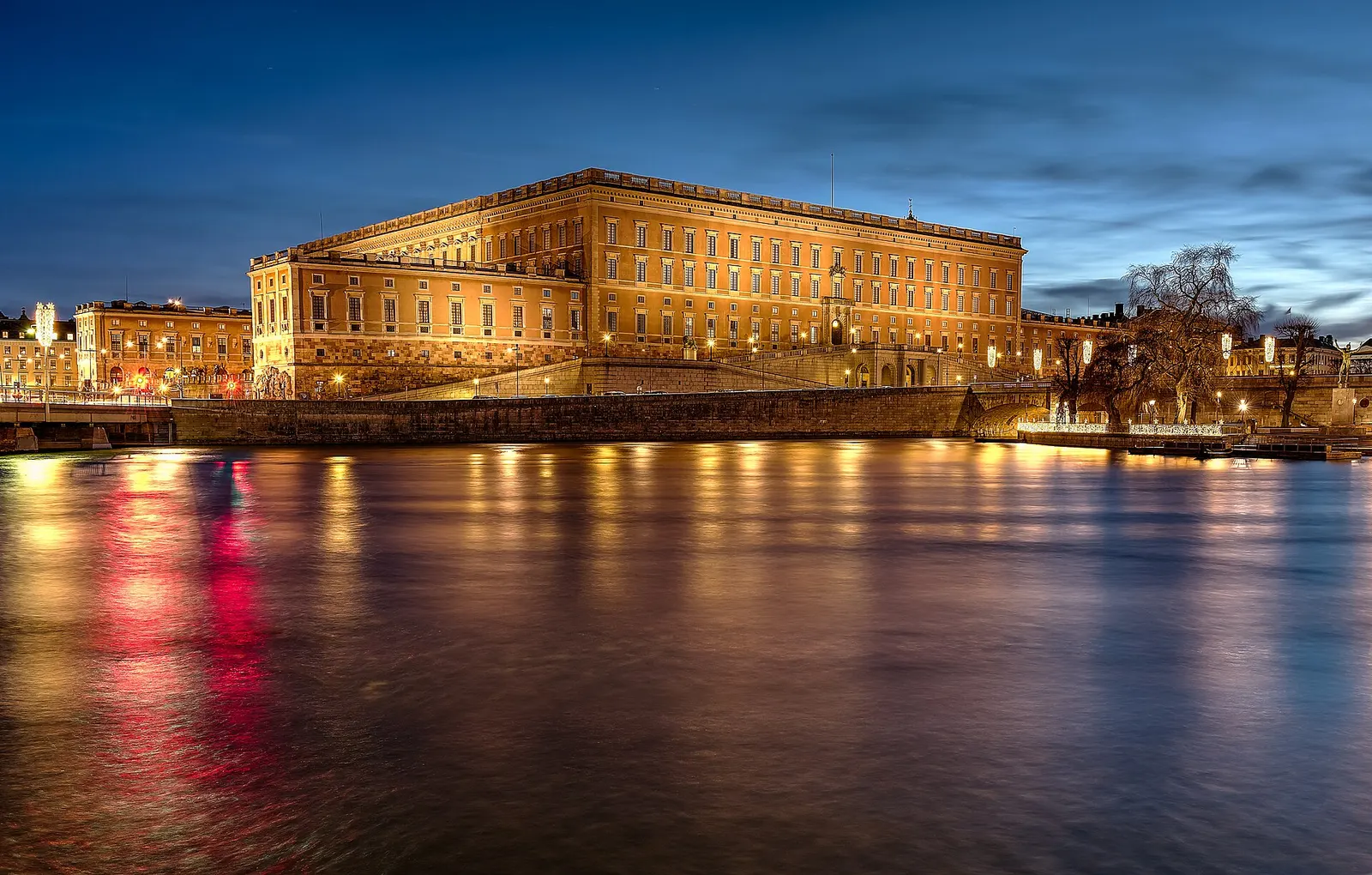
Stockholm Palace
Built on the footprint of the medieval Tre Kronor castle after the fire of 1697, this immense Roman Baroque palace was designed by architect Nicodemus Tessin the Younger. The exterior features massive sandstone façades surrounding a central courtyard. Inside, visitors find the royal apartments, the Royal Chapel, and the Treasury housing the Swedish regalia.
Storkyrkan
Dedicated to Saint Nicholas, this cathedral dates to the thirteenth century, though its exterior was later remodelled in Baroque style to harmonise with the palace. Within the brick Gothic interior stands the famous 1489 wooden sculpture of Saint George and the Dragon by Bernt Notke. It remains the venue for royal weddings and parliamentary openings.
Stortorget
This cobbled square was the heart of medieval Stockholm and the tragic setting for the Stockholm Bloodbath of 1520. Tall sixteenth-century merchant houses with decorated gables flank the perimeter, alongside the former Stock Exchange Building. In the centre sits the Stortorgsbrunnen, an eighteenth-century well-house that marks the traditional centre point of the city.
Nobel Prize Museum
Occupying the former Börshuset on Stortorget, this cultural institution documents the legacy of Alfred Nobel and the achievements of laureates across physics, chemistry, medicine, literature, and peace. Exhibitions display original artifacts, historical manuscripts, and personal donations from laureates. The building itself reflects Neoclassical architectural design dating from the 1770s.
German Church
Founded by the Hanseatic German merchant community in the Middle Ages, the church received its current double-nave form during the early seventeenth century. Its 96-metre brick and copper spire dominates the Gamla Stan skyline. The interior features an elaborate Renaissance alabaster pulpit, a Baroque altar, and ornate private royal galleries.
Mårten Trotzigs Gränd
Named after a German merchant who bought properties here in the late sixteenth century, this steep passage connects Prästgatan to Västerlånggatan. It tapers down to a width of just ninety centimetres across thirty-six stone steps. Gas lamps illuminate the flanking medieval walls, which preserve building phases dating back centuries.
Iron Boy
Officially titled Boy Looking at the Moon, this fifteen-centimetre sculpture was created by artist Liss Eriksson in 1967. Positioned on a sandstone plinth within the Bollhustäppan courtyard, the small figure depicts a boy sitting with his knees drawn up. Local residents often dress the statue in hand-knitted caps and scarves throughout winter.
House of Nobility
Constructed between 1641 and 1674 by architects Simon de la Vallée and Justus Vingboons, Riddarhuset served as the assembly hall for the Swedish nobility until 1866. The red-brick exterior features Corinthian pilasters and ornate sandstone sculptures. Inside, the main session hall is adorned with thousands of copper coats of arms belonging to noble families.
Riddarholmen Church
Founded as a Franciscan friary in the late thirteenth century, this red-brick basilica is the sole surviving medieval monastery church in Stockholm. Its cast-iron openwork spire, erected after a lightning strike in 1835, is a major waterfront landmark. Inside rest Swedish monarchs from Gustavus Adolphus through to King Gustaf V.
Wrangel Palace
Positioned on the western edge of Riddarholmen, this structure incorporates medieval defensive towers from Gustav Vasa's fortifications. Rebuilt by field marshal Carl Gustaf Wrangel after 1652, it later served as the royal residence following the 1697 Tre Kronor fire. Today it houses the Svea Court of Appeal, overlooking Lake Mälaren.
Bonde Palace
Designed by Nicodemus Tessin the Elder and Jean de la Vallée for Lord High Treasurer Gustaf Bonde, this palace was completed in 1673. Its French-inspired design features two extended corner pavilions flanking an austere main courtyard. Once the city town hall, the complex has accommodated the Supreme Court of Sweden since 1949.
Oxenstierna Palace
Commissioned in 1653 by Lord High Chancellor Axel Oxenstierna and designed by Jean de la Vallée, this building introduces Roman palace architecture to Stockholm. The heavy stone rustication and alternating window pediments follow strict symmetry. Only one wing of the grand quadrangle design was completed, preserving an authentic seventeenth-century exterior.
Tessin Palace
Erected between 1694 and 1700 by Nicodemus Tessin the Younger as his personal residence, this townhouse sits opposite the Royal Palace. The façade draws upon Roman Baroque principles, while the interior encloses a celebrated formal courtyard garden. Today the residence is used by the Governor of Stockholm County for official state functions.
Finnish Church
Situated directly across from the southern palace façade, this building began in the seventeenth century as Lilla Bollhuset, a royal ball sports hall and theatre. Converted into a church for the Finnish-speaking congregation in 1725, it maintains an understated exterior. The intimate interior houses historic liturgical silver and a small baroque organ.
Stenbock Palace
Constructed in 1670 for Count Johan Gabriel Stenbock by architect Nicodemus Tessin the Elder, this palace faces Birger Jarls Torg. Its façade demonstrates early Classical lines with stucco embellishments and decorative pilasters. The building was restored in the twentieth century and now houses premises for the Supreme Administrative Court.
Birger Jarls Torg
Named after the thirteenth-century founder of Stockholm, this quiet square forms the core of Riddarholmen island. At its centre stands a bronze statue of Birger Jarl, created by sculptor Johan Niclas Byström in 1854. The perimeter is enclosed by historical state institutions, including the Old Parliament building and former noble residences.
Norrbro
Designed by architect Carl Fredrik Adelcrantz and completed in 1807, Norrbro is a Neoclassical stone arch bridge connecting Gamla Stan with Norrmalm. The massive granite arches span the waters of Norrström, resting partly upon Helgeandsholmen. The crossing provides direct axial views of the northern palace frontage and the Royal Swedish Opera.
Museum of Medieval Stockholm
Constructed around extensive archaeological excavations discovered during parliamentary renovations in the late 1970s, this underground museum sits beneath Norrbro. The site preserves fifty-five metres of Gustav Vasa's city wall, a medieval graveyard, and warship remnants. Exhibits detail everyday life in Stockholm between the thirteenth and early sixteenth centuries.
Riksdag Building
Constructed between 1897 and 1905 to designs by Aron Johansson, this massive Neoclassical complex occupies Helgeandsholmen island between Gamla Stan and the modern centre. The façade exhibits monumental granite colonnades and Sweden's coat of arms. It houses the debating chambers, parliamentary offices, and the modern plenary hall for the 349-seat Riksdag.
Brantingtorget
Formed during extensive redevelopment in the mid-twentieth century, this circular public space is completely enclosed by administrative government buildings in Gamla Stan. The central paved courtyard features a fountain sculpture, Morning, crafted by artist Ivar Johnsson in 1962. Access is achieved through narrow vaulted passages off neighbouring alleys like Västerlånggatan.
Djurgården Island, Vasa Museum & Skansen
Vasa Museum, Nordic Museum Nordiska Museet, Skansen Open-Air Museum, ABBA The Museum, Gröna Lund, Prins Eugens Waldemarsudde, Rosendal Palace, and Thiel Gallery
Vasa Museum
The museum was custom-built to display the Vasa, an ornate warship that sank on its maiden voyage in 1628. Salvaged largely intact in 1961, the vessel features hundreds of intricately carved wooden sculptures. Visitors can examine the original oak hull across multiple viewing levels and explore exhibits on maritime life.
Nordic Museum
Designed by Isak Gustaf Clason in the Renaissance revival style, this imposing cathedral-like building opened in 1907. It preserves Sweden's cultural history from the early modern era to the contemporary period. Inside the cavernous central hall stands an enormous painted oak statue of King Gustav Vasa by Carl Milles.
Skansen
Founded by Artur Hazelius in 1891, Skansen is the oldest open-air museum in the world. It features roughly 150 reconstructed farmsteads, workshops, and traditional buildings transported from across Sweden to depict pre-industrial rural life. Craftspeople demonstrate glassblowing and baking, while enclosures house native Scandinavian wildlife such as brown bears and moose.
ABBA The Museum
Opened in 2013 on Djurgårdsvägen, this attraction provides an extensive retrospective on the legendary pop group. The collection contains original stage costumes, gold records, instruments, and studio recreations. Audio guides recorded by the band members accompany interactive installations where visitors can sing along or mix tracks.
Gröna Lund
Dating from 1883, this compact waterfront funfair is Sweden's oldest operational amusement park. Because of spatial constraints on the island, its roller coasters and drop towers are ingeniously interwoven over the walkways. The park also features historic concert stages that have hosted international music legends across many decades.
Prins Eugens Waldemarsudde
Architect Ferdinand Boberg designed this waterfront mansion between 1903 and 1905 for Prince Eugen, a gifted landscape painter. Donated to the state upon the prince's death, the estate retains its original interiors, antique furnishings, and personal art collections. The terraced gardens overlook Stockholm harbour and feature notable bronze sculptures by Rodin and Milles.
Rosendal Palace
Built in the 1820s by architect Fredrik Blom as a summer pavilion, the palace represents Swedish Empire architecture, known locally as Karl Johan style. The interior preserves original silk wall hangings, Swedish-made mahogany furniture, and elaborate period chandeliers. Guided tours reveal one of Europe's best-preserved domestic interiors from this regal era.
Rosendals Trädgård
Originally established in the nineteenth century to supply the neighbouring palace, these biodynamic gardens serve as a public horticultural institute. The grounds feature heritage apple orchards, geometric rose gardens, and operational glasshouses. A bakery and garden cafe utilize produce harvested directly from the surrounding estate.
Thiel Gallery
Banker and patron Ernest Thiel commissioned Ferdinand Boberg to design this white art nouveau villa, completed in 1907. It houses a distinguished collection of Nordic art from the turn of the twentieth century, including significant works by Edvard Munch, Anders Zorn, and Bruno Liljefors. The building retains its original domestic charm alongside its formal galleries.
The Viking Museum
Located along Djurgårdstrand, this exhibition presents an evidence-based look at Norse society, trade networks, and domestic customs. Archaeological findings and accurate reconstructions challenge popular myths surrounding Viking warfare and attire. A central feature is Ragnfrid's Saga, an atmospheric ride portraying an overseas journey in the tenth century.
Vrak, Museum of Wrecks
Housed inside a converted 1940s naval building, this museum focuses on the uniquely preserved shipwrecks scattered across the brackish Baltic seabed. Using holographic projections, digital diving simulations, and salvaged artefacts, it reveals underwater discoveries without removing delicate ships from the water. Displays highlight centuries of trade, naval warfare, and coastal navigation.
Spritmuseum
Occupying two eighteenth-century naval storage pavilions, this museum examines Sweden's complex relationship with alcohol, from snaps songs to state temperance movements. It also permanently houses the Absolut Art Collection, featuring works by Andy Warhol, Keith Haring, and Damien Hirst. Sensory exhibits explore distillation methods and herbal flavour profiles.
Djurgården Church
Designed by architect Charles Emil Löfvenskiöld, this striking red wooden church was completed in 1828. Built to serve local royal park workers, shipwrights, and artisans, it stands as an architectural curiosity on northern Djurgården. Its intimate timber-lined interior contains classic Swedish ecclesiastical craftwork and modest commemorative tablets.
Seglora Church
Constructed in 1729 in Västergötland, this shingle-covered timber church was dismantled and rebuilt inside Skansen in 1916. The interior features painted barrel vaults dating from 1735, a traditional elevated pulpit, and hand-carved wooden pews. It remains one of Sweden's most popular venues for traditional weddings and choral performances.
Bredablick Tower
Constructed in 1876, this 30-metre-tall brick lookout tower sits on Skansen's highest elevation. Hazelius purchased the tower and incorporated it into the open-air museum grounds during its formative years. From its upper gallery, visitors gain sweeping vantage points over the surrounding archipelago, royal parklands, and city centre.
Blockhusudden
This scenic coastal headland formed part of the city's coastal defences as early as the reign of King Gustav Vasa in the sixteenth century. It features an automated lighthouse designed by Gustaf Dalén, which was the first in the world to utilise the sun valve regulator. The shoreline offers unobstructed perspectives of ferry routes entering Stockholm.
Djurgårdsbron
Constructed for the Stockholm World's Fair in 1897, this ornate iron bridge serves as the primary entrance to Djurgården from Östermalm. Sculptor Rolf Adlersparre created the four monumental zinc statues of Norse gods, including Thor and Freyja, that stand upon tall granite columns. Elaborate cast-iron balustrades depict aquatic flora and fauna.
Biologiska Museet
Built in 1893, this wooden pavilion features a design influenced by medieval Norwegian stave churches. The museum pioneered full-scale wildlife dioramas, showcasing taxidermy specimens against expansive background canvases painted by Bruno Liljefors. Natural skylights illuminate the internal galleries, preserving a rare example of Victorian museum design.
Skånska Gruvan
Erected for the 1897 Stockholm Exhibition, this romantic masonry building was designed by architect Gustaf Wickman to advertise the Scanian coal and clay industries. Constructed in red brick and decorative stone, its facade resembles a medieval gatehouse. After surviving a destructive fire in 1977, the structure was fully restored to host private events and public functions.
Djurgårdsbrunn Canal
King Karl XIV Johan ordered the excavation of this canal in 1832 to improve boat passage between the Baltic bays of Saltsjön and Djurgårdsbrunnsviken. Lined with weeping willows and broad walking tracks, the waterway transformed northern Djurgården into a formal royal leisure park. Today, excursion boats, rowers, and cyclists frequently travel its tranquil banks.
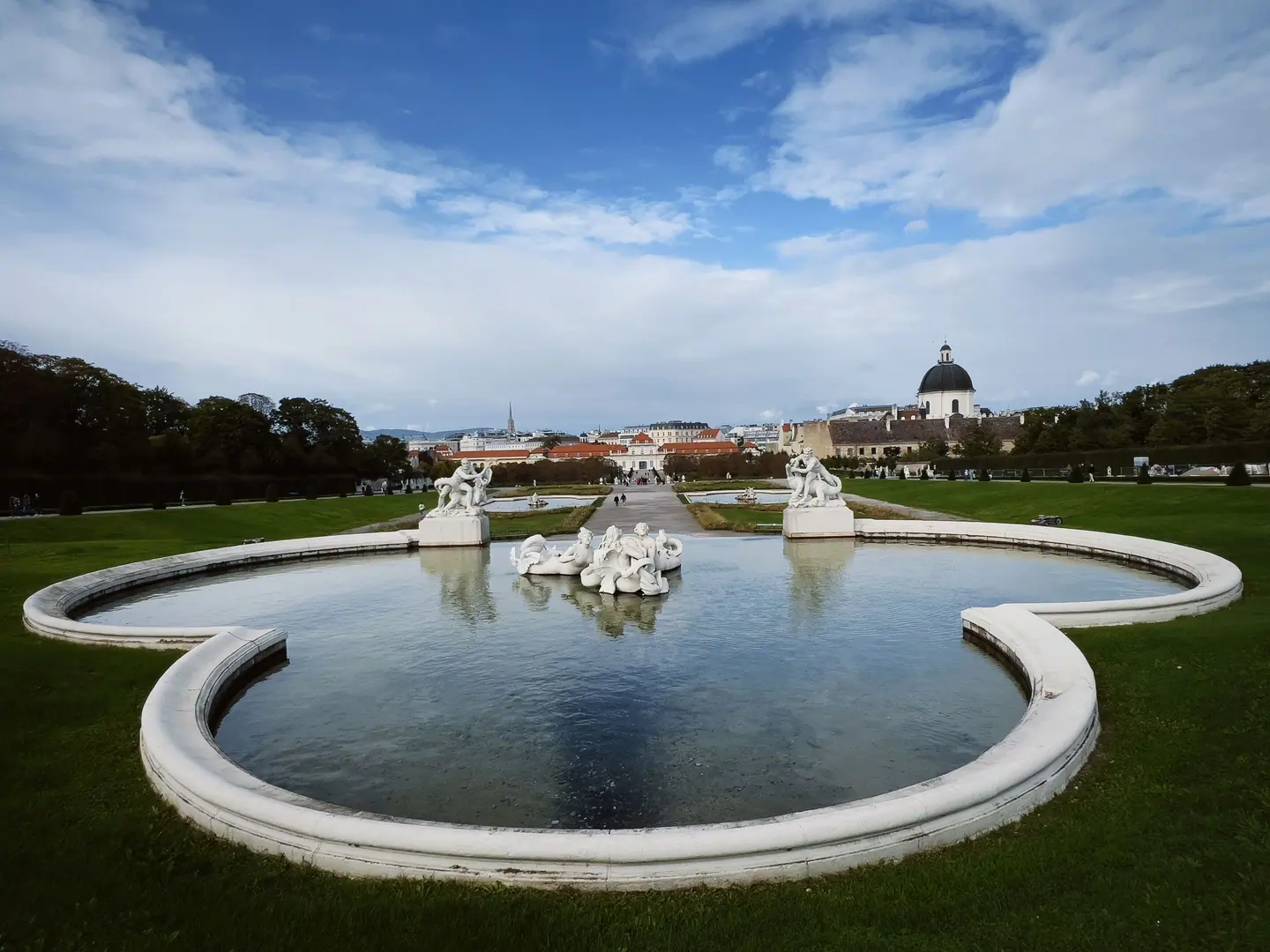
Kungsholmen, Norrmalm, Skeppsholmen & Strandvägen
Stockholm City Hall Stadshuset, Kungsträdgården, Royal Swedish Opera, Nationalmuseum, Skeppsholmen Bridge, Moderna Museet, Strandvägen Boulevard, Royal Dramatic Theatre, and Hallwyl Museum
Stockholm City Hall
Designed by architect Ragnar Östberg and completed in 1923, this municipal seat features eight million red bricks and a 106-metre tower topped by three golden crowns. We can inspect the Blue Hall, venue for the Nobel Prize banquet, alongside the Golden Hall lined with mosaics of Swedish historical figures.
Norr Mälarstrand
Stretching along the southern shore of Kungsholmen, this tree-lined promenade was transformed during the 1930s into an urban park corridor. Visitors walking toward Rålambshovsparken can examine well-preserved examples of Swedish functionalist residential buildings, built to maximise daylight and waterfront views across Riddarfjärden.
Stockholm Court House
Architect Carl Westman created this imposing building in the National Romantic style, drawing inspiration from medieval Vadstena Castle. The structure houses the Stockholm District Court, distinguished by massive granite portals, a copper roof, and decorative ironwork that echo early Swedish fortification traditions.
Kungsholms Church
Dedicated to Ulrika Eleonora in 1688, this cruciform church combines late Renaissance and baroque elements under a prominent central dome completed in 1810. The surrounding churchyard contains historic tombs of prominent craftsmen and civic officials who shaped the early industrial growth of Kungsholmen.
Stockholm Central Station
Designed by Adolf Wilhelm Edelsvärd, the main passenger terminal opened in 1871 to link regional rail networks across Sweden. We can walk through the central booking hall to observe the monumental paintings by John Ericsson, depicting traditional regional landscapes and industrial development across the country.
Sergels Torg
Completed in the 1960s as part of the redevelopment of central Norrmalm, this multi-level plaza takes its name from sculptor Johan Tobias Sergel. The lower level features a distinctive black-and-white triangular paving pattern, while a 37-metre glass obelisk by Edvin Öhrström anchors the roundabout fountain above.
Kulturhuset
Architect Peter Celsing designed this long concrete-and-glass cultural facility facing Sergels Torg to serve as an accessible venue for public arts. The building contains galleries, reading rooms, and theatrical stages, presenting a transparent facade intended to merge street life with community cultural events.
Saint James's Church
Situated adjacent to Kungsträdgården, this historic church was commenced in the late sixteenth century and completed in 1643, displaying late Gothic, Renaissance, and baroque details. The south portal features carved stone figures, while the interior holds eighteenth-century altarpieces and intricate historic chandeliers.
Kungsträdgården
Once the enclosed pleasure grounds of the Swedish monarchy, this central park was opened to the public in the late eighteenth century. The grounds contain the Molin Fountain, bronze statues of King Charles XII and King Charles XIII, and formal lines of cherry trees planted along open pathways.
Royal Swedish Opera
Replacing Gustav III's original theatre building from 1782, this current neo-classical venue designed by Axel Anderberg opened in 1898. The interior features a gilded auditorium and the opulent Golden Foyer, decorated with mirrors and ceiling frescoes created by academic painter Carl Larsson.
Arvfurstens Palats
Architect Erik Palmstedt designed this palace between 1783 and 1794 for Princess Sophia Albertina, sister to King Gustav III. Its classical facade matches the Opera House across Gustav Adolfs Torg, featuring Corinthian pilasters and interiors that reflect the refined decorative style of the Gustavian period.
Nationalmuseum
Opened in 1866 and designed by German architect Friedrich August Stüler, the museum houses extensive royal art collections dating from the sixteenth century onward. Visitors encounter monumental staircase frescoes by Carl Larsson and galleries filled with paintings by Rembrandt, Goya, and Swedish masters like Anders Zorn.
Skeppsholmsbron
Constructed in Motala in 1861, this iron bridge was the first forged structure of its type in Sweden, connecting the Blasieholmen peninsula to Skeppsholmen. The balustrade is famously decorated with gilded royal crowns at its midpoint, providing pedestrians with open views toward Gamla Stan.
Skeppsholmen Church
Completed in 1842 by architect Fredrik Blom, this octagonal neoclassical structure was inspired by the Pantheon in Rome and served the Swedish naval parish. Deconsecrated in 2002, the venue now operates as Eric Ericsonhallen, hosting choral music beneath its grand coffered dome.
Moderna Museet
Housed in a purpose-built facility designed by Spanish architect Rafael Moneo, the collection displays works by Picasso, Dalí, and Marcel Duchamp. Outside on Skeppsholmen's grounds, visitors can explore large-scale sculptures created by Niki de Saint Phalle and Jean Tinguely beside historic naval storehouses.
Af Chapman
Constructed in Whitehaven, England, in 1888, this three-masted full-rigged iron ship was later acquired by the Swedish Navy for naval training. Permanently moored along the western shore of Skeppsholmen since 1947, the vessel functions as a public youth hostel and maritime landmark.
Strandvägen
Constructed in time for the 1897 Stockholm World's Fair, this waterfront avenue features opulent residential architecture combining neo-Renaissance and Art Nouveau styles. The wide pedestrian quay accommodates vintage passenger ferries departing for the archipelago, flanked by rows of linden trees.
Royal Dramatic Theatre
Designed by Fredrik Lilljekvist and completed in 1908, this national theatre faces Nybroviken with a gleaming facade of white Ekeberg marble. Carl Milles carved the external relief sculptures, and the gilded ornamentation of the foyer honours theatrical traditions associated with playwright August Strindberg.
Hallwyl Museum
Countess Wilhelmina von Hallwyl commissioned architect Isak Gustaf Clason to build this lavish private palace in 1898, blending Spanish Renaissance and Venetian Gothic elements. Donated to the Swedish state, the preserved rooms retain original period furnishings, arms, and European fine china without alterations.
Berzelii Park
Established in the 1850s on the site of an infilled bay, this landscaped park contains a central bronze statue of chemist Jöns Jacob Berzelius by Carl Gustaf Qvarnström. The perimeter is defined by the historic Berns Salonger entertainment palace, constructed in 1863 with gilded neo-rococo interiors.
Södermalm Cliffs, Fotografiska & Monteliusvägen
Slussen, Katarina Elevator, Mosebacke Terrace, Katarina Church, Fotografiska Stockholm, Fjällgatan Viewpoint, Sofia Church, Monteliusvägen, Mariaberget, and Långholmen
Slussen
Operating since the reign of Queen Christina in 1642, this vital junction regulates the water levels between Lake Mälaren and the Baltic Sea. Recent urban redevelopment schemes have transformed the concrete mid-century cloverleaf into modern quaysides and transit terminals, presenting panoramic vistas across the waterfront towards Gamla Stan.
Katarina Elevator
First constructed in 1881 and redesigned with an open steel lattice frame in 1936, this public lift hauls visitors upwards from the Slussen quayside. The elevated pedestrian bridge extending from the lift shaft affords sweeping lookouts over the harbour, leading directly towards the cultural quarters of Mosebacke.
Mosebacke torg
Set on a high hill overlooking the harbour basin, this square became a magnet for bohemian artists and writers during the nineteenth century. The neighbouring Mosebacke Terrace gained prominence through August Strindberg's satirical novel The Red Room, and visitors today gather here for open-air concerts and wide water views.
Södra Teatern
Erected in 1859 after an earlier playhouse burned down, this ornate theatre remains one of the oldest active cultural venues in the Swedish capital. The grand neo-Renaissance interior accommodates drama and music performances, while the upper balconies overlook the rooftop panorama of the archipelago shipping channels.
Katarina Church
Architect Jean de la Vallée designed this magnificent Greek cross plan church in 1656, which was painstakingly rebuilt after catastrophic fires in 1723 and 1990. The lemon-yellow exterior supports an octagonal dome visible across the district, surrounded by a peaceful graveyard containing the tomb of assassinated diplomat Anna Lindh.
Stig Claessons park
Dedicated to the celebrated author and illustrator who captured local working-class life, this terraced garden borders historic stone staircases. The peaceful site features bronze sculptures and shaded seating beneath mature trees, offering travellers a momentary respite between Katarina Church and the surrounding historic timber tenements.
Fotografiska Stockholm
Occupying a former Art Nouveau customs house designed by Ferdinand Boberg in 1906, this museum stages rotating exhibitions of international photography. Inside, visitors discover innovative digital media alongside traditional prints, while the top-floor bistro provides uninterrupted vistas across the main maritime shipping channels of Saltsjön.
Fjällgatan
Perched on the sheer granite precipice of Stigberget, this scenic thoroughfare retains red-painted wooden houses that survived devastating city fires. The street forms a famous vantage point across Djurgården and the inner harbour, having served as the scenic setting for celebrated novels by author Per Anders Fogelström.
Per Anders Fogelström Terrace
Named after the novelist whose City series documented the urban transformation of working-class Stockholm, this lookout platform sits beside his former residence. The balustrade overlooks the busy passenger ferries of Saltsjön, providing informative plaques explaining how these steep cliffs evolved from rural outposts into coveted urban vistas.
Stigbergsparken
Resting high above the industrial waterfront, this park incorporates rocky outcrops and grassy lawns that reflect the rugged topography of southern Stockholm. It borders well-preserved eighteenth-century wooden houses, providing visitors with quiet walking paths that connect the harbour docks with the leafy avenues of eastern Södermalm.
Sofia Church
Completed in 1906 and named after Queen Sophia, this prominent stone church rises from the highest natural elevation in the district. Designed by Gustaf Hermansson in a transitional Romanesque Revival style, its central granite spire can be identified from vantage points right across the southern metropolitan area.
Vita Bergen
Originally an impoverished district of industrial labourers, this rocky park was preserved as a municipal recreational reserve in the late nineteenth century. Today, preserved red wooden houses stand alongside open-air amphitheatre facilities, creating an instructive portrait of pre-industrial housing framed by rolling lawns and mature lilacs.
Göta Lejon
Opening its doors in 1928, this functionalist performance palace remains one of the largest musical and theatrical venues in the district. The facade exemplifies the clean lines of early modern Swedish design, while the expansive auditorium hosts major musical theatre productions and contemporary acoustic concerts throughout the year.
Maria Magdalena Church
Standing as the oldest surviving religious foundation on Södermalm, this building incorporates structural elements dating back to the late sixteenth century. Nicodemus Tessin the Elder contributed to its elegant tower, and the shady churchyard holds the final resting places of noted Swedish lyricists including Carl August Nicander and Evert Taube.
Monteliusvägen
Constructed in 1998 along the sheer northern edge of Mariaberget, this wooden footpath stretches for five hundred metres high above the lake waters. Walkers enjoy uninterrupted prospects of City Hall and Lake Mälaren, bordered on the uphill side by traditional eighteenth-century timber residences.
Mariatorget
Laid out during the 1760s following severe neighbourhood fires, this elegant square features gravel pathways, mature trees, and classic residential facades. At its focal centre stands Thor's Fishing, an expressive bronze fountain sculpture crafted in 1903 by Anders Henrik Wissler depicting the Norse god battling the Midgard Serpent.
Mariaberget
This elevated enclave retains extensive ensembles of eighteenth-century stone and timber architecture spared from modern redevelopment plans. Cobbled thoroughfares like Bastugatan reveal preserved artisan dwellings, courtyards, and small community gardens overlooking the vast waterway that flows past central Stockholm into the Baltic Sea.
Skinnarviksberget
Rising fifty-three metres above sea level, this barren bedrock summit offers wide vistas across Kungsholmen, Gamla Stan, and the surrounding waters. Historically used by leather tanners due to the foul smells of their trade, the windy hilltop is now an open gathering spot for evening sunsets.
Långholmen Prison Museum
For over two centuries, this island fortress served as Sweden's central penitentiary until the prison complex was formally decommissioned in 1975. The preserved cellblocks now contain educational exhibits depicting harsh nineteenth-century penal regimes, Swedish correctional history, and the infamous execution of robber Alfred Ander.
Långholmsbron
Spanning the narrow channel of Pålsundet, this sturdy road bridge replaced earlier wooden crossings in the early twentieth century. It provides foot passengers and cyclists with picturesque approaches to the peaceful swimming beaches, allotment gardens, and parkland trails that now flourish across the once-feared penal colony of Långholmen.
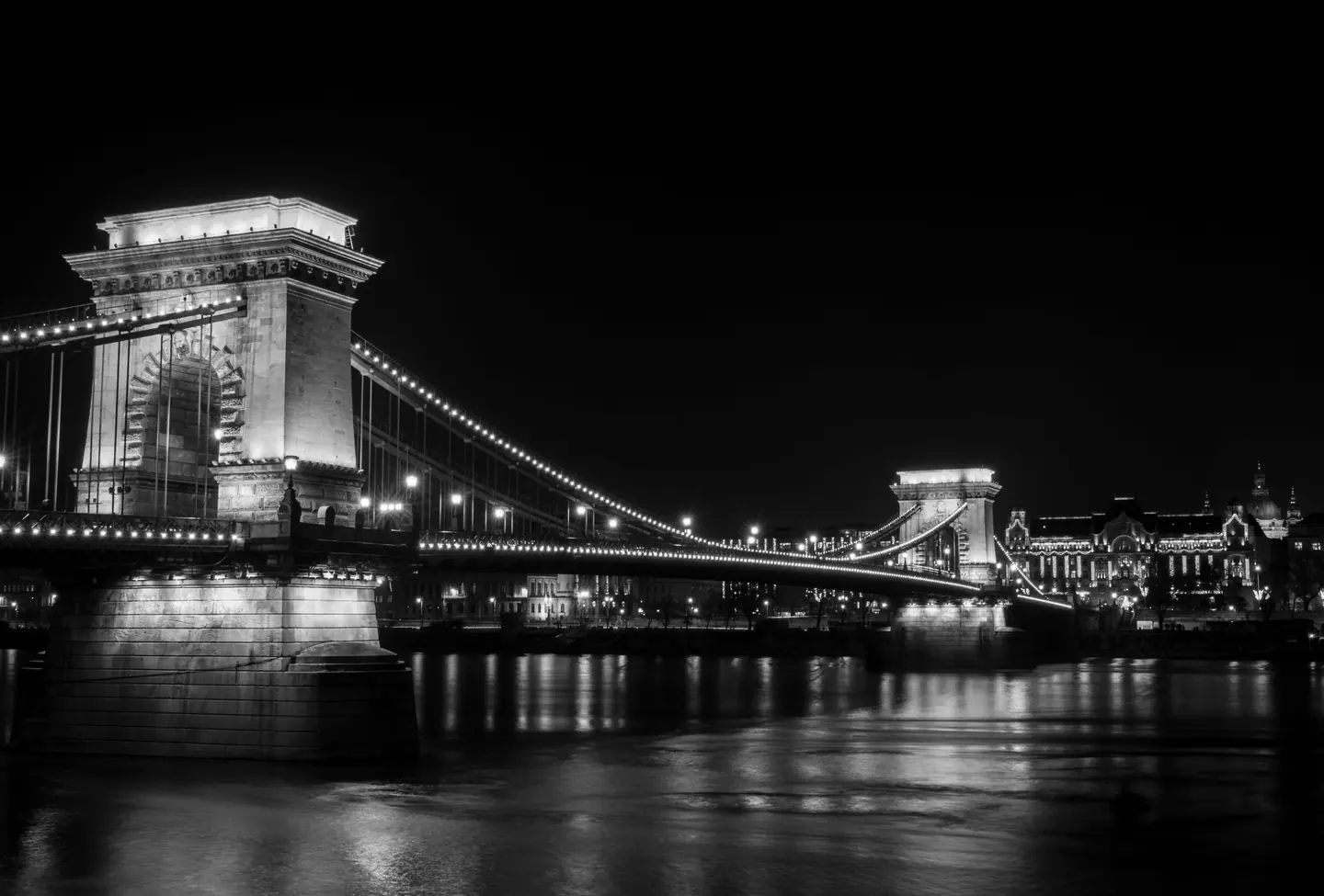
Vasastan, Hagaparken, Woodland Cemetery & Drottningholm
Stockholm Public Library Gunnar Asplund, Odenplan, Haga Park, Gustav III’s Pavilion, Millesgården, Skogskyrkogården Woodland Cemetery, and Drottningholm Palace & Court Theatre
Stockholm Public Library
Designed by celebrated architect Gunnar Asplund and completed in 1928, this orange-stuccoed institution stands as a defining monument of Nordic Classicism. The cylindrical rotunda encloses three tiers of open bookshelves, providing natural light through tall clerestory windows. Step inside the main hall to admire the seamless transition between classical proportion and early functionalist thought.
Gustaf Vasa Church
Completed in 1906 to designs by Agi Lindegren, this imposing cruciform church rises dramatically over Odenplan. The building features an expansive central dome measuring over sixty metres high and an elaborate marble high altar carved by Burchard Precht in the early eighteenth century. The interior holds Sweden's first purpose-built columbarium, established beneath the crypt in the 1920s.
Stockholm Observatory
Founded by the Royal Swedish Academy of Sciences, this hilltop complex opened in 1753 under the direction of architect Carl Harleman. Scientists here conducted continuous daily meteorological records from 1756, forming one of the longest unbroken weather archives on Earth. Visitors can view the classical ochre facade and explore the terraced parkland that commands broad views over central Vasastan.
Sven-Harrys Art Museum
Opened in 2011, this modern arts complex features a striking exterior clad in brass, zinc and aluminium alloys. The building houses temporary exhibitions alongside a rooftop replica of founder Sven-Harry Karlsson's eighteenth-century manor house, Ekholmsnas. The domestic interiors display a private art collection with major paintings by Carl Fredrik Hill, August Strindberg and Helene Schjerfbeck.
Matteus Church
Designed by Erik Lallerstedt and dedicated in 1903, this brick church was initially constructed as a chapel of ease to serve the expanding working-class population of northern Vasastan. The building showcases refined Jugendstil architectural motifs, including a prominent roof lantern and carved granite portals. Olle Hjortzberg later added sweeping decorative wall murals inside the tranquil sanctuary.
Haga Park
Commissioned by King Gustav III in the late eighteenth century, this vast parkland represents one of Europe's premier examples of English landscape gardening. Broad lawns roll down to the shores of Lake Brunnsviken, punctuated by meandering paths, natural groves and romantic follies. The grounds contain historic royal pavilions, monuments and the burial site of the Swedish royal family.
Gustav III's Pavilion
Built by architect Olof Tempelman between 1787 and 1792, this delicate royal retreat served as King Gustav III's favoured summer residence. Interior designer Louis Masreliez appointed the rooms with refined Gustavian furnishings, gilded mirrors and Roman wall decorations based on Pompeian archaeological discoveries. It was from this pavilion that the king departed for the fateful masquerade ball in 1792.
Copper Tents
Designed by Louis Jean Desprez in 1787, these remarkable structures were built to accommodate royal bodyguards and stable staff. The street-facing elevations are painted and shaped to resemble classical Roman military camp tents fabricated entirely from sheet copper. Behind these theatrical fronts, brick buildings now house park exhibits and a public cafe overlooking the lawns.
Echo Temple
Erected in 1790 as an outdoor summer dining room for Gustav III, this oval colonnaded temple was designed by architect Carl Christoffer Gjorwell. The pavilion features painted classical ceilings and open columns that frame pastoral vistas of Hagaparken's meadows. The domed roof design creates a notable acoustic echo, which served to amuse diners and royal guests during banquets.
Chinese Pavilion at Haga
Commissioned by Gustav III and designed by Louis Jean Desprez, this charming octagonal garden pavilion was constructed in 1787. Reflecting the European fascination with Chinese decorative arts, it features an upward-curving green pagoda roof and painted wooden trim. Tucked beneath native pines, the structure represents the decorative architectural whimsy prevalent in eighteenth-century Swedish royal parks.
Royal Cemetery, Haga
Established in 1922 on Karlsborg island in Lake Brunnsviken, this secluded cemetery serves as the final resting place for members of the Royal House of Bernadotte. Crown Princess Margareta of Sweden was the first to be interred here, preferring an open-air grave to traditional church crypts. The serene site holds the graves of King Gustaf VI Adolf and Prince Bertil.
Carl Eldh Studio Museum
Architect Ragnar Ostberg, who built Stockholm City Hall, designed this unique wooden atelier in 1919 for sculptor Carl Eldh. Located on the rocky ridge of Bellevue Park, the building retains Eldh's original living quarters and expansive sunlit workrooms. Hundreds of plaster sketches, bronzes and working models for famous public statues remain arranged exactly as the artist left them.
Millesgarden
Perched on the cliffside of Lidingo overlooking the water toward Stockholm, this open-air museum was created by sculptor Carl Milles and his wife Olga. The property combines classical Mediterranean loggias, fountain basins and stepped granite terraces lined with Milles's airborne bronze sculptures. The complex includes the artist's historic home, an extensive antiquities collection and an adjacent contemporary art gallery.
Skogskyrkogarden
Conceived by architects Gunnar Asplund and Sigurd Lewerentz between 1917 and 1940, this UNESCO World Heritage Site blends Nordic nature with contemplative architecture. Paths wind through dense pine forest toward grassy mounds, reflecting ponds and simple stone monuments. The site challenged traditional necropolis design, crafting a landscape tailored to psychological comfort and the cycle of life.
Woodland Chapel
Constructed in 1920 to designs by Gunnar Asplund, this modest wooden chapel was the first permanent building completed at Skogskyrkogarden. The dark wood-shingled roof and low eaves evoke traditional Swedish vernacular dwellings, contrasting with a delicate classical portico. Above the entrance sits Carl Milles's small gilded bronze sculpture, The Angel of Death, welcoming mourners inside.
Holy Cross Chapel, Skogskyrkogarden
Inaugurated in 1940 as Gunnar Asplund's final work, this masterwork of Nordic functionalism stands beside a broad granite cross and reflective pool. The monumental open portico features a polished stone colonnade and a bronze resurrection sculpture by John Lundqvist. Inside, carefully angled courtyards and large windows invite daylight and forest scenery directly into the funeral spaces.
Resurrection Chapel
Designed by Sigurd Lewerentz and completed in 1925, this temple-like chapel embodies Swedish 1920s classicism. It stands at the end of Seven Springs Way, a long footpath flanked by weeping birches and pines. The exterior features a slender Corinthian portico, while the austere interior directs natural light toward the altar from a solitary high window on the southern wall.
Drottningholm Palace
Built primarily to designs by Nicodemus Tessin the Elder from 1662, this grand estate serves as the private residence of the Swedish royal family. The palace presents a magnificent Baroque facade overlooking parterre gardens, fountain cascades and forested island shorelines. Within, the grand staircase and Hedvig Eleonora's State Bedchamber stand among Northern Europe's finest preserved seventeenth-century royal interiors.
Drottningholm Palace Theatre
Constructed in 1766 by Carl Fredrik Adelcrantz for Queen Lovisa Ulrika, this opera house survived untouched following Gustav III's death until its rediscovery in 1921. The theatre retains its original hand-cranked wooden stage machinery, pulleys, wave machines and wind simulators in complete working order. Authentic trompe-l'oeil backdrops and period stage effects continue to support summer historical opera performances.
Chinese Pavilion at Drottningholm
Erected between 1763 and 1769 to replace an earlier timber summerhouse, this ornate pavilion was presented to Queen Lovisa Ulrika as a birthday gift. Designed by Carl Fredrik Adelcrantz, it blends French Rococo architecture with exotic Oriental decorative motifs and lacquer panels. The surrounding parkland contains historic outbuildings including the Confidence dining salon and early royal workshops.
Island Ferries and Waterfront Walks in Stockholm
Before setting out, check local transit connections, museum booking notes and monthly weather data in our Stockholm Gamla Stan, Royal Djurgården & 14 Islands city guide, and compare other walking itineraries.