Malmö
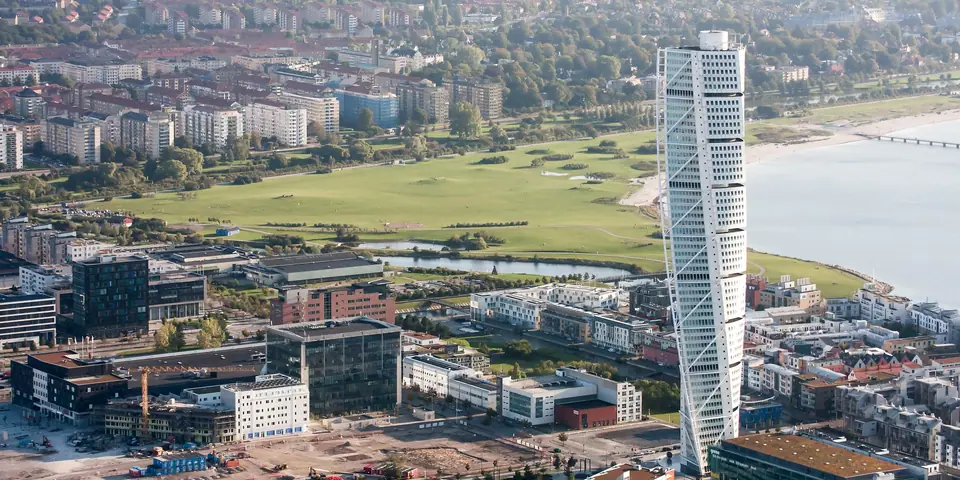
Sweden's third-largest city sits on the Öresund strait in southwestern Scania, linked directly to Copenhagen by the Öresund Bridge and shaped by Brick Gothic churches, the Renaissance fortress of Malmöhus, waterfront timber bathhouses, and the twisted silhouette of Turning Torso.
Quick decisions
Overview
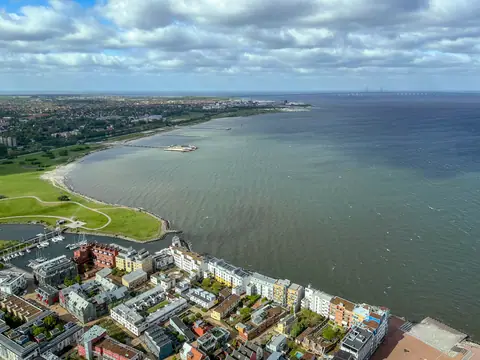
Malmö is the third-largest city in Sweden after Stockholm and Gothenburg, and the seventh-largest city in the Nordic region. Situated at 55 degrees 35 minutes north and 13 degrees east along the Öresund strait on Sweden's southwestern coast, it serves as the gubernatorial seat of Skåne County and the commercial hub of Scania. In 2024 the municipality recorded 365,644 residents across a metropolitan area of 780,035 inhabitants, forming part of the transnational Öresund Region of four million people together with Copenhagen across the water. Its flat coastal topography makes walking and cycling effortless between historic canals, broad parks, and sandy urban beaches facing the Danish shoreline.
Documented as a city in 1275 under the name Malmhaug, meaning gravel pile, Malmö grew as a fortified ferry berth for the Danish Archbishop of Lund 20 kilometres to the northeast and received its city privileges in 1353. Ceded by Denmark to Sweden in the 1658 Treaty of Roskilde, it evolved from a major Scandinavian shipyard and manufacturing centre into a university and architecture city anchored by the 2000 Öresund Bridge and the 2005 Turning Torso skyscraper, blending centuries of Danish-Swedish brick heritage with contemporary coastal design.
Getting there
Most international visitors fly into Copenhagen Airport (CPH) on the Danish island of Amager, located 24 kilometres west of central Malmö across the Öresund Bridge. Direct Öresundståg regional trains run every 15 minutes during the day and reach Malmö Central Station in approximately 20 minutes via Hyllie and Triangeln. Domestic and low-cost flights also use Malmö Airport (MMX), 28 kilometres east in Svedala Municipality. High-speed SJ X 2000 trains and Snälltåget services link Malmö Central Station directly to Stockholm, Gothenburg, Hamburg, and Berlin.
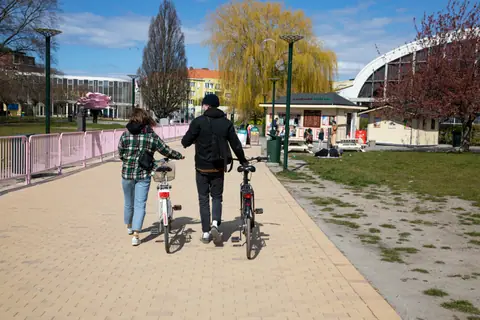
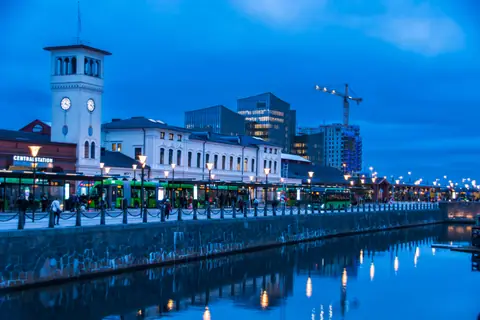
Once inside the municipality, getting around is completely cashless and straightforward. The underground City Tunnel connects the three urban rail hubs of Malmö Central, Triangeln, and Hyllie in minutes, while purple Pågatågen commuter trains reach surrounding Scanian towns such as Lund and Ystad. On street level, green city buses and bi-articulated electric MalmöExpressen services fan out across every borough, supplemented by flat, well-signposted cycle lanes that run uninterrupted from the southern squares to the seaside piers and coastal parks.
Where to stay
Accommodation clusters around three central zones connected by the City Tunnel rail line. Gamla Staden (around Stortorget, Lilla Torg, and Gamla Väster) puts you steps from Brick Gothic churches, half-timbered courtyards, and canal bridges. Universitetsholmen and Malmö Live sit beside Malmö Central Station, while Västra Hamnen offers quiet waterfront apartments and hotels near Sundspromenaden and Turning Torso.
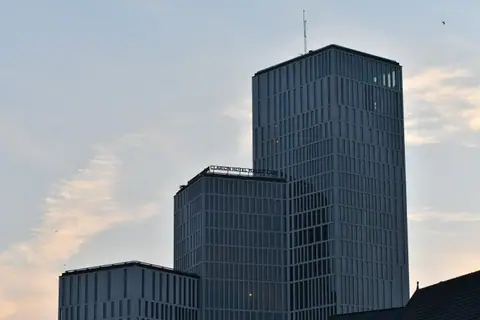
Choosing a base depends on how you plan to divide your time between historic sightseeing, sea swimming, and regional rail excursions across Scania or into Denmark. Travellers who value period architecture and evening restaurant terraces gravitate toward the cobbled squares inside the canal loop, where most landmarks lie within a brief stroll. Those arriving late or departing early for Copenhagen Airport often prefer the contemporary high-rise hotels beside the station platforms at Malmö Central, Triangeln, or Hyllie, whereas visitors seeking salt air, quiet residential courtyards, and morning dips along the boardwalk find a calm coastal setting in the Western Harbour.
Things to do
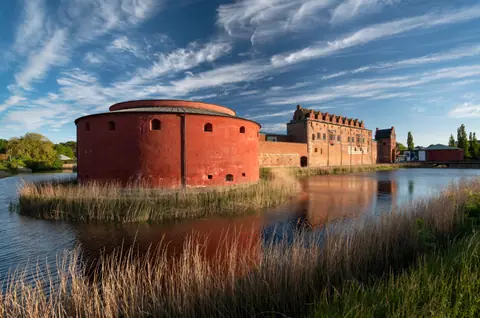
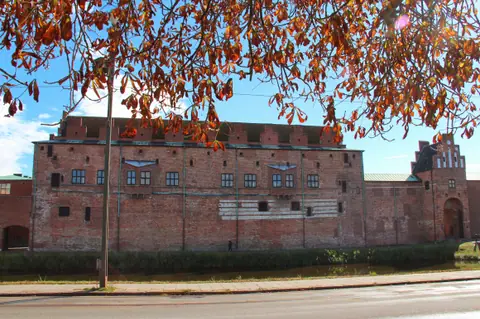
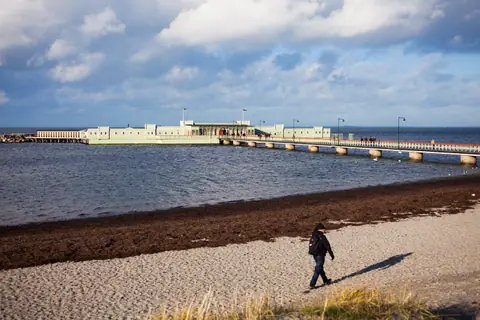
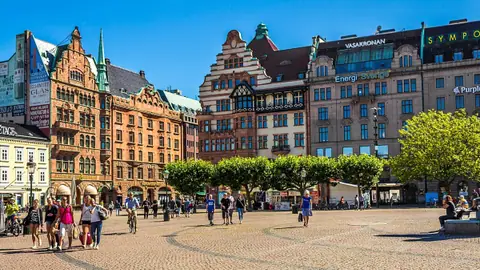
Begin in Gamla Staden at Stortorget, laid out in 1538, where the 1546 Malmö Town Hall, Kockska huset, and Apoteket Lejonet frame the square, and step into the 14th-century Brick Gothic basilica of Sankt Petri kyrka and cobbled Lilla Torg. Cross the canal through Kungsparken and Slottsparken to Malmöhus Castle, built between 1526 and 1539 on Slottsholmen. Continue northwest to Västra Hamnen to see Santiago Calatrava's 190-metre Turning Torso and follow the shoreline to the 1898 Ribersborgs kallbadhus pier.
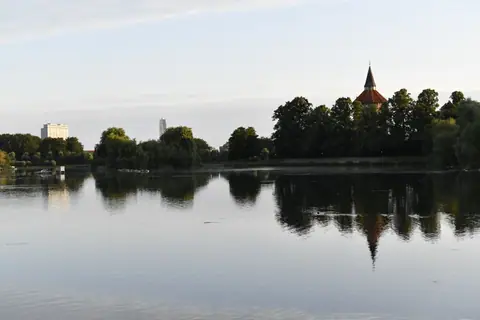
Beyond the inner canal ring, the architectural circuit links historic brick monuments with expansive public green spaces that earned Malmö the nickname Parkernas stad. Visitors can wander beneath mature trees from the castle bastions to the glass library wing beside Slottsparken, explore the submarine and maritime exhibits opposite the fortress moat, or continue south toward the circular lawns and water reservoirs of Pildammsparken. Along the coast, timber decks, granite steps, and swimming jetties turn the former industrial shoreline into an open-air living room looking directly across the strait toward the pylons of the cross-border bridge.
Food and drink
Malmö pairs deeply rooted Scanian rural cooking with Sweden's most international street-food scene. Traditional inns and market halls serve Skånsk äggakaka, a thick butter-fried egg cake topped with smoked fried pork belly and lingonberries, alongside cone-shaped Skånsk spettekaka spit cake baked over rotating skewers. Around Möllevångstorget, Bergsgatan, and the 2016 Malmö Saluhall freight-depot food hall, bakeries and stalls turn out freshly fried falafel wraps, flatbreads, and artisan pastries.
Because fertile farmland surrounds the city on three sides while the Öresund strait borders the fourth, local menus reflect both coastal fishing traditions and heavy country harvests of root vegetables, apples, cabbage, and grains. Coffee houses across Gamla Väster and cobbled Lilla Torg uphold the daily Swedish ritual of fika with cardamom buns and dark-roast filter coffee, while open-air produce markets bring morning shoppers to Möllevången during the week. From casual street kiosks wrapping warm chickpea fritters in flatbread to brick-vaulted cellar dining rooms beneath the Old Town squares, eating well here requires minimal travel between neighbourhoods.
Culture
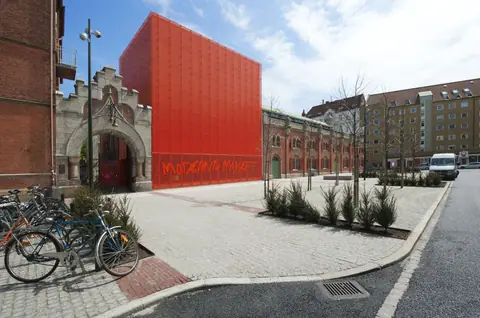
Malmö's cultural calendar spans visual arts, symphonic music, and outdoor summer festivals. Moderna Museet Malmö occupies a converted 1901 brick power station with a perforated orange-red annex by Tham and Videgård, while Klas Anshelm's 1975 Malmö Konsthall offers 2,000 square metres of skylit gallery space. Having hosted the Eurovision Song Contest in 1992, 2013, and 2024, the city celebrates each August with Malmöfestivalen across its central squares and gathers year-round in Folkets Park, founded by the labour movement in 1891.
Performing arts and design institutions occupy prominent historic and contemporary buildings throughout the urban core. Near Triangeln, the functionalist auditorium of Malmö Opera stages classic and newly composed operas and musicals, while the concert halls of Malmö Live on Universitetsholmen host the Malmö Symphony Orchestra and chamber recitals beside the canal. Independent galleries, craft collectives at the Form/Design Center on Lilla Torg, and film festivals dedicated to Nordic documentaries and youth cinema keep the cultural programme active through every season of the year, giving travellers plenty of indoor cultural depth alongside outdoor coastal recreation.
Weather by month
Malmö is warmest in July, with average highs around 23°C, and coldest in February, when nights drop to about -2°C. August is the wettest month, with rain on about 14 days. For mild weather with fewer rainy days, aim for May and September.
| Month | Low | Range | High | Rain | Rainy days |
|---|---|---|---|---|---|
| Jan | -1°C | 3°C | 58 mm | 10 d | |
| Feb | -2°C | 3°C | 40 mm | 7 d | |
| Mar | 0°C | 7°C | 39 mm | 7 d | |
| Apr | 3°C | 13°C | 30 mm | 5 d | |
| May | 8°C | 18°C | 40 mm | 7 d | |
| Jun | 11°C | 21°C | 67 mm | 11 d | |
| Jul | 14°C | 23°C | 71 mm | 12 d | |
| Aug | 14°C | 22°C | 86 mm | 14 d | |
| Sep | 11°C | 19°C | 42 mm | 7 d | |
| Oct | 6°C | 13°C | 67 mm | 11 d | |
| Nov | 4°C | 8°C | 64 mm | 11 d | |
| Dec | 1°C | 5°C | 69 mm | 12 d |
Averages of daily values from 2015 to 2024. Rainy days are days with at least 1 mm of rain. Source: Open-Meteo · Compare destinations by month.
Malmö on the map
Every place we cover in Malmö. Tap a category or pin to explore.
In-depth Malmö guides
Browse the guides grouped by topic: sights, neighbourhoods, food, transport, day trips and trip planning.
Sights, Landmarks & Parks
Key monuments, viewpoints, museums and nature trails.
- Things to Do in Malmö: Landmarks, Sea Baths & Architecture WalksDiscover the top things to do in Malmö, from Malmöhus Castle and Turning Torso to Ribersborgs kallbadhus, Brick Gothic churches, and city parks.
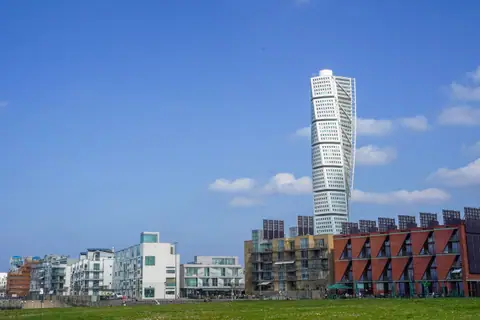
- Västra Hamnen & Turning Torso: Malmö's Reborn Shipyard WaterfrontExplore Västra Hamnen, built on the former Kockums shipyard for the 2001 Bo01 exposition and crowned by Santiago Calatrava's 190-metre Turning Torso.
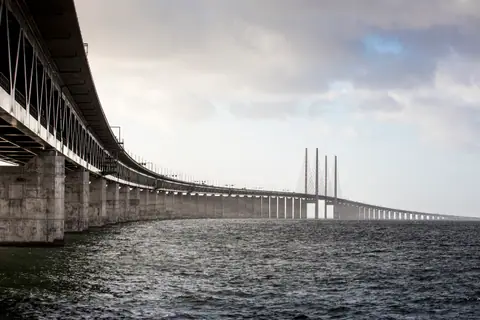
- Öresund Bridge & Lernacken: Sweden's Fixed Link to DenmarkLearn how the 15.9-kilometre Öresund Bridge, Peberholm artificial island, and Lernacken viewpoint connect Malmö with Copenhagen across the strait.
- Malmöhus Castle & Malmö Museums: Nordic Renaissance FortressVisit Malmöhus Castle on Slottsholmen, built between 1526 and 1539 as the oldest preserved Renaissance castle in the Nordic region and home to Malmö Museer.
- Malmö's Parks: Kungsparken, Slottsparken & PildammsparkenWalk through the 'City of Parks': 1872 Kungsparken, 21-hectare Slottsparken and Slottsträdgården, and 45-hectare Pildammsparken from the 1914 Baltic Exhibition.
- Ribersborg Beach & Kallbadhus: Malmö's 1898 Open-Air Sea BathSwim and sauna year-round at Ribersborgs kallbadhus (Kallis), built on stilts in 1898 off Malmö's 2.5-kilometre sandy Ribersborgsstranden beach.
- Moderna Museet, Malmö Konsthall & Malmö Live: Arts & ArchitectureExplore Malmö's leading cultural venues: Moderna Museet Malmö in a 1901 power station, Klas Anshelm's 1975 Malmö Konsthall, Malmö Live, and Malmö Opera.
- Best Time to Visit Malmö: SMHI Climate Normals, Daylight & FestivalsPlan when to visit Malmö using verified SMHI climate data, midsummer 17-hour-31-minute daylight, August's Malmöfestivalen, and year-round sea saunas.
Neighbourhoods & Where to Stay
Districts, historic quarters and the best bases for your stay.
- Malmö: Essential Planning for Sweden's Öresund GatewayPlan a visit to Malmö with verified facts on its Danish-Swedish history, walkable districts, 410 km of bike paths, and cross-border rail links.
- Stortorget, Lilla Torg & Gamla Väster: Malmö's Historic HeartWalk through Gamla Staden to see the 1546 Malmö Town Hall on Stortorget, 14th-century Sankt Petri kyrka, cobbled Lilla Torg, and Gamla Väster.
- Möllevången & Folkets Park: Open-Air Markets, Jugendstil & NightlifeExplore Möllevången (Möllan), Malmö's 53-hectare Jugendstil quarter around Möllevångstorget's daily produce market, and 1891 Folkets Park.
- Where to Stay in Malmö: Best Areas from Gamla Staden to Västra HamnenCompare the best neighbourhoods to stay in Malmö: historic Stortorget and Gamla Väster, Malmö Live and Central Station, Västra Hamnen, Triangeln, and Hyllie.
Food & Drink
Local dishes, markets, cafés and dining districts.
Getting Around & Arrival
Airport transfers, public transit, passes and driving rules.
Day Trips & Excursions
Easy half-day and full-day trips from the city.
Need your embassy or consulate in Sweden? See embassies and consulates in Sweden.
Reviews
Log in to write a review.
No reviews yet.