Uppsala
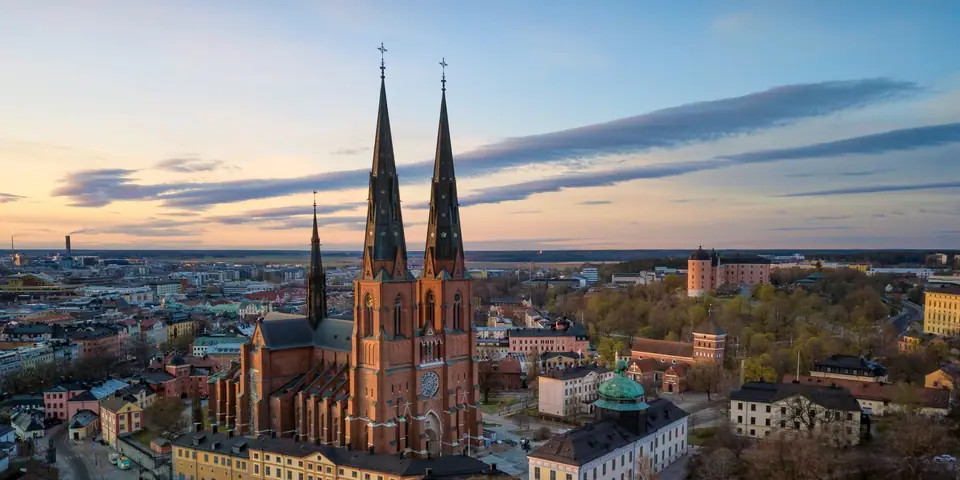
Sweden's ecclesiastical seat since 1164 and Nordic university city since 1477 sits on the Fyris River 71 kilometres north of Stockholm, crowned by the 118.7-metre spires of Uppsala Cathedral, the pink bastions of Uppsala Castle, Carl Linnaeus's botanical gardens, and the Royal Mounds of Gamla Uppsala.
Quick decisions
Overview
Set across the Fyris River (Fyrisån) 71 kilometres north of Stockholm, Uppsala is the fourth-largest city in Sweden after Stockholm, Gothenburg, and Malmö, and serves as the administrative capital of Uppsala County. The urban area recorded 174,982 residents in 2023 (and 177,074 in 2019), while Uppsala Municipality holds around 247,269 to 249,000 inhabitants. Known in the early Middle Ages as Aros and later Östra Aros, meaning East River Mouth where the Fyris emptied into the Ekoln bay of Lake Mälaren, the riverside settlement functioned as the trading harbour for the ancient royal and cultic centre 5 kilometres upstream. Since 1164, Uppsala has been the ecclesiastical centre of Sweden as the seat of the Archbishop of the Church of Sweden, and when the archiepiscopal see moved south to Östra Aros in 1273, the older settlement became known as Gamla Uppsala.
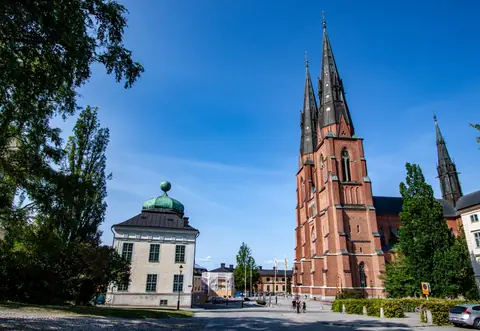
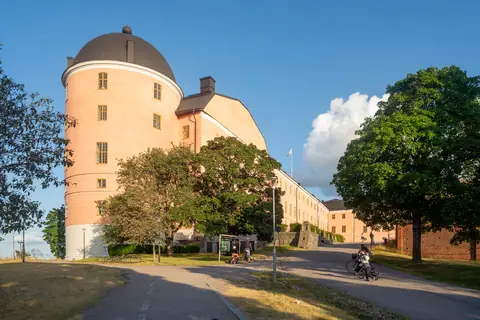
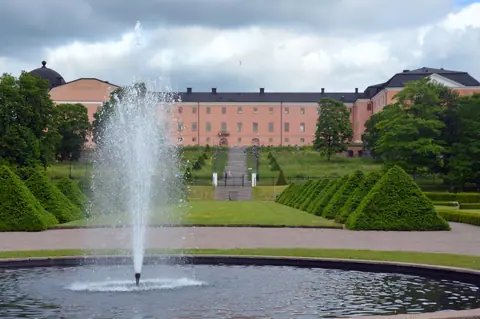
On the Domberget hill west of the river, Uppsala Cathedral rises 118.7 metres as the tallest church in the Nordic countries, facing Gustavianum and Uppsala University, founded in 1477 as the oldest university in Scandinavia. Along the Kasåsen gravel ridge to the south stand the salmon-pink walls and round bastions of Uppsala Castle, begun by King Gustav Vasa in 1549, overlooking the clipped Baroque parterres of the Botanical Garden and the neoclassical university library Carolina Rediviva.
Getting there
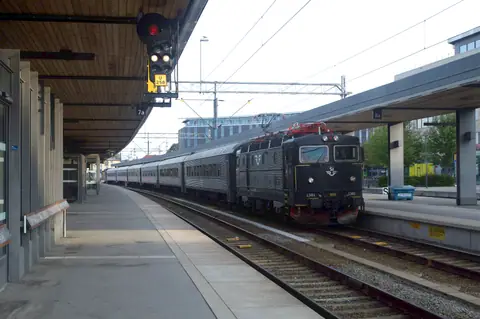
Stockholm Arlanda Airport (ARN), the largest airport in Sweden, lies in Sigtuna Municipality nearly 40 kilometres southeast of Uppsala and connects directly to Uppsala Central Station in under 20 minutes via frequent Mälartåg regional trains and SL Pendeltåg commuter trains departing beneath SkyCity, or in 40 to 45 minutes via yellow UL regional coach line 801 without the airport rail station passage fee. From Stockholm Central Station, regular SJ intercity services, Mälartåg double-decker trains, and commuter rail services cover the 71 kilometres north along the East Coast Line to Uppsala Resecentrum in 35 to 40 minutes.
Once you step through the glass-and-stone travel centre or the pedestrian underpass, the flat eastern shopping streets and the western cathedral hill are easily explored on foot or by rented bicycle. For excursions beyond the urban core, green UL city buses run every few minutes from Stora Torget and the station forecourt to Gamla Uppsala in 15 minutes, while summer visitors can board vintage railbuses and steam locomotives on the 33-kilometre narrow-gauge Lennakatten heritage railway from Uppsala Östra station.
Where to stay
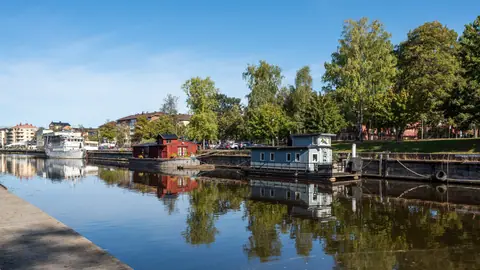
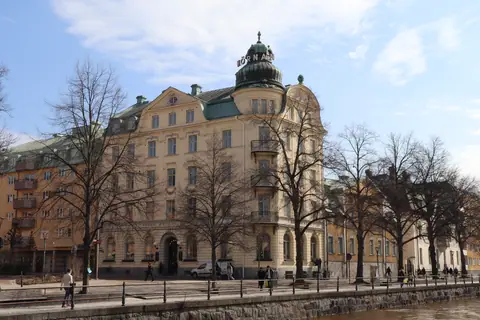
Because central Uppsala is compact and walkable, almost all accommodation sits within a pleasant stroll of the Fyrisån bridges and the main railway platforms. Staying along Västra Ågatan and Östra Ågatan places you directly beside the river weirs, moored wooden houseboats, and weeping willows within easy reach of Uppsala Cathedral, including heritage rooms at the 1907 Grand Hotell Hörnan overlooking the old station park and the riverfront embankments.
One block east of the water, the pedestrianised shopping streets around Stora Torget, Drottninggatan, and Svartbäcksgatan provide immediate access to green UL city bus stops, independent bookshops, and the 1655 Linnaean Garden. Travellers seeking quiet cobbled surroundings among nineteenth-century academic facades can look for small guesthouses and apartments in Fjärdingen west of the river, whereas modern full-service business and conference hotels cluster east of the railway tracks around Uppsala Central Station and Vaksala torg beside the Uppsala Konsert & Kongress hall. Advance reservations are essential around the 30 April Valborg spring festival and late-May university graduation ceremonies.
Things to do
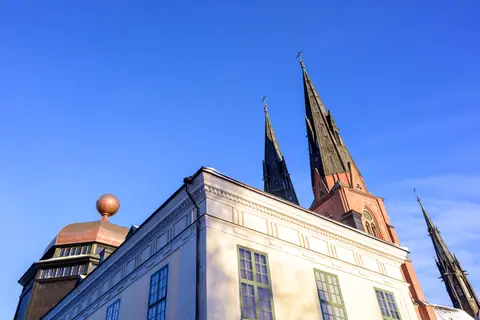
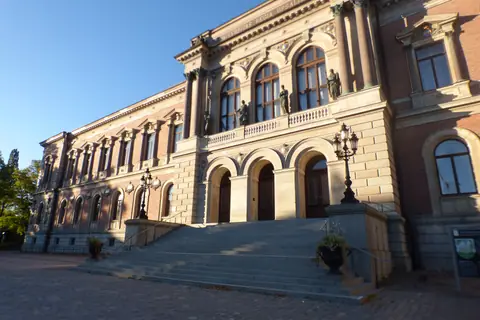
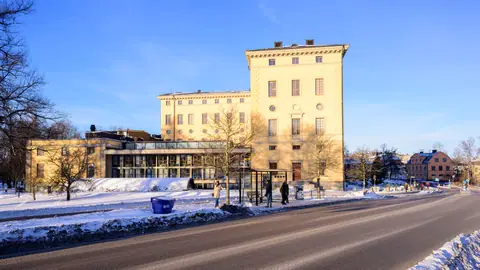
Begin in the western academic quarter of Fjärdingen at Uppsala Cathedral, inaugurated in 1435, to view the gilded reliquary shrine of Saint Eric and the burial chapels and ledger stones of King Gustav Vasa, King John III, Emanuel Swedenborg, and Carl Linnaeus. Directly across Domkyrkoplan, step inside Gustavianum, built between 1622 and 1625, to examine Olaus Rudbeck's 1662 anatomical theatre cupola, the 1633 Augsburg Art Cabinet, and Viking boat-grave finds from Valsgärde before admiring the 1887 Renaissance Revival University Hall across Universitetsparken.
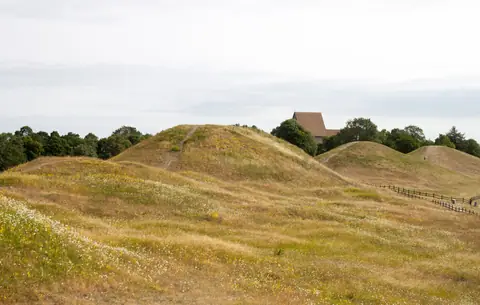
Climb Carolinabacken to inspect the 6th-century purple-vellum Silver Bible and the 1539 Carta marina inside Carolina Rediviva, then follow the ridge south to Uppsala Castle for expansive city views, Uppsala Konstmuseum, and the subterranean Vasaborgen ruins. Below the castle slopes stretches the Botanical Garden with its 1802 Linneanum orangery, complemented on the east bank by the 1655 Linnaean Garden and 1693 Linnaeus Museum along Svartbäcksgatan. Complete your itinerary 5 kilometres north at Gamla Uppsala, where three monumental 6th-century Vendel Period royal burial mounds rise beside the medieval parish church and Gamla Uppsala Museum.
Food and drink
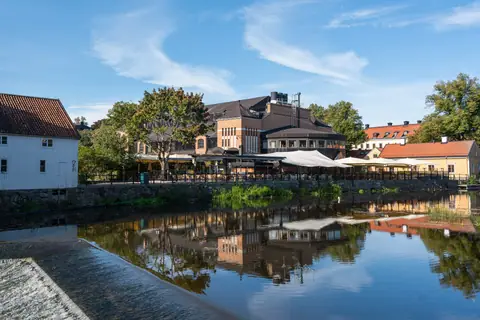
Uppsala pairs historic market-hall gastronomy with centuries-old academic fika culture along the banks of the Fyrisån. At the eastern foot of Dombron on Sankt Eriks torg, the 1909 National Romantic Uppsala Saluhall, affectionately nicknamed Köttbasilikan (The Meat Basilica) for its three-aisled basilica profile and semicircular apse, houses artisan delicatessen counters and waterside restaurants serving aged Swedish cheeses, cured meats, game charcuterie, and fresh Baltic seafood overlooking the rushing Kvarnfallet weir.
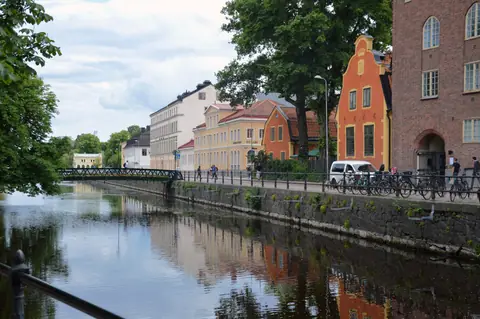
Along the cobbled riverside promenade of Östra Ågatan and the literary lanes of Drottninggatan and Sysslomansgatan, venerable pastry shops led by Güntherska Hovkonditori & Schweizeri and Ofvandahls serve freshly baked cinnamon and cardamom buns, green-marzipan princess cake, and late-winter semlor stuffed with sweet almond paste and whipped cream. Brasseries around Stora Torget and inside the preserved 1866 railway station building offer traditional Swedish husmanskost, fried Baltic herring with lingonberries, and pickled herring platters, while the historic student nations open courtyard garden cafés and casual lunch terraces throughout the warmer summer months.
Culture
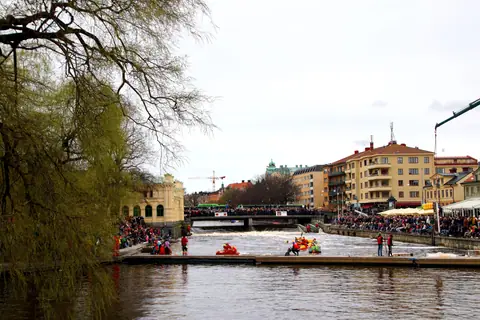
Academic traditions, choral music, and seasonal festivals shape Uppsala's cultural identity through its 13 historic student nations, founded in the 1630s and 1640s and named after the provinces of Sweden. Every 30 April on Walpurgis Night, known across Sweden as Valborgsmässoafton and locally as Sista april, engineering students race whimsical homemade rafts down the Fyrisån in the morning Forsränningen before students and alumni gather after lunch on the steep slope of Carolinabacken outside Carolina Rediviva to wave white student caps in unison, followed by spring serenades from the Orphei Drängar choir and evening bonfires at Gamla Uppsala.
Throughout the year, symphonic concerts, touring ensembles, and public lectures fill the 2007 Henning Larsen-designed Uppsala Konsert & Kongress hall on Vaksala torg, while mid-September brings the city-wide Kulturnatten arts festival and November illuminates the riverbanks during All Light on Uppsala. Literary and artistic heritage also runs deep in Fjärdingen and Kåbo, where visitors can trace Gösta Knutsson's beloved tail-less cat Pelle Svanslös along Åsgränd or tour the expressive sculptures of Bror Hjorths Hus.
Weather by month
Uppsala is warmest in July, with average highs around 23°C, and coldest in January, when nights drop to about -6°C. August is the wettest month, with rain on about 12 days.
| Month | Low | Range | High | Rain | Rainy days |
|---|---|---|---|---|---|
| Jan | -6°C | 0°C | 39 mm | 7 d | |
| Feb | -6°C | 0°C | 30 mm | 5 d | |
| Mar | -3°C | 4°C | 33 mm | 6 d | |
| Apr | 0°C | 10°C | 32 mm | 5 d | |
| May | 5°C | 16°C | 39 mm | 7 d | |
| Jun | 9°C | 20°C | 61 mm | 10 d | |
| Jul | 13°C | 23°C | 65 mm | 11 d | |
| Aug | 12°C | 21°C | 74 mm | 12 d | |
| Sep | 7°C | 16°C | 52 mm | 9 d | |
| Oct | 3°C | 10°C | 53 mm | 9 d | |
| Nov | -1°C | 4°C | 53 mm | 9 d | |
| Dec | -4°C | 1°C | 46 mm | 8 d |
Averages of daily values from 2015 to 2024. Rainy days are days with at least 1 mm of rain. Source: Open-Meteo · Compare destinations by month.
Uppsala on the map
Every place we cover in Uppsala. Tap a category or pin to explore.
In-depth Uppsala guides
Browse the guides grouped by topic: sights, neighbourhoods, food, transport, day trips and trip planning.
Sights, Landmarks & Parks
Key monuments, viewpoints, museums and nature trails.
- Best Things to Do in Uppsala: Landmarks, Museums & GardensThe essential Gothic cathedral, academic museums, botanical gardens, and Iron Age royal monuments in and around Uppsala.
- Uppsala Cathedral (Domkyrka): Gothic Architecture, Royal Tombs & TreasuryHistory, French Gothic architecture, royal burial chapels, and the Treasury Museum inside Scandinavia's largest cathedral.
- Gustavianum & University Hall: Rudbeck's Anatomical Theatre & Academic UppsalaExploring Uppsala University's 1620s museum building and 1887 Renaissance Revival ceremonial hall across from the cathedral.
- Uppsala Castle (Uppsala Slott): Vasa Fortress, Queen Christina & Art MuseumHistory of the 16th-century royal fortress on the Kasåsen esker, its Renaissance bastions, and Uppsala Art Museum.
- Uppsala's Botanical Gardens: Botaniska Trädgården, Linnéträdgården & HammarbyExploring the three historic Uppsala University botanical gardens shaped by Olaus Rudbeck and Carl Linnaeus.
- Gamla Uppsala: The Royal Mounds, Vendel History & Medieval ChurchExploring Scandinavia's Iron Age royal seat, 6th-century Vendel cremation mounds, and Sweden's first archbishopric.
- Carolina Rediviva & the Silver Bible: Uppsala University Library GuideInside Uppsala University Library's 1841 landmark at the top of Drottninggatan and its UNESCO-listed manuscript treasures.
- Fyris River (Fyrisån) & Stadsträdgården: Bridges, Parks & Pelle SvanslösExploring Uppsala's riverside promenades, historic iron bridges, Victorian city park, and Gösta Knutsson's famous tail-less cat.
- Best Time to Visit Uppsala: Seasons, SMHI Weather & Valborg CalendarMonth-by-month weather patterns from SMHI data, daylight changes, and seasonal highlights in Uppland.
Neighbourhoods & Where to Stay
Districts, historic quarters and the best bases for your stay.
- Uppsala: Essential Planning for Sweden's University CityPlan your visit to Uppsala with verified facts on the Fyrisån banks, Fjärdingen academic quarter, Kasåsen ridge, and local transport.
- Uppsala Student Nations & Valborg: Academic Traditions & Walpurgis NightHow Uppsala's 17th-century student societies and the 30 April spring festival shape the life and architecture of the city.
- Where to Stay in Uppsala: Best Areas Around Fyrisån, Stora Torget & StationComparing Uppsala's central neighbourhoods for riverside views, cathedral access, and rail connections.
Food & Drink
Local dishes, markets, cafés and dining districts.
Getting Around & Arrival
Airport transfers, public transit, passes and driving rules.
Day Trips & Excursions
Easy half-day and full-day trips from the city.
Need your embassy or consulate in Sweden? See embassies and consulates in Sweden.
Reviews
Log in to write a review.
No reviews yet.