A detailed Mediterranean route through two thousand years of Valencia: Roman Valentia ruins, the UNESCO Gothic Silk Exchange, Modernista markets, the 9-km Turia riverbed park, and Calatrava’s domes.
Roman Valentia, Moorish Irrigation Canals and the Fifteenth-Century Silk Boom
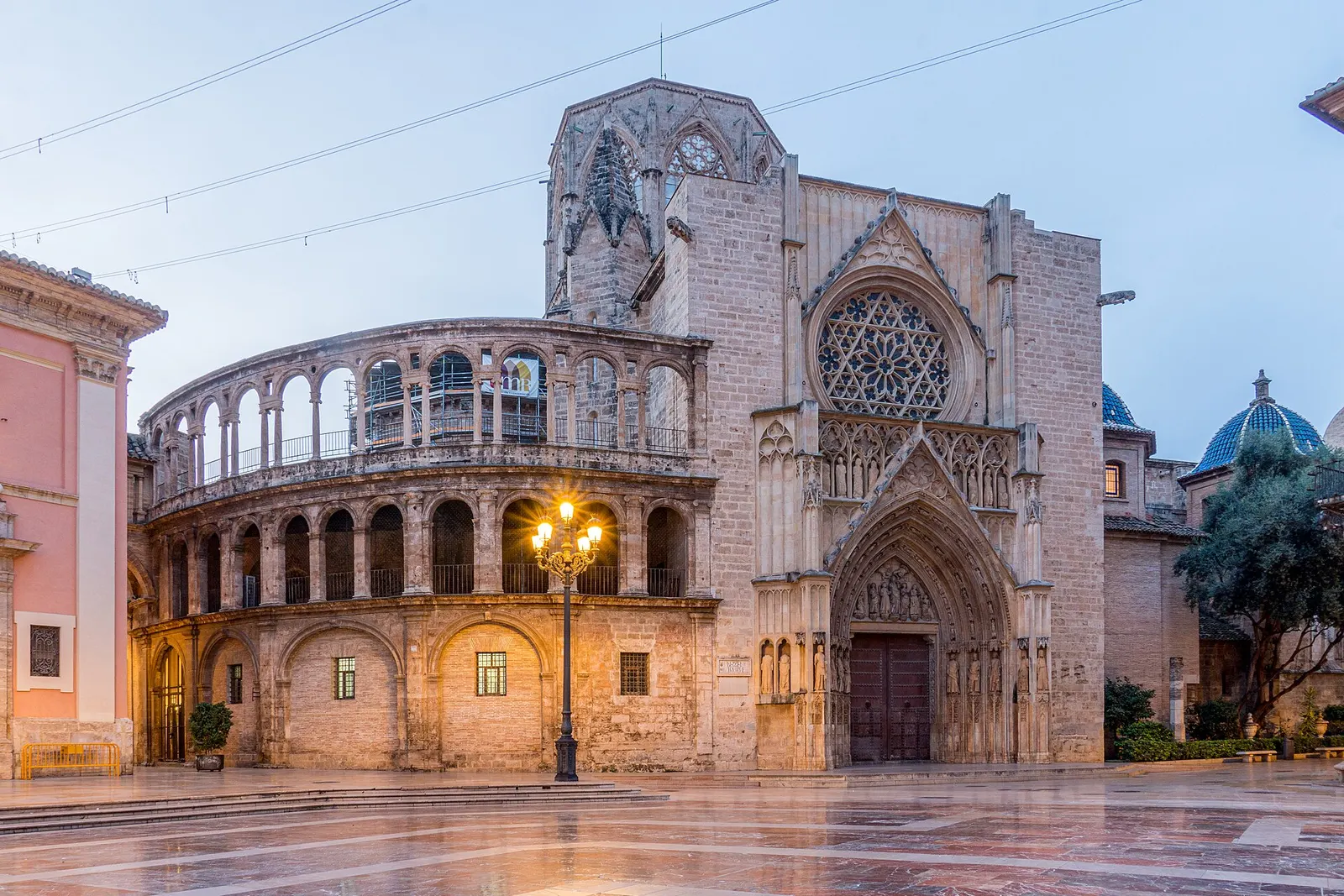
Founded in 138 BC by Roman consul Decimus Junius Brutus Callaicus for veteran legionaries on a river island of the Turia as Valentia Edetanorum, the city flourished from the eighth to thirteenth centuries as Moorish Balansiya, famed for its paper mills, lustreware ceramics, and the eight irrigation canals still adjudicated every Thursday at noon by the UNESCO-listed Water Tribunal (Tribunal de las Aguas) outside the Cathedral's Apostles' Gate.
Following King James I of Aragon's entry in 1238, Valencia enjoyed a fifteenth-century Valencian Golden Age of silk trade and literature exemplified by the twisted palm-tree columns of La Lonja de la Seda (1482, 1533), and after the 1957 Turia flood, transformed its entire old riverbed into a nine-kilometre ribbon of gardens culminating in Santiago Calatrava's City of Arts and Sciences.
Cathedral, Plaza de la Virgen & Roman-Visigothic Almoina
Valencia Cathedral & Holy Chalice Chapel (Santo Cáliz), Miguelete Bell Tower (El Micalet), Apostles’ Gate (Water Tribunal Site), Plaza de la Virgen & Turia Fountain, Basilica of Our Lady of the Forsaken, Almoina Archaeological Centre Glass Floor over Roman Forum, and Palau de la Generalitat
Valencia Cathedral
Founded on the site of a former Visigothic cathedral and later a Moorish mosque, this vast structure combines several architectural epochs. Inside, travellers can admire Renaissance frescoes uncovered above the high altar alongside the grand ambulatory. The interior also provides access to the celebrated Holy Chalice Chapel and the lofty bell tower.
El Miguelete Bell Tower
Constructed between 1381 and 1429, this free-standing octagonal tower stands over fifty metres tall beside the cathedral entrance. Visitors who ascend the spiral staircase of over two hundred stone steps reach an open terrace with panoramic vistas across the rooftops. The upper belfry houses the original medieval bell that has struck the hours for centuries.
Apostles' Gate of Valencia Cathedral
Opening onto Plaza de la Virgen, this fourteenth-century Gothic entrance features sculpted figures of the twelve apostles arranged across its pointed arches. Every Thursday at midday, the entrance serves as the open-air courtroom for the Tribunal de las Aguas, an ancient irrigation court recognized by UNESCO. Take time to study the intricate stonework and floral rose window above.
Chapel of the Holy Chalice
Originally built as a chapterhouse in 1369, this vaulted stone chamber now holds the revered Santo Cáliz, an agate vessel from the first century. The space features detailed star-patterned ribbed vaulting and an alabaster relief depicting scenes of the Old and New Testaments. The walls display twelve relief panels carved by Florentine sculptor Giuliano Poggibonsi.
Plaza de la Virgen
This pedestrian square forms the civic and spiritual heart of Valencia, occupying ground once used as the Roman city forum. Paved in smooth marble, the open space is framed by the cathedral, the basilica and the regional government palace. Street lamps, stone benches and café terraces surround the central fountain, making it an engaging vantage point.
Turia Fountain
Sculpted by Manuel Silvestre Montesinos in 1976, this bronze monument stands at the heart of Plaza de la Virgen. It features a reclining central male figure representing the Turia River surrounded by eight young women pouring water from pitchers, representing the regional irrigation canals. The cascades of water offer a refreshing pause during city explorations.
Basilica of Our Lady of the Forsaken
Constructed between 1652 and 1667, this Baroque sanctuary houses the venerated statue of the Virgin of the Forsaken. The interior oval nave is crowned by an elliptical dome adorned with colourful frescoes by Antonio Palomino depicting the glory of heaven. A raised private gallery connects directly across the street to the cathedral via an arched stone bridge.
L'Almoina Archaeological Centre
Sheltered beneath a shallow pool with a glass floor, this subterranean site preserves layered remnants spanning two millennia. Visitors follow suspended metal walkways above Roman thermal baths, forum walls, Visigothic baptisteries and Islamic palace walls. Multimedia displays and uncovered stone inscriptions explain how successive civilisations rebuilt the city upon the same footprint.
Palau de la Generalitat
Initiated in the fifteenth century, this fortified urban palace blends late Gothic, Renaissance and Herrerian architectural styles across its facade and courtyards. The interior contains the Sala Nova with its carved coffered ceiling and the Sala de Cortes decorated with classical murals. A quiet central courtyard showcases pointed Gothic arches and stone staircases.
Puerta del Palau
Also known as the Portal de l'Almoina, this portal is the oldest entrance to Valencia Cathedral, dating to the mid-thirteenth century. It displays pure Romanesque architecture with deeply recessed round arches resting on small stone columns. A ring of carved stone corbels shows fourteen human heads, representing the pioneering couples who resettled the city after the Christian reconquest.
Puerta de los Hierros
Designed by German architect Konrad Rudolf in the early eighteenth century, this dynamic entrance serves as the principal facade of the cathedral. Its curved, concave stone screen reflects Italian Baroque theatricality, flanked by Corinthian columns and religious statuary. A tall iron railing encloses the entrance terrace, giving the doorway its historic Spanish name.
Archbishop's Palace of Valencia
Standing directly opposite the cathedral's Romanesque portal, this stately episcopal residence was largely reconstructed after suffering heavy damage during the Spanish Civil War. The exterior features classical masonry and an arched stone bridge leading across to the cathedral choir. Its calm central courtyard includes a classical colonnade and the Diocesan Archive collection.
Plaza de la Almoina
This open plaza stands beside the eastern apse of the cathedral, named after the medieval charitable institution that once distributed food here. Today, its central feature is the glass-bottomed pool of the archaeological museum, which reflects surrounding stone facades while illuminating the ruins beneath. It offers a tranquil alternative to the busier neighbouring squares.
Palacio de Benicarló
Originally erected in the fifteenth century for the Borgia family, this aristocratic mansion now serves as the seat of the Corts Valencianes. The exterior features pointed windows and a monumental stone portal, while the interior preserves grand reception halls and courtyard gardens. Visitors can observe the harmonious juxtaposition of medieval stone craftsmanship and modern parliamentary facilities.
Casa de las Rocas
Constructed in the fifteenth century, this unique museum was built to store and protect the massive wooden floats used during Corpus Christi celebrations. The high wooden gates were purpose-built to allow the passage of the towering Rocas, which depict allegorical and biblical figures. Inside, visitors can view centuries-old processional giants, monster figures and equestrian parade costumes.
Serranos Towers
Erected by master builder Pere Balaguer between 1392 and 1398, this pair of polygonal towers defended the northern road into Valencia. Later utilised as a prison, the fortification remains intact, permitting visitors to walk across its battlements and crenellated viewing platforms. From the top, views stretch from the historic cathedral towers out across the green Turia gardens.
Church of San Nicolás de Bari and San Pedro Mártir
Originally a thirteenth-century Gothic parish church, this site was transformed in the late seventeenth century with Baroque decoration across its nave. The ceiling vaulting showcases almost two thousand square metres of frescoes painted by Dionís Vidal, depicting the lives of Saint Nicholas and Saint Peter Martyr. The intricate artwork has earned the building wide acclaim.
Santa Catalina Church
Constructed on the site of a medieval mosque, this Gothic temple features a distinctive hexagonal bell tower completed in the early eighteenth century by Juan Bautista Viñes. The tower displays classical pilasters, carved foliate swags and delicate stone balustrades. Inside, the quiet single-nave church provides an atmospheric retreat just steps from the lively Plaza de la Reina.
Plaza de la Reina
Redesigned as an expansive pedestrian precinct, this square serves as a primary gathering point at the foot of the cathedral. Paved in pale granite, the plaza offers outdoor seating, palm trees and clear angles of the cathedral's Baroque entrance and bell tower. It represents the point from which radial road distances throughout the province are measured.
Almudín de Valencia
Erected on former Muslim foundations in the early fourteenth century, this building served as the municipal storehouse for grain and wheat. The interior contains three open naves supported by stone arcades beneath timber roof trusses, decorated with early modern murals celebrating civic agriculture and patron saints. The restored space now operates as an atmospheric municipal art gallery.
La Lonja de la Seda, Central Market & El Carmen Quarter
La Lonja de la Seda UNESCO Gothic Silk Exchange (Contract Hall Spiral Columns & Orange Courtyard), Church of Santos Juanes, Central Market of Valencia (Mercado Central 1928 Modernista Domes), Round Square Plaza Redonda, Church of San Nicolás (Valencian Sistine Chapel Frescoes), Torres de Serranos, Torres de Quart, and Portal de la Valldigna
La Lonja de la Seda
Constructed between 1482 and 1548 by Pere Compte, this UNESCO World Heritage complex showcases late Valencian Gothic civil architecture. Visitors admire the Sala de Contratacion, where slender twisted stone columns rise into ribbed star vaults resembling palm canopies, alongside an enclosed courtyard planted with sweet orange trees.
Church of Santos Juanes
Erected over an ancient mosque outside the Roman walls, this church was remodelled in the seventeenth and eighteenth centuries following several devastating fires. The exterior features a prominent Baroque rear facade facing the market square, while the interior retains traces of monumental ceiling frescoes created by the court painter Antonio Palomino.
Mercado Central
Designed by architects Francesc Guardia Vidal and Enric Nieto in 1914, this iron and glass structure stands as a masterpiece of Valencian Art Nouveau. The expansive trade floor contains over a thousand stalls beneath a central cupola adorned with painted tiles and crowned by a wrought-iron weather vane known as the parrot.
Plaza Redonda
Designed by Salvador Escrig Melchor in 1837, this perfectly circular plaza was built on the site of an earlier meat market. Three tiers of residential balconies ring the central pedestrian space, which features a central stone fountain surrounded by traditional stalls specialising in Valencian bobbin lace, haberdashery, and regional handicrafts.
Church of San Nicolás
This fourteenth-century Gothic temple underwent an extraordinary transformation between 1690 and 1700 when painter Dionis Vidal executed designs conceived by Antonio Palomino. More than two thousand square metres of historic frescoes cover the ribbed vaults, depicting the lives of Saint Nicholas of Bari and Saint Peter Martyr with remarkable trompe-l'oeil illusions.
Torres de Serranos
Erected by Pere Balaguer between 1392 and 1398, these polygonal towers served as the northern ceremonial gateway through the medieval Christian city walls. The stone ramparts later functioned as a noble prison and sheltered art treasures during the Spanish Civil War. Visitors can climb stone staircases to view the battlements.
Torres de Quart
Built between 1441 and 1460 by Pere Bonfill and Francesc Baldomar, these twin defensive towers guarded the western highway to Madrid. The exterior masonry remains visibly pitted with cannonball impacts sustained during the 1808 Napoleonic siege. The interior features ribbed vaulting and open galleries overlooking the El Carmen district.
Portal de la Valldigna
Pierced through the eleventh-century Islamic city ramparts in 1400, this round horseshoe arch provided direct access between the Christian city and the separate Moorish quarter. A ceramic altarpiece dedicated to the Virgin of Valldigna decorates the top of the passage, while original wooden beams survive overhead in the narrow residential alley.
Centre del Carme Cultura Contemporania
Founded in 1281 following the Christian reconquest, this convent evolved across centuries to incorporate a Gothic cloister, a Renaissance court, and an ornate chapel. Now housing a contemporary arts institution, the galleries display rotating experimental exhibitions around shaded archways and preserved stone sarcophagi.
Palacio de Cerveró
Constructed in the early eighteenth century for the counts of Cervero, this palace exhibits an austere stone facade with carved heraldic shields. It currently serves as the Institute of the History of Medicine and Science, housing historic surgical instruments, scientific laboratories, and academic library collections around a central neoclassical courtyard.
Casa de las Rocas
Built in the mid-fifteenth century by order of Pere El Cerimonios, this building stores the ancient triumphal wagons called Rocas pulled during the feast of Corpus Christi. The massive high-arched wooden door was specially engineered to allow the passage of these gigantic carved wood and papier-mache floats and biblical figures.
Church of Santa Catalina
Founded in the thirteenth century, this church is dominated by its hexagonal Baroque bell tower, constructed between 1688 and 1705 by master stonemason Juan Bautista Vina. The tower exhibits intricate stone pilasters, decorative carvings, and a balustrade, while the Gothic interior features an ambulatory with five radiating apsidal chapels.
Plaza del Tossal
Serving as the central meeting point of the El Carmen quarter, this square marks the boundary between the medieval Christian and Islamic quarters. Beneath the paved flagstones lies the Galeria del Tossal, an underground archaeological crypt that preserves a reconstructed section of the eleventh-century Islamic wall, including a defensive tower.
Palacio de Malferit
Located along the historic Calle Caballeros, this fifteenth-century residence displays a traditional Gothic courtyard with an open-air stone staircase leading to upper state rooms. The building accommodates L'Iber, displaying hundreds of thousands of miniature lead soldiers arranged into detailed dioramas illustrating global conflicts and Spanish military campaigns.
Church of the Holy Cross
Originally part of the Carmelite monastery complex, this sanctuary became a separate parish church following nineteenth-century ecclesiastical confiscations. The single nave contains side chapels between buttresses, illuminated by a high baroque dome and adorned with classical altarpieces, historic wood carvings, and canvas paintings by local masters.
La Casa de los Gatos
Crafted in 2003 by artisan Alfonso Yuste Navarro, this tiny wall installation depicts a three-storey classical Valencian townhouse complete with tiled roof, fountain, and heraldic coat of arms. Built directly into a stone garden boundary, the small entrance serves as a functional doorway for the local neighbourhood cat colony.
Plaza del Carmen
Surrounded by shaded cafes and historic multi-storey townhouses, this plaza forms the civic heart of the El Carmen quarter. At its centre stands a stone fountain adorned with sculptures, positioned opposite the monumental stone facade of the convent church, reflecting the architectural transition from late Gothic to early Baroque.
Palacio de Benicarlo
Commissioned by the Borja family in the fifteenth century, this imposing stone palace was remodelled during the Renaissance and later served as the seat of the Spanish Republican government in 1937. Today it houses the Corts Valencianes, retaining its grand central courtyard, heraldic carvings, and carved coffered ceilings.
Plaza de la Virgen
Occupying the site of the ancient Roman forum, this paved pedestrian square is dominated by the Turia Fountain, an allegorical bronze sculpture representing the river and its historic irrigation canals. The plaza is framed by the Apostles Door of the cathedral, the seventeenth-century Basilica of the Virgin, and the government palace.
Palacio de la Generalitat
Commenced in 1421, this complex blends Valencian Gothic architecture with Renaissance defensive elements, featuring a square corner tower erected in the early sixteenth century. Inside, the famous Sala Nova and Salo Daurat retain their original gilded coffered ceilings, hand-painted ceramic tiles, and historical wall canvases commemorating regional estates.
Marqués de Dos Aguas, Patriarca, Ayuntamiento & Ruzafa
Palace of the Marqués de Dos Aguas Alabaster Rococo Portal (González Martí National Ceramics Museum), Royal College Seminary of Corpus Christi El Patriarca, Old University La Nau, Plaza del Ayuntamiento, Estación del Norte Mosaic Hall, Mercado de Colón (1916 Modernista Brick & Tile), and Ruzafa Quarter
Palace of the Marqués de Dos Aguas
Originally a Gothic residence, the palace received its flamboyant Rococo makeover in the mid eighteenth century under sculptor Ignacio Vergara and painter Hipólito Rovira. The main portal features two cascading rivers represented by muscular figures carved from local alabaster. Inside, visitors discover the National Museum of Ceramics amidst gilded ballrooms and carriage collections.
González Martí National Museum of Ceramics and Decorative Arts
Established in 1947 by scholar Manuel González Martí, this national collection documents Spanish tilework and pottery from Antiquity to modern experiments by Pablo Picasso. The displays occupy the upper chambers of the Dos Aguas Palace, retaining historical furnishings alongside medieval Christian and Hispano-Moresque lusterware. Highlights include a reconstructed eighteenth-century Valencian kitchen lined with painted folk tiles.
Royal College of Corpus Christi
Known locally as El Patriarca, this complex was erected between 1586 and 1610 to train Counter-Reformation priests. Its central cloister displays elegant Doric columns of Genoese marble, while the dark interior church is covered in frescoes by Bartolomé Matarana. The small museum holds masterworks by El Greco, Caravaggio, and early Flemish painters.
Church of San Juan de la Cruz
Standing directly adjacent to the Dos Aguas Palace, this church originated as one of the first Christian parishes established after the Reconquista. Between 1750 and 1768, architect José Pérez transformed the fourteenth-century interior into a theatrical Rococo hall laden with stucco angels and cherubs. The entrance retains its restrained Gothic portal topped by a Baroque niche.
La Nau
La Nau served as the administrative and intellectual heart of the city university for more than five centuries. Built around a Neoclassical courtyard lined with Doric colonnades, the building houses the historic Paraninfo lecture hall and the rich historic library. Today, the complex operates as a cultural centre, hosting scholarly exhibitions and academic conferences.
Plaza del Patriarca
Situated between La Nau and the Royal College of Corpus Christi, this paved square offers an expansive view of both Renaissance facades. A central fountain and stone benches make it an appealing resting point for travellers exploring the university quarter. The square frequently accommodates outdoor book fairs and student cultural events.
Bank of Valencia Building
Completed in 1942, this monumental corner building was designed by architect Francisco Javier Goerlich as the headquarters for the regional bank. The exterior blends traditional Valencian Baroque motifs with classical limestone masonry, capped by an elaborate dome. Its position at the junction of Carrer del Pintor Sorolla anchors the financial district.
Teatro Principal
Inaugurated in 1832, the Teatro Principal was the first modern theatre built in Valencia, designed initially by Italian architect Filippo Fontana. Its restrained Neoclassical facade conceals an opulent horseshoe auditorium adorned with crimson velvet and gilded plasterwork. It remains a focal venue for classical music, ballet, and major regional drama productions.
Plaza del Ayuntamiento
Transformed in the early twentieth century over an old convent site, this expansive public plaza hosts the city floral market and major civic gatherings. During the March festival of Las Fallas, it becomes the stage for daily pyrotechnic shows known as the mascletà. Distinctive architecture from rationalist and eclectic styles surrounds its perimeter.
Valencia City Hall
The Casa Consistorial integrates an eighteenth-century educational house with a dramatic Neoclassical facade added by Francisco de Mora and Carlos Carbonell between 1904 and 1934. Visitors can walk into the marble Crystal Ballroom and visit the Municipal Historical Museum, which preserves the original Real Senyera flag. The central balcony provides broad vistas across the civic square.
Palacio de Comunicaciones
Built between 1915 and 1923 by Miguel Ángel Navarro, the former central post office displays an exuberant blend of classical, Baroque, and modernist influences. Inside, a grand central hall features a monumental stained-glass dome composed of 370 pieces showing regional coats of arms. It now functions as an exhibition venue and cultural forum.
Church of San Martín
Dating back to the fourteenth century, this church is best recognized for the bronze equestrian statue of Saint Martin dividing his cloak, cast in 1495 over the main entrance. The interior showcases a thorough Baroque renovation executed by Francisco Vergara the Elder, characterized by rich gold leafing and dynamic plaster vaults. It stands alongside the lively pedestrian path towards the central market.
Plaza Redonda
Engineered in 1837 by Salvador Escrig Melchor, this unusual circular plaza is hidden within a dense ring of residential tenements. Small haberdashery and lace stalls line the ground floor circle surrounding a central stone fountain. Travellers reach the open-air core through four narrow, covered passageways cutting through the surrounding streets.
Church of Santa Catalina
Erected over a previous mosque site, this Gothic church was largely rebuilt following a destructive fire in the sixteenth century. Its greatest architectural treasure is the hexagonal Baroque bell tower, designed by Juan Bautista Viñes between 1688 and 1705, which marks the entrance to the historic Barrio del Carmen. The interior reveals vaulted Gothic chapels illuminated by stained-glass apertures.
Estación del Norte
Designed by Demetrio Ribes and opened in 1917, this railway terminus represents a high point of the Valencian Modernisme movement. The facade is festooned with ceramic oranges, blossoms, and regional emblems celebrating agricultural fertility. Inside, the passenger hall and ticketing area are covered in intricate wooden panelling, brass fittings, and colourful trencadís mosaics.
Valencia Bullring
Constructed between 1850 and 1859 by architect Sebastián Monleón Estellés, the bullring evokes the Roman Colosseum with its exterior four-tiered brick arcades. The circular brick structure measures 52 metres in diameter and borders the main rail terminal. A small museum on site traces the history of tauromaquia through traditional costumes, posters, and historical ephemera.
Mercado de Colón
Architect Francisco Mora Berenguer completed this brick and wrought-iron hall in 1916, drawing heavy inspiration from the Catalan Modernisme of Antoni Gaudí. The dramatic parabolic arches and colourful ceramic mosaics depict agricultural produce and everyday Valencian rural life. After extensive restoration, the former food market functions as an upscale gastronomic hall with cafes and florists.
Church of San Valero and San Vicente Mártir
Standing as the spiritual centre of the Ruzafa district, this parish was erected in the late seventeenth century over an earlier church destroyed by fire. It features a robust octagonal bell tower that rises above the surrounding flat-roofed quarter. The single-nave interior contains six side chapels decorated with ornate altarpieces, reflecting the town's independent village heritage.
Ruzafa Market
Constructed in 1957 to the designs of Julio Bellot Senent, this utilitarian market hall replaced an open-air street trade system in Ruzafa. Its raw concrete facade features distinct stepped patterns, painted in lively colours to match its residential environment. Hundreds of family-run stalls operate within, selling fresh Mediterranean fish, regional meats, cheeses, and seasonal garden produce.
Convento de Nuestra Señora de los Ángeles
Founded in the thirteenth century immediately following the Christian conquest by King James I of Aragon, this convent marks the historic site where the surrender of Valencia was negotiated. The current architecture dates from seventeenth-century reconstructions, offering a sober brick exterior characteristic of regional monastic houses. It remains an essential historical touchstone within the Ruzafa neighbourhood.
The 9-Kilometre Turia Gardens, Fine Arts Museum & Bioparc
Jardín del Turia, Puente del Real & Puente de la Trinidad, Museum of Fine Arts of Valencia (Sorolla, Goya & Velázquez), Royal Gardens Jardines del Real (Viveros), Palau de la Música, Gulliver Park Giant Sculpture, Cabecera Park, and Bioparc Valencia
Jardín del Turia
Following the catastrophic flood of 1957, the city diverted the Turia River southwards and transformed the empty riverbed into an expansive park. Spanning nine kilometres, it features sunken pathways, sports facilities, orange groves, and historical stone bridges. We recommend walking beneath the antique arches to appreciate how the green corridor knits together Valencia.
Puente del Real
Constructed in the late sixteenth century on the site of an earlier wooden crossing, this bridge historically linked the old walled city to the Royal Palace. Ashlar masonry, triangular cutwaters, and two Baroque temple-shrines housing statues of Saint Vincent Ferrer and Saint Vincent Martyr define its profile. It serves as an impressive entry point to the riverbed gardens.
Puente de la Trinidad
Erected in the early fifteenth century, this Gothic crossing was rebuilt in stone after floods damaged the original structure. It takes its name from the adjacent convent and displays weathered statues of Saint Louis Bertrán and Saint Thomas of Villanova added in the seventeenth century. The pointed arches and robust piers offer an authentic glimpse of medieval civil engineering.
Puente de Serranos
Built between 1512 and 1518 to replace an earlier timber span wrecked by floodwaters, this bridge aligns directly with the Serranos Towers. Crafted from solid ashlar stone with broad cutwaters, it carried travellers arriving from the northern royal highways into the fortified core. It is now entirely pedestrianised, offering open vistas across the gardens below.
Puente de San José
Erected around the beginning of the seventeenth century, this masonry bridge spans the park near the western edge of the historic quarter. It features broad stone piers, low parapets, and a sculpted niche dedicated to Saint Joseph. The bridge connects the city centre with northern residential suburbs, framed by towering palms and sports fields.
Museum of Fine Arts of Valencia
Occupying the seventeenth-century Saint Pius V Baroque seminary, this gallery houses Spain's second-largest art collection. The museum is noted for its medieval altarpieces, alongside masterpieces by Diego Velázquez, Francisco Goya, and local painter Joaquín Sorolla. Visitors can admire the elegant cloistered courtyard, the blue-tiled dome, and delicate Renaissance portraits by Joan de Joanes.
Jardines del Real
Also known as Viveros, this public park occupies the grounds of the former Palace of the Kings of Valencia, demolished in 1810 during the Peninsular War. Shaded avenues are filled with classical statues, rose gardens, aviary cages, and archaeological remains of the palace foundations. It provides a peaceful retreat adjacent to the Museum of Fine Arts.
Palau de la Música
Designed by architect José María García de Paredes and opened in 1987, this concert venue features a soaring glass canopy that reflects the surrounding palm groves. A large fountain outside sprays water in time with classical recordings during seasonal displays. The complex serves as the home of the Valencia Orchestra and hosts an extensive symphonic programme.
Parque Gulliver
Modelled on Lemuel Gulliver tied down by the Lilliputians, this monumental seventy-metre sculpture invites visitors to climb across its recumbent form. Designed by architect Rafael Rivera and artist Manolo Martín, the giant's limbs, hair, and clothing double as ramps, slides, and ladders. It remains an inventive landmark within the middle section of the Turia riverbed.
Puente de las Flores
Inaugurated in 2002 to connect the Ensanche district with the northern avenues, this bridge is famous for the thousands of colourful flowers lining its balustrades year-round. Murallas and geraniums are routinely swapped to reflect seasonal changes and regional festivities. Walking across offers fine views down into the sunken gardens and landscaped bicycle lanes.
Puente del Mar
Dating to 1596, this ashlar bridge replaced an older wooden structure washed away by river torrents. Ten wide segmental arches support a wide pedestrian platform paved in cobblestones and flanked by decorative stone benches. Two prominent shrines house statues of the Virgin of the Forsaken and Saint Pascual Baylón, overlooking calm garden terraces.
Puente de Aragón
Completed in 1933, this expansive bridge features six reinforced-concrete arches faced with granite. Sculptor José Capuz carved four allegorical figures on the central pylons, representing Wisdom, the Farmer, the Fisherman, and the City of Valencia. It carries vehicle and foot traffic directly towards the grand avenues of the modern expansion districts.
Puente del Ángel Custodio
Designed by Arturo Piera and opened during the post-war era, this bridge is notable for its ornamental lampposts and classical piers. Built from stone and concrete, it honours the city's Guardian Angel with heraldic emblems etched into its railings. It crosses directly above the sports fields and running tracks of the lower riverbed.
Parque de Cabecera
Situated at the extreme western entrance of the diverted river, this park recreates the original riparian landscape of the Turia with reed beds, weeping willows, and islets. Visitors can hire paddle boats on the large central lake or climb the artificial hill for panoramic views. It forms a tranquil buffer zone between urban Valencia and Bioparc.
Bioparc Valencia
Opened in 2008, this ten-hectare zoological institution focuses on African flora and fauna using the zoo-immersion approach. Invisible rivers, rock faces, and wooden footbridges separate spectators from free-roaming herds of giraffes, zebras, lions, and lemurs. The habitats carefully replicate the savannah, equatorial forests, and Madagascar wetlands, providing an educational look at biodiversity.
Puente de Campanar
Built during the late 1930s to replace historic ferry crossings, this utilitarian bridge connected Valencia with the former independent village of Campanar. Its concrete supports span wide sports zones and botanical plantings below. Walking across reveals the gradual transition from the historic city core to the modern residential neighbourhoods of the northwest.
Puente de las Glorias Valencianas
Constructed in the late twentieth century, this bridge accommodates major urban traffic between north Valencia and the centre. Beneath its clean lines, the dry riverbed provides extensive athletic grounds, skateboard areas, and orange trees. It borders the IVAM modern art precinct and marks the western segment of the park's central cultural corridor.
Puente de las Artes
Commissioned in the 1990s and designed by British architect Norman Foster, this bridge carries traffic over the riverbed on slender steel and concrete supports. Its understated aesthetic contrasts with the historic stone bridges further downstream. Beneath the roadway, wide paved avenues and tall eucalyptus trees provide shaded exercise paths for local runners.
Monasterio de la Trinidad
Founded in 1445 by Queen Maria of Castile, this Royal Monastery is an exquisite example of Valencian Flamboyant Gothic architecture. The complex features a cloister, a brick-fronted church, and an intricate ceramic tile floor inside. Its outer perimeter faces the green riverbed directly, sitting adjacent to the historic Puente de la Trinidad.
Museo de Ciencias Naturales de Valencia
Located inside the Jardines del Real, this museum preserves important paleontological and entomological collections. Its centrepiece is the Rodrigo Botet collection, showcasing rare Pleistocene mammal skeletons from South America, including a giant ground sloth and a glyptodont. Interactive rooms document the geological history of the Valencian Community and international evolution.
City of Arts and Sciences, Marina, Cabanyal & Albufera Lagoon
Palau de les Arts Reina Sofía, L’Hemisfèric Eye Planetarium, Museu de les Ciències Príncipe Felipe, L’Umbracle Arch Promenade, L’Àgora CaixaForum, L’Oceanogràfic by Félix Candela, El Cabanyal Tile-Fronted Fishermen’s Houses, Malvarrosa Sorolla Beach, and Albufera Lagoon Sunset Pier at El Palmar
Palau de les Arts Reina Sofía
Designed by Santiago Calatrava, this monumental opera house rises beside the Turia gardens with an imposing curved structural feather spanning over two hundred metres. Clad in crushed white ceramic trencadís, the complex accommodates four separate auditoriums dedicated to opera, ballet, and symphonic music. Visitors can inspect the sweeping cantilevered shells and elevated promenade walkways encircling the main concert hall.
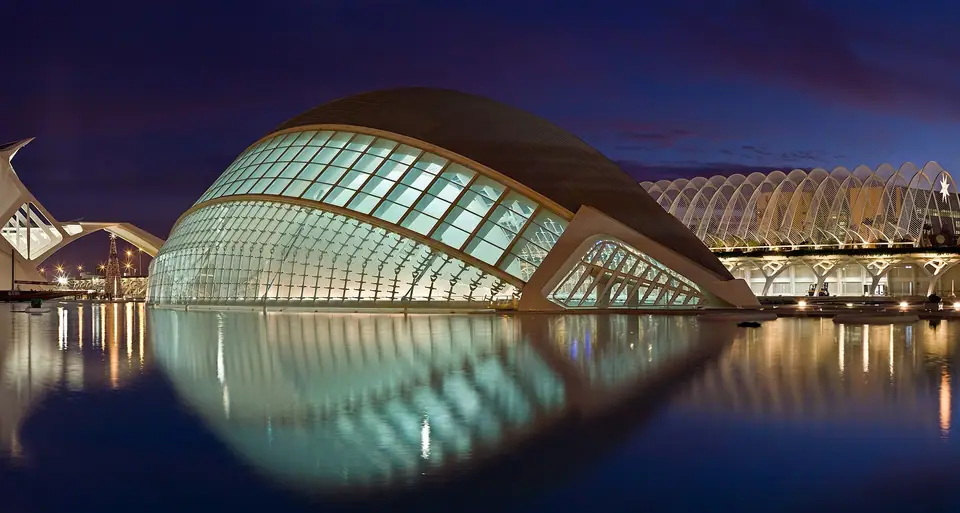
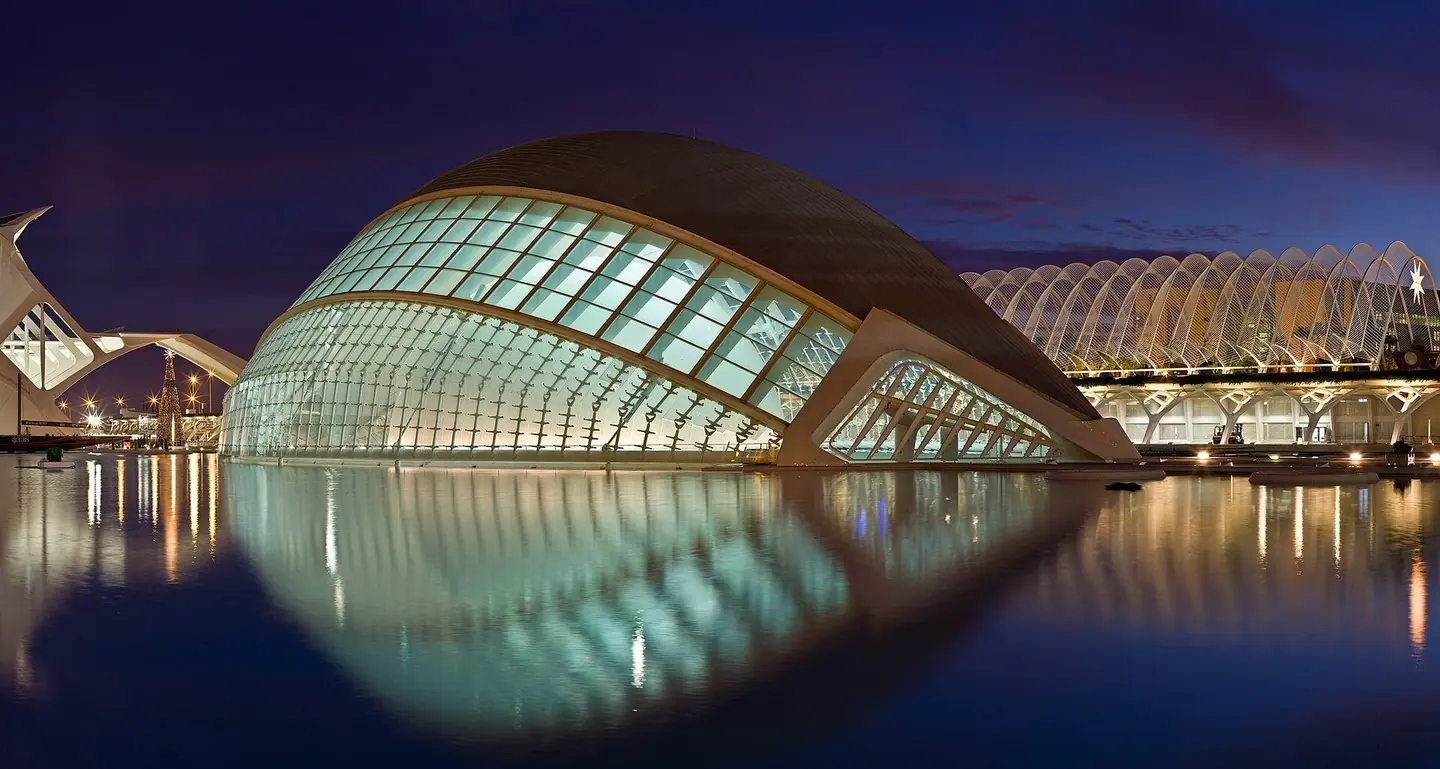
L'Hemisfèric
Opening in 1998 as the inaugural pavilion of the City of Arts and Sciences, this eye-shaped structure houses an IMAX cinema and digital planetarium. The concrete shell incorporates mechanical awnings that open like an eyelid above a shallow surrounding pool. Travellers can admire the precise reflections of the metallic arches mirrored in the water basin.
Museu de les Ciències Príncipe Felipe
This expansive science museum evokes the articulated spine of a prehistoric whale across three extensive levels of interactive scientific galleries. Santiago Calatrava built the grand structure using reinforced concrete arches, expansive glazed facades, and external diagonal buttresses. The interior displays focus on physics, genetics, and space exploration through hands-on experimental stations.
L'Umbracle
Functioning as an open-air sculpture pavilion and botanical walk, this elevated promenade features fifty-five fixed and fifty-four floating arches. The garden preserves indigenous plant varieties from the Valencian Community alongside contemporary sculptures by international artists. From its western balustrade, travellers enjoy wide vantage points across the sunken pools of the neighbouring museum complex.
CaixaForum Valencia (L'Àgora)
Rising eighty metres above the drained riverbed, this pointed elliptical arena was conceived by Santiago Calatrava before being converted into CaixaForum Valencia by architect Enric Ruiz-Geli. The blue ceramic tile cladding encloses modular timber exhibition pods, an auditorium, and educational classrooms. Visitors can examine the interplay between the original steel ribs and the organic interior architecture.
Pont de l'Assut de l'Or
Standing as the highest point in the city, this single-pylon cable-stayed bridge features a curved white mast reaching a height of 125 metres. Built to connect southern districts across the Turia parkway, the structure supports vehicle lanes and pedestrian paths suspended by heavy steel cables. The base overlooks the historic Assut de l'Or irrigation diversion weir.
L'Oceanogràfic
Reputed as Europe's largest oceanarium, this marine complex features distinctive water-lily-shaped entrance pavilions designed by master structural engineer Félix Candela. Thin-shell concrete hypar roofs house aquatic habitats representing the Mediterranean, Arctic, and Red Sea biomes. The central underwater tunnel offers clear views of sand tiger sharks and manta rays swimming directly overhead.
Edificio del Reloj
Constructed in 1916 as the headquarters of the port authority, this French neo-classical edifice served as the gateway for sea travellers arriving in Valencia. Architect Federico Gómez de Membrillera crowned the slate mansard roof with a sculpted maritime clock tower. The restored halls regularly host temporary exhibitions documenting maritime trade and local naval history.
Tinglados del Puerto de Valencia
Lining the inner docks, these industrial sheds were constructed between 1911 and 1914 to shelter citrus fruits and exported agricultural freight. Designed with wrought-iron trusses, the buildings feature colourful ceramic reliefs depicting commerce, agriculture, and Valencian orange harvests. Today, the open-sided pavilions serve as civic recreation spaces for skating and seaside strolls.
Veles e Vents
Erected to host the America's Cup sailing regatta, this four-storey minimalist pavilion was designed by David Chipperfield and Fermín Vázquez. Its deep white concrete platforms cantilever over the harbour channel, providing extensive shade across outdoor public decks. The building now houses cultural venues and restaurants overlooking superyacht berths in the marina.
Marina Real Juan Carlos I
This expansive public docklands redevelopment transformed the commercial docks into a civic marina filled with leisure boats, sailing schools, and promenades. The waterfront esplanade runs alongside the former Formula 1 street circuit pits and historic dry docks. Visitors can walk the broad piers to inspect competitive racing yachts and open-air seaside installations.
El Cabanyal
Originally an independent fishing village known as Poble Nou de la Mar, this grid-patterned coastal district retains its unique vernacular architecture. Narrow two-storey nineteenth-century houses display colourful ceramic tile facades, wrought-iron balconies, and decorative plaster cornices. Walking along Carrer de la Reina reveals community efforts that preserved these streets from demolition.
Museu de la Setmana Santa Marinera
Housed in a former grain warehouse in El Cabanyal, this specialist museum preserves the artistic heritage of the maritime Holy Week celebrations. Exhibits include carved processional floats, embroidered velvet standards, and traditional biblical costume attire worn by local parish brotherhoods. The collection reflects the deep maritime spirituality of local sailors and dockers.
Mercat del Cabanyal
Operating since 1958 at the centre of the maritime quarter, this active covered market functions as the culinary focal point for local coastal residents. Stalls showcase fresh catches landed at neighbouring docks, including cuttlefish, red prawns, and Mediterranean mussels. The outer perimeter hosts small counters serving traditional snacks and salted fish specialities.
Casa Museu Blasco Ibáñez
Situated on Malvarrosa beach, this restored three-storey villa served as the writing retreat of author and politician Vicente Blasco Ibáñez. The building features an elegant caryatid-lined balcony, classical columns, and garden terraces overlooking the sea. Inside, travellers can view the writer's personal library, original manuscripts, portraits, and nineteenth-century furnishings.
Platja de la Malva-rosa
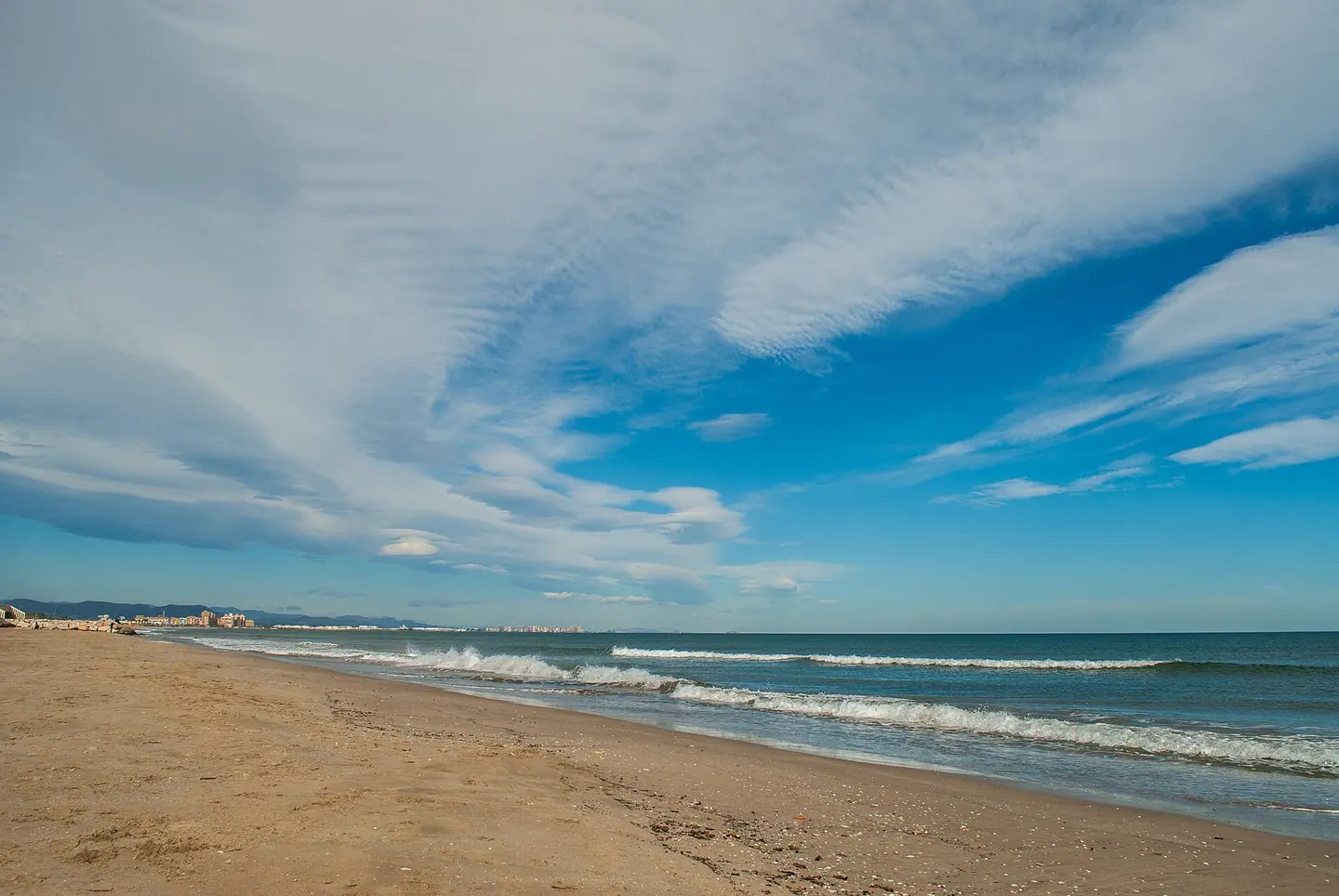
Named after the mallow plants once cultivated here for perfume production, this expansive urban beach forms Valencia's primary seafront strand. The shoreline gained fame through the Impressionist canvases of Joaquín Sorolla, who painted local oxen pulling fishing skiffs from these waters. The adjoining paved promenade is lined with traditional paella restaurants and open terraces.
L'Albufera
Separated from the Mediterranean by a narrow dune bar, this vast freshwater lagoon constitutes the core of a protected natural park. Ancient Arabic poets referred to the water body as the mirror of the sun due to its flat, reflective surface. The surrounding marshlands nurture indigenous bird colonies, waterfowl, and the vast paddy fields that yield Valencian paella rice.
El Palmar
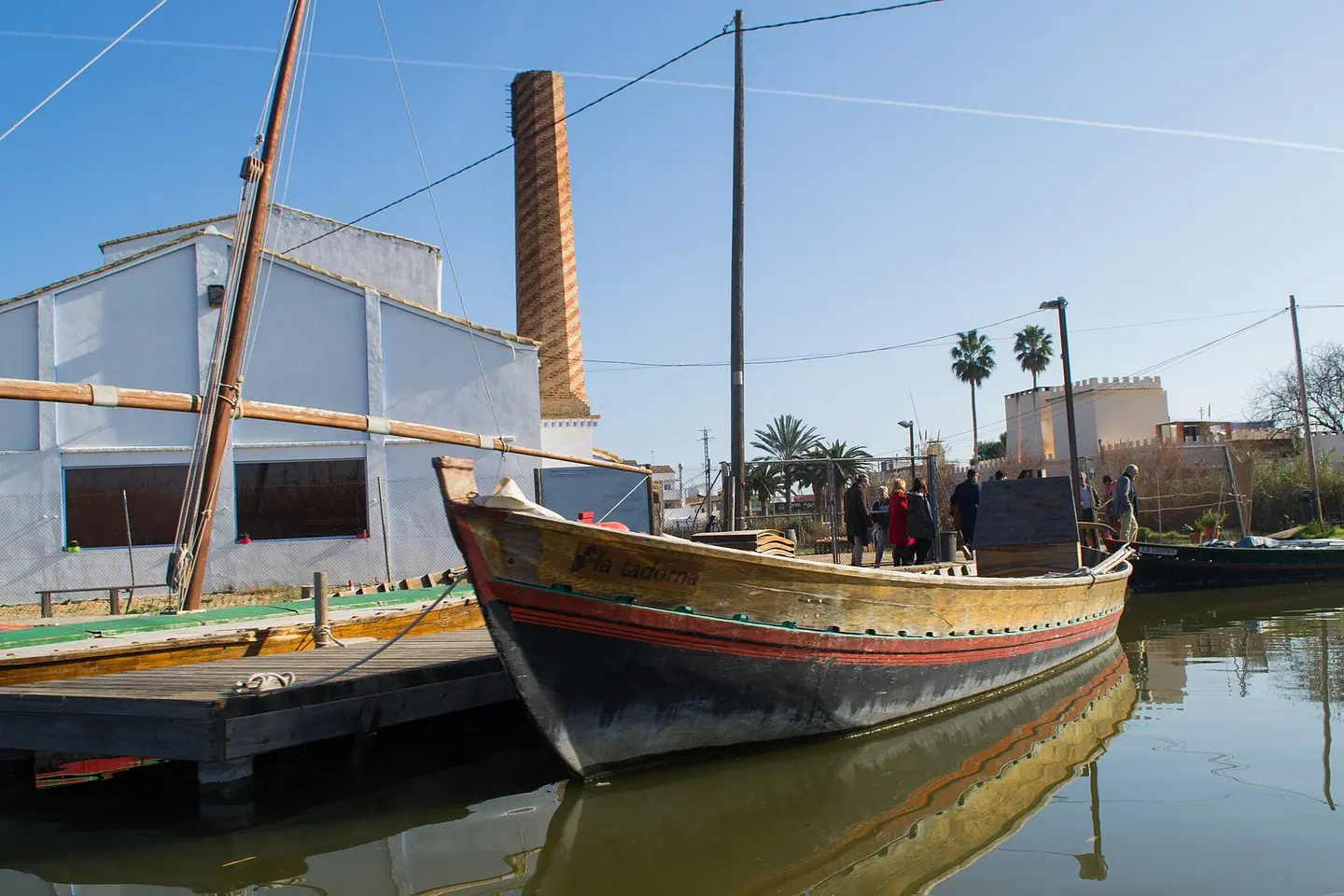
Accessed by bridges across irrigation canals, this former fishing settlement sits surrounded by water and rice paddies on the southern shore of the lagoon. The village maintains traditional thatch-and-clay barraca cottages that housed rural fishermen for generations. We find working docks here where local boatmen moor wooden vessels used for navigating the shallow reeds.
Embarcador d'El Saler
Located near the northern forest reserve of the Devesa, this timber pier serves as an access point for traditional boat excursions across the Albufera. Lateen-rigged wooden crafts known as albuferencs depart along narrow channels flanked by high bullrushes. The quiet spot offers open perspectives across marshlands populated by grey herons and flamingos.
Mirador de l'Albufera
Positioned beside the main coastal highway through the natural park, this wooden viewing pier extends out into the open waters of the lake. It provides panoramic sightlines of the distant Sierra Calderona mountain range beyond the western shore. The deck allows visitors to inspect the native marsh flora and observe migratory waterfowl at dusk.
Walking or Cycling the Nine-Kilometre Turia Garden in Valencia
Before setting out, check local transit connections, museum booking notes and monthly weather data in our Valencia city guide, and compare other walking itineraries.