


























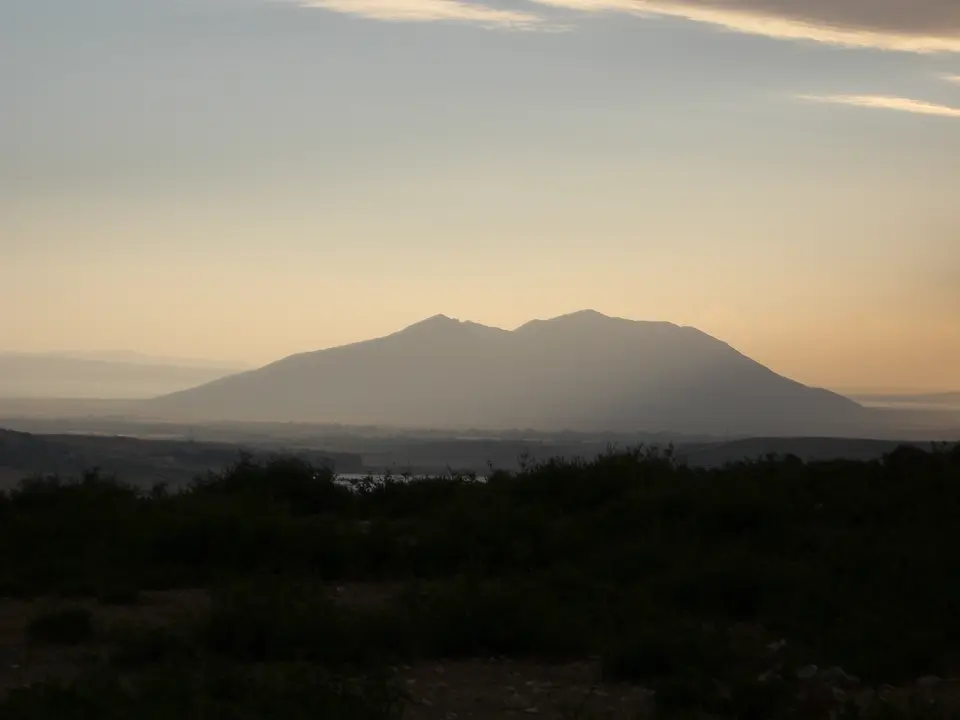
Quick Field Data
- UNESCO Inscription: 1980 · Criterion (x) · Placed on the Danger List from 1996 to 2006
- Scale & Footprint: 126 km2 encompassing Lake Ichkeul alongside surrounding seasonal marshes and the limestone massif of Djebel Ichkeul
- Access & Ticketing: Managed by the Tunisian Ministry of Agriculture; access to the mountain foot trails and lakeside birdwatching points operates from the southern park entrance near Mateur
- Arrival Logistics: Situated in northern Tunisia, 15 km north of Mateur and 20 to 25 km southwest of Bizerte, within easy road reach of Tunis
Double-Seasonal Hydrology and the Isolated Limestone Massif
Freshwater and seawater trade places here every year. Covering 126 km2 in northern Tunisia just 20 kilometres (12 miles) southwest of Bizerte on the Mediterranean Sea and 15 kilometres north of Mateur, Ichkeul National Park protects the last surviving great freshwater lake and marsh complex of a wetland chain that once stretched across the entire length of North Africa. The park boundaries enclose three sharply contrasting yet interdependent Mediterranean habitats: the shallow open waters of Lake Ichkeul (known in Arabic as Buḥayra ʾIshkul), the broad sedge and reed marshes bordering its shores, and the steep limestone ridge of Djebel Ichkeul rising abruptly from the southern edge of the water.
What makes Lake Ichkeul ecologically extraordinary is its hydrological regime driven by a double seasonal alternation in water levels and salinity between upstream freshwater inflows and downstream seawater exchanges. During the cool Mediterranean autumn and winter, feeder rivers and wadis draining the surrounding northern Tunisian hills pour fresh rainwater into the basin, raising water levels and flushing out salt while inundating the surrounding mudflats and marshes with fresh to slightly brackish water. Conversely, during the dry summer months, river inflows drop sharply, intense Mediterranean evaporation lowers the lake surface, and salty seawater flows backward into the basin from the sea downstream.
This annual oscillation between low winter salinity and elevated summer salinity governs the entire biological food web of the reserve, which supports more than 500 plant species and more than 200 animal species. Because both the winter inflow from upstream and the summer exchange with seawater downstream are subject to strong natural intra-annual and inter-annual climate variability across the Mediterranean, the marsh vegetation responds sensitively to every shift in water balance. As winter freshwater floods the marshes and dilutes the lake, vast underwater beds of freshwater plants and dense marsh belts of reedbeds and sedges flourish across the shallow mud. Those starch-rich tubers and aquatic plants provide the primary winter food supply for hundreds of thousands of migrating birds that arrive each winter at Ichkeul, while the rocky crags and shrubland of Djebel Ichkeul harbour rare endemic Tunisian flora, including the flowering plant Teucrium schoenenbergeri Nabli, harvested inside the park in 1965.
In the middle of the winter migration, the lake and adjacent marshes shelter an exceptional density of waterfowl, with simultaneous counts in favourable wet years reaching more than 300,000 ducks and geese alongside coots, storks, and pink flamingoes at the same time. Alongside these vast flocks, Ichkeul provides critical winter refuge for three waterfowl species of worldwide importance for global conservation: Oxyura leucocephala (the white-headed duck) alongside Aythya nyroca (the ferruginous duck) and Marmaronetta angustirostris (the marbled duck). Because all three species depend on shallow, plant-rich waters to forage and build energy reserves before spring breeding migrations across the Mediterranean Sea, the winter balance of Lake Ichkeul directly affects waterfowl survival across Europe and North Africa.
Hafsid Hunting Reserve and Upstream Dams to Salinity Recovery
Protection of the mountain and lake stretches back to the 13th century, when the rulers of the Hafsid dynasty designated Lake Ichkeul and the wooded slopes of Djebel Ichkeul as a royal reserve. Centuries later, under French colonial administration in the early 20th century, the estate passed into the public domain. Recognising its indispensable role as a stopover for hundreds of thousands of migrating birds crossing the Mediterranean between Europe and Africa each year, the Tunisian authorities established Ichkeul National Park in 1980 under the management of the Tunisian Ministry of Agriculture. That same year, the wetland was inscribed on the UNESCO World Heritage List under Criterion (x) and designated as Ramsar site number 213 on 24 November 1980.
Soon after inscription, however, the construction of three dams on the upstream watercourses that feed the lake and wetlands threatened the hydrological engine that sustains the entire lake-marsh system. As those upstream reservoirs impounded winter river runoff to supply fresh water for agriculture and towns, freshwater inflow into the lake and surrounding marshes dropped sharply. Deprived of its winter freshwater flush, the lake drew in increasing volumes of seawater downstream without a corresponding winter dilution, driving salinity levels upward across both the open water and the bordering marshes.
The ecological cause and effect was immediate and severe. Because the dams sharply reduced freshwater inflow to the basin, the freshwater reedbeds and sedges alongside other freshwater plant species were replaced by salt-loving plants unpalatable to wintering waterfowl. As that mix of freshwater plants disappeared, migratory bird populations suffered a sharp reduction, prompting the park's inclusion on the UNESCO Danger List between 1996 and 2006. In response, the Tunisian government enforced strict legal protection and a management plan, undertaking hydrological steps to retain freshwater in the basin, regulate exchanges with downstream seawater, and reduce lake salinity. Following those water management interventions, Lake Ichkeul was removed from the Danger List in 2006, though reports from the World Conservation Union cautioned that high salinity during dry cycles remains a serious challenge and that managing water inflows across this wetland basin remains a primordial requirement for sustaining the wetland. Keeping the winter freshwater pulse strong enough to flush summer salt accumulation is the only way to preserve the underwater plant beds that feed wintering ducks, geese, and coots across the 126 km2 reserve.
Walking Djebel Ichkeul and Observing Winter Waterfowl
For travellers exploring northern Tunisia between Tunis and the Mediterranean coast at Bizerte, Ichkeul National Park offers a striking contrast between rugged limestone ridge walking and quiet wetland birdwatching. All visitor access focuses on the southern flank of Djebel Ichkeul, where the mountain forms a natural promontory rising between the open lake and the adjacent marshes, creating elevated vantage points over the water without disturbing the sensitive feeding and nesting grounds of wintering ducks and geese alongside storks and pink flamingoes. Walking along these limestone contours allows visitors to trace the sharp physical boundary between dry Mediterranean rock scrub and the flooded reedbeds of Buḥayra ʾIshkul.
- Southern entrance near Mateur and the Djebel Ichkeul visitor centre: Approach the park by road from Mateur (15 km south) or Bizerte (20 to 25 km northeast) to enter via the southern gate at the foot of Djebel Ichkeul. Follow the access road up the lower limestone slope to the park visitor centre, where exhibits explain how the double seasonal alternation of upstream freshwater and downstream seawater controls the reedbeds and sedges that feed migratory bird populations across the northern Tunisian basin, and how the Tunisian Ministry of Agriculture manages winter water releases to counter summer evaporation.
- Limestone ridge trails and southern marsh observation points: From the visitor centre terrace, walk the marked footpaths contouring along the slopes of Djebel Ichkeul, where panoramic overlooks gaze directly down onto the shallow lake waters and the adjacent marshes. Bring binoculars or a spotting scope to scan the shoreline reedbeds and open water for pink flamingoes and storks as well as white-headed ducks (Oxyura leucocephala) and ferruginous ducks (Aythya nyroca) alongside marbled ducks (Marmaronetta angustirostris), while observing the more than 500 plant species (including the endemic Teucrium schoenenbergeri Nabli) and 200 animal species thriving across the limestone mountain and wetland habitats.
- Winter migration timing and connections to Bizerte and Tunis: Time your visit for the cool winter migration season, when up to 300,000 ducks and geese alongside coots gather on the water and daytime temperatures are mild for hiking the exposed limestone trails of Djebel Ichkeul. Arrive early in the morning when wintering waterfowl feed actively along the shallow marsh channels before afternoon winds ripple the lake surface. Combine a morning field walk at Ichkeul with an afternoon drive 20 to 25 km northeast to the Mediterranean coast at Bizerte, or return to the capital using our UNESCO World Heritage Atlas and our Tunis city guide.
