


























Quick Field Data
- UNESCO Inscription: 1985 (Natural Criterion x)
- Scale & Footprint: 2,873 hectares (29 square kilometres / 11 square miles) of diked freshwater marshes, seasonal lagoons, together with woodland swamps in Rajasthan
- Access & Ticketing: Administered by Rajasthan forestry and tourism authorities; check the official site for entry permits, licensed naturalist guides, plus rickshaw rules
- Arrival Logistics: Located 2 kilometres (1.2 miles) southeast of Bharatpur and 55 kilometres (34 miles) west of Agra, east of Jaipur
A Royal Duck-Shooting Reserve Transformed into a Global Bird Sanctuary
Situated on the eastern edge of Rajasthan where arid desert terrain meets the tropics across the Indo-Gangetic Great Plains, just 2 kilometres (1.2 miles) southeast of Bharatpur and 55 kilometres (34 miles) west of Agra, Keoladeo National Park (also known as Keoladeo Ghana National Park) demonstrates how a human-engineered regulated wetland can sustain one of the richest concentrations of avian life in Eurasia. Designated as a Ramsar Wetland of International Importance on 1 October 1981 (Ramsar site number 230), established as a National Park on 10 March 1982, and inscribed in the UNESCO World Heritage Atlas in 1985 under natural criterion x (updated from criterion iv in 2005), the compact 2,873-hectare (29-square-kilometre or 11-square-mile) reserve lies east of Jaipur and welcomed 147,000 visitors in 2017. Locally called Ghana, signifying a natural mosaic of dry grasslands, woodlands, woodland swamps, plus seasonal wetlands, this green wildlife oasis supports between 364 and 400 recorded bird species alongside a rich web of aquatic and terrestrial life. Mist rises across the quiet lagoons at dawn.
Originally a natural depression wetland that protected Bharatpur settlements from flash floods and provided ample pasture for village livestock, the site functioned from the 1850s as the private waterfowl hunting preserve of the Maharaja of Bharatpur and was engineered as a regulated waterfowl shooting preserve in 1899 under the state administration. A well-designed system of earthen dykes (bunds), mounds, alongside sluice gates partitioned the depression into compartments of varying water depths fed from the Ajan Bund reservoir outside the park boundary. Through the sustained advocacy of ornithologist Salim Ali, the reserve became the Bharatpur Bird Sanctuary in 1956 (with protected sanctuary notifications in 1971 and on 13 March 1976) before hunting ceased permanently and the area was declared Keoladeo National Park in March 1982.
Climate Extremes together with Ecological Management
Because Bharatpur experiences an extreme semi-arid climate, where 1988 meteorological records documented mean maximum temperatures ranging from 20.9 degrees (69.6 degrees on the imperial scale) in January to 47.8 degrees (118.0 degrees) in May, diurnal swings from 5 degrees (41 degrees) in winter to 50 degrees (122 degrees) in summer, relative humidity between 62 percent in March and 83.3 percent in December, and mean annual rainfall of 662 millimetres (26.1 inches) across 36 rainy days (dropping to 395 millimetres over 32 days in drought years like 1988), the wetland depends entirely on regulated external water deliveries and alternate wetting and drying cycles, supplemented in severe droughts by deep tube wells that pump water into small depressions to save aquatic seeds, spores, plus invertebrates.
Following a severe drought crisis in 2007, when water from the temporary Ajan Bund reservoir (which must reach a level of 8.5 metres to flow via the Dakan canal, alongside minor supplies from the Khokhar Weir or Bees Mora) proved insufficient to meet the park's annual requirement of 14.17 million cubic metres (500 million cubic feet), the Government of Rajasthan and the Ministry of Environment and Forests advanced a 650-million-rupee water supply project in April 2008. This engineering scheme diverts and lifts 400 million cubic feet of monsoon floodwater over 30 days between July and September via 16 kilometres of underground pipelines, a 13,000-cubic-metre raw water reservoir, plus 3 pump houses from the Goverdhan drain near Santruk village. Inside the park, management has also grappled with vegetation succession and environmental pressures: after grazing by 2,500 local cattle and domestic water buffalo was banned in November 1982 (leaving only around 700 feral cattle inside), the perennial amphibious grass Paspalum distichum multiplied to block open water channels; in June and July 1986, larvae of the Lepidopteran Parapoynx diminutalis inhibited the growth of aquatic Nymphoides cristatum; in 1988 and early 1989, mortality affecting 40 ring-necked doves alongside four sarus cranes outside the park perimeter prompted studies on pesticide runoff and heavy metal contamination; and in 2007 and 2008, park teams actively eradicated invasive non-native mesquite (Prosopis juliflora) and Cineraria scrub.
Breeding Heronries alongside Park Biodiversity
One-third of Keoladeo National Park consists of open water and marshland with submerged and emergent plants, while the surrounding uplands support short grass cover including Dichanthium annulatum alongside Cynodon dactylon, tall grasslands, saline soil patches where woody Piloo trees (Salvadora oleoides and Salvadora persica) thrive, and scattered pockets of huge Kadam trees (Neolamarckia cadamba). Across the reserve, botanical surveys have catalogued 379 flowering plant species, including 96 wetland plants, supporting over 1,000 invertebrate species (worms, insects, plus mollusks), 60 species of Lepidopterans, and 20 fish species that anchor the food chain:
- The Monsoon Breeding Heronry (115 Breeding Bird Species): Around 115 bird species breed inside the park, led by 15 waterbird species, including herons, oriental ibises, little, and great cormorants, Indian shags, white spoonbills, painted storks, Asian open-billed storks, alongside darters, which congregate during well-flooded monsoon seasons to form a dramatic canopy heronry of over 20,000 nesting birds.
- The Winter Palearctic Waterfowl: Situated in the middle of the Central Asian migratory flyway, Keoladeo hosts vast winter congregations arriving from Afghanistan, Turkmenistan, China, Siberia, together with the western Palearctic, including gadwalls, shovelers, common, and cotton teals, tufted, and knob-billed ducks, bar-headed geese, ruffs, common, wood, plus green sandpipers, greater flamingos, spot-billed alongside great white pelicans, demoiselle cranes, plus resident sarus cranes.
- Raptors together with the Siberian Crane Project: Raptors include the breeding greater spotted eagle, imperial eagle, tawny eagle, short-toed eagle, crested serpent eagle, Pallas's sea eagle, osprey, plus peregrine falcon, alongside warblers, babblers, bulbuls, bee-eaters, chats, buntings, Indian grey hornbills, painted francolins, plus Marshall's iora. Historically the only known wintering site for the central flock of the rare Siberian crane, which was last recorded here in the winter of 2001 to 2002 after a December 1992 to January 1995 collaborative conservation project by India, Russia, the International Crane Foundation, alongside the Wild Bird Society of Japan, the sanctuary protects six Vulnerable, two Endangered, plus five Critically Endangered avian species.
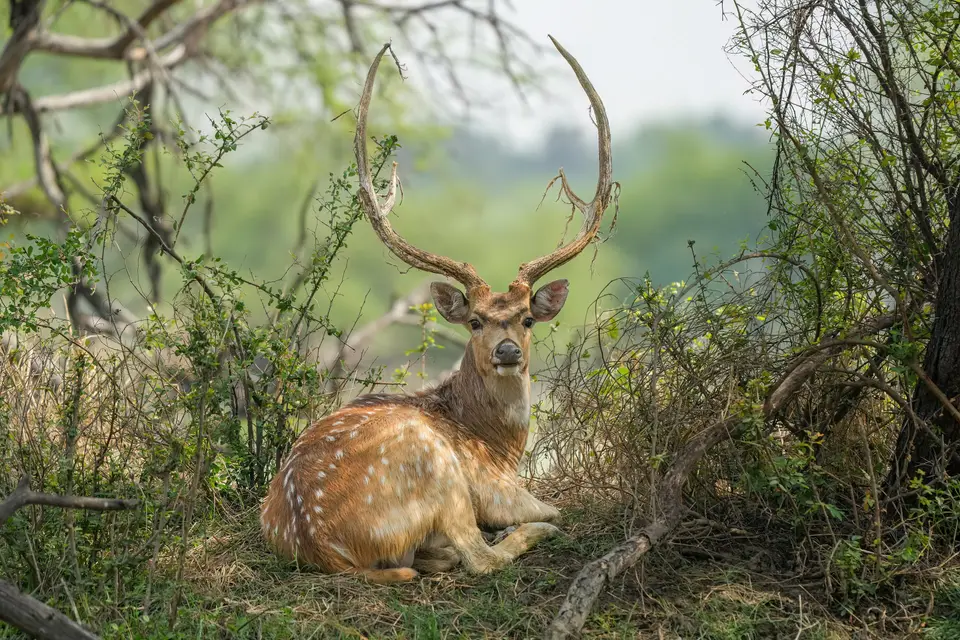
- Mammals alongside Herpetofauna: Field surveys across the sanctuary have documented 27 identified mammalian species (up to 50 recorded in wider surveys), including rhesus macaques, Hanuman langurs, nilgai, chital, sambar, blackbuck, Indian hog deer, wild boar, Indian porcupines, small, and grey mongooses, jungle, leopard, plus fishing cats, Asian palm, and small Indian civets, Bengal foxes, golden jackals, striped hyenas, plus smooth-coated otters, alongside 7 of Rajasthan's 10 turtle species, 5 lizard species (including monitor lizards), 13 snake species (pythons, kraits, cobras, plus Russell's vipers), and 7 amphibian species including bullfrogs and skipper frogs.
Exploring the Dykes by Bicycle or Rickshaw
Because motorised private vehicles are excluded from the wetland dykes, Keoladeo offers a quiet, accessible birdwatching environment where visitors can observe wetland ecology along tree-lined earthen bunds without traffic noise. Walking or pedalling slowly along the raised paths allows ornithologists and photographers to inspect both the shallow open-water compartments and the surrounding Kadam and Piloo groves at close range across the full daily cycle of avian activity:
- Entry and Route: Located 2 kilometres southeast of Bharatpur along the highway and rail corridor between Agra (55 kilometres east) and Jaipur to the west, the main gate is easily reached from Bharatpur railway station or by road from nearby heritage cities across eastern Rajasthan and the surrounding Indo-Gangetic Great Plains.
- Tickets and Viewpoints: Visitors walk the earthen dykes, rent bicycles at the entrance gate, or hire licensed cycle-rickshaw drivers who have been trained by park authorities as experienced bird spotters to scan the marshes, Kadam groves, alongside Ajan Bund channels; check the official site for current entry permits, camera fees, and licensed naturalist guide tariffs before arriving at the gate.
- Timing and Onward Connections: Visit between August and September to observe the 20,000-bird monsoon breeding heronry, or during the cooler months from November through February when Palearctic ducks, geese, pelicans, plus eagles fill the flooded compartments. Arriving at first light when the park gates open rewards birdwatchers with the highest activity along the water margins before midday warmth settles over the plains.
