Quick Field Data
- UNESCO Inscription: Cultural Landscape World Heritage Site (Ref. 933), inscribed on 2 December 2000 under Criteria (i), (ii), and (iv).
- Scale & Footprint: 86,021 hectares spanning a 280-kilometre middle section of the Loire River between Sully-sur-Loire and Chalonnes-sur-Loire across Centre-Val-de-Loire and Pays-de-la-Loire.
- Access & Ticketing: Towns, river levees, and cycling paths stay freely open year-round. Individual Loire Valley châteaux and abbey grounds run separate admission ticketing via official estate portals.
- Arrival Logistics: Tours Val de Loire Airport (TUF) sits 4 km from central Tours. Frequent rail routes also connect directly from Paris, located 203 km northeast of the core valley.
River Terraces, Tufa Quarries, and Medieval River Crossings
Spanning 280 km along the middle section of France's longest river from Sully-sur-Loire, east of Orléans, to Chalonnes-sur-Loire, west of Angers, the Loire Valley traverses four departments: Loiret, Loir-et-Cher, Indre-et-Loire, and Maine-et-Loire. Widely called the Garden of France and the Cradle of the French, this 800-square-kilometre river corridor enjoys a gentler climate than plains further north. The broad river acts as a weather dividing line between northern and southern France, warming adjacent valley microclimates enough to support vineyards, cherry orchards, artichoke fields, and asparagus beds around historic towns such as Orléans, Blois, Amboise, Tours, Chinon, Saumur, Montsoreau, and Angers.
Archaeological finds confirm human occupation along the valley since the Middle Palaeolithic period. From Gallo-Roman centuries until the nineteenth century, the Loire functioned as an indispensable commercial waterway linking inland France toward the Atlantic coast. Centuries of river engineering left stone embankments, masonry dyke systems, and working ports visible across both minor and major beds of the river today.
Builders extracted pale tufa limestone across the hillsides for churches and palaces, excavating deep galleries that communities adapted into troglodyte dwellings, storage rooms, and cellars. Before pleasure estates lined the banks, tenth-century counts and kings raised fortified castles and Benedictine abbeys at river bluffs. Major Romanesque churches at Saint-Benoît-sur-Loire, Fontevraud, and Cunault, joined by ogival gothic churches in Blois and Candes, shaped medieval settlement before fifteenth-century royal courts arrived.
Once sovereigns moved power into the Loire Valley during the late Middle Ages and Renaissance, French courtiers could scarcely afford to live far from the throne. Nobles hired landscape designers and Italian, French, and Flemish architects to convert grim defensive keeps into open residences framed by ornamental vistas. Because demographic growth, industrial activity zones, highways, bridges, and urban edges now press against historic towns, a State Prefect Coordinator oversees cross-regional safeguards under the Plan Loire grandeur nature programme begun in 1994 to balance flood protection, water supply, and ecological diversity.
Château de Chambord, Chenonceau, and Loire Valley Castles
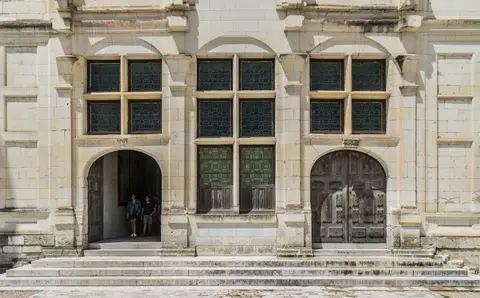
More than three hundred châteaux stand across the wider river basin, including 42 core châteaux within the World Heritage boundaries that together welcome over 3.3 million visitors per year. Among the premier Loire Valley castles listed by British travel surveys, including Chinon, Loches, Chaumont, Blois, Meung, Rivau, Lemeré, Amboise, Clos Lucé, Villandry, and Valençay, two properties illustrate the architectural transformation most dramatically: Château de Chambord and Château de Chenonceau. Both remain central stops for travellers planning things to do Loire Valley France.
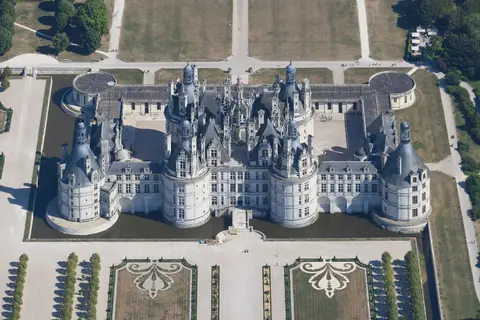
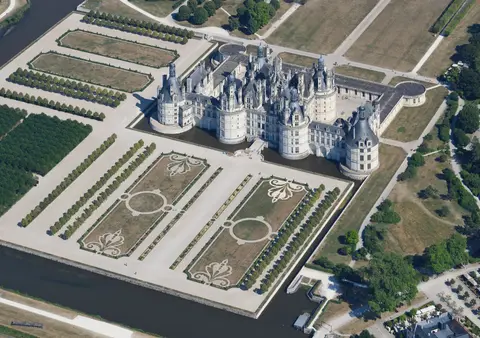
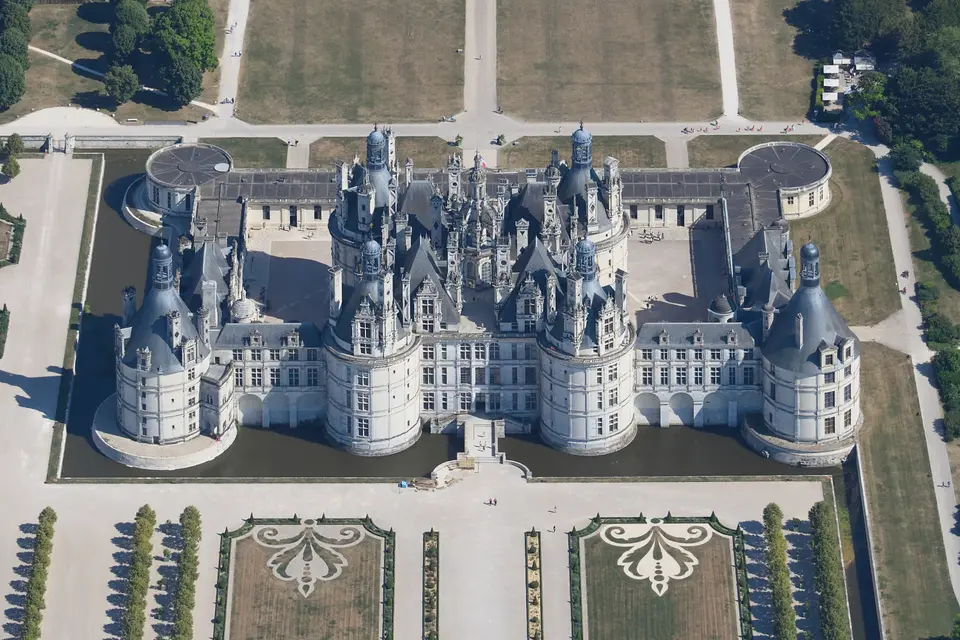
Commissioned by King Francis I, Château de Chambord rose between 6 September 1519 and 1547 under Francis de Pontbriand and on-site overseer Pierre Neveu. Construction paused during the Italian War from 1521 to 1526 amid marshy foundation problems and tight royal funds, before resuming in September 1526 with 1,800 workers. Attributed initially to Tuscan designer Domenico da Cortona, whose wooden model was drawn later by André Félibien, the plan may also reflect ideas from Leonardo da Vinci, who lived as the king's guest at Clos Lucé near Amboise.
Archaeological research by Jean-Sylvain Caillou and Dominic Hofbauer established that the asymmetric facades stem from an early rotative plan organised around the central stairwell before being simplified during construction. Blending French medieval keep massing with Italian Renaissance geometry, Chambord wraps a square keep with four corner bastion towers inside an outer compound featuring a 128-metre front facade and over 800 sculpted columns. Inside, 440 rooms, 282 fireplaces, and 84 staircases desert old corridor plans by grouping rooms into self-contained suites off four cross-shaped vaulted halls, while an open double-spiral staircase of roughly 274 steps rises three storeys without ascending and descending visitors ever meeting.
Writer Henry James later compared the skyline of 11 tower types and three chimney designs to the spires of a town, while writer John Evelyn marvelled at the stair's clever visibility loopholes. Built solely as a royal hunting lodge inside a 52.5-square-kilometre deer park and 31-kilometre wall, Chambord stayed unheated and unfurnished. Visiting courts of up to 2,000 people hauled collapsible furniture and provisions for short stays totalling barely seven weeks for King Francis I. Later occupants included Gaston, Duke of Orléans in 1639, and Louis XIV, who built a 1,200-horse stable and hosted Molière's premiere of Le Bourgeois gentilhomme before abandoning the estate in 1685.
During the eighteenth century, exiled Polish king Stanislas I, father-in-law of Louis XV, resided at Chambord from 1725 to 1733 before Marshal Maurice de Saxe stationed his regiment there until 1750. Revolutionary timber sales stripped panelling in 1792, Napoleon granted the château to Marshal Berthier, and later owners including the Count of Chambord and the Dukes of Parma preceded Franco-Prussian War field hospital service in 1870 to 1871. During the Second World War, curators evacuated Louvre artworks to Chambord for safekeeping, and today the open palace welcomes around 700,000 guests annually despite June 2016 park flooding.
South on the River Cher, Château de Chenonceau displays a distinct history led across centuries by influential women. Purchased in 1513 by Thomas Bohier from the indebted Marques family, whose medieval castle had burned in 1412 before 1430s rebuilding, the estate gained its present Renaissance house between 1514 and 1522 under Katherine Briçonnet while preserving the older corner keep. Seized by the Crown in 1535, it became the gift of King Henry II to Diane de Poitiers, who obtained full legal possession in 1555. Diane planted four triangular gardens behind protective flood terraces and commissioned Philibert de l'Orme from 1556 to 1559 to span the Cher with five stone arches.
After Henry II died in 1559, regent Catherine de' Medici forced Diane to swap Chenonceau for Chaumont and hosted France's first recorded fireworks in 1560 for Francis II. Between 1570 and 1576, Jean Bullant erected the two-storey grand gallery atop the river arches, dedicated in 1577, though Catherine's vast pincer-wing expansion drawn by Jacques Androuet du Cerceau remained unbuilt. Following mourning widow Louise of Lorraine's eleven years in black after Henry III's 1589 assassination, Henry IV cleared debts for Gabrielle d'Estrées before her son César's heirs and the Duke of Bourbon held the house into the eighteenth century.
In 1733, financier Claude Dupin purchased Chenonceau, and his wife Louise Dupin hosted Voltaire, Montesquieu, Buffon, Marivaux, and secretary Jean-Jacques Rousseau, who drafted parts of Émile there. Louise Dupin preserved the château during the French Revolution by convincing authorities that its gallery formed the sole bridge crossing the Cher for leagues. Restored in 1875 by Marguerite Pelouze under architect Félix Roguet, sold to the Terry family in 1891, and owned since 1913 by the Menier chocolate family, the estate sheltered First World War wounded. During the Second World War, Chenonceau straddled the occupied and free zones across the Cher, surviving German bombing in June 1940 and Allied chapel damage on 7 June 1944 before Bernard Voisin restored it in 1951 for roughly 800,000 annual visitors.
Loire Valley Wine, Cycling Paths, and Living Culture
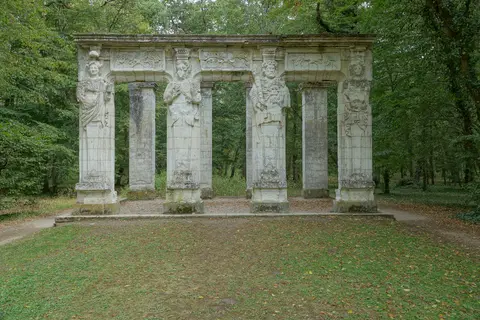
Agricultural skill shapes the Loire Valley France landscape just as vividly as stone towers. Stretching from Atlantic Muscadet estates upward to Sancerre and Pouilly-Fumé southeast of Orléans, Loire Valley wine vineyards thrive on gravel river terraces and chalk slopes, producing fresh, crisp, fruit-forward styles. Atlantic breezes temper summer heat, though spring frosts and autumn harvest rain regularly test local growers. Regional data from Pays-de-la-Loire reflect a diversified valley economy where services including tourism drive 66.7 percent of jobs, industry 26.5 percent, and agriculture 3.9 percent, generating 5.0 percent of French national economic output.
Visitors seeking active things to do Loire Valley itineraries find 550 km of cycling tracks along the Loire by Bike network connecting three Regional Nature Parks. The region holds roughly 800 listed historic monuments, more than 100 museums, and 30 golf courses supported by over 700 hotels and 550 restaurants. Cultural depth spans Renaissance chansonniers songbooks blending words, music, and illuminations right up to contemporary art installations inside Château de Montsoreau, the sole château raised directly in the Loire riverbed, as well as galleries in Tours, Chaumont-sur-Loire, and Orléans. Small rural stops such as Montrésor add quiet Indrois riverside walks, a historic wool market, and sixteenth-century logis facades away from major estate crowds.
Access Zones Along the Middle Loire Valley Corridor
Covering 86,021 hectares across 280 km, visits to the Loire Valley divide cleanly into four geographic clusters connected by regional rail and river roads.
| Complex Zone | Key Highlights | Access & Ticket Rule |
|---|---|---|
| Blois and Chambord Sector | Château de Chambord keep, 52.5-square-kilometre walled woodland park, and Royal Château de Blois. | Woodland trails stay open without fee, while château interiors require timed estate tickets. |
| Tours, Chenonceau, and Amboise | Bridge gallery at Chenonceau, Clos Lucé, Château d'Amboise, and Villandry formal gardens. | Each monument manages separate online entry and parking rules via its official website. |
| Chinon, Fontevraud, and Saumur | Hilltop Chinon fortress, Fontevraud Abbey, riverside Château de Montsoreau, and tufa cellars. | Town streets and river promenades stay open freely, while abbeys and cellars charge admission. |
| Orléans and Sully-sur-Loire | Eastern World Heritage gateway, Saint-Benoît-sur-Loire abbey, and masonry flood dykes. | River embankments stay freely accessible all year, with local tickets for castle and abbey halls. |
Double-Spiral Staircases, River Piers, and Tuffeau Masonry
Walking estate terraces and historic river quays brings out three physical signatures defining Loire Valley châteaux and river towns.
- Double-spiral core inside Chambord's keep: Stand beneath the cross-shaped vaulted halls to trace how dual staircases twist around a lit hollow axis beneath 11 tower designs and three distinct chimney silhouettes.
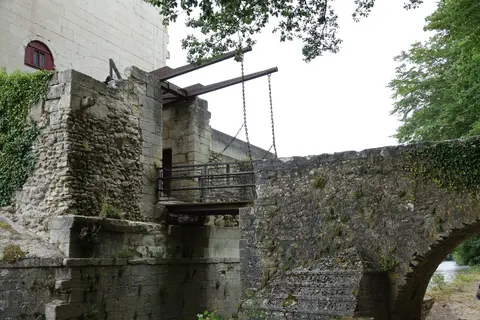
- Watermill piers beneath Chenonceau's arches: From the riverside parterres, inspect how Philibert de l'Orme's five masonry arches anchor directly onto medieval mill piers in the River Cher current.
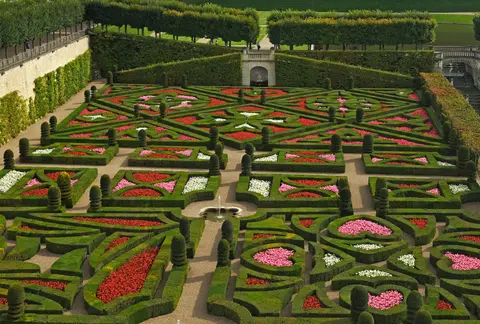
- Carved tuffeau stone and dark slate roofs: Notice across Blois, Tours, and Villandry how pale soft limestone holds fine pilasters while steep dark slate pitches shed valley rainfall.
Best Time to Visit the Loire Valley and Rail Access from Paris
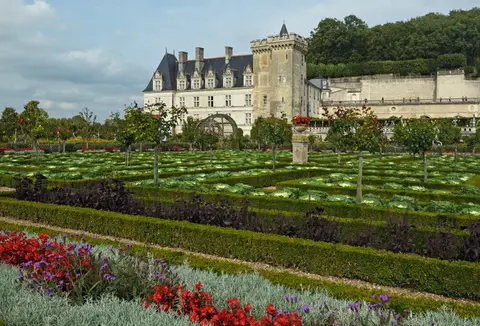
Planning the best time to visit Loire Valley France routes centres on late spring through early autumn, when kitchen gardens at Villandry bloom fully and dry river levees suit cycling. May, June, and September offer calmer palace courtyards than midsummer while keeping pleasant river breezes for vineyard walks. Autumn brings harvest activity and golden foliage together with cooler mornings, while winter suits unhurried museum towns despite mist and chilly stone halls.
Understanding how to get to Loire Valley from Paris by train makes car-free visits easy, with fast mainline departures linking Paris directly to Orléans, Blois, and Tours before local branch trains connect Amboise, Chenonceaux, Saumur, and Angers. Air passengers land right inside the corridor at Tours Val de Loire Airport (TUF), located 4 km from central Tours. Because Paris sits only 203 km northeast, combining Seine urban landmarks with Renaissance estates takes minimal travel time, and wider French listings await in the UNESCO World Heritage Atlas.