


























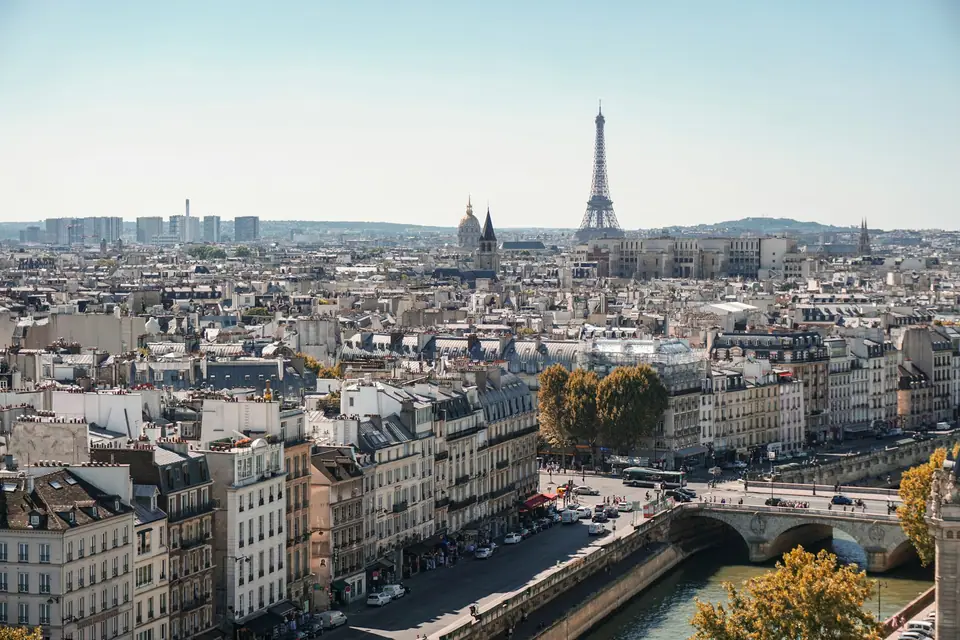
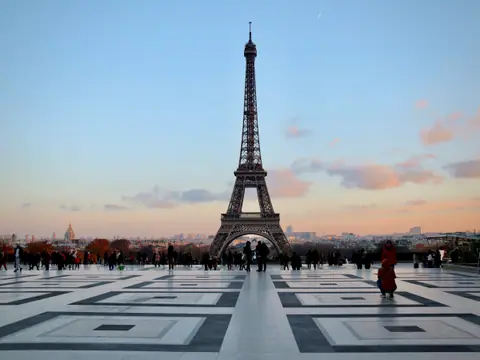
Photo by Alexander Kagan on Unsplash
Paris: Arrondissements, Museum Bookings & Local Rules
How the 20 spiral arrondissements work, which monuments require advance timed slots, and the daily habits that make Paris effortless.
The biggest mistake first-time visitors make in Paris is treating the capital like a rushed checklist. Booking the Eiffel Tower, the Louvre, and Montmartre on the same day guarantees exhaustion by mid-afternoon. Central Paris inside the 35-kilometre Boulevard Périphérique ring road covers only 105 square kilometres. That footprint makes the city far more compact than London or Berlin. Even so, its major museums are vast and its historic quarters demand unhurried exploration on foot. Anchor each morning around a single pre-booked landmark. Leave your afternoons open for riverside walks, covered passages, and café terraces.
How the 20 spiral arrondissements and the Seine divide the city
Understanding Parisian geography takes only five minutes once you learn two structural principles. Those two anchors are the curve of the River Seine and the clockwise spiral of the 20 municipal arrondissements (ah-rohn-dees-MAHN). Flowing 13 kilometres westward through the capital, the Seine splits Paris into two historic halves around its central islands. Those two islands are the Île de la Cité and the residential Île Saint-Louis:
- Rive Droite (Right Bank) vs Rive Gauche (Left Bank). The Right Bank north of the Seine grew around royal power, commerce, finance, and fashion. It holds the Louvre, the Tuileries, the Palais Garnier opera house, the Marais, the Champs-Élysées (shahns ay-lee-ZAY), and Montmartre. The Left Bank south of the river developed around the medieval Sorbonne university (founded in 1257) and monastic estates. That history gives the Latin Quarter, Saint-Germain-des-Prés (sahn zher-MAHN day PRAY), and Montparnasse a scholarly, literary, and institutional character.
- The 20 Arrondissements (L'Escargot Spiral, Postcodes 75001 to 75020). Established in their current boundaries during the municipal expansion of 1860, the 20 districts coil outward clockwise from the centre like a snail shell. Every blue-and-green street plaque and five-digit postcode reveals its exact ring. The last two digits of 75001 denote the 1st arrondissement around the Louvre and Palais-Royal. Postcodes 75002 to 75004 form the inner commercial and Marais core. Numbers 75005 to 75007 sweep across the Left Bank from the Latin Quarter to the Eiffel Tower. Postcode 75008 covers the Champs-Élysées, while 75012 to 75020 form the outer residential ring, including Père Lachaise (20th) and Montmartre (18th).
- Baron Haussmann's Boulevards and Lutetian Limestone. Between 1853 and 1870, Prefect Georges-Eugène Haussmann cleared crowded medieval alleys to build wide, straight axial avenues. Uniform six-storey apartment blocks cut from pale cream Lutetian limestone quarried beneath the Paris Basin line these boulevards. Their wrought-iron balconies and angled zinc mansard roofs create clear visual sightlines to monuments like the Arc de Triomphe and Opéra Garnier.
Advance timed-entry bookings and staggered museum closing days
Modern crowd management means walk-up ticket sales have largely vanished at Paris's headline monuments between April and October. National and municipal museums stagger their weekly closing days. Checking those days in advance prevents a wasted journey on a Monday or Tuesday morning:
- Closed on Mondays vs Closed on Tuesdays. The Musée d'Orsay, Musée Rodin, Musée de l'Orangerie, Palace of Versailles, and the Paris Catacombs close every Monday. Conversely, the Musée du Louvre, Centre Pompidou, Musée Picasso, and Musée du Moyen Âge (Cluny) close every Tuesday. The Eiffel Tower, Arc de Triomphe, and Sainte-Chapelle remain open seven days a week.
- Mandatory Timed Reservations. Book online time slots weeks ahead on the official websites for the Louvre and the Eiffel Tower, where lift tickets open 60 days ahead. The Paris Catacombs release slots exactly 7 days before your visit date, while Sainte-Chapelle and the Musée de l'Orangerie book out days ahead. Even travellers holding the Paris Museum Pass (sold in 2-day, 4-day, and 6-day durations) must reserve a free online time slot. That rule applies at the Louvre, Orangerie, Versailles, and Sainte-Chapelle, including for visitors under 26 from the European Union.
- Notre-Dame Cathedral (Reopened December 2024). Following its five-year restoration after the April 2019 fire, Notre-Dame de Paris reopened on 7 and 8 December 2024. Admission to the cathedral nave remains completely free of charge. Visitors can book a free same-day or two-day-ahead timed entry code via the official Notre-Dame app or website to reduce queuing on the Parvis.
Money, tipping laws, Wallace fountains, and everyday etiquette
France uses the Euro (EUR). Contactless Visa and Mastercard bank cards or smartphone wallets (sans contact) work for virtually every purchase. You can tap a card for a single espresso or RATP metro barriers, as explained in our Paris transport guide. Carry a small reserve of local notes and coins for open-air food markets and older neighbourhood bakeries that set a card minimum.
By French law (service compris, fixed at 15 percent), service is already included in every menu price at restaurants, brasseries, and cafés. You never need to add an extra percentage tip. Leaving small change in coins after café table service or rounding up a bistro bill is appreciated but optional. Always ask for a carafe d'eau (kah-RAHF doh) at restaurants to receive free chilled tap water instead of paying for bottled mineral water. Outdoors, refill your bottle at over 1,200 public drinking points managed by Eau de Paris. Those include more than 100 dark-green cast-iron Wallace fountains installed across the city since 1872. Parisian sockets use European Type E two-pin plugs at 230 Volts and 50 Hz.
Finally, never underestimate the social importance of one word: Bonjour (bohn-ZHOOR, or Bonsoir after 18:00). In France, walking into a bakery, shop, pharmacy, or hotel lobby and asking a question without first greeting the staff comes across as rude. Start every interaction with a clear "Bonjour, Madame" or "Bonjour, Monsieur". Add "s'il vous plaît" when ordering, and say "Merci, au revoir" when leaving. Keep your phone zipped inside a front pocket on Metro Line 1 and RER B. That simple awareness and courtesy will transform your stay across all of Paris's neighbourhoods.
Where it is
- 1Paris
- Paris-Orly Airport (ORY) · about 14 km from Paris in a straight line
- Directions in Google Maps
Stations and taxi ranks: OpenStreetMap. Airports: OurAirports. Distances are in a straight line.
Traveller tips
Real advice from people who have been to Paris. Every tip is read by our team before it goes live.
No tips yet. Been here? Yours could be the first.
Thank you! Your tip will appear here after a quick review.
More in Paris
Continue exploring Paris with related neighbourhood, food, and planning guides
How to Get to Paris: CDG & Orly Airport Trains, Eurostar & Metro Guide
Paris, France
Best Time to Visit Paris: Month-by-Month Weather, Crowds & Events
Paris, France
What to Wear in Paris: Season-by-Season Packing, Shoes & Museum Rules
Paris, France
Eiffel Tower Guide: Summit vs 2nd Floor Tickets, Stairs & Viewpoints
Paris, France
