


























Quick Field Data
- UNESCO Inscription: 1988 (Natural Criteria ix, x)
- Scale & Footprint: 8,864 hectares (88.64 square kilometres, within a wider 36,000-hectare / 88,960-acre / 360-square-kilometre forest tract) across Sabaragamuwa and Southern Provinces
- Access & Ticketing: Administered by the Department of Forest Conservation of Sri Lanka; check the official site for mandatory licensed guide accompaniment and entrance tickets
- Arrival Logistics: Located in southwestern Sri Lanka near Rakwana across Rathnapura, Galle, and Kaluthara districts, southeast of Colombo
A Gondwanaland Relic in the Southwestern Wet Zone of Sri Lanka
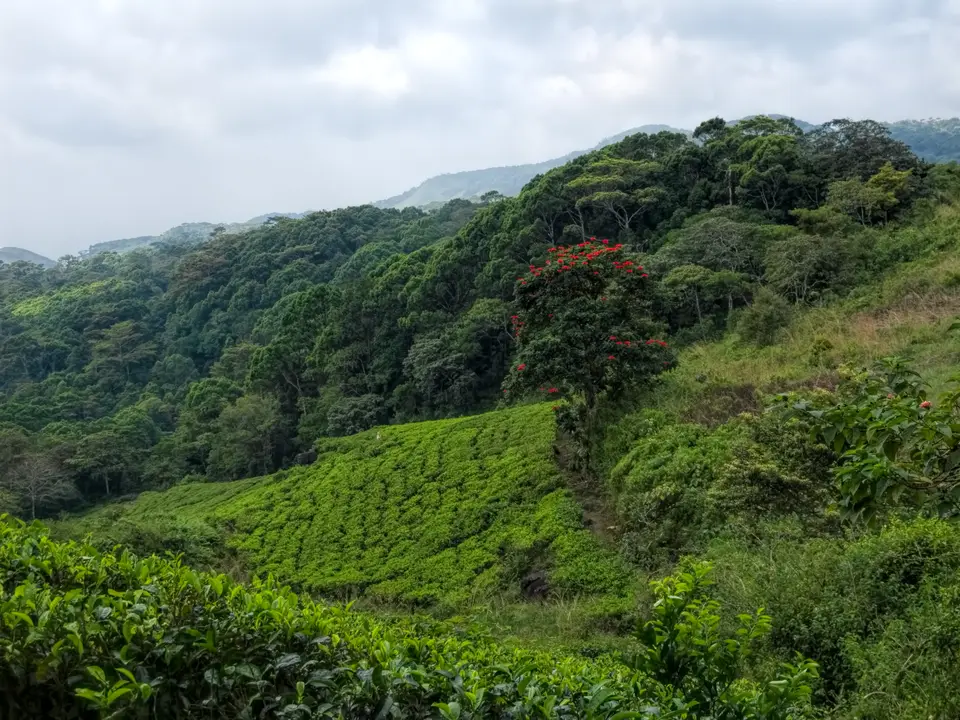
Tucked into the wet-zone foothills of southwestern Sri Lanka across the borderlands of Sabaragamuwa and Southern Provinces, Sinharaja Forest Reserve protects the country's last viable expanse of primary lowland tropical rainforest. Established in April 1978 under the Department of Forest Conservation and inscribed in the UNESCO World Heritage Atlas in 1988 under natural criteria ix and x, the reserve lies southeast of Colombo near the hill town of Rakwana. Administratively, 60 percent of the forest falls within the borders of Rathnapura District, while Galle District and Kaluthara District each contain 20 percent. Whereas commercial tea gardens and agricultural estates cleared much of Sri Lanka's southwestern wet zone over the past two centuries, the steep, narrow ridge-and-valley terrain of Sinharaja preserved an unbroken virgin rainforest canopy whose botanical lineages trace back to the Jurassic period between 200 and 145 million years ago, when the island formed part of the ancient southern supercontinent of Gondwanaland. Mist clings to the high ridges.
The inscribed World Heritage reserve covers 8,864 hectares (88.64 square kilometres), consisting of 6,092 hectares of Forest Reserve together with 2,772 hectares of Proposed Forest Reserve, set within a broader contiguous rainforest landscape encompassing up to 36,000 hectares (88,960 acres or 360 square kilometres). Rising across an elevational gradient from 300 metres in the lower river valleys up to 1,170 metres along the upper mountain ridges, this elongated belt of rolling highland terrain comprises a sequence of parallel ridges and deep valleys crisscrossed by a dense network of clear mountain streams. Draining to both the south and the north, this detailed matrix of waterways flows into the Gin River (Gin Ganga) along the southern boundary of the reserve, whereas along the northern boundary streams including the Napola Dola, the Koskulana Ganga, and the Kudawa Ganga empty into the Kalu River (Kalu Ganga) basin, which covers most of the northern drainage. Over the past 60 years, meteorological stations across the forest have recorded annual rainfall ranging between 3,614 and 5,006 millimetres, delivered primarily during the southwest monsoon from May to July and the northeast monsoon from November to January.
Because this warm, perennially humid equatorial climate supports an estimated total vegetation density of around 240,000 individual plants per hectare across every vertical layer from ground herbs and ferns to emergent hardwood crowns, Sinharaja is recognised as the densest rainforest in Asia and an essential living laboratory for our scientific understanding of continental drift and the evolutionary processes that shaped South Asian island biota after the breakup of Gondwanaland. Across the island of Sri Lanka as a whole, botanists have recorded 830 endemic plant species, of which 217 species of trees and woody climbers are restricted to the southwestern lowland wet zone. Within Sinharaja Forest Reserve alone, field surveys have documented 139 of those 217 wet-zone woody species (representing 64 percent of the lowland wet-zone total, including 16 rare species), and more than 60 percent of all individual canopy and understorey trees in the forest are endemic to Sri Lanka, with many of them considered rare and restricted to small microhabitats between the shaded valley streams and upper ridge crests.
Mixed-Species Bird Flocks, Endemic Mammals, and Reptilian Diversity
Matching the ancient Gondwanaland heritage of its flora, the wildlife of Sinharaja exhibits some of the highest localized endemism rates in South Asia across birds, mammals, reptiles, rare amphibians, butterflies, and other insects:
- Nineteen of 20 endemic bird species: Faunal endemism is particularly high among the forest avifauna: out of the 20 Sri Lankan endemic bird species recorded within the reserve, 19 species (95 percent) inhabit Sinharaja. Birdwatchers walking the shaded forest trails accompanied by a certified Sri Lankan tour guide regularly encounter mixed-species foraging flocks moving through the mid-canopy and understorey, sheltering rare endemics including the elusive red-faced malkoha, the green-billed coucal, and the brightly plumaged Sri Lanka blue magpie.
- Fourteen documented mammal taxa and rainforest elephants: More than 50 percent of Sri Lanka's endemic mammal species live inside the reserve, occupying every ecological stratum from the high tree crowns to the stream-side leaf litter. Documented native and endemic mammals include the apex Sri Lankan leopard (Panthera pardus kotiya), troops of the arboreal purple-faced langur (Semnopithecus vetulus), the diurnal toque macaque (Macaca sinica), the nocturnal red slender loris (Loris tardigradus), and the tiny Sinharaja shrew (Crocidura hikmiya). Ground-dwelling ungulates and carnivores include the Sri Lankan deer (Rusa unicolor unicolor), the diminutive Sri Lankan spotted chevrotain (Moschiola meminna), the yellow-striped chevrotain (Moschiola kathygre), and the Sri Lankan jackal (Canis aureus naria), alongside four distinct palm civet taxa: the golden palm civet (Paradoxurus zeylonensis), Paradoxurus aureus, the golden dry-zone palm civet (Paradoxurus stenocephalus), and the Sri Lankan brown palm civet (Paradoxurus montanus). In addition, the dense lowland canopy of Sinharaja shelters the final two surviving individuals of the lowland rainforest elephant subpopulation (Elephas maximus maximus) remaining in the country.
- Endemic vipers, tree frogs, and the Sri Lankan birdwing butterfly: The damp leaf litter, mossy boulders, and stream banks harbour endemic reptiles such as the arboreal green pit viper and the venomous terrestrial hump-nosed viper, alongside a rich variety of rare amphibians, especially tree frogs that breed in the humid microclimates of the Kalu Ganga and Gin Ganga headwaters. Among invertebrates, more than 50 percent of Sri Lanka's endemic butterfly species occur here, led by the large endemic Sri Lankan birdwing butterfly, while terrestrial leeches thrive across the damp forest floor throughout the monsoon and inter-monsoon seasons.
Border Villages, Conservation Advocacy, and Four Guided Entrances
Around the perimeter of Sinharaja, dozens of traditional border villages are closely integrated with the forest ecosystem, where local residents sustainably collect herbal medicine, edible fruits, nuts, mushrooms, and other non-timber forest products including wild bees' honey and a sugary sap tapped from native fishtail palms belonging to the genus Caryota. Conservation vigilance has remained vital over recent decades: Martin Wijesinhe served as one of the most significant figures connected to Sinharaja, acting as its dedicated unofficial guardian and caretaker from the 1950s until his death in 2021; in 2013, following a formal complaint from Sri Lanka's Centre for Environmental and Nature Studies and a social media campaign by environmentalists, UNESCO requested authorities to halt the widening of an ancient road linking the Lankagama area to Deniyaya along a 1-kilometre jungle patch inside the protected area; and in March 2021, an expose of deforestation inside the reserve by environmentalist Bhagya Abeyratne drew widespread national media attention:
- Entry and route: Public visitor access into Sinharaja is organised across four main entry gates surrounding the reserve across Sabaragamuwa and Southern Provinces: Weddagala on the northwest (approached via Kudawa in Rathnapura District), Rakwana on the northeast, Neluwa on the southwest in Galle District, and Deniyaya and Mederipitiya on the southeast.
- Tickets and viewpoints: In accordance with Department of Forest Conservation regulations, independent unguided entry is prohibited; all visitors are required to purchase a forestry permit at the entrance office and enter the forest accompanied by a certified, licensed Sri Lankan tour guide who offers insights into the reserve's biodiversity and ecological significance while helping spot camouflaged green pit vipers, hump-nosed vipers, red-faced malkohas, green-billed coucals, and Sri Lanka blue magpies along the ridge and valley trails. Check the official site before arrival for current permit rules and guided hiking tour options.
- Timing and onward connections: The drier months between the May to July southwest monsoon and the November to January northeast monsoon provide the clearest trail conditions and highest birding activity across the Kalu Ganga and Gin Ganga watersheds, though hikers at all times of year should wear protective footwear against leeches, carry rain gear for sudden tropical downpours, and begin their guided walk early in the morning from Weddagala, Kudawa, Rakwana, Neluwa, or Deniyaya before afternoon clouds gather over the upper ridges.
