


























Quick Field Data
- UNESCO Inscription: 1985, inscribed as a masterpiece of Hellenistic Thracian sepulchral architecture and sculpture preserving unique polychrome caryatids and funerary murals.
- Scale & Footprint: Situated inside Mound No. 7 (Ginina Mogila) within the 647.6-hectare Sboryanovo Archaeological Reserve, which encompasses over 40 Thracian burial mounds and the fortified plateau of ancient Helis.
- Access & Ticketing: Protected beneath a climate-controlled moisture-isolating shell inside the reinstated earthen tumulus; entry is strictly in small timed groups accompanied by a site curator, so check the official site for seasonal hours and dry-weather opening policies.
- Arrival Logistics: Located 2.5 kilometres southwest of the village of Sveshtari and 42 kilometres northeast of Razgrad in Razgrad Province, northeastern Bulgaria.
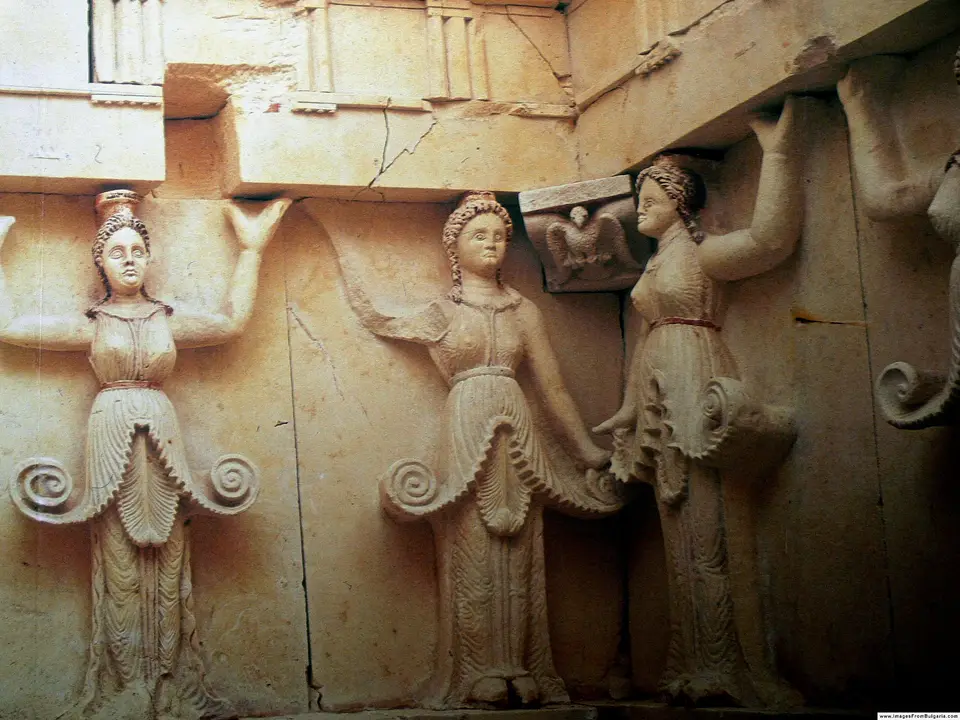
Beneath the grassy earthen dome of Ginina Mogila (Mound No. 7) in the western Ludogorie plateau of northeastern Bulgaria, 2.5 kilometres southwest of the village of Sveshtari and 42 kilometres northeast of Razgrad, lies the Thracian Tomb of Sveshtari (Sveshtarska grobnitsa). Discovered in 1982 during archaeological excavations in the Eastern Mound Necropolis of the Sboryanovo (Sborianovo) historical and archaeological reserve and inscribed on the UNESCO World Heritage Atlas in 1985 across a 647.6-hectare protected zone, this royal mausoleum dates from the first quarter of the third century BC. Built for a ruler of the Getae (Getes), a powerful northern Thracian people inhabiting both banks of the lower Danube who maintained close contact with the Hellenistic and Hyperborean worlds, the limestone chamber tomb preserves ten extraordinary high-relief polychrome caryatids and a painted vault lunette that have no known parallel anywhere in the ancient Thracian lands. Ten sculpted maidens support the stone vault.
King Dromichaetes, Lysimachus, and the Getic Capital of Helis
The historical backdrop to the Sveshtari royal tomb lies in the political rise of the Getic tribes following the Balkan military campaigns of King the Macedonian ruler Philip II from 352 to 340 BC. Whereas the Getae had previously been federated within the southern Odrysian Kingdom during the fifth century BC, the Macedonian shattering of Odrysian authority allowed the Getic rulers to consolidate a flourishing kingdom across both sides of the lower Danube (spanning modern northeastern Bulgaria and Romania) during the second half of the fourth and early third centuries BC.
Archaeological and historical scholarship identifies the Sveshtari mausoleum as the probable royal grave of King Dromichaetes (reigned around 300 to 280 BC), the celebrated ruler of the Getae who defeated and captured the Hellenistic general and diadochus King Lysimachus of Thrace (circa 360 to 281 BC, one of the successors of Alexander the Great), before sealing a dynastic peace treaty by marrying Lysimachus's daughter. Inside the tomb, the presence of two ceremonial stone funerary beds and unfinished sculptural details indicates that the young queen was buried beside her husband before the stonecutters and painters had fully completed the interior decoration, a rare, frozen snapshot of an interrupted Hellenistic and Thracian artistic workshop.
The royal necropolis of Sveshtari does not stand in isolation: it forms part of the 647.6-hectare Sboryanovo reserve, which contains more than 40 Thracian sepulchral mounds alongside ancient sanctuaries, medieval settlements, and an Ottoman mausoleum and minaret. Directly adjacent to the necropolis, perched on a natural peninsula stronghold surrounded by the deep limestone ravines of the Krapinets River, lie the excavated ruins of a large fortified Getic city widely identified by archaeologists as Helis, the royal capital of Dromichaetes. Occupied between roughly 335 and 250 BC according to stamped amphora handles and coinage, this plateau fortress was defended by an outer stone wall up to 4 metres thick enclosing 10 hectares and an inner stone wall enclosing a 5-hectare quadrilateral residential core linked by paved thoroughfares. In 2012, excavations across the 150 fourth-century BC mounds near Sveshtari uncovered a spectacular golden treasure including a gold ring, 44 female figure plaques, and 100 gold buttons.
Three Vaulted Chambers, Ten Polychrome Caryatids, and the Deification Lunette
Constructed from finely dressed blocks of soft white limestone fitted together without mortar in accordance with the fundamental principles of Thracian cult buildings, the Sveshtari tomb is entered through an open entrance corridor (dromos) that leads into three barrel-vaulted rectangular rooms: an anteroom, a lateral chamber on the east (used for grave offerings and sacrificial horse remains), and the richly sculpted central burial chamber on the north. Framing the entrance are stone pillars carved with bucrania (ox skulls), rosettes, and garlands.
Stepping into the central funerary chamber reveals a sculptural and architectural composition that merges Greek Hellenistic Doric and Corinthian orders with indigenous Getic religious symbolism. Engaged columns, four Doric and one Corinthian, divide the limestone walls below a Doric frieze of triglyphs and metopes, while standing on a continuous stone bench around the three walls are ten female figures (caryatids) carved in high relief, each measuring roughly 1.2 metres tall. Positioned with four figures along the northern back wall and three figures along each of the eastern and western side walls, these ten caryatids are depicted as hybrid half-human, half-plant beings: their solemn, individualized faces and raised arms (frozen in the ritual gesture of a choir of mourners or priestesses holding up the architrave) rise above belted chiton garments whose skirts curl outward into inverted three-petalled acanthus calyces and spiral volutes.
Significantly, the limestone surfaces of the caryatids still retain traces of their original third-century BC mineral polychromy in shades of dark ochre, brown, blue, red, and lilac. Directly above the four northern caryatids, painted in dark mineral pigments on the semicircular lunette panel beneath the barrel vault, is a figurative mural depicting the posthumous apotheosis (heroisation and deification) of the Getic king. Within Bulgaria, the middle of scene, the tall figure of the standing goddess extends a golden laurel wreath toward the mounted king, who rides toward her on horseback accompanied by armour-bearing squires behind him and female attendants carrying ritual vessels and gifts in front of him, unfinished charcoal sketch lines still visible on the plaster proving that the tomb was sealed hastily upon the ruler's death.
Microclimate Shell Conservation and Exploring the Sboryanovo Reserve
What makes the royal tomb inside Ginina Mogila so significant to the study of ancient southeastern Europe is the way it bridges the classical Hellenistic Mediterranean and the indigenous Thracian world of the lower Danube. While the finely dressed limestone masonry, Doric and Corinthian architectural orders, and triglyph friezes reflect close familiarity with early third-century BC Greek building techniques, the ten polychrome half-human, half-plant caryatids and the painted heroisation lunette express distinct Getic religious beliefs regarding royal immortality and the afterlife.
Set within the wider archaeological terrain of the Sboryanovo reserve alongside more than 40 burial mounds and the fortified plateau settlement on the Krapinets River ravines, the Sveshtari mausoleum illuminates the political and artistic golden age of the Getae. Observing the preserved mineral pigments and the unfinished sculptor's chisel marks inside the central chamber gives visitors an intimate view of a third-century BC royal monument frozen at the moment of its sealing.
Following its discovery in 1982, Bulgarian and international conservation engineers encased the limestone tomb inside a protective moisture-isolating concrete dome before reinstating the external earthen tumulus of Ginina Mogila, allowing curators to monitor temperature and humidity year-round while visitors view the chamber through glass partitions.
- Verify dry-weather opening status and group entry windows before travelling: Because high outdoor humidity during heavy rain or winter fog can destabilise the third-century BC ochre and lilac pigments inside the burial chamber, the tomb closes temporarily during wet weather; confirm current visitor access status with the museum management in Isperih before driving to Sveshtari.
- Look for the unfinished sculptor's chiselling and charcoal outlines in the central chamber: As you view the ten caryatids and the upper vault lunette, notice how several acanthus skirts and the mounted horseman mural on the lunette remain in preliminary sketch and rough-carved stages, showing the exact step-by-step sequence of an ancient Hellenistic and Thracian workshop.
- Walk the Sboryanovo trails to the Krapinets River fortress of Helis: After visiting Mound No. 7, follow the signposted walking paths through the 647.6-hectare Sboryanovo reserve to inspect the 4-metre-thick limestone ramparts of the Getic capital of Helis overlooking the Krapinets canyon and the Ottoman mausoleum within the reserve.
