


























Best Things to Do in Bali: Temples, Volcano Treks and Coastal Sanctuaries
Plan the best things to do in Bali across cultural sea temples, volcanic ridges, UNESCO subak terraces, and marine sanctuaries with verified local logistics.
Bali presents distinct geographic landscapes across its volcanic spine, cultural heartlands, and limestone peninsulas. Social media has concentrated visitor traffic onto a small handful of oversubscribed photo stops, leaving exceptional highland forests and quiet reef bays uncrowded. Grouping your days geographically prevents hours spent sitting in island traffic. The dry season runs from April to October and offers the most reliable conditions for climbing volcanic ridges and open-water swimming, with August averaging only 57 millimetres of rainfall across 18.5 wet days. Choosing early mornings or late afternoons for outdoor activities avoids the strongest equatorial heat and midday congestion.
Venerable Sea Temples and Highland Sanctuaries
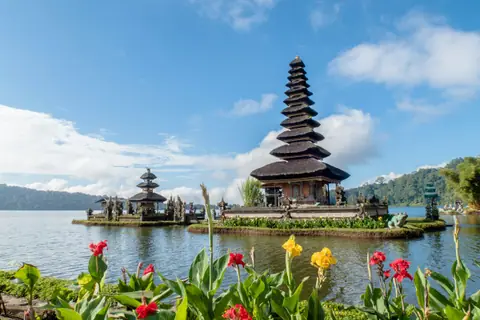
Sacred architecture in Bali reflects the philosophy of Tri Hita Karana, which preserves harmony between humans, nature, and the spiritual realm. Uluwatu Temple occupies a sheer limestone cliff overlooking the Indian Ocean on the Bukit Peninsula. In the late afternoon, visitors gather here for the Kecak performance, where a choir of seated men chant in interlocking polyrhythms while the sun dips beneath the horizon. Monkeys inhabit the surrounding forest canopy and frequently target loose sunglasses, cameras, and snacks.
Tanah Lot sits on an offshore rocky outcrop in Tabanan regency, approachable on foot across the sand strictly during low tide. When the tide rises, the ocean completely isolates the shrine. Further inland on the slopes of Mount Agung, Bali's highest point at 3,148 metres, stands Pura Besakih. As the mother temple complex of the island, Besakih comprises over 80 individual shrines tiered up the mountain slope. Every visitor must wear modest clothing with knees and shoulders covered, wrapped in a sarong and sash before entering sacred courtyards. Consult our Bali temples guide for comprehensive dress regulations and seasonal prayer schedules.
Highland Climbs, Rice Terraces and Village Architecture
Mount Batur offers an active volcanic climb centered above Lake Batur in the Kintamani caldera. Trekkers depart well before dawn to reach the summit rim for first light, watching steam vents hiss against the morning chill. The ascent traverses loose volcanic gravel and steep rock steps, making sturdy footwear and licensed local guidance essential. For lower-altitude trekking, Mount Lesung delivers quieter forest routes and clear views across nearby crater lakes.
Centuries of communal cooperation shaped the subak agricultural landscapes of the western highlands. At Jatiluwih, massive emerald terraces cascade down mountain slopes using temple-managed water channels established in the ninth century. Walking the irrigation dikes here reveals small stone shrines where farmers leave daily offerings of woven palm leaf, rice grains, and fragrant blossoms. To observe traditional domestic layout and bamboo construction, visit Penglipuran village in Bangli regency. Renowned for its spotless stone street, identical compound gateways, and preserved community forests, the settlement demonstrates classical Balinese village spatial planning.
Marine Reserves and Coastal Activities
The coastline of Bali varies dramatically between southern surf breaks and protected northern marine habitats. Along the eastern coast, Amed features black volcanic sand beaches fronting shallow coral reefs full of tropical marine life. Swimmers and snorkelers can step straight off the shoreline into quiet water. Nearby Tulamben shelters the historic shipwreck of the USAT Liberty, resting on a sandy seabed accessible directly from the pebble beach. On the north coast, Lovina Beach provides tranquil water conditions where early boat charters take passengers offshore for dolphin-watching excursions.
Across the Badung Strait, the offshore island of Nusa Penida contains dramatic limestone topography. Kelingking Beach is celebrated for its distinctive T-rex-shaped headland that drops precipitously to turquoise surf. The coastal switchback path down to Kelingking sand is extremely steep, exposed to intense heat, and bordered by rudimentary bamboo railings. Surfers favor Canggu Beach on the southwest coast, characterised by dark volcanic sand and dependable breaks suitable for intermediate riders.
| Experience and Destination | Regional Location | Key Natural Feature | Practical Recommendation |
|---|---|---|---|
| Uluwatu Temple Kecak Performance | Bukit Peninsula, South Bali | Ocean cliff top setting | Arrive by mid-afternoon to secure seating before sunset |
| Mount Batur Summit Trek | Kintamani, Central Highlands | Active volcanic crater and lake | Pack warm windproof layers for the chilly dawn summit |
| Jatiluwih Subak Rice Terraces | Tabanan Regency | UNESCO-listed irrigation network | Follow established field paths to protect active crops |
| USAT Liberty Shipwreck | Tulamben, East Bali | Historic coastal marine habitat | Swim out early in the day when surface currents remain calm |
| Penglipuran Traditional Village | Bangli Regency | Preserved bamboo architecture | Respect private residential courtyards during foot exploration |
Artisan Traditions and Forest Sanctuaries in Ubud
Ubud serves as the cultural center of the central foothills, surrounded by deep river ravines and working farmland. The Sacred Monkey Forest Sanctuary protects hundreds of long-tailed macaques within a dense canopy of ancient banyan trees and carved mossy stone shrines. Visitors must secure all loose personal belongings and avoid eye contact with the animals. In the town center, traditional yoga studios offer daily movement sessions overlooking green fields, catering comfortably to novices and experienced practitioners alike.
Evenings in the central palace courtyards feature rotational performances of classical Balinese dances, including Legong with its intricate finger movements and Barong mythological dramas. Taking an interactive cooking workshop introduces the complex spice foundations of local cuisine, known as base genep, ground fresh on stone mortars before simmering local dishes. Review our Ubud guide for detailed walking itineraries along quiet northern village pathways and river gullies.
Hidden Waterfalls and Black Sand Coastlines
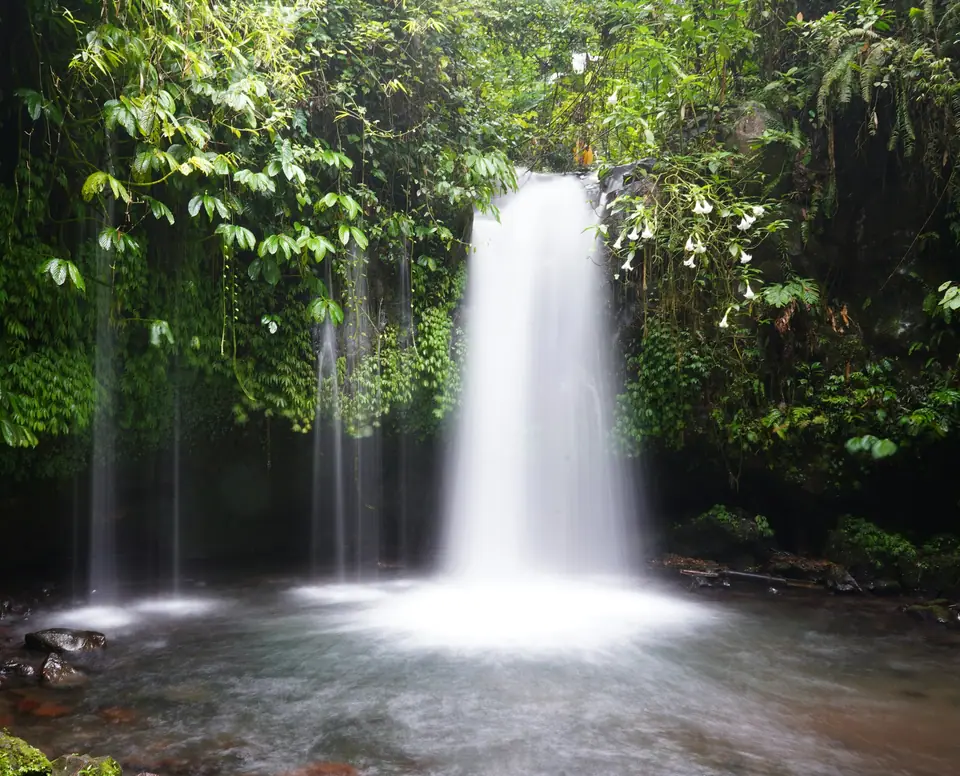
Volcanic rivers cutting through the central uplands form impressive hidden cascades. Tukad Cepung Waterfall sits concealed inside a dramatic rock cavern near Bangli, where sunlight beams filter down through a narrow canyon ceiling onto the pool. In the northern highlands, Sekumpul Waterfall plunges into a lush jungle gorge, accessed via a trek down steep stone stairs, bamboo footbridges, and shallow river crossings. Sturdy water shoes prevent slipping on wet river stones.
Along the southeastern coastline, Kusamba Beach presents striking black volcanic sands where artisan salt makers harvest mineral-rich sea salt at dawn. Workers carry seawater in wooden shoulder buckets to spray across raked sand flats before evaporating the brine inside hollowed coconut trunks. Combining these coastal stops with high-altitude temple visits produces a balanced island schedule. Refer to our Bali 5-day itinerary to connect these activities efficiently across your travel dates.
Where it is
- 1Central Bali
- Denpasar I Gusti Ngurah Rai International Airport (DPS) · about 38 km from the central Bali in a straight line
- Directions in Google Maps
Stations and taxi ranks: OpenStreetMap. Airports: OurAirports. Distances are in a straight line.
Traveller tips
Real advice from people who have been to Bali. Every tip is read by our team before it goes live.
No tips yet. Been here? Yours could be the first.
Thank you! Your tip will appear here after a quick review.
More in Bali
Continue exploring Bali with related neighbourhood, food, and planning guides
Best Time to Visit Bali: Seasons, Weather and Festival Calendar
Bali, Indonesia
What to Wear in Bali: Temple Etiquette, Climate and Packing Guide
Bali, Indonesia
Ubud Guide: Rice Fields, Royal Palaces, and Forest Sanctuaries
Bali, Indonesia
Bali Temples Guide: Etiquette and Which Temples to Visit
Bali, Indonesia
