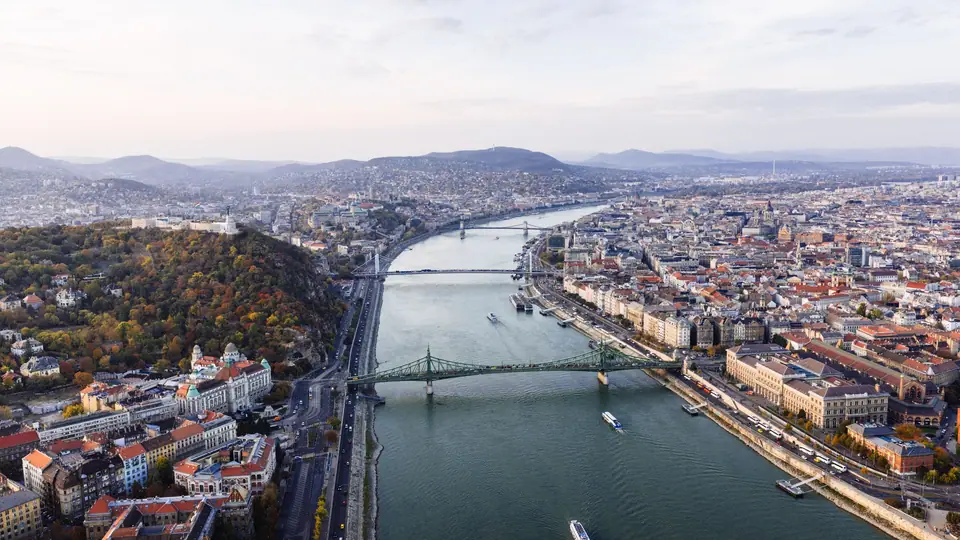
Gellért Hill, the Reopened Citadella and Cave Church
How to walk up Gellért Hill to the reopened Citadella fortress park, the Liberty Statue and the Cave Church in the cliff.
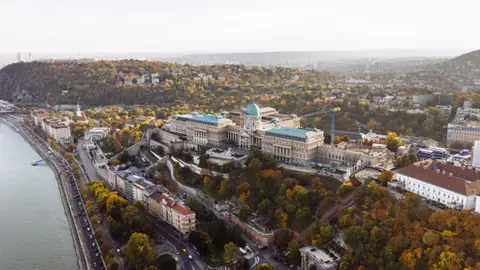
South of Castle Hill on the Buda bank, the dolomite cliff of Gellért Hill (Gellért-hegy) rises 235 metres straight out of the Danube. For more than a decade its summit fortress was fenced off behind scaffolding, making the climb end in a construction wall. Following a major restoration that reopened the complex in spring 2026, Gellért Hill is once again the single best high viewpoint in Budapest.
The reopened Citadella and Liberty Statue
Built by the Habsburgs after they crushed the 1848 and 1849 Hungarian War of Independence, the 220-metre-long Citadella was designed not to defend Budapest from foreign armies, but to aim cannons down at the rebellious citizens of Pest. Instead of the old single bottlenecked gate, the restoration cut wide stairways through the limestone walls so walkers can pass straight into a 6,000-square-metre public park inside the fortress courtyard, complete with gardens, water features, a glass pedestrian bridge and a café.
At the eastern prow of the fortress stands the 14-metre bronze Liberty Statue (Szabadság-szobor), holding a palm leaf high above her head, erected in 1947 as a Soviet liberation monument and rededicated after 1989 to all who sacrificed their lives for Hungary's independence. Walking the Citadella park, the fortress wall promenades and the plaza around the Liberty Statue is completely free; entering the multi-level Bastion of Freedom historical exhibition inside the western cannon tower (rondella) and its exclusive upper roof terrace requires a timed ticket.
Three stops on the way up (or down)
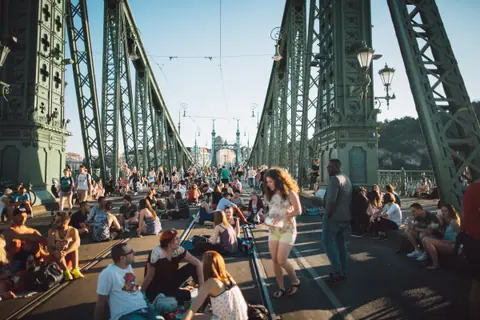
You can walk from either Szent Gellért tér (at the Buda end of green Liberty Bridge, served by metro line M4 and trams 19, 41, 47 and 49) or from Elizabeth Bridge (Erzsébet híd) in 25 to 35 minutes on paved, shaded switchback paths:
- Gellért Hill Cave Church (Sziklatemplom): tucked into the cliff face right above Szent Gellért tér. Inspired by Lourdes and run by the Hungarian Pauline Order, this natural thermal cavern system was used as a field hospital during the Second World War and later bricked shut behind a two-metre-thick concrete wall by the communist regime from 1951 to 1989 (check the official site for audio-guided visiting hours outside Mass).
- St Gerard Monument and waterfall: halfway up the path from Elizabeth Bridge, a semicircular colonnade frames a bronze statue of 11th-century bishop Gerard (Gellért), holding a cross above an artificial waterfall where pagan rebels rolled him down the cliff in a spiked barrel in 1046.
- The Garden of Philosophy (Filozófiai kert): on the quieter northern slope toward Hegyalja út, where a circle of bronze figures by sculptor Nándor Wagner (Abraham, Jesus, Buddha, Laozi, Akhenaten, Gandhi, Bodhidharma and Francis of Assisi) stands on the grass with an uncrowded view of Buda Castle.
Traveller tips
Real advice from people who have been to Gellért Hill, the Reopened Citadella and Cave Church. Every tip is read by our team before it goes live.
No tips yet. Been here? Yours could be the first.
Thank you! Your tip will appear here after a quick review.
More in Budapest
Continue exploring Budapest with related neighbourhood, food, and planning guides