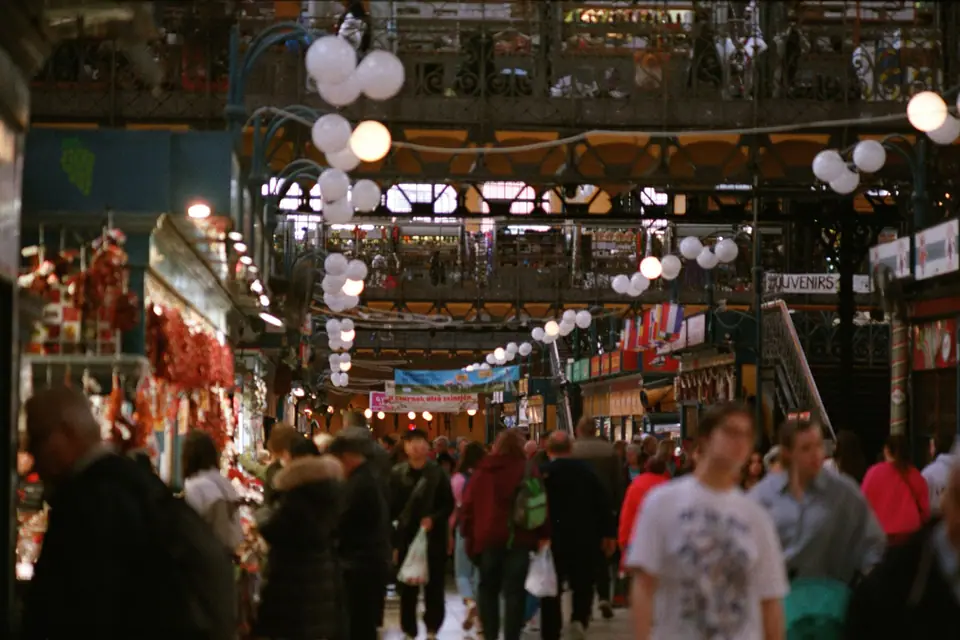
The Great Market Hall, Goulash and Hungarian Food
How to navigate the Great Market Hall, tell gulyás apart from pörkölt, and pick the best coffee houses and Hungarian wines.
Hungarian food is built around sweet red paprika from Szeged and Kalocsa, slow-cooked onions and lard, sour cream (tejföl) and rich layered pastries inherited from the Austro-Hungarian coffee house tradition. To taste it properly, avoid the laminated multi-language picture menus on Váci utca and learn the difference between a few core dishes.
The Great Market Hall (Nagyvásárcsarnok)
At the Pest end of green Liberty Bridge (Fővám tér, metro M4 and Tram 2) stands Budapest's largest indoor market hall, opened in 1897 under a sweeping steel frame and a yellow-and-green Zsolnay pyrogranite tiled roof. Each of its three levels has a different job:
- The ground floor: where locals actually shop, along aisles of braided garlic, strings of sweet (édes) and hot (csípős) paprika, tins of paprika paste, Tokaji wines, honey, goose liver (libamáj) and cured Pick or Mangalica salamis. This is the best place in Budapest to buy edible souvenirs at normal supermarket-level prices.
- The upstairs mezzanine: half craft-souvenir stalls, half hot food counters serving huge plates of stuffed cabbage and fried flatbreads. It is fun to look down over the iron hall from the balcony, though the food stalls up here charge heavy tourist mark-ups and crowd quickly at midday.
- The basement: fishmongers, butchers and barrels of savanyúság, traditional Hungarian pickled peppers stuffed with cabbage, sour gherkins and fermented watermelon.
Remember that the Great Market Hall is closed all day on Sundays and closes mid-afternoon on Saturdays; go on a weekday morning between 8am and 11am.
Dishes to order (and how they differ)
- Gulyás (goulash): in Hungary, gulyás is always a clear, paprika-red soup cooked with cubes of beef shin, potatoes, carrots and tiny pinched csipetke noodles, served in a bowl or mini cauldron.
- Pörkölt and Paprikás: what foreigners usually think of as thick goulash stew is actually marhapörkölt (boneless beef braised slowly in onions and paprika). When finished with thick sour cream, it becomes paprikás, most famously csirkepaprikás (chicken paprikash), always served with soft nokedli egg dumplings.
- Lángos: deep-fried yeasted dough rubbed with garlic water and topped with sour cream and grated cheese. Skip the pricey tourist versions upstairs in the Great Market Hall and get a freshly fried one at Retro Lángos (near Arany János utca metro) or the market stalls inside Hunyadi tér or Lehel Csarnok.
- Kürtőskalács (chimney cake): a Transylvanian-Hungarian sweet dough wrapped around a wooden spit, baked over charcoal until caramelised and rolled in walnut, cinnamon or cocoa.
Classic coffee houses and Hungarian wine
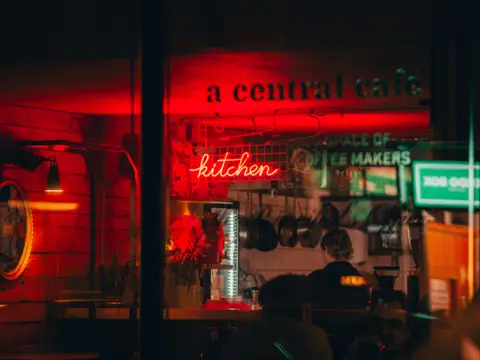
Like Vienna, turn-of-the-century Budapest was a city of literary coffee houses. The grandest survivor is the New York Café (Erzsébet körút 9 to 11), an 1894 Neo-Baroque palace of twisted marble columns, ceiling frescoes and crystal chandeliers; it is gorgeous to look at, though queues run out the door and coffee prices match the gilded ceiling. For a calmer historic room at fairer prices, sit at Centrál Kávéház (Károlyi utca 9, opened 1887), Művész Kávéház on Andrássy Avenue, or Gerbeaud on Vörösmarty tér, ordering a slice of caramel-topped Dobos torte or walnut-apricot Zserbó. At dinner, pair dishes with dry crisp Furmint, spicy Kékfrankos, full-bodied reds from Villány, or a small glass of golden Tokaji Aszú (rated from 3 to 6 puttonyos by sweetness).
Traveller tips
Real advice from people who have been to The Great Market Hall, Goulash and Hungarian Food. Every tip is read by our team before it goes live.
No tips yet. Been here? Yours could be the first.
Thank you! Your tip will appear here after a quick review.
More in Budapest
Continue exploring Budapest with related neighbourhood, food, and planning guides