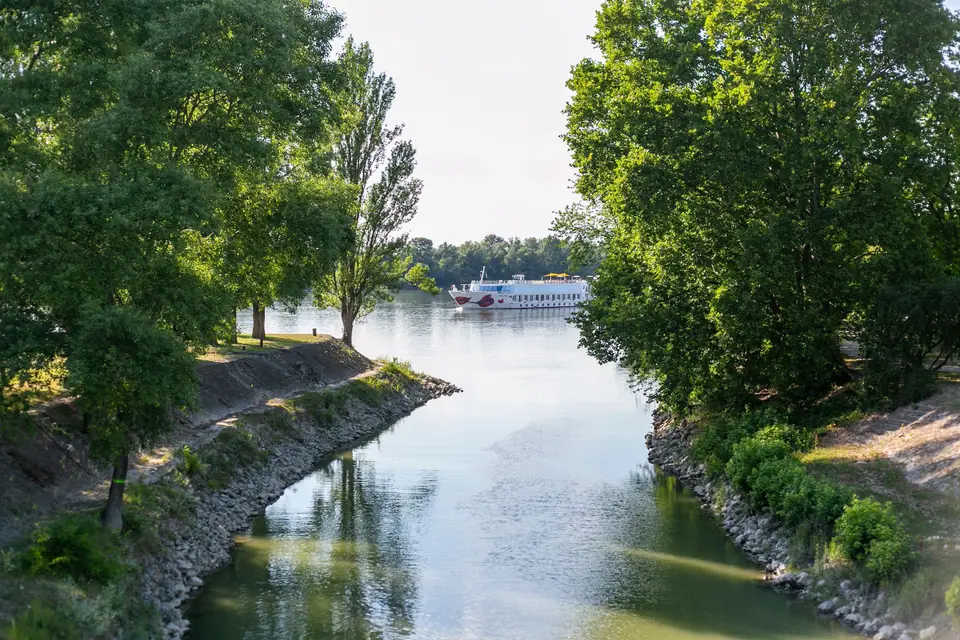
Margaret Island and Roman Óbuda
A car-free green island in the middle of the Danube, plus Roman ruins and Baroque squares just upstream in Óbuda.
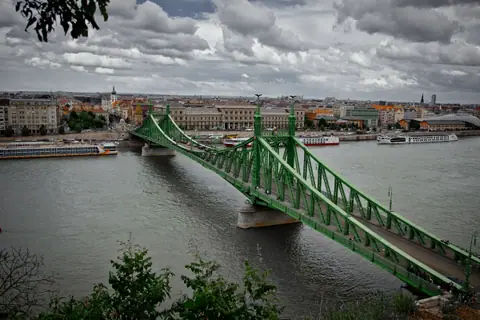
Just north of the Hungarian Parliament, the Danube splits around Margaret Island (Margitsziget), a 2.5-kilometre-long tear-drop of parkland linked to both banks by Margaret Bridge at the south tip and Árpád Bridge at the north. Closed to private cars (only BKK bus 26 and pedal carts run down its spine), it is where Budapest goes to run, picnic and cool off on hot afternoons.
What to do on Margaret Island
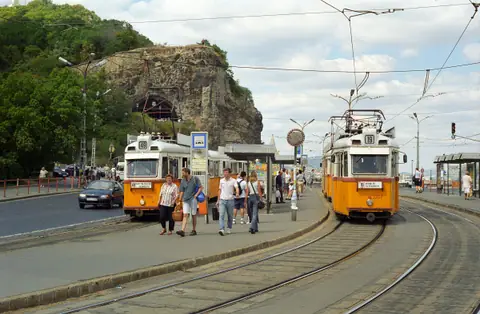
The easiest entrance is from the middle of Margaret Bridge (Margit híd): take yellow Tram 4 or 6, which runs every two to three minutes day and night, get off at the mid-river stop Margitsziget / Margit híd, and walk down the curving ramp straight to the southern lawns.
- The Musical Fountain (Zenélő szökőkút): right inside the southern entrance, jets of water dance to classical, pop and Hungarian music every hour from spring to autumn, with a larger choreographed light-and-water show after dusk.
- Medieval Dominican Convent ruins: halfway up the island stand the stone walls of the 13th-century convent where Princess Margaret (daughter of King Béla IV, who vowed her to God if Hungary survived the 1241 Mongol invasion) lived and died at age 28, giving the island its name.
- The Japanese Garden, Water Tower and running track: at the northern end, a quiet rock garden with thermal-fed lily ponds and tortoises sits near the 1911 Art Nouveau octagonal Water Tower (open in summer as a lookout and exhibition space). A cushioned 5.3-kilometre rubber running track circles the entire shoreline of the island.
- Palatinus Strand Baths: occupying the west side of the island, with a listed 1937 Bauhaus entrance hall, an outdoor wave pool and thermal pools fed by the island's springs.
Crossing into Óbuda and Roman Aquincum
Opposite the northern tip of Margaret Island on the Buda bank lies Óbuda ("Old Buda"), the oldest of the three towns united in 1873. While Soviet-era panel blocks line the main roads, the heart around cobbled Fő tér (Main Square) preserves 18th-century Baroque townhouses, the Zichy Palace cultural centre and the poignant outdoor bronze sculptures of rainy-day women under umbrellas by Imre Varga (get off the H5 suburban HÉV train from Batthyány tér at Szentlélek tér).
Three stops further north on the same H5 train (Aquincum stop) lies the Aquincum Museum and Archaeological Park, the excavated civil town of the Roman provincial capital of Lower Pannonia, where Marcus Aurelius wrote parts of his Meditations. You can walk among the 2nd-century stone foundations of Roman public baths, shops, a Mithraeum temple and an underfloor hypocaust heating system, alongside an indoor museum displaying the world's best-preserved Roman water organ (hydraulis) from AD 228.
Traveller tips
Real advice from people who have been to Margaret Island and Roman Óbuda. Every tip is read by our team before it goes live.
No tips yet. Been here? Yours could be the first.
Thank you! Your tip will appear here after a quick review.
More in Budapest
Continue exploring Budapest with related neighbourhood, food, and planning guides