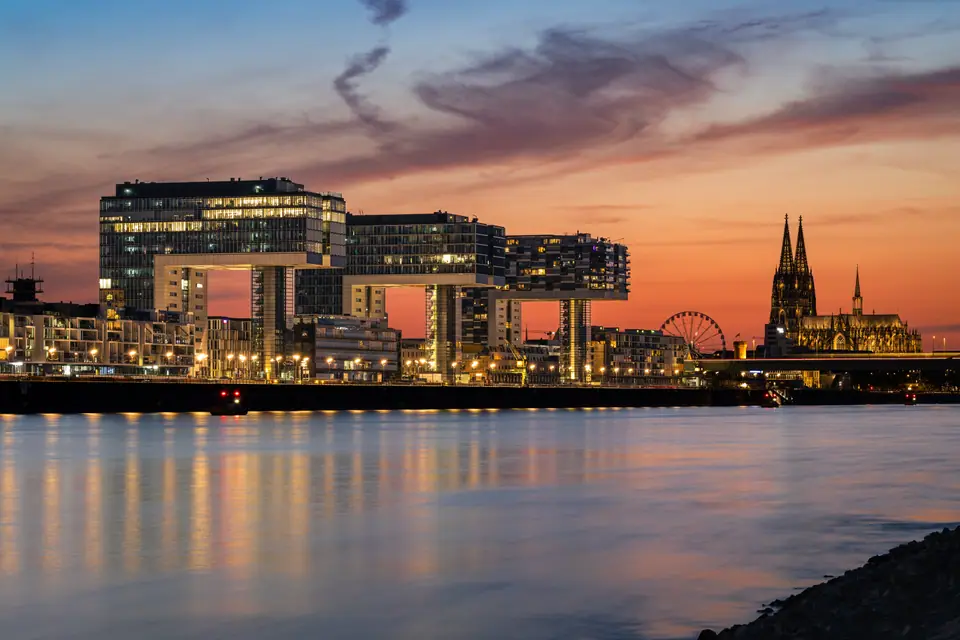
Photo: Superbass · CC BY-SA 4.0
Twin Spires to the Rheinauhafen: Walking Cologne
A five-stop architectural walking circuit across Cologne linking the Dom, Museum Ludwig, Alter Markt, Rheinauhafen cranes, and Deutz.
Central Cologne clusters its civic monuments along a tight left-bank curve facing the Rhine. Walking beats short tram hops here because every corner sets Roman stonework right beside post-war brick. This five-stop walk spans roughly 4 to 5 kilometres from north to south before crossing the river at dusk. Put on steady walking shoes and begin right on the terrace above the railway concourse.
Domplatte, the Cathedral Terrace and Museum Ludwig
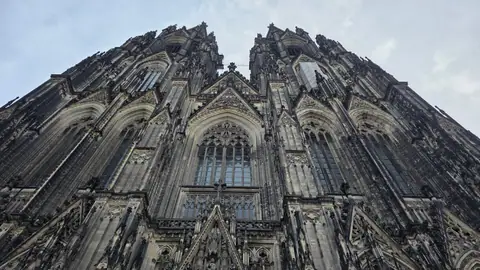
Start on the elevated stone terrace of Domplatte directly south and east of Cologne Cathedral. Walking slowly around the towering choir apse shows how nineteenth-century masons completed medieval flying buttresses to fourteenth-century blueprints. Directly east rises the saw-toothed zinc roofline of Museum Ludwig (opened in 1986) beside the subterranean concrete shell of the Kölner Philharmonie. Active climbers can tackle all 533 spiral steps up the South Tower to a viewing gallery between 97 and 100 metres above the river.
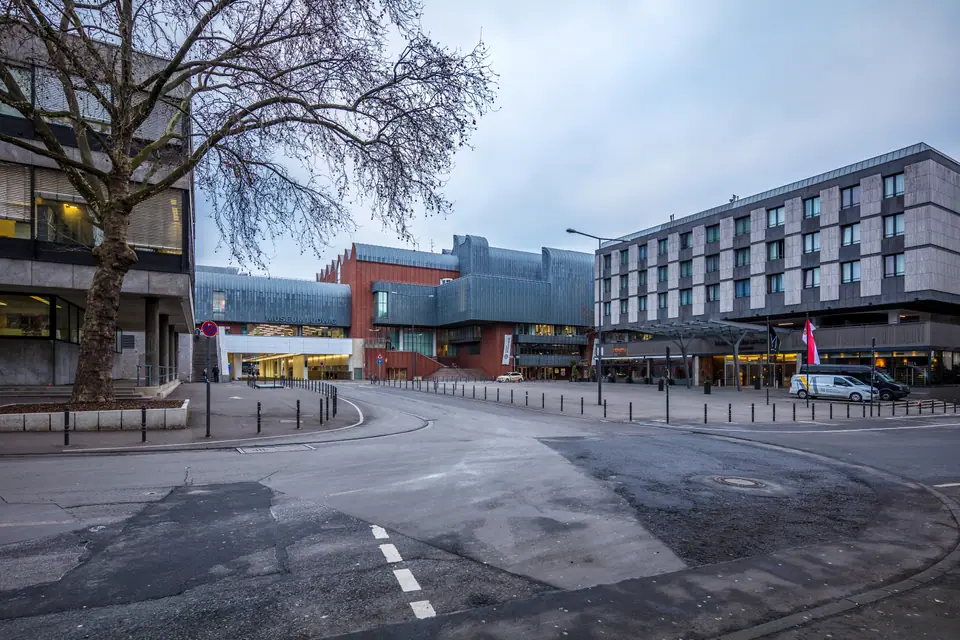
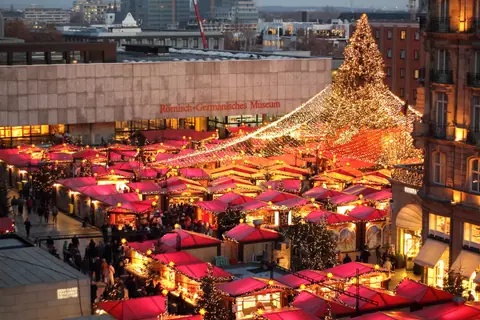
Step inside Museum Ludwig if modern painting belongs on your morning itinerary. Collectors Peter and Irene Ludwig anchored its clean galleries with deep American Pop Art holdings, Russian avant-garde works, German Expressionism, and expansive Pablo Picasso rooms. Outside, note the wide red-brick expanse of Heinrich-Böll-Platz. The symphony hall sits directly underneath those pavers, so attendants cordon off the plaza during evening performances to protect indoor acoustics from footsteps.
Alter Markt, the Rathaus Courtyard and Fischmarkt
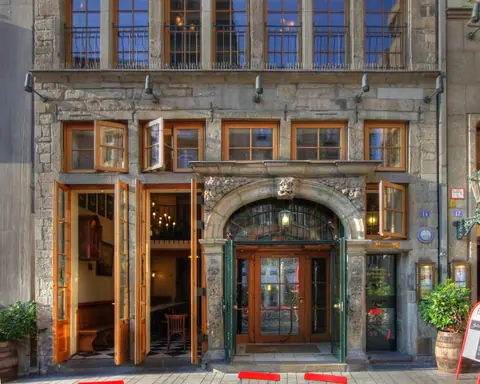
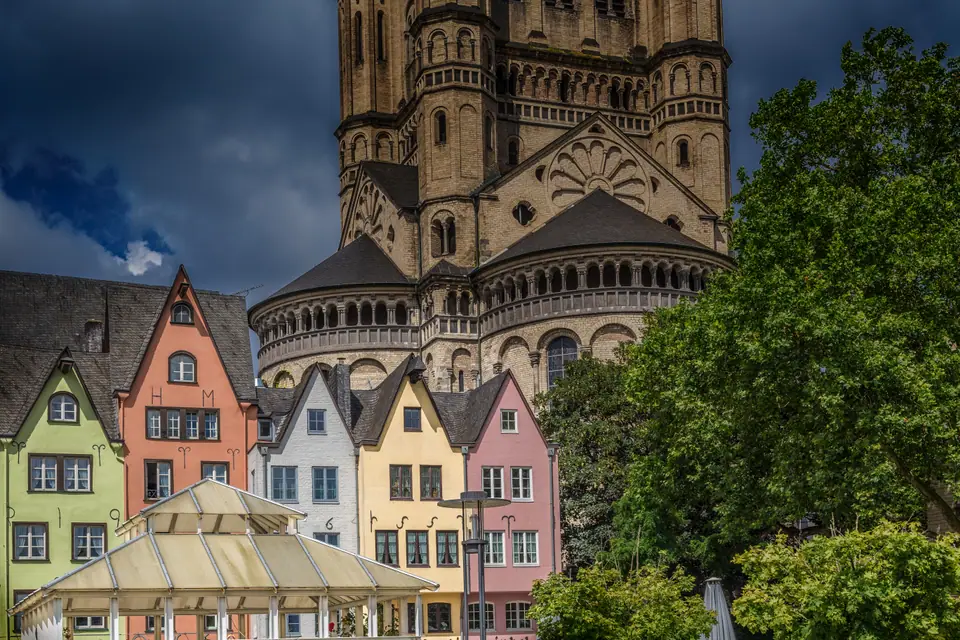
Descend stone stairs east toward the river past the massive 75-metre crossing tower of Great St Martin. Right beneath those four Romanesque corner turrets lies cobblestoned Fischmarkt. Narrow merchant townhouses painted pastel ochre, sage, and slate were rebuilt after 1945 shoulder to shoulder above riverside café tables. Outdoor seats fill quickly whenever afternoon sun warms the gables.
Step one block inland onto Alter Markt and Rathausplatz to inspect the ornate 1573 Renaissance loggia (Rathauslaube) grafted onto the fifteenth-century Gothic Town Hall tower. Beneath the neighbouring plaza, tall glass-and-concrete frames guard ongoing excavations for MiQua, the planned Jewish Museum complex advancing toward a 2029 public opening. Perimeter viewing walkways still expose layered Roman foundations and medieval cellar vaults cleanly in open daylight.
Belgisches Haus Interim Galleries and the Western Roman Line
Leave the waterfront briefly and stroll west up Schildergasse or parallel Cäcilienstraße for roughly 700 metres (around 10 minutes on foot) to number 46, Belgisches Haus. Because the flagship 1974 Römisch-Germanisches Museum beside the Cathedral remains closed for comprehensive refurbishment into 2030, curators show portable treasures inside this streamlined mid-century pavilion near Neumarkt. Roman blown glass, carved portraits, civic inscriptions, and gold finds fill calm sunlit rooms.
From Cäcilienstraße, detour south past the bold three-apsed choir of St Maria im Kapitol or stroll two blocks north to Peter Zumthor's quiet 2007 Kolumba Diocesan Museum. Check our Roman and Romanesque survey to pick which basilica interiors fit your afternoon timing before looping downhill toward the water.
Rheinauhafen Quay, Harbour Cranes and the Chocolate Peninsula
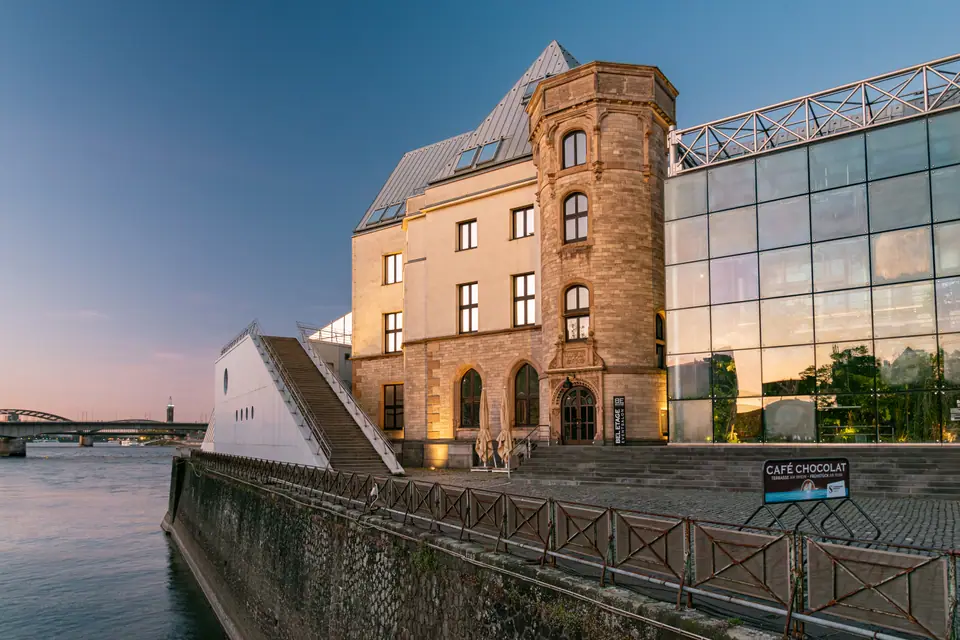
Rejoin the Rhine south of Deutzer Brücke where flat stone quays step onto the two-kilometre Rheinauhafen peninsula. Expanded dramatically as Cologne's inland customs harbour in 1898 (the late 1890s), the dockside pairs red-brick warehouses and cast-iron cranes with modern pedestrian walkways. Jutting off the northern tip beside the sturdy nineteenth-century Malakoff Tower stands architect Fritz Eller's glass-prowed Schokoladenmuseum, opened in 1993 with active cocoa lines spinning behind tall viewing panes.
Continue south along the car-free promenade beneath the 60-metre cantilevered wings of the three Kranhäuser (Kranhaus Nord, Kranhaus 1, and Kranhaus Süd). Built between 2006 and 2010 by Alfons Linster and Hadi Teherani, those towers echo vintage harbour gantries overlooking busy river traffic. At the southern slipway stands the medieval Bayenturm fortress, marking where city fortifications once met passing ships.
Across Severinsbrücke to the Deutz Sunset Terrace
External stairs lift pedestrians onto the asymmetric yellow suspension span of Severinsbrücke high above the yacht basin. Looking back from mid-span opens an uncluttered silhouette across the Cathedral's 157-metre spires and all 12 Romanesque church towers behind terracotta roofs. Descend onto the eastern Deutz riverbank and follow Kennedy-Ufer north to the wide stone steps of the Rheinboulevard.
Locals claim those warm riverside tiers every clear summer evening as freight barges churn downstream below. When dinner calls across in the Old Town or Südstadt, cross west along the footpath lining the 409-metre Hohenzollern Bridge. Built from 1907 to May 1911 and blown up on 6 March 1945, it reopened to pedestrians in May 1948 before full six-track rail restoration finished in 1959. Love locks appeared in 2008, turning the northern rail walk straight back toward Domplatte. Keep another morning free for our Bonn day-trip railway route.
- Half-day or full-day timing: Walking all five stops comfortably takes half a day. Visiting Museum Ludwig, the Chocolate Museum, and the Domschatzkammer inside stretches the loop across a full day.
- Monday closures: Municipal museums such as Museum Ludwig and Belgisches Haus close on Mondays. River embankments, gardens, and open church sanctuaries welcome visitors daily.
- Wet-weather shortcuts and passes: Cologne averages 187.6 wet days yearly. Keep our VRS transit guide handy for swift tram hops and weigh a 24-hour or 48-hour KölnCard for up to 50 percent off museum tickets.
- River docks and daylight angles: KD day boats moor below Frankenwerft when Rhine levels stay normal. Morning sun lights the Cathedral west façade and Fischmarkt cleanly, while late afternoon illuminates the eastern Deutz skyline steps.
Where it is
- 1Cologne
- Cologne Bonn Airport (CGN) · about 15 km from Cologne in a straight line
- Directions in Google Maps
Stations and taxi ranks: OpenStreetMap. Airports: OurAirports. Distances are in a straight line.
Traveller tips
Real advice from people who have been to Cologne. Every tip is read by our team before it goes live.
No tips yet. Been here? Yours could be the first.
Thank you! Your tip will appear here after a quick review.
More in Cologne
Continue exploring Cologne with related neighbourhood, food, and planning guides