Photo: Raimond Spekking · CC BY-SA 3.0
Kölsch, Halve Hahn and Brauhaus Etiquette in Cologne
Decoding Cologne dining culture: the Köbes beer waiter system, 0.2L Stange refills, Halve Hahn rye rolls, Himmel un Ääd, and historic Brauhaus etiquette.
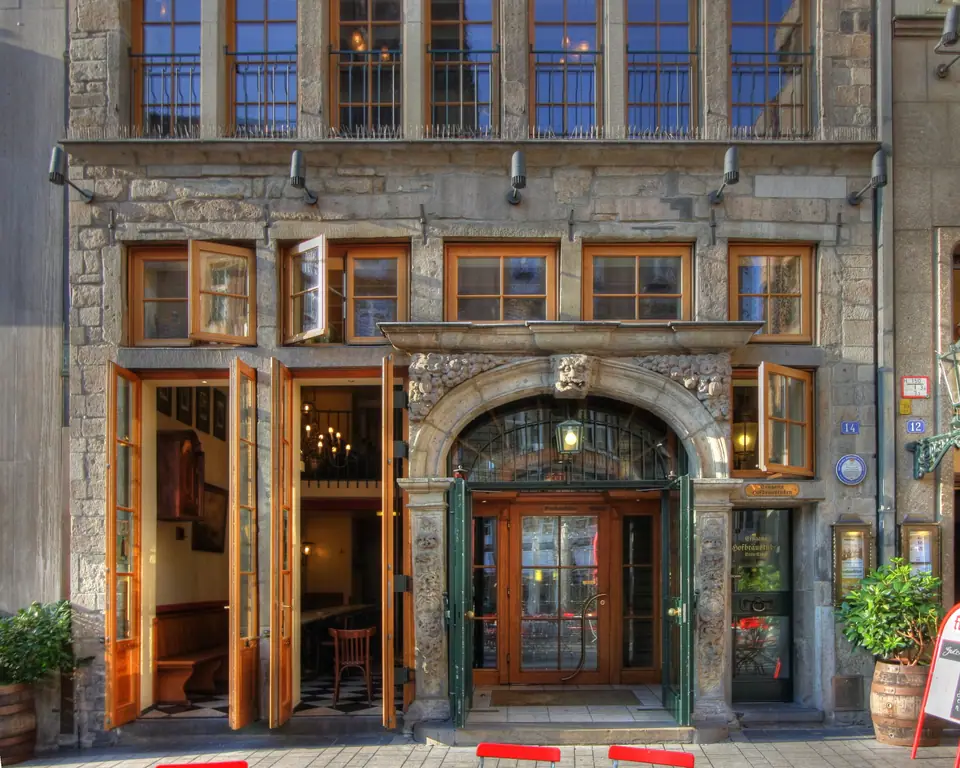
Eating and drinking in central Cologne centres on the historic Brauhaus. These oak-panelled halls around the Cathedral and Alter Markt move briskly. Staff seat newcomers beside regulars on shared wooden benches, often setting down cold beer before coats hang dry. Learning a handful of unspoken floor customs turns brisk service banter into an effortless daily routine on the Rhine.
Why does a Köbes bring another glass without asking?
Traditional taproom waiters carry the historic title Köbes (plural Köbesse). You spot them instantly in heavy dark-blue aprons with battered leather coin pouches strapped at the waist. Genuine Kölsch loses crisp sparkle quickly inside wide mugs. Breweries therefore pour strictly into slim 0.2-litre (200-millilitre) glasses called Stangen, carried across noisy aisles inside a circular metal tray called a Kranz.
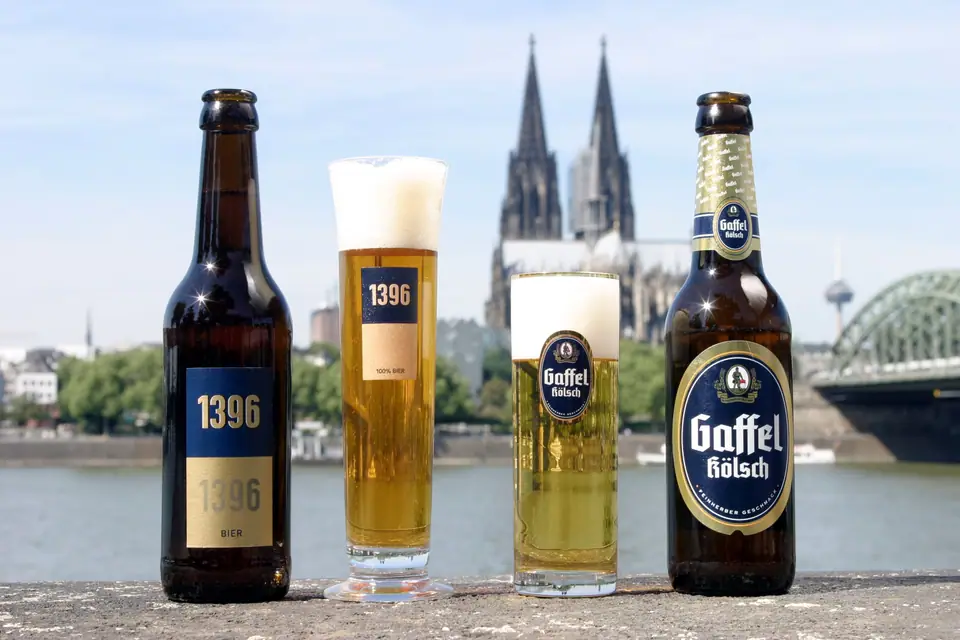
Whenever a Köbes spots your Stange falling to the bottom swallow, a fresh chilled glass slides onto your table automatically. Each replacement earns a quick pencil stroke along the rim of your cardboard coaster (Bierdeckel). Leave that mat beside or beneath the glass and refills keep circling smoothly. Rest the dry coaster flat across your empty rim when you want to stop and settle up.
How should guests read Brauhaus banter and pay at the end?
Uninitiated guests occasionally mistake a waiter's sharp one-liners for irritation. Inside landmark houses such as Früh am Dom, Gaffel am Dom, Peters Brauhaus, Sion, Brauerei zur Malzmühle, or Päffgen on Friesenstraße, dry egalitarian teasing reflects centuries of craft pride. That attitude descends from young brewery apprentices who once hauled oak casks through noisy rooms. Smile back, order concisely, and never ask a historic house for a beer brewed by a rival across town.
Keep your pencilled coaster dry near the edge of the table until everyone finishes drinking. Many city beer halls accept bank cards much more smoothly today than years ago. Certain historic tables still prefer Euro cash, so keep small bills handy even when hotels across Belgisches Viertel and Südstadt run contactless everywhere.
What arrives when you order a Halve Hahn?
Visitors translating the local dialect literally as half a roasted chicken walk straight into Cologne's favourite table prank. Order a Halve Hahn and your waiter brings a crusty split dark-rye roll (Röggelchen) with cold butter. A thick wedge of mature Gouda cheese, sliced raw onion, and sharp Rhineland mustard (Mostert) complete the meatless plate.
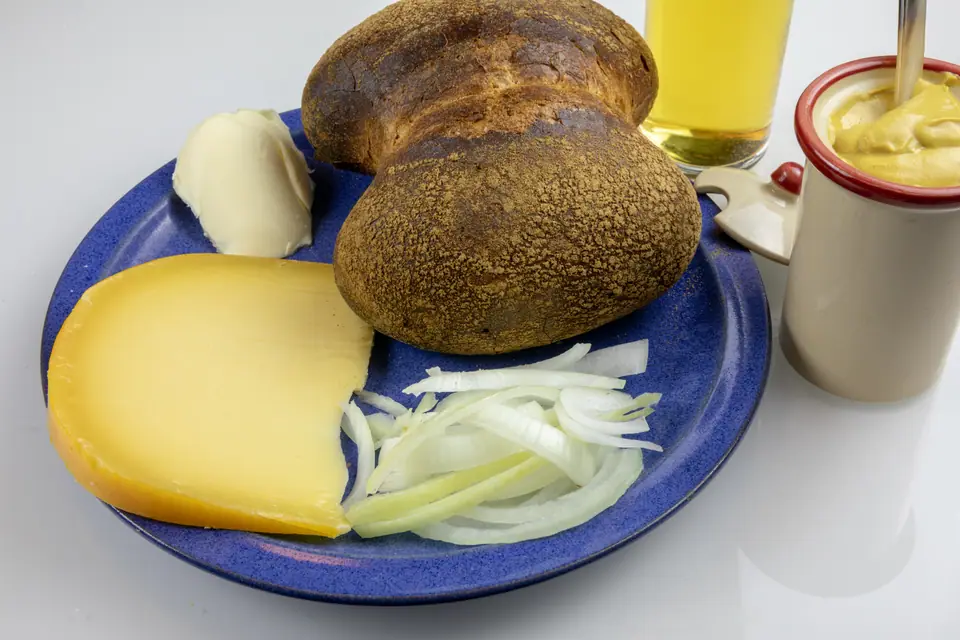
Nineteenth-century brewery lore traces the playful misnomer to a thrifty patron who requested half a roll with modest cheese instead of meat. Today, this crisp savoury snack fits easily between afternoon sightseeing stops paired with two cold rounds of Kölsch.
Why is authentic Kölsch guarded under strict geographic rules?
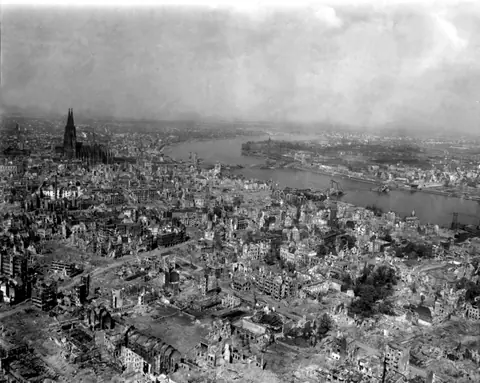
Cologne brewers formed their civic guild back in 1396. City decrees mandated top-fermented (obergärig) brewing as early as 1603. Brewers adopted cold cellar conditioning in the 18th century, refining the bright golden style around 1918. Over 40 active breweries filled Cologne alleys with malt steam prior to the Second World War, though bombing left just 2 standing by the end of 1945.
To defend local craft standards, regional houses including Reissdorf and historic Altstadt names signed the Kölsch-Konvention on 6 March 1986. European Protected Geographical Indication (PGI) status reinforced those rules in 1997. True Kölsch must brew inside Cologne or at grandfathered regional sites such as Brühl and Wiehl within roughly 50 kilometres. Standards mandate a bright, filtered pale beer pouring between 4.4 and 5.2 percent alcohol at 20 to 30 IBU under the German Beer Purity Law (Reinheitsgebot).
Which hearty Rhineland plates belong on a Brauhaus table?
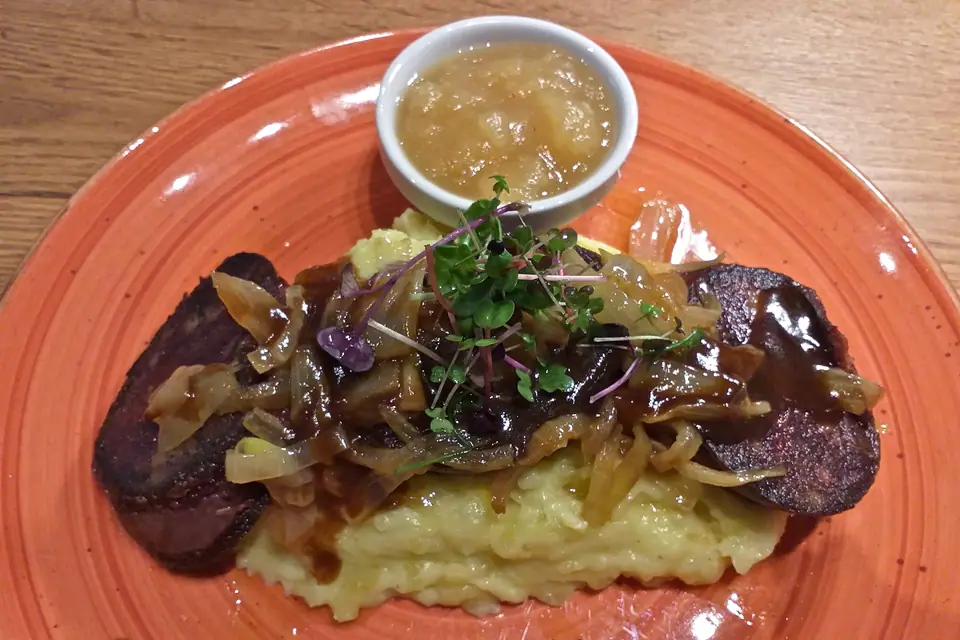
Dinner menus favour honest farm comfort built on brisk sweet-and-sour seasoning. Himmel un Ääd ("Heaven and Earth") matches tart stewed apples from orchard branches above with smooth mashed potatoes from the soil below. Crispy pan-fried slices of black blood sausage (Flönz) and sweet browned onions crown the plate. Lighter snack seekers also order Kölscher Kaviar, pairing cold blood sausage directly with mustard and a rye roll.
When richer Sunday plates call, ask for Rheinischer Sauerbraten. Cooks marinate beef for days in vinegar, wine, and spices before simmering a dark gravy thickened with raisins and crumbled gingerbread (Printen). Older recipes sometimes featured horsemeat. Virtually every central dining hall now serves tender beef beside red cabbage (Rotkohl) and potato dumplings (Klöße).
Where do locals eat beyond the Altstadt oak benches?
Heavy gravy and carved pork knuckles lose charm after three consecutive tavern suppers. Step west into Belgisches Viertel for seasonal bistros, stroll Südstadt side streets for wine bars, or sample lively Turkish grills along Weidengasse and Keupstraße. Finishing our Rheinauhafen promenade walk also drops you straight beside the Chocolate Museum (opened 1993) for an afternoon cocoa stop above the harbour.
- Kölsch (PGI): Bright, filtered, top-fermented pale Cologne beer pouring crisp at 20 to 30 IBU inside slim 0.2-litre Stangen.
- Röggelchen & Halve Hahn: Double-baked crusty rye roll served cold with mature Gouda cheese, sliced raw onions, cold butter, and Rhineland mustard.
- Himmel un Ääd: Mashed potato layered beside spiced warm apple compote, fried blood sausage (Flönz), and deeply caramelised onion rings.
- Rheinischer Sauerbraten: Vinegar-marinated roast braised into a sweet-tart sauce with raisins and gingerbread beside red cabbage and potato dumplings.
- Mettbrötchen: Morning counter favourite spreading raw seasoned minced pork (Mett) across crisp rolls with salt, black pepper, and fresh onion.
Where it is
- 1Cologne
- Cologne Bonn Airport (CGN) · about 15 km from Cologne in a straight line
- Directions in Google Maps
Stations and taxi ranks: OpenStreetMap. Airports: OurAirports. Distances are in a straight line.
Traveller tips
Real advice from people who have been to Cologne. Every tip is read by our team before it goes live.
No tips yet. Been here? Yours could be the first.
Thank you! Your tip will appear here after a quick review.
More in Cologne
Continue exploring Cologne with related neighbourhood, food, and planning guides