Dortmund Harbour Guide
The working canal port that explains how Dortmund got its coal and steel moving.
Dortmund is nowhere near the sea, yet it has a port. The harbour on the northern edge of the centre sits at the end of the Dortmund-Ems Canal, which links the city to the North Sea ports, and it was built so that ore, coal and finished goods could leave by water instead of clogging the railways. Nobody comes for a headline attraction. You come to understand the logistics behind the rest of the Ruhr.
What you actually see
The landmark is the Altes Hafenamt, the old harbour office, a brick building with a turreted corner that dates from the opening years of the port. It currently has extensive renovation work around it and no confirmed new events, so treat it as something to look at from outside and do not plan an interior visit.
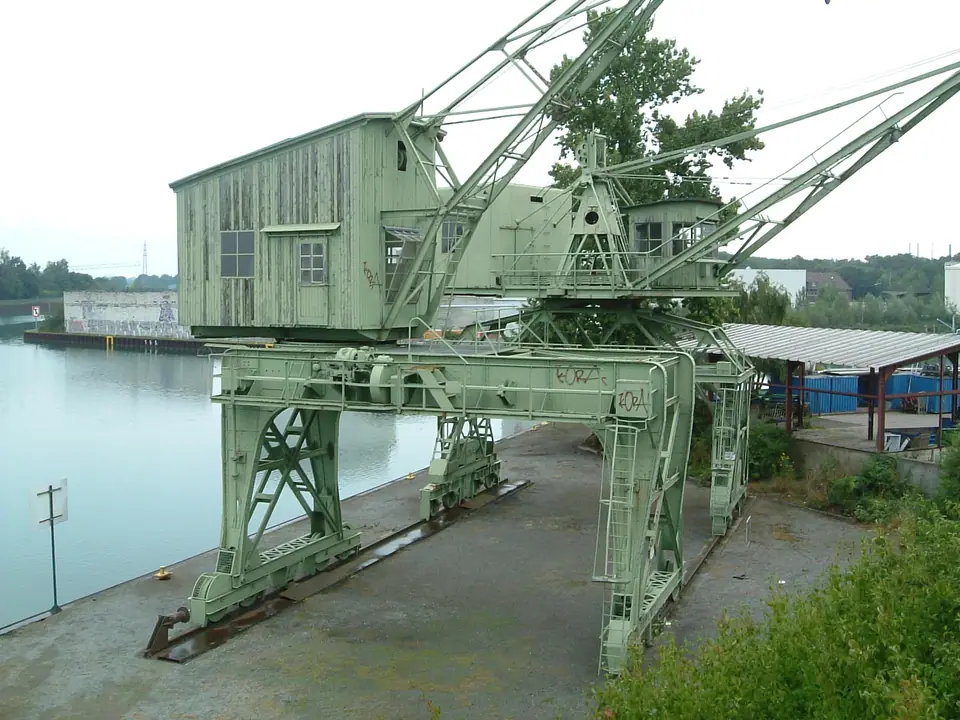
Around it, the quays still carry cranes, silos and rail sidings, and several old warehouse blocks along the water have been converted into offices, studios and small cultural venues. One quay feels like a design district, the next like a scrapyard, and that unevenness is the charm. Walk the water's edge slowly and watch how the new uses are slotted into the old structures. Barges and work boats still move on the canal, which is a useful reminder that this is a functioning port and not a heritage set.
Getting there and linking it up
The harbour lies north of the Hauptbahnhof, beyond the railway lines. The simplest approach is a short Stadtbahn ride, but on a dry day we prefer walking up through the Nordstadt, because the streets between the station and the water show you the working-class districts that fed the industry.
It combines naturally with the rest of the city's industrial story. The harbour is the transport chapter, Zeche Zollern covers mining, the Hoesch Museum covers steel and the lives of the workers, and PHOENIX West shows a blast-furnace site left standing. Seen in that order, the city reads as a system and not a repeat of one theme.
Do not pair it with PHOENIX See on the same short outing. Both are waterfronts, but they sit on opposite sides of the city, and they answer opposite questions: one asks what a port did, the other what a former steelworks can become as a leisure landscape.
When to go and what to expect
Choose a dry afternoon with clear light. The brick, the water and the cranes photograph well in low sun, and the area is quiet enough on a weekday to take your time. In rain it is a bleak place, and in winter darkness arrives early, so do not leave it late.
There is no ticket office, no visitor centre and no set route, which is exactly why it suits a flexible slot in the day. Allow an hour or ninety minutes if you are only looking, longer if you stop for a coffee in one of the converted buildings or want to follow the canal path further. Bring sturdy shoes, as some surfaces are rough.
Who it suits, and who should skip it
This is for people who enjoy infrastructure: photographers, urban explorers, anyone who has read about canals and wants to see one working. It also suits repeat visitors who have done the centre and want a different layer of the city. It is a poor choice for a first-day orientation, for small children who need a playground, or for anyone expecting a polished marina with waterside restaurants and yachts. Those do not exist here.
If your time is short and you must choose one industrial outing beyond the city centre, make it Zeche Zollern or PHOENIX West first. Come to the harbour once those are done, or when the weather rules out the bigger sites and you only have a couple of hours free.
Traveller tips
Real advice from people who have been to Dortmund Harbour. Every tip is read by our team before it goes live.
No tips yet. Been here? Yours could be the first.
Thank you! Your tip will appear here after a quick review.
More in Dortmund
Continue exploring Dortmund with related neighbourhood, food, and planning guides