Hoesch Museum Guide
A free museum that tells Dortmund's steel history through one company and the people who worked there.
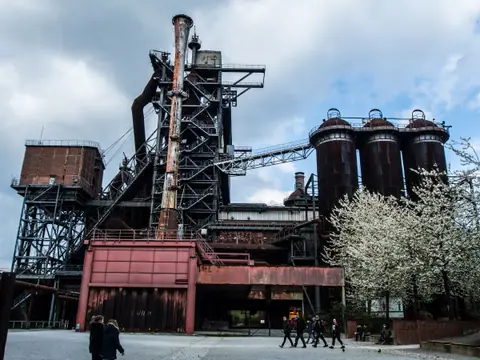
Dortmund once had more steel capacity than almost any city in Germany, and the name above the gates was often Hoesch. This small museum uses that single company to explain what steelmaking did to the people and streets around it. Because the story is so specific, it sticks in the mind better than most big industrial museums.
What you will see
The permanent exhibition follows the company from its beginnings through its growth into one of the great names of German heavy industry. The emphasis falls on people as much as machines: working conditions, the company's role as employer and landlord, housing, the shifts that governed family life and the way neighbourhoods grew up around the works. Photographs, documents and tools do most of the talking, and the display is more reading-friendly than showy.
A separate attraction is the preserved steel house known as the Stahlhaus L141, which brings the subject down to domestic scale. A house built of steel is a surprising object, and it makes an abstract industrial idea feel physical. The museum also runs tours and events, so look at its programme to see whether one coincides with your visit.
Where it is, and why that matters
The museum lies in the north-east of the city, in the old steel district rather than the centre, near Borsigplatz. This is also the neighbourhood where the football club was born in the early twentieth century, so a trip here links neatly with the club story told at the BORUSSEUM. The area is working-class in origin and much of it is still a residential district, so do not expect a polished tourist quarter. Our Nordstadt guide explains the neighbouring districts, which have a similar history and a very mixed population today.
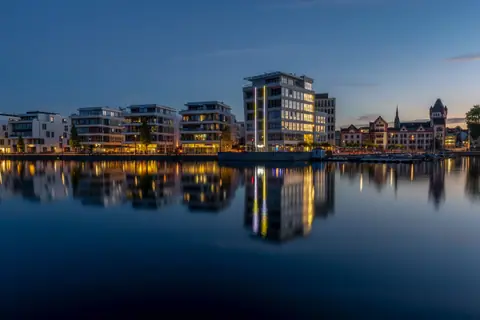
Much of the surrounding steelworks closed around the turn of the millennium, and the cleared land has been reused in various ways. That makes the museum a useful prologue to the redevelopment you can see at PHOENIX West and PHOENIX See, where the same industry has been turned into parkland, housing and new business space.
Planning around the schedule
The museum's weekly pattern is unusual. It opens only on certain days, with some days closed entirely, and the pattern does not follow the usual museum week. That is the single biggest planning issue, and it is why you should confirm the current schedule on the official site before you set off. Do not assume there will be a weekend fallback. If you are building a trip around it, fix the museum day first and plan the other days around it.
Allow one to two hours for the visit. If you enjoy reading display texts and looking at documents, you will use all of that; if you prefer interactive exhibits, you will finish sooner.
How it compares with other industrial sites
- Against Zeche Zollern. Zeche Zollern is a coal mine with ornate architecture and a lot of open space, while Hoesch is a compact company story. They complement each other rather than overlap.
- Against DASA. The DASA looks at the modern world of work, with a lot of hands-on material, while Hoesch looks backwards at a closed chapter.
Who it suits
This museum is a natural fit for anyone interested in labour history, industrial towns or the background to German football. Because entry is free, it also suits a budget-conscious trip, and you do not need to feel pressured to stay for long if the subject does not grip you.
We would skip it if you want spectacle or have only a single day in Dortmund; one of the larger industrial sites will give you more for the time. But if you have already seen Zollern and want to understand the steel side of the story, or if the club's origins in this district interest you, then this modest museum is a thoughtful way to spend an afternoon.
Traveller tips
Real advice from people who have been to Hoesch Museum. Every tip is read by our team before it goes live.
No tips yet. Been here? Yours could be the first.
Thank you! Your tip will appear here after a quick review.
More in Dortmund
Continue exploring Dortmund with related neighbourhood, food, and planning guides