Signal Iduna Park Guide
BVB's stadium in the south-west of the city, with the Yellow Wall and a football district around it.
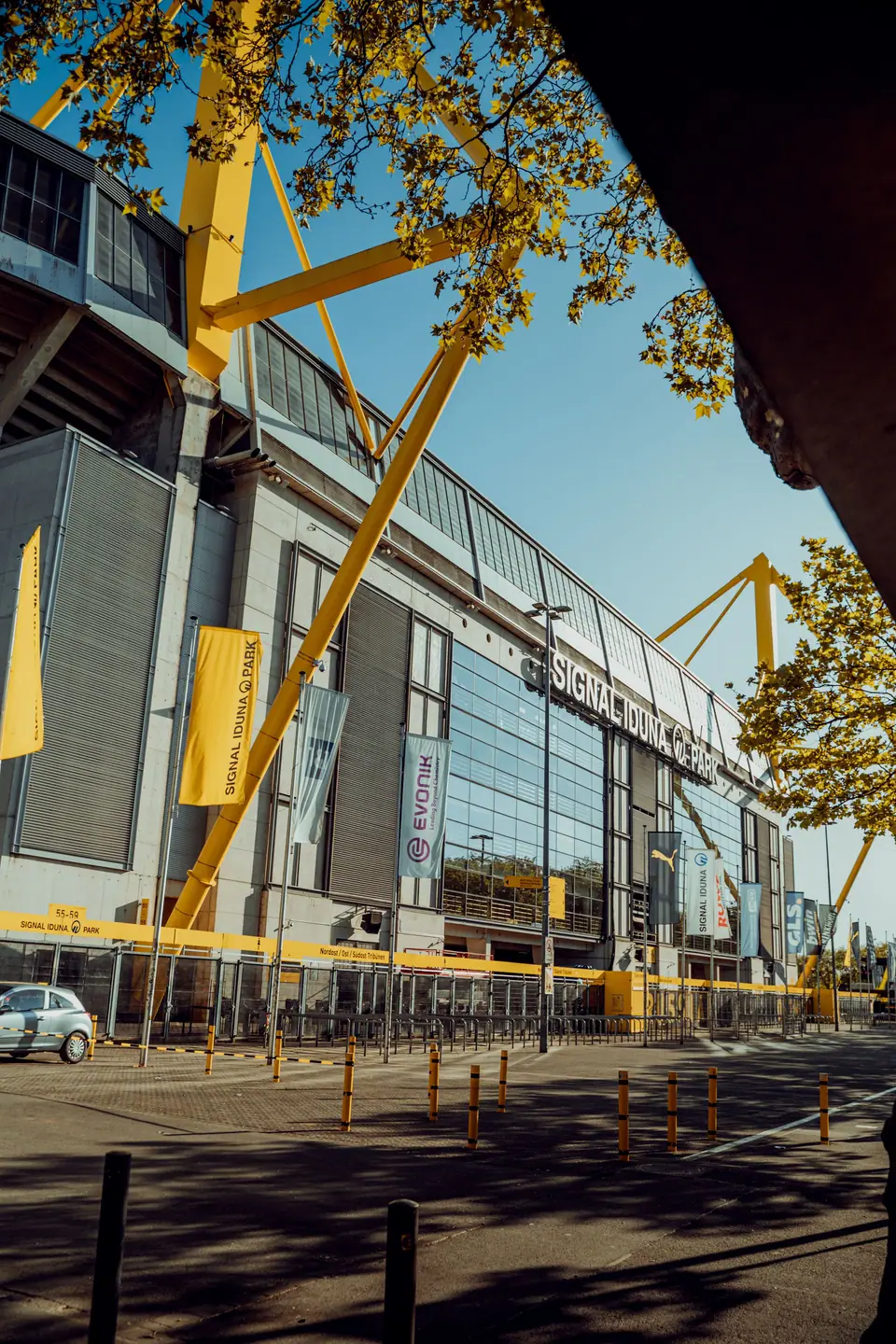
Signal Iduna Park is the home of Borussia Dortmund and the building that most people associate with the city. It opened in 1974 as the Westfalenstadion, built for the World Cup that year, and many supporters still use the old name. It has been rebuilt and enlarged several times, and today the capacity is more than eighty thousand, among the largest in Germany. The stadium stands in the south-west of the city, in a district that also holds the exhibition halls, training grounds and the club museum.
What makes it special
The south stand, known as the Yellow Wall, is the reason the stadium has a reputation beyond Germany. It is one of the largest standing terraces in European football, and on match days it becomes a single block of yellow and black that sings from the first minute. The rest of the ground is steep and close to the pitch, so even the upper tiers feel part of the noise. You do not need to know much about football to understand why the place matters to the city.
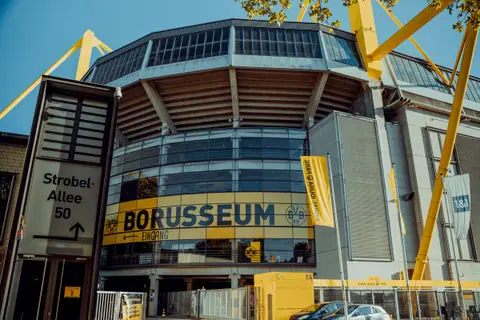
The club's story explains the atmosphere. Borussia Dortmund was founded in 1909 and grew up with the working-class districts of the city, which is why the fans think of the club as theirs. Our BORUSSEUM guide covers that history in more detail.
Outside a fixture
Quiet, wide and easy to walk, the district rewards a slow loop. You can walk around the outside of the stadium, see the scale of the stands, visit the club museum and stroll to the entrance of Westfalenpark, which lies next door. Stadium tours exist and are popular with supporters, but availability and booking rules change, so use the club's official website and not a third-party seller. Without a tour, you get the exterior and the museum, which is enough for a half-day for most visitors.
We recommend allowing two hours for the district and three if you are adding a museum visit. Pair it with the park in the afternoon, then go back north to the Kreuzviertel for dinner. That gives the day a shape: football in the morning, green space after lunch and a neighbourhood meal in the evening.
When the club plays at home
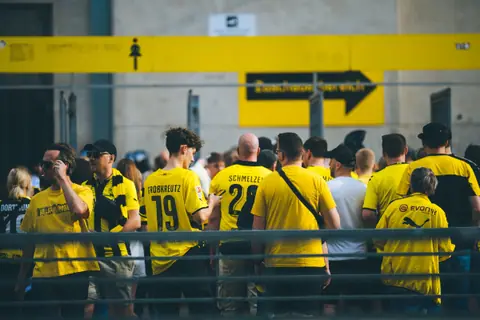
Everything changes. The streets fill hours before kick-off, buses and trams turn into part of the occasion, and the usual sightseeing rhythm stops working. Our matchday guide covers the practical details. Tickets and entry rules are set by the club and change from season to season, so use official channels only and ignore anyone who offers a ticket on the street. Leave the hours around the game free of fixed bookings, because moving through the crowd takes longer than any map suggests.
Who it is for
Supporters of the game should treat this as the anchor of the trip, ideally around a home fixture. Neutral visitors who like architecture and atmosphere can see the stadium in a short morning and spend the rest of the day elsewhere. If football means nothing to you, the stadium is not the best use of a short stay, and the PHOENIX West industrial site or Zeche Zollern will tell you more about the city.
Getting there
Use the Stadtbahn from the Hauptbahnhof area rather than a car; the journey is short and needs no change in the usual case. Parking near the ground is limited and traffic is heavy on match days. Check the transport operator's timetable the day before, because special match-day services can differ from the normal pattern. Walking back towards the centre after a quiet day is possible for energetic visitors, though the route passes mostly wide roads and offers little to look at, so we would take the train.
One more point for photographers: the stands look best from the avenues in morning light, and the park next door gives a second angle, with the stadium rising above the trees.
Traveller tips
Real advice from people who have been to Signal Iduna Park. Every tip is read by our team before it goes live.
No tips yet. Been here? Yours could be the first.
Thank you! Your tip will appear here after a quick review.
More in Dortmund
Continue exploring Dortmund with related neighbourhood, food, and planning guides