


























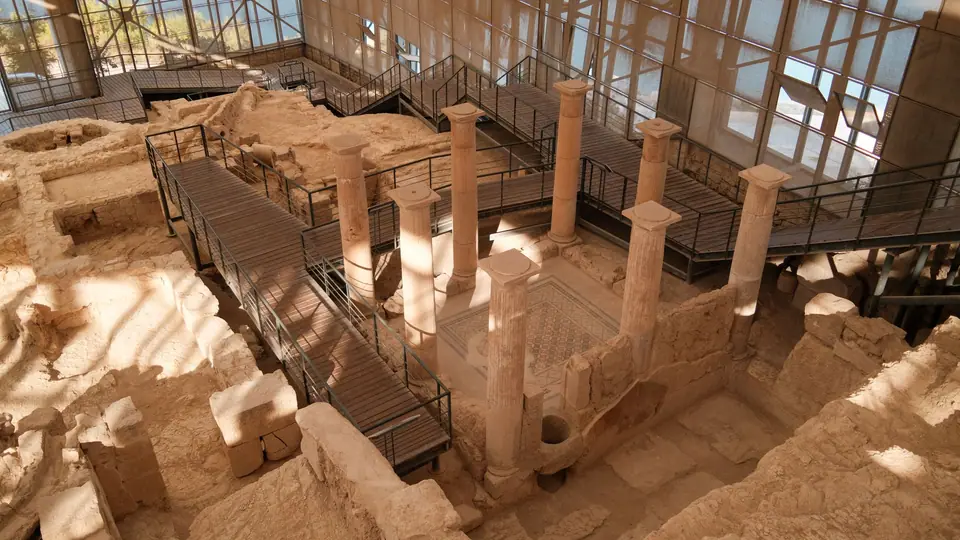
Gaziantep Archaeology Museum, Neo-Hittite Karkamış and Yesemek Quarry
Tracing 3,000-year-old Hittite lions, storm gods and the 300 basalt sphinxes of the Yesemek Open-Air Quarry.
While the Zeugma Mosaic Museum covers the classical Hellenistic and Roman era, Gaziantep's deeper roots lie in the Late Bronze Age Hittite Empire and the Iron Age Neo-Hittite Kingdoms (1400 to 700 BC), when monumental citadels like Carchemish (Karkamış), Sam'al (Zincirli) and Tilmen ruled the plains between the Taurus Mountains and the Euphrates. You can see their colossal black-basalt sculptures right in central Gaziantep or on an memorable southern day trip to the ancient quarry where they were carved.
1. The Gaziantep Archaeology Museum (Arkeoloji Müzesi, İstasyon Caddesi)
Located just a 10-minute walk (or one tram stop) east of the Zeugma Mosaic Museum beside the Cultural Park (Museum Pass Turkey valid), this well-curated museum walks you chronologically from a reconstructed prehistoric Pleistocene Steppe Mammoth skeleton excavated from the Gavur Lake peat bog near Pazarcık through Bronze Age cylinder seals up to its centerpiece:
- The Neo-Hittite Sculpture Hall (Carchemish & Zincirli): stand before towering black volcanic basalt palace wall slabs (orthostats), twin-lion column bases, winged sphinxes, royal funerary banquet stelae and the horned Storm God Tarhunzas (Teshub) wielding a thunderbolt and axe.
- The Sanctuary of Jupiter Dolichenus (From Ancient Doliche / Dülük): just ten kilometres north of the museum at Dülük Baba Tepesi (adjacent to the rock-cut underground Mithraeum temple of Dülük Ancient City, the oldest religious underground sanctuary of the Roman mystery cult of Mithras in Anatolia), Roman soldiers worshipped the local Hittite sky god transformed into Jupiter Dolichenus standing on the back of a bull, a cult that spread all the way to Hadrian's Wall in Britain.
2. Yesemek Open-Air Museum and Sculpture Workshop (95 km south-west in İslahiye)
If you have a rental car and love archaeology off the beaten path, drive 1 hour 20 minutes south-west to the hillside village of Yesemek (on the UNESCO World Heritage Tentative List). Discovered in 1890 by Felix von Luschan, Yesemek was the largest open-air stone sculpture quarry and training school in the ancient Near East, operated by the Hittites between the 14th and 8th centuries BC. When the Assyrians suddenly conquered the region around 700 BC, the sculptors dropped their chisels and walked away: today, more than 300 partially finished colossal black-basalt gate lions, mountain gods, sphinxes and reliefs still lie scattered across the open grassy hillside in every stage of production.
Traveller tips
Real advice from people who have been to Gaziantep Archaeology Museum, Neo-Hittite Karkamış and Yesemek Quarry. Every tip is read by our team before it goes live.
No tips yet. Been here? Yours could be the first.
Thank you! Your tip will appear here after a quick review.
More in Gaziantep
Continue exploring Gaziantep with related neighbourhood, food, and planning guides
Rumkale Fortress and Sunken Halfeti: Euphrates River Canyon Boat Trip
Gaziantep, Turkey
Gaziantep's Museums Trail: Kutnu Silk, Mother-of-Pearl, Mevlevihane and Panorama
Gaziantep, Turkey

Getting to Gaziantep: Oğuzeli Airport (GZT) Havaş, Bus B01 and Intercity Coaches
Gaziantep, Turkey

Getting Around Gaziantep: Contactless Cards, Tramway, Gaziray and Walking
Gaziantep, Turkey
