


























Bakırcılar Çarşısı (Copper Bazaar), Yemeniciler Arastası and Almacı Pazarı
Following the rhythmic tap of copper hammers through Gaziantep's 16th-century guild alleys and spice markets.
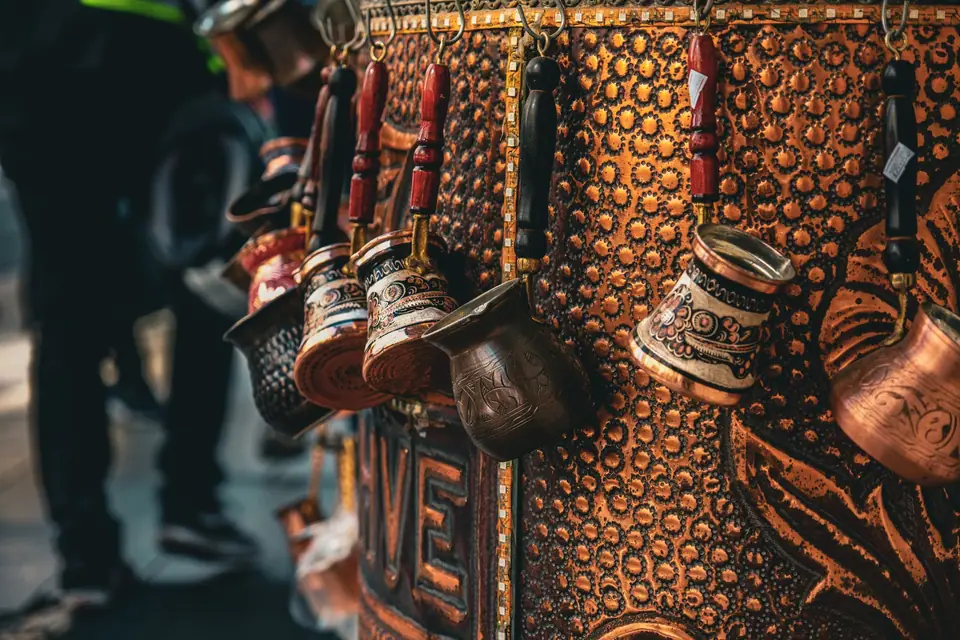
Before you even see the stone arcades of Bakırcılar Çarşısı (The Coppersmiths' Bazaar) south of Gaziantep Castle, you can hear it: a melodic, rhythmic tık-tık-tık of hundreds of small steel hammers tapping against copper sheets inside wood-shuttered workshops. Organized according to the Ottoman lonca (craft guild) system where each lane is dedicated to a single trade, carpenters, tinsmiths, saddlers, spice sellers and cobblers, this 16th- to 18th-century market network is a living workshop rather than a tourist strip.
1. Bakırcılar Çarşısı (The Coppersmiths' Bazaar)
Walking down the flagstone lanes shaded by timber eaves, stop to watch the masters at work. Genuine Gaziantep copperware is never stamped out by factory hydraulic presses from thin sheet metal; instead, a genuine piece is forged and hammered from a single thick piece of solid copper (yekpare dövme bakır) and lined inside by hand over an open fire with pure food-safe tin (kalay). Look at the underside of a copper coffee pot (cezve), pan (sahan) or tray: if the hammer dimples are slightly irregular and the vessel feels heavy in your hand, it is authentic handwork.
2. Yemeniciler Arastası (The Cobblers' Arcade) & Kutnu Silk
Immediately adjacent to the copper lanes runs Yemeniciler Arastası, where master shoemakers stitch yemeni, traditional flat, heel-less shoes made since the 16th century using a sole of buffalo hide, an upper of Moroccan-dyed red or black goat leather, and an interior lining of breathable sheepskin stitched together with beeswaxed linen thread (worn by Hollywood casts in films from Troy to Harry Potter because they mould to the foot and never cause sweat).
In the neighbouring shops and inside the vaulted 1718 Zincirli Bedesten ("The Chained Covered Market", built by Darendeli Hüseyin Pasha), browse bolts of Kutnu fabric, a royal striped silk-and-cotton textile woven exclusively in Gaziantep since the 1500s using natural warp-dyeing techniques.
3. Almacı Pazarı (Elmacı Pazarı, The Spice & Pistachio Market)
Emerging onto Karagöz Caddesi brings you to Almacı Pazarı, the aromatic pantry of the city. Beneath garlands of sun-dried purple aubergine skins, hollowed-out courgettes and sweet red peppers hanging like necklaces from every shop beam (used year-round to make Gaziantep's famous dried vegetable kuru dolma), burlap sacks overflow with emerald-green early-harvest boz iç pistachios, glossy crimson İpek pul biber (silk-textured sun-dried red pepper flakes rubbed with olive oil), sour sumac, pomegranate molasses and wheels of sun-dried grape pestil. Any shop will vacuum-seal spices and nuts in thick plastic bags for your suitcase.
Traveller tips
Real advice from people who have been to Bakırcılar Çarşısı (Copper Bazaar), Yemeniciler Arastası and Almacı Pazarı. Every tip is read by our team before it goes live.
No tips yet. Been here? Yours could be the first.
Thank you! Your tip will appear here after a quick review.
More in Gaziantep
Continue exploring Gaziantep with related neighbourhood, food, and planning guides

Best Things to Do in Gaziantep
Gaziantep, Turkey
The Zeugma Mosaic Museum: The Gypsy Girl, Roman Villas and Mars
Gaziantep, Turkey
Tahmis Kahvesi (1639) and the Historic Caravanserais (Hanlar) of Gaziantep
Gaziantep, Turkey
Gaziantep Castle, the Hamam Museum and the Underground Kasteller Water System
Gaziantep, Turkey
