


























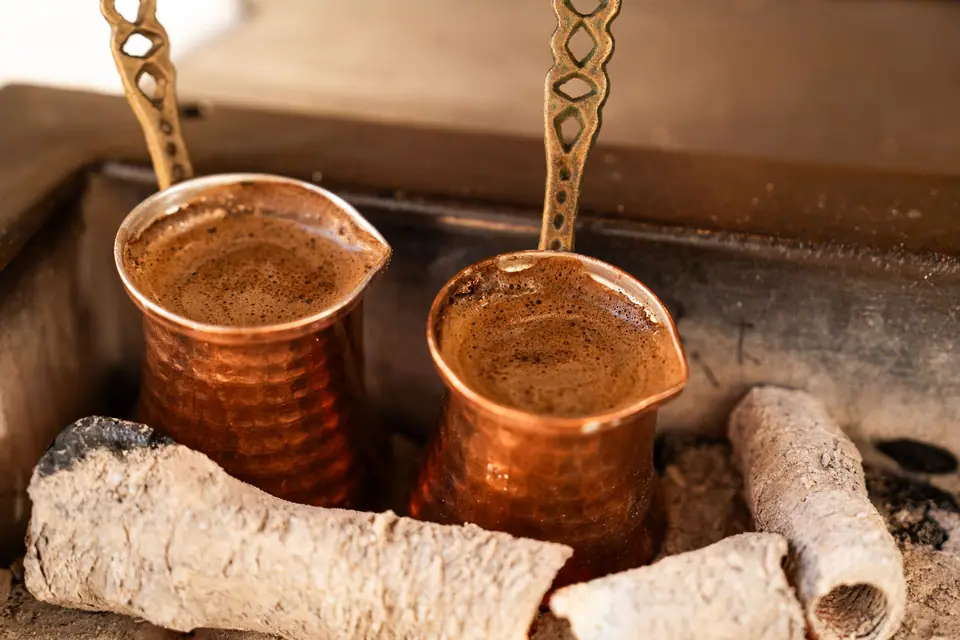
Tahmis Kahvesi (1639) and the Historic Caravanserais (Hanlar) of Gaziantep
Drinking roasted wild-pistachio coffee inside a 1639 timber coffeehouse and exploring Gaziantep's Silk Road inns.
In the Ottoman Empire, the word tahmis (from the Arabic for "to roast") referred to the guild hall where raw coffee beans were roasted and pounded in giant stone mortars. Standing at the southern edge of the Copper Bazaar beside the Tekke Mosque, Tahmis Kahvesi was built in 1638 to 1639 by Janissary commander Mustafa Ağa bin Yusuf as an endowment to support the Mevlevi Dervish Lodge (Mevlevihane) next door. Having hosted Sultan Murad IV on his 1638 Baghdad campaign, poet Karacaoğlan and generations of Silk Road merchants, it is one of the oldest continuously operating coffeehouses in the world.
What to Order Inside Tahmis Kahvesi: Menengiç Coffee and Zahter Tea
Step inside the two-storey stone-and-dark-timber hall (rebuilt with high cedar beams after two 1900s fires) or take a low woven stool in the vine-shaded back courtyard. While traditional Turkish coffee and dibek coffee are served all day, two local drinks are essential here:
- Menengiç Kahvesi (Wild Terebinth / Pistachio Coffee): made from the wild, un-grafted fruit berries of the native menengiç tree (Pistacia terebinthus) that grows wild across the rocky hills of southeastern Turkey. The oily green-brown berries are roasted and ground into a rich paste, then simmered slowly in a copper pot with hot milk (or water) rather than coffee beans. Because it is made from a wild pistachio berry, it is 100% naturally caffeine-free, with a velvety, nutty, pine-and-pistachio aroma, served alongside a small bowl of roasted menengiç seeds and chickpeas.
- Zahter Çayı (Wild Mountain Thyme Tea): a fragrant herbal infusion of wild thymbra leaves picked in the Gaziantep hills, served in a small waisted glass to aid digestion after a heavy kebab or baklava meal.
Walking the Trail of the Silk Road Inns (Hanlar)
Gaziantep preserved more than thirty historic stone commercial inns (hanlar) where camel caravans unloaded silk, spices, soap and dried fruit on the ground floor while merchants slept in the vaulted cells upstairs. Walk a 45-minute loop linking the five finest courtyards:
- Gümrük Hanı (The Living Museum of Crafts, 1878): right below the castle, dedicated today to master artisans weaving multi-coloured kutnu silk on wooden handlooms and blowing mosaic glass.
- Hışva Han (Lala Mustafa Pasha Han, 1577): the oldest surviving caravanserai in the city right at the foot of the castle hill, now meticulously restored into a refined boutique hotel and courtyard restaurant.
- Bayazhan (1909): a grand stone tobacco-merchant's inn housing the Gaziantep City Museum and evening courtyard taverns.
- Şire Han (1885) and Tuz Hanı (1590): monumental two-storey courtyards built for the grape-molasses (şire) and salt trades.
Traveller tips
Real advice from people who have been to Tahmis Kahvesi (1639) and the Historic Caravanserais (Hanlar) of Gaziantep. Every tip is read by our team before it goes live.
No tips yet. Been here? Yours could be the first.
Thank you! Your tip will appear here after a quick review.
More in Gaziantep
Continue exploring Gaziantep with related neighbourhood, food, and planning guides
Best Time to Visit Gaziantep: Pistachio Harvest, GastroAntep Festival and Seasons
Gaziantep, Turkey
What to Wear in Gaziantep: Bazaar Cobbles, Sun Layers and Extra Suitcase Space
Gaziantep, Turkey
3 Days in Gaziantep: Zeugma Mosaics, Copper Bazaar, Baklava and Halfeti
Gaziantep, Turkey
Dülük Ancient City (Doliche Mithraeum) and Burç Forest Park
Gaziantep, Turkey
