Photo: Mongolo1984 · CC BY-SA 4.0
The Lanterna Lighthouse, Porto Antico and the Aquarium
Follow Genoa sea edge across Renzo Piano Bigo lift, Galata Maritime Museum, Acquario di Genova and the 77-metre Lanterna lighthouse.
Genoa still operates as Italy's leading commercial port, stretching across roughly 700 hectares of terminals and 500 hectares of harbour water. Cargo cranes line more than twenty-two kilometres of coast and handled about 64.5 million tonnes of freight in 2024. Right beside active ferry berths and dry docks runs a remarkably walkable cultural waterfront opened to the public in 1992. Dividing this shoreline into four logical stops keeps dockside distances manageable and fits smoothly with our sea-level city guide.
Instead of separating tourism from working shipping, Genoa threads pedestrian promenades directly beside dry docks, yacht moorings and ferry basins. Spreading these waterfront stops over half a day prevents indoor museum fatigue while catching shifting Mediterranean harbour light.
Porto Antico, the Bigo lift and Renzo Piano's 1992 waterfront
Before 1992, tall masonry customs walls cut medieval Genoa straight off from its own harbour basin. For the Columbus fifth-centenary Expo that year, Genoa-born architect Renzo Piano cleared industrial fences between Molo Vecchio and Ponte Spinola. Workers restored seventeenth-century Magazzini del Cotone cotton warehouses into sunlit exhibition halls, cinema screens, bookshops and broad public quays. Rising boldly above the central pier stands Piano's white steel Bigo, shaped after historic shipyard loading cranes.
Long curved arms suspend the wide tensile canopy covering Piazza delle Feste, sheltering concerts and seasonal outdoor gatherings below. Inside that crane frame, an enclosed glass cabin lifts visitors forty metres upwards for rotating 360-degree harbour views. From the top you look cleanly across Sottoripa slate rooftops, working container cranes and coastal ferries clearing the western breakwaters. Anchored beside the neighbouring jetty floats Piano's 2001 steel-and-glass Biosfera dome. More than 150 tropical plant and animal species live inside that controlled globe beside moored yachts, while outer quays stay free near Sottoripa snack counters.
Galata Museo del Mare and the Nazario Sauro submarine
Strolling west past marina docks reaches Genoa's historic Darsena naval arsenal. Redesigned in 2004 by Spanish architect Guillermo Vazquez Consuegra, this bright glass-fronted block houses Galata Museo del Mare, the largest maritime museum in the Mediterranean. Five indoor exhibition levels topped by the outdoor Mirador rooftop terrace trace Genoa's seafaring centuries cleanly. Ground-floor halls showcase a forty-metre full-scale reconstruction of a seventeenth-century Genoese oared galley beside Columbus and Andrea Doria exhibits.
Intermediate decks display hand-painted portolan sea charts, early transatlantic steamers and a dramatic Cape Horn storm room. Above them sits the third-floor Memoria e Migrazioni wing. Those galleries trace Italians crossing oceans towards La Boca in Buenos Aires, Brazil and Ellis Island in New York, placed next to a contemporary migrant vessel. On the fourth floor, the Andrea Doria hall documents the liner's 26 July 1956 collision with MS Stockholm. Exhibits combine a six-metre hull model, a scale bow replica and a thirty-degree tilted walkway before climbing to the windy Mirador roof terrace.
Moored outdoors in the sheltered dock basin floats the Cold War Italian Navy submarine Nazario Sauro (S518). Open as the only submarine in Italy visitable afloat, its narrow steel compartments invite visitors wearing yellow safety helmets. Inside, narrow ladders wind straight past torpedo racks, stacked crew bunks, galley corners and brass periscope control stations.
Acquario di Genova timed entry at Ponte Spinola
Projecting along Ponte Spinola like a moored white hull, Acquario di Genova opened in 1992 with exterior lines by Renzo Piano and exhibit designs by Peter Chermayeff. In 2013, Piano returned to add the wide Cetaceans Pavilion extending out over open water. Ranking as Italy's largest aquarium, its winding indoor route passes roughly seventy tanks drawing over 1.2 million visitors annually.
Galleries span Caribbean manatees, reef sharks, Antarctic penguins, glowing jellyfish halls and split-level dolphin pools lit from above and below water. Timed admission tickets sell out rapidly around weekends, summer cruise turnarounds and Italian school breaks. Booking timed online entry days ahead stops pier queues from cutting short waterfront afternoons. Allow unhurried breaks along sunny outdoor benches rather than stacking the aquarium and Galata tightly back to back.
Passeggiata della Lanterna to the 1543 lighthouse
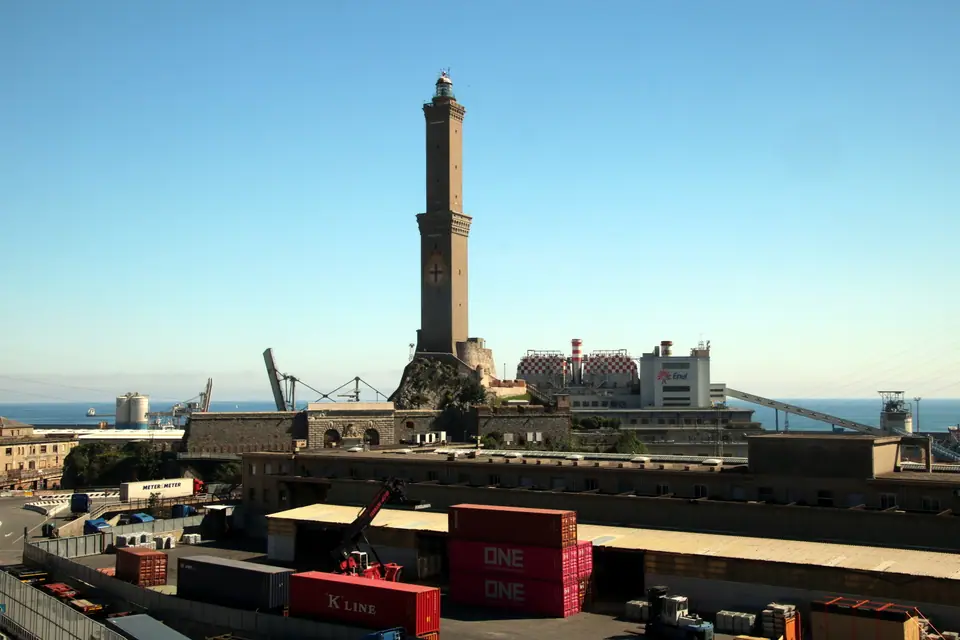
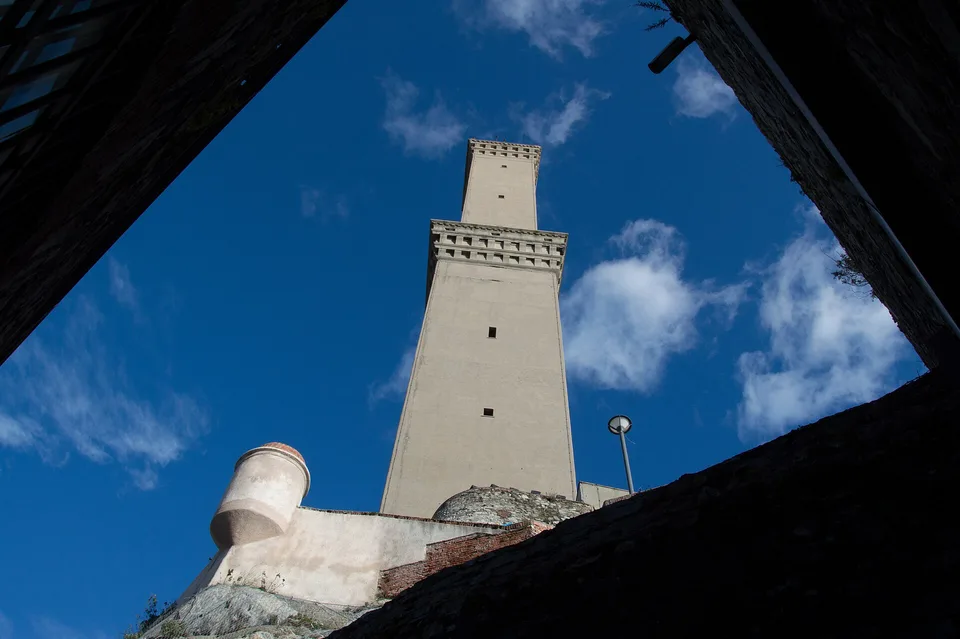
Guarding Genoa's western breakwater since records around 1128 and rebuilt in its present stone form in 1543, La Lanterna rises seventy-seven metres atop San Benigno crag. That rocky headland places the beacon 117 metres above sea level, making it the tallest lighthouse in the Mediterranean. Inside the solid masonry shaft, 172 stone steps climb up to the outdoor panoramic terrace overlooking seventeenth-century park ramparts and active container terminals.
Surrounding park gardens below the tower base preserve stone seventeenth-century ramparts above western port docks. Shaded paved paths thread through terraced lawns and brick embrasures overlooking Sampierdarena cranes and ferry dry docks. Bring a windproof layer when coastal gusts cross the headland, because brick walls open straight onto harbour water without tall tree shelter. Verify four operational realities ahead before setting off westwards along the working port perimeter:
- Weekend lighthouse hours: La Lanterna normally opens Friday, Saturday and Sunday plus selected public holidays, staying closed Monday through Thursday.
- Sub-port tunnel detour and shuttle: Harbour engineering around Genoa's sub-port tunnel alters walking links along the roughly 800-metre Passeggiata della Lanterna boardwalk. Ride the dedicated shuttle leaving Piazzale San Benigno near Metro Dinegro whenever path gates shift.
- Off-peak winter museum checks: Confirm Galata Museo del Mare winter opening days ahead since off-peak Mondays close, and pair Acquario entry with chosen time slots.
- Gale and weather shutdowns: Strong winds or Orange and Red Allerta Meteo alerts shut the exposed tower terrace immediately, while nearby berths link cleanly back via Piazza Principe and Dinegro.
Where it is
- 1The Lanterna Lighthouse, Porto Antico and the Aquarium
- Genoa Cristoforo Colombo Airport (GOA) · about 5 km from here in a straight line
- Milano Linate Airport (LIN) · about 119 km from here in a straight line
- Directions in Google Maps
Stations and taxi ranks: OpenStreetMap. Airports: OurAirports. Distances are in a straight line.
Traveller tips
Real advice from people who have been to Genoa. Every tip is read by our team before it goes live.
No tips yet. Been here? Yours could be the first.
Thank you! Your tip will appear here after a quick review.
More in Genoa
Continue exploring Genoa with related neighbourhood, food, and planning guides