Photo: Zairon · CC BY-SA 4.0
Via Garibaldi and the Palazzi dei Rolli Hosting System
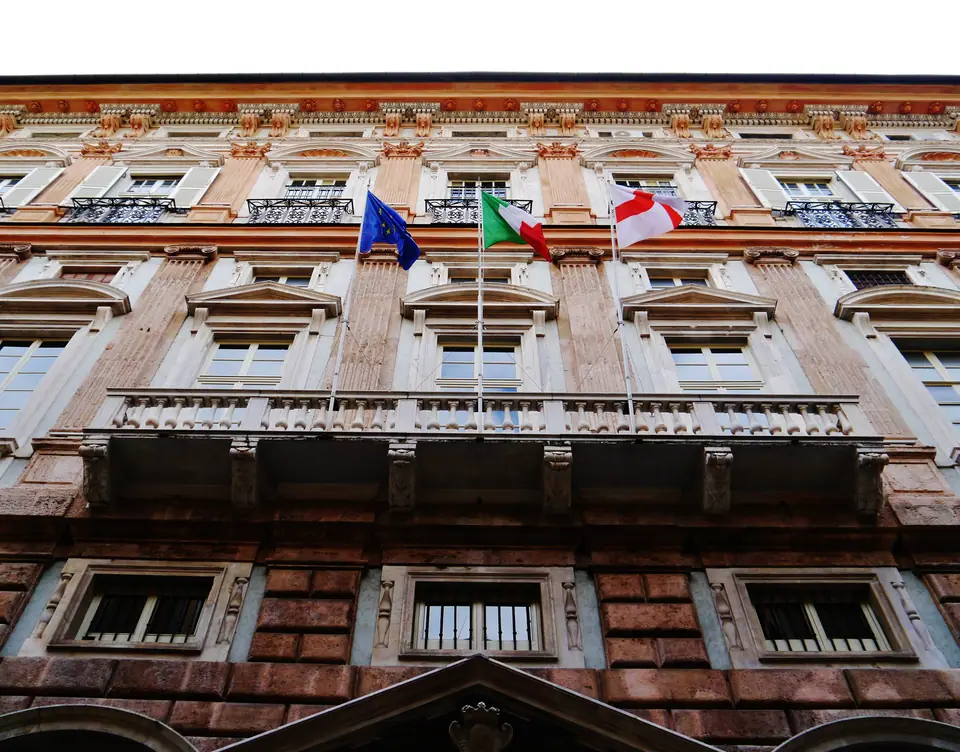
Via Garibaldi preserves Genoa aristocratic Renaissance reception halls, created under the 1576 Palazzi dei Rolli state-hosting lottery.
In July 2006 at its thirtieth session in Vilnius, UNESCO inscribed forty-two aristocratic houses under one unified listing: Genoa's Strade Nuove and the system of the Palazzi dei Rolli (Reference 1211). The listing protects a 15.77-hectare architectural core wrapped inside a 113-hectare buffer zone across the historic hillside. These sixteenth- and seventeenth-century mansions were never secluded country estates. Together they formed an extraordinary public-hospitality system invented by a merchant republic without a royal palace.
The year 2026 marks twenty years since that UNESCO milestone, yet Via Garibaldi still halts unaware visitors mid-stride. Stepping out of shadowy medieval alleys onto one sunlit street of carved marble loggias reveals Renaissance banking wealth at full scale. Courtyard arches, painted stuccoes and terraced hillside gardens turn steep mountain rock into civic stagecraft.
Carving Strada Nuova out of terraced stone slopes
By the mid-sixteenth century, Genoa's medieval core around San Lorenzo had grown far too cramped for ceremonial carriages or modern Renaissance avenues. Starting work in 1558, civic surveyors drove Strada Nuova straight across lower Castelletto slopes north of the old town. They completed principal building lots by 1583. Known today as Via Giuseppe Garibaldi, that straight stone corridor contrasted sharply with crooked alleys directly below.
Architects cut deep retaining shelves straight into hillside bedrock so tall entrance vestibules stepped naturally towards upper levels. Twin marble staircases lifted arriving guests toward airy courtyard loggias and sunlit rear orange gardens climbing the incline. Wealthy patrician dynasties later extended this prestigious street plan westwards across two further phases. Via Balbi grew between 1602 and 1620 towards Piazza Principe around Jesuit colleges and grand Balbi mansions. Over a century later, civic planners laid out Via Cairoli, originally named Strada Nuovissima, between 1778 and 1786 to close the upper promenade.
The 1576 Rolli lottery and diplomatic hospitality
Genoa's elected Doges governed from an austere civic seat at Palazzo Ducale. That arrangement left the Republic without royal state suites to house visiting emperors, monarchs, popes, princes, cardinals or foreign ambassadors. Rather than financing an expensive permanent guest palace, the Genoese Senate enacted a decree in 1576 founding official lists titled Rolli degli alloggiamenti pubblici. Civic inspectors surveyed grand private houses and ranked each mansion into quality classes called bussoli, numbering three or four tiers across surviving registers.
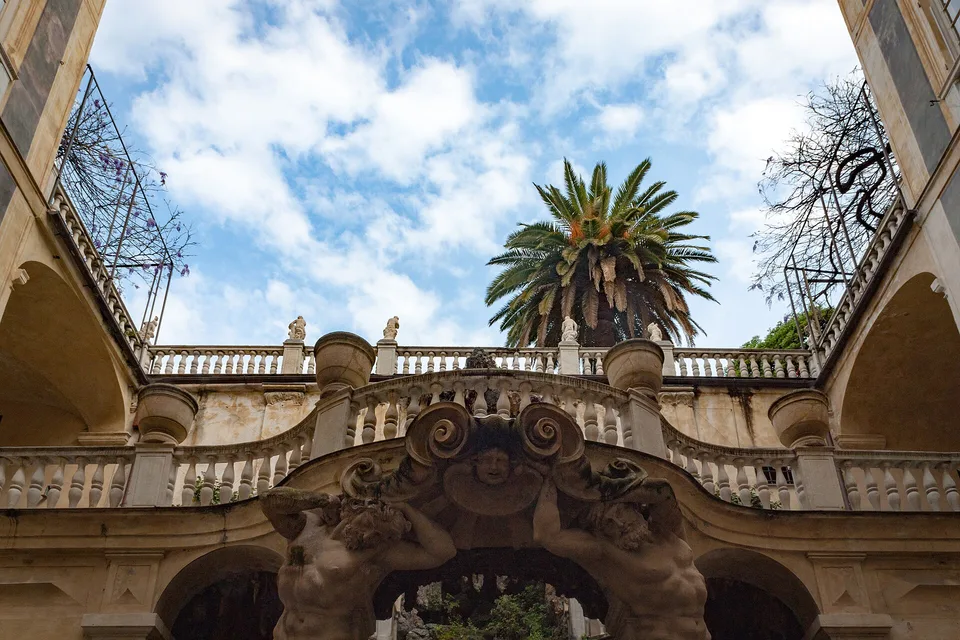
Whenever high-ranking delegations sailed into Genoa harbour, civic clerks performed a ceremonial draw using an urn called the bussolotto. Drawn noble households became legally required to lodge and entertain an entire visiting retinue entirely at private expense. Competing for higher bussoli prestige drove Genoa's banking dynasties to commission frescoed reception salons, painted facades and dramatic entrance staircases. Five surviving registers compiled between 1576 and 1664 included over one hundred and sixty properties across successive editions. The final 1664 roll listed ninety-five qualifying residences.
Impressed by this concentration of contemporary domestic geometry, Flemish painter Peter Paul Rubens documented Genoese plans and elevations inside his 1622 Antwerp volume, Palazzi di Genova. His published engravings carried Ligurian courtyard sequencing and theatrical staircase staging to architects across northern Europe.
Musei di Strada Nuova along Via Garibaldi
Most historic palaces remain active bank offices, diplomatic seats or private residences today. Their grand upper halls welcome general visitors mainly during spring and autumn Rolli Days weekends. Three adjacent houses on Via Garibaldi instead unite year-round as one linked municipal museum complex established in 2004. One combined ticket guides visitors cleanly through adjoining stone courtyards, upper picture galleries and elevated garden terraces.
Palazzo Rosso (Via Garibaldi 18)
Finished in warm Genoa terracotta plaster, this seventeenth-century palace entered civic hands in 1874 through a gift from the final Brignole-Sale duchess. Decorated noble apartments display historic period furniture, Anthony van Dyck portraits, paintings by Albrecht Durer and major Bernardo Strozzi canvases. Narrow upper steps climb to an open rooftop loggia overlooking grey slate roofs, cathedral towers and working port cranes. Stepped courtyard walls behind the hall show clearly how builders handled severe slope pressure.
Palazzo Bianco (Via Garibaldi 11)
Built originally as Palazzo Luca Grimaldi, cool whitewashed Palazzo Bianco houses Genoa's civic picture gallery across bright upper halls. Quiet high-ceilinged rooms trace Genoese, Flemish and Spanish Baroque painting traditions across successive centuries without heavy palace gilding. Caravaggio's stark Ecce Homo anchors the main collection cleanly beside luminous Flemish altarpieces. Calm rear garden links connect visitors straight across towards Palazzo Doria Tursi, highlighting striking contrasts between modest exterior stucco and richly carved marble interiors.
Palazzo Doria Tursi (Via Garibaldi 9)
Begun in 1565 by architect Rocco Lurago for Niccolo Grimaldi, this vast stone palace became Genoa's City Hall with linked galleries. Sweeping double marble stairs climb above an arcaded courtyard towards civic treasure rooms. Highlights preserve Antonio Canova's marble Penitent Magdalene, official Republic trade weights, historic Genoese coinage and Niccolo Paganini's 1743 Guarneri del Gesu violin, Il Cannone.
Stepping inside courtyards year-round
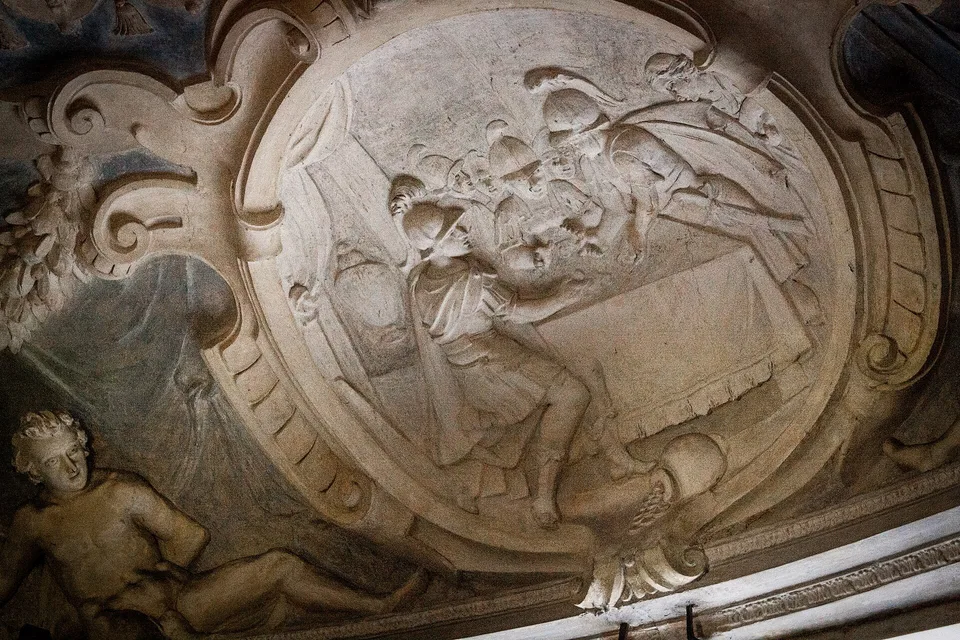
Even on quiet weekday walks outside festival weekends, slipping politely through open street-level palace portals along Via Garibaldi and Via Balbi costs nothing. Looking upward across cool granite colonnades shows immediately how architects stretched cramped coastal plots into serene sunlit perspectives. Shaded portico halls bring welcome shelter from summer glare or sudden autumn downpours. Check seasonal opening hours on Musei di Genova ahead of arrival. Winter schedules traditionally close these municipal rooms on Mondays, and summer visiting windows adjust seasonally.
Once finished inside the galleries, Piazza Fontane Marose and Piazza Portello sit minutes away for your next uphill step. Pairing Strada Nuova courtyards with our central vertical walk or elevated rooms in Castelletto joins Renaissance stonework smoothly onto harbour balconies.
Where it is
- 1Via Garibaldi and the Palazzi dei Rolli Hosting System
- Genoa Cristoforo Colombo Airport (GOA) · about 7 km from here in a straight line
- Milano Linate Airport (LIN) · about 118 km from here in a straight line
- Directions in Google Maps
Stations and taxi ranks: OpenStreetMap. Airports: OurAirports. Distances are in a straight line.
Traveller tips
Real advice from people who have been to Genoa. Every tip is read by our team before it goes live.
No tips yet. Been here? Yours could be the first.
Thank you! Your tip will appear here after a quick review.
More in Genoa
Continue exploring Genoa with related neighbourhood, food, and planning guides