


























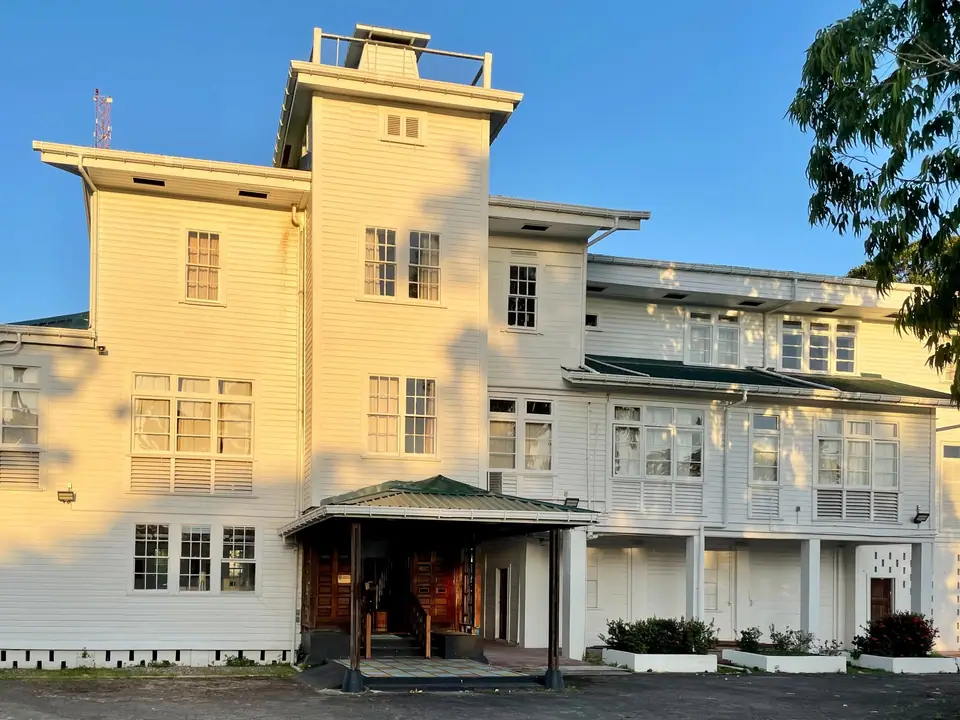
Castellani House, 1763 Cuffy Monument and Brickdam Cathedral Guide
Explore Georgetown's Brickdam axis: visit the 1834 Parliament Building, Brickdam Cathedral, Philip Moore's 10-metre bronze 1763 Cuffy Monument, and the National Gallery at Castellani House.
Running straight east from Stabroek Market on the Demerara River to the gates of the Georgetown Botanical Gardens, Brickdam is the oldest paved roadway in the capital. Built by the Dutch in the 1780s out of fired clay bricks to connect the river wharf with surrounding sugar estates, this historic west-to-east axis links Guyana's 1834 Parliament, its Roman Catholic cathedral, its national independence monument, and its National Gallery of Art.
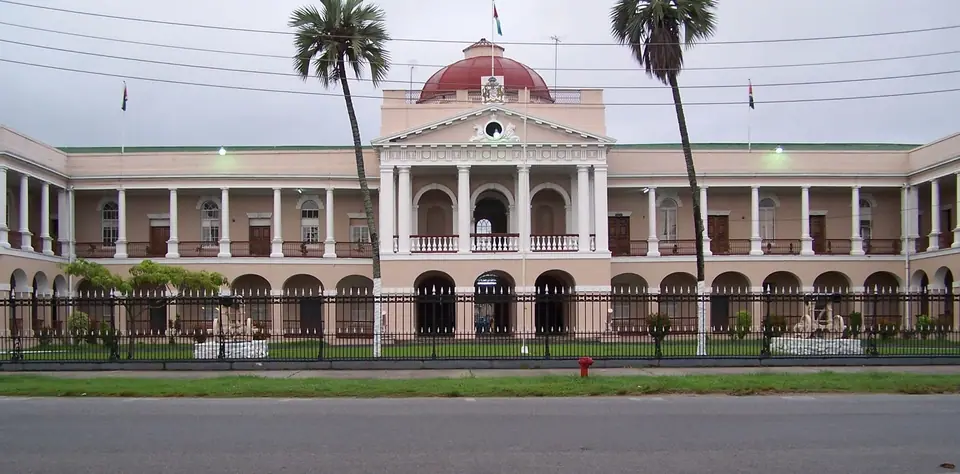
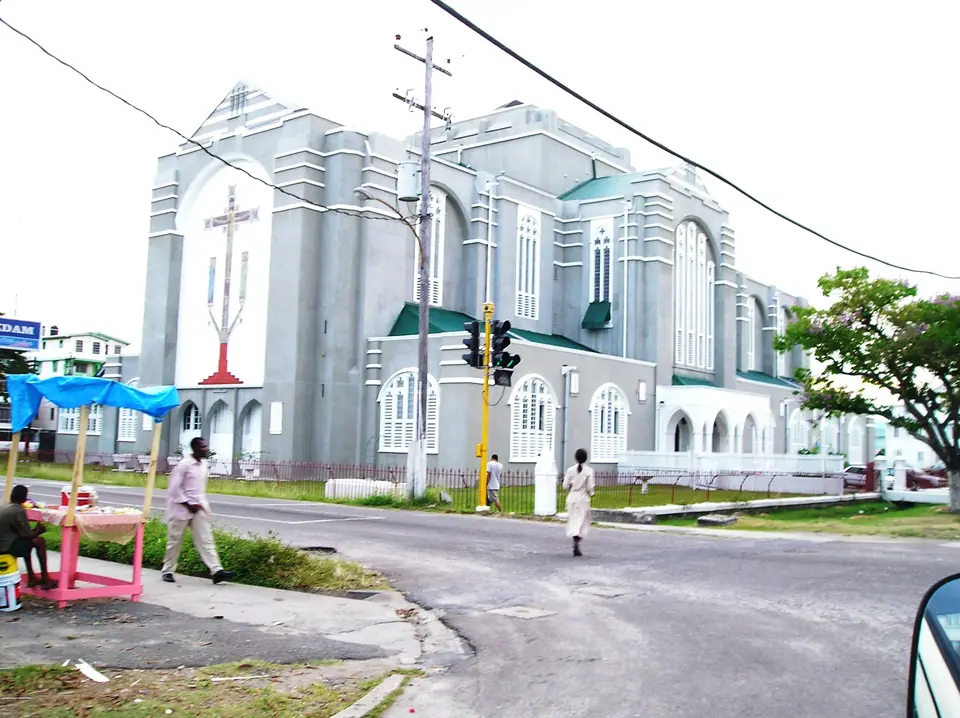
Parliament Building (1834) and Brickdam Cathedral (1925)
At the western end of Brickdam stands the Parliament Building of Guyana, known historically as the Public Buildings. Designed in neoclassical Florentine Renaissance style by Joseph Hadfield and completed in 1834, the year slavery was abolished in the British Empire, it is one of the rare nineteenth-century stuccoed brick structures in a city of wood. In the forecourt stands a bronze statue of labour leader Hubert Nathaniel Critchlow (1884 to 1958), while the Parliamentary Chamber features a carved ceiling designed in the 1870s by Maltese architect Cesar Castellani.
Four blocks east along Brickdam rises the Roman Catholic Cathedral of the Immaculate Conception (Brickdam Cathedral). Built between 1914 and 1925 in Romanesque Revival reinforced concrete by English architect Leonard Stokes after a 1913 fire destroyed Castellani's earlier wooden cathedral, its 60-metre dome and marble altar gifted by Pope Pius XI anchor the avenue.
The 1763 Monument (Cuffy Monument, 1976) on Square of the Revolution
Where Brickdam meets Vlissengen Road at the Square of the Revolution stands Guyana's most powerful public sculpture: the 1763 Monument. Unveiled on 23 February 1976, the 10-metre, 2.5-tonne bronze statue was designed by Guyanese artist Philip Moore (1921 to 2012) and cast in England. It honours Cuffy (Kofi), an Akan-born enslaved cooper who on 23 February 1763 led more than 2,500 enslaved Africans in the Berbice Slave Rebellion, one of the earliest anti-slavery revolutions in the Americas, holding Berbice for nearly a year.
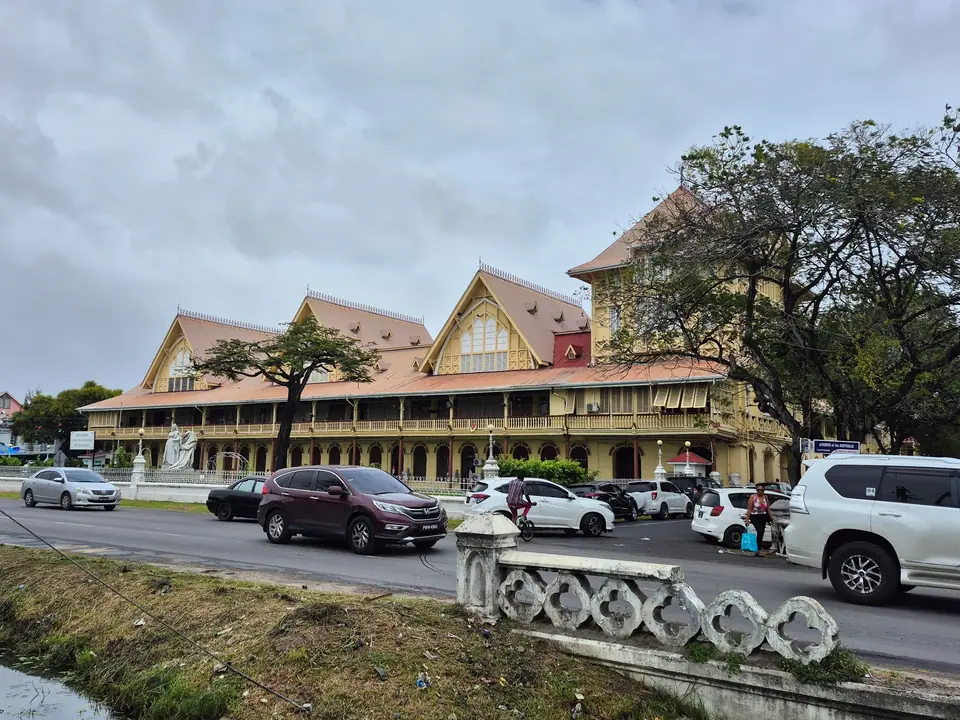
Castellani House (1879 to 1882): Guyana's National Gallery of Art
Directly behind the 1763 Monument at Vlissengen Road and Homestretch Avenue sits Castellani House. Built between 1879 and 1882 by Cesar Castellani for the Government Botanist, the greenheart timber villa was expanded upward with a third storey and open-air gallery between 1965 and 1985 when it served as the residence of Forbes Burnham.
Inaugurated in 1993 as the National Gallery of Art, Castellani House displays over 700 works from the national collection, including abstractions by Aubrey Williams, surrealist canvases by Stanley Greaves, landscapes by Edward Rupert Burrowes, wood carvings by Philip Moore and Akawaio sculptor Oswald Hussein, and paintings by Bernadette Persaud; check the official site for exhibition hours.
Traveller tips
Real advice from people who have been to Castellani House, 1763 Cuffy Monument and Brickdam Cathedral. Every tip is read by our team before it goes live.
No tips yet. Been here? Yours could be the first.
Thank you! Your tip will appear here after a quick review.
More in Georgetown
Continue exploring Georgetown with related neighbourhood, food, and planning guides
Demerara River, Fort Island and Essequibo River Day Trip Guide
Georgetown, Guyana
Kaieteur Falls Day Trip from Georgetown: World's Tallest Single-Drop Waterfall
Georgetown, Guyana
Georgetown: Wooden Garden City, Demerara River and Planning Tips
Georgetown, Guyana
Things to Do in Georgetown: St. George's Cathedral, Stabroek Market and Botanical Gardens
Georgetown, Guyana
