


























St. George's Cathedral, City Hall and Victorian Wooden Architecture Guide
Walk Georgetown's Victorian timber architecture trail, from Sir Arthur Blomfield's 43.5-metre wooden St. George's Cathedral to Father Ignatius Scoles's 1889 Gothic Revival City Hall.
Because nineteenth-century British Guiana lacked stone quarries on its alluvial coast but possessed limitless interior rainforests of rot- and termite-resistant hardwoods, Victorian architects translated European Gothic Revival, Italianate, and Georgian styles into native Demerara Greenheart (Chlorocardium rodiei), Mora, Wallaba shingles, and American pitch pine. Walking the central corridor from Company Path down Avenue of the Republic to Brickdam reveals the finest ensemble of monumental nineteenth-century wooden civic buildings in the Caribbean and South America.
St. George's Cathedral (1892): The 43.5-Metre Wooden Gothic Masterpiece
Standing on its own leafy oval at the junction of Church Street and North Road, the Cathedral Church of St. George is the seat of the Anglican Bishop of Guyana and one of the tallest freestanding wooden churches in the world. After three earlier churches on the site settled into the soft coastal clay, English Gothic Revival architect Sir Arthur Blomfield drew plans for a soaring timber cathedral on a reinforced concrete raft foundation.
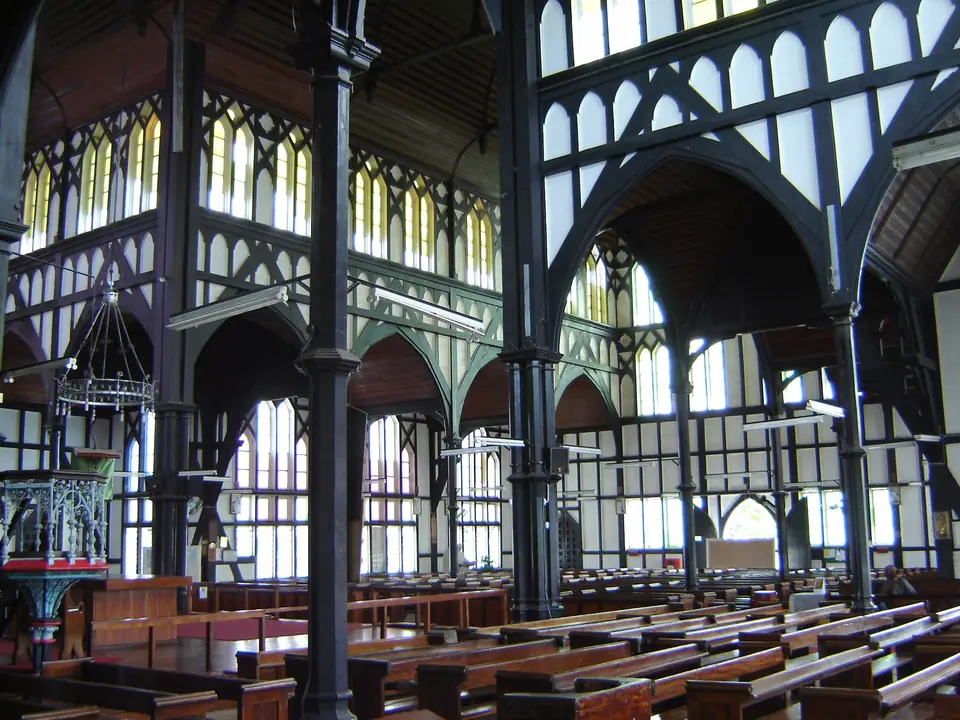
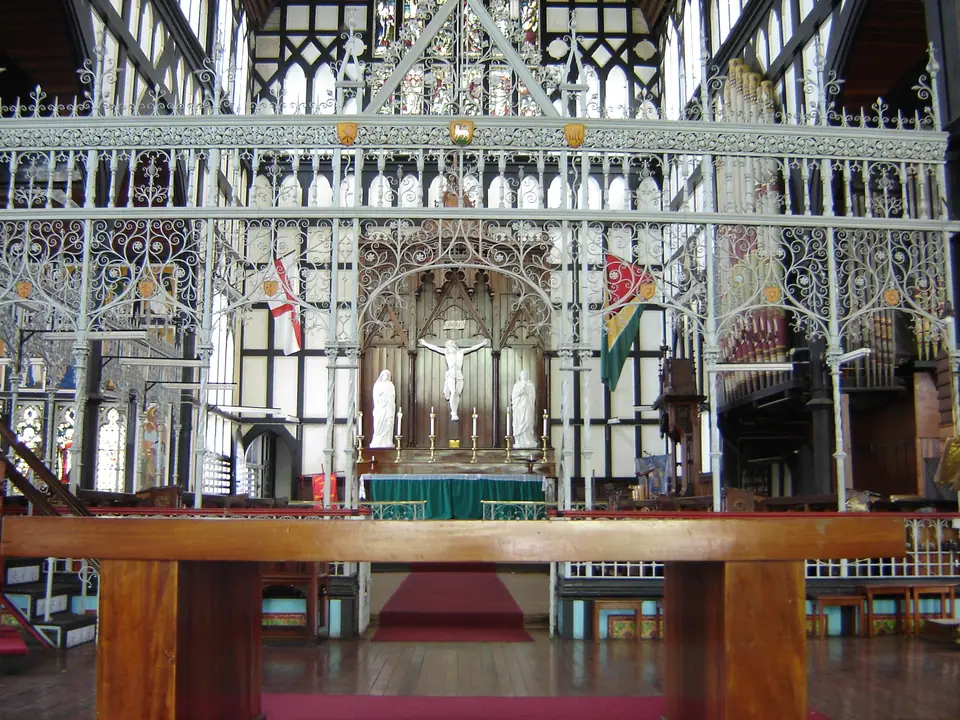
Construction began on 21 November 1889 using native Demerara greenheart framing and pitch-pine panelling, opening for its first service on 24 August 1892 and reaching full completion in 1899. Rising to 43.5 metres (143 feet) at the tip of its central spire, the white-painted exterior is adapted to the tropics with louvered shutters and deep eaves. Step inside to admire the unpainted vaulted timber nave, wrought-iron chancel screen, stained-glass lancet windows, colonial memorial tablets, and a crystal chandelier gifted by Queen Victoria for her Golden Jubilee.
Georgetown City Hall (1889) and Victoria Law Courts (1887)
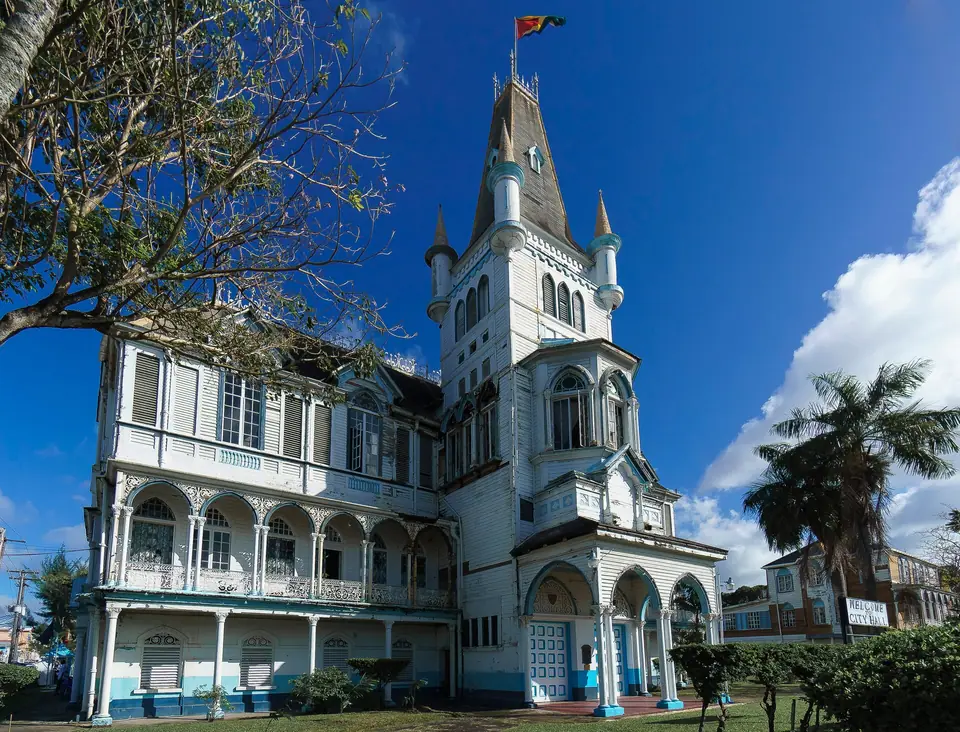
Three blocks south along Avenue of the Republic stands Georgetown City Hall, the most picturesque wooden Gothic building in the Caribbean. Designed in 1887 by Jesuit priest and architect Reverend Ignatius Scoles and opened on 1 July 1889, the three-storey structure combines a central square tower and conical turret, cast-iron columns, pointed Gothic arches, mahogany staircases, and lacy white-and-blue gingerbread fretwork. Across the canal at Charlotte Street rises the 1887 Victoria Law Courts (High Court), designed by Baron Hora Siccama with timber gables and an 1894 white marble statue of Queen Victoria by Henry Richard Hope-Pinker.
Demerara Windows, State House (1858), and Red House
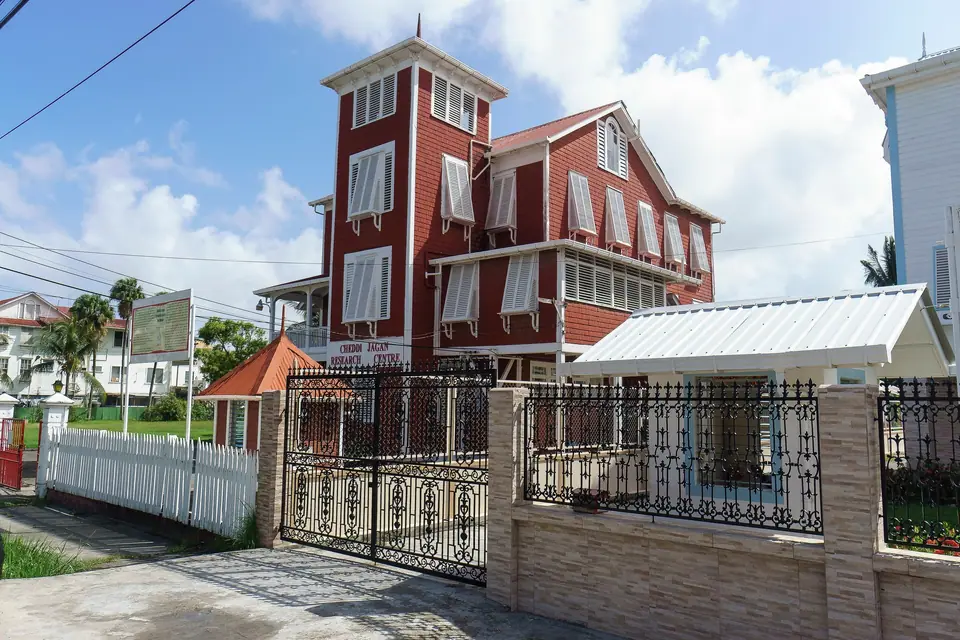
Walking north onto Main Street and High Street, look for the signature Demerara Window, a top-hinged wooden louver shutter propped outward over a perforated cooler box where ice blocks were once placed so Atlantic breezes blew chilled air indoors while keeping out rain. Fine examples survive on State House (built in 1858 on Main Street as the British governor's residence and now the official residence of the President of Guyana) and Red House (Kamana Court) on High Street, housing the Cheddi Jagan Research Centre; check the official National Trust site for visiting details.
Traveller tips
Real advice from people who have been to St. George's Cathedral, City Hall and Victorian Wooden Architecture. Every tip is read by our team before it goes live.
No tips yet. Been here? Yours could be the first.
Thank you! Your tip will appear here after a quick review.
More in Georgetown
Continue exploring Georgetown with related neighbourhood, food, and planning guides

How to Get to Georgetown: Cheddi Jagan (GEO) and Eugene F. Correia (OGL) Airports
Georgetown, Guyana
Best Time to Visit Georgetown: Dry Seasons, Trade Winds and Mashramani
Georgetown, Guyana
Where to Stay in Georgetown: Kingston, Main Street and Queenstown
Georgetown, Guyana
3 Days in Georgetown Itinerary: Victorian Timber Heritage, Markets and Kaieteur Flight
Georgetown, Guyana
