


























Stabroek Market, Bourda Market and Water Street Guide
Explore Georgetown's two historic marketplaces: the 1881 cast-iron Stabroek Market and clock tower on the Demerara River stelling, and tropical fruit stalls at Bourda Market.
To understand the daily pulse of Georgetown, follow the flow of produce, river boats, and commerce between the banks of the Demerara River on Water Street and the inland canal avenues of Bourda. Anchoring this corridor are two nineteenth-century Victorian marketplaces that have fed the capital for more than 140 years: the iron-framed landmark of Stabroek Market and the open-air tropical fruit and spice labyrinth of Bourda Market.
Stabroek Market (1881): The Iron Clock Tower on the Demerara River
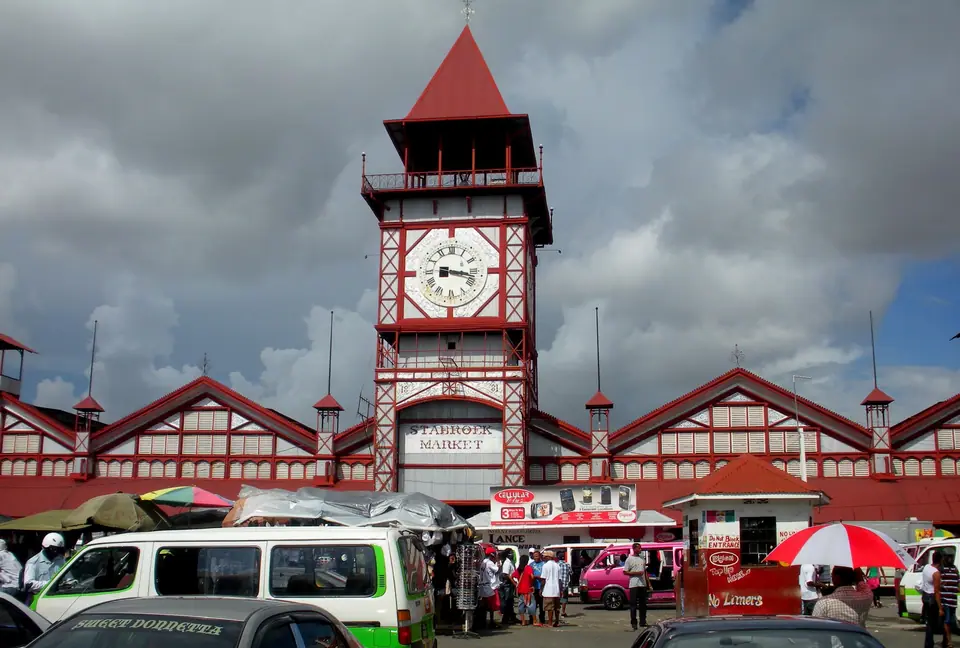
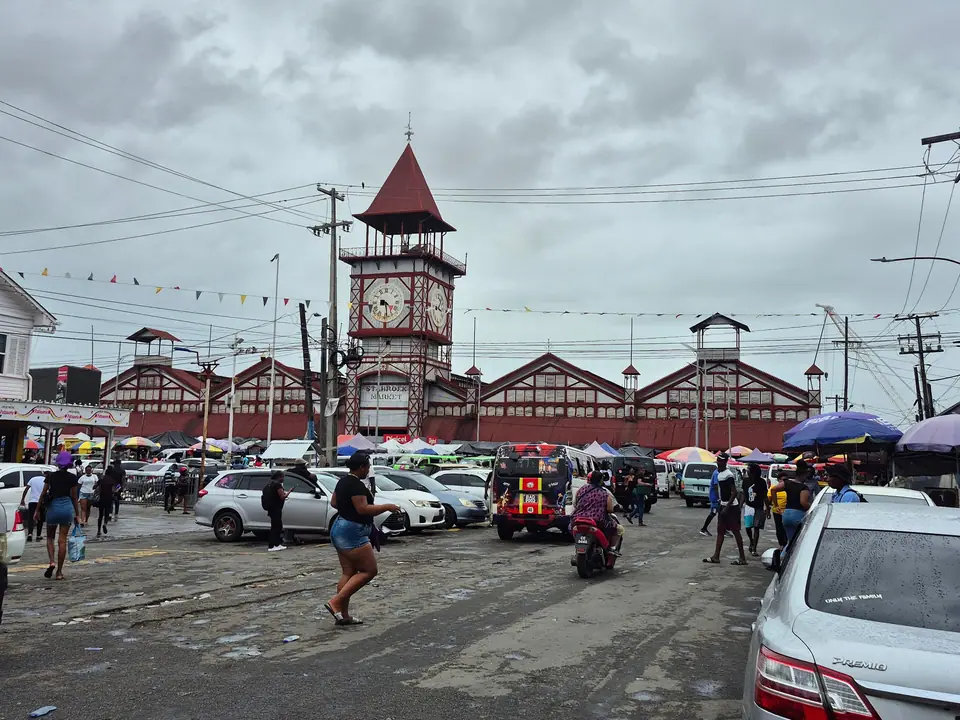
Standing at the western foot of Brickdam on Water Street directly above the Demerara River, Stabroek Market sits on the oldest trading square in the city, designated as a marketplace by the Dutch Court of Policy in the 1790s when Georgetown was still called Stabroek. The current monumental structure was designed by American engineer Nathaniel McKay and fabricated and erected between 1880 and 1881 by the Edgemoor Iron Company of Delaware, USA, opening officially on 1 November 1881.
Covering roughly 7,000 square metres on timber and iron piles driven into the riverbank, the building is an engineering showcase of the Victorian Iron Age: a vast, high-pitched roof supported by exposed wrought-iron trusses, ventilated clerestories, and cast-iron columns, crowned at the front by a steep four-sided red-and-white pyramidal Clock Tower that serves as the visual symbol of Georgetown. Beneath the iron canopy, hundreds of stalls are arranged by trade, from goldsmiths crafting traditional Guyanese filigree bangles and watch repairers to spice merchants, provision stalls, and fabric sellers.
The Stabroek Stelling and Water Street
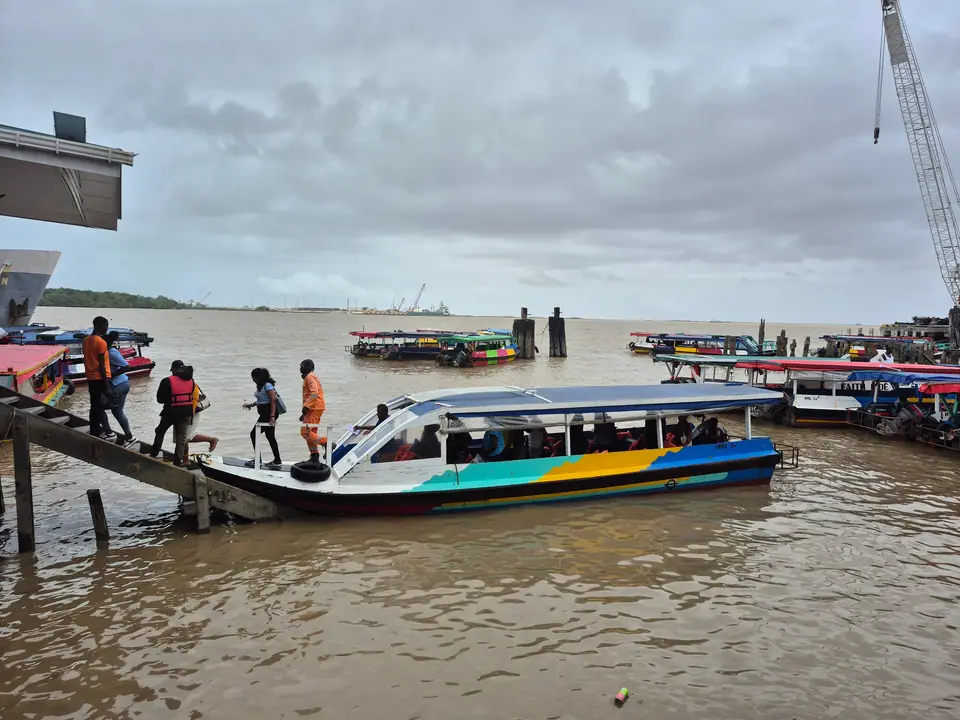
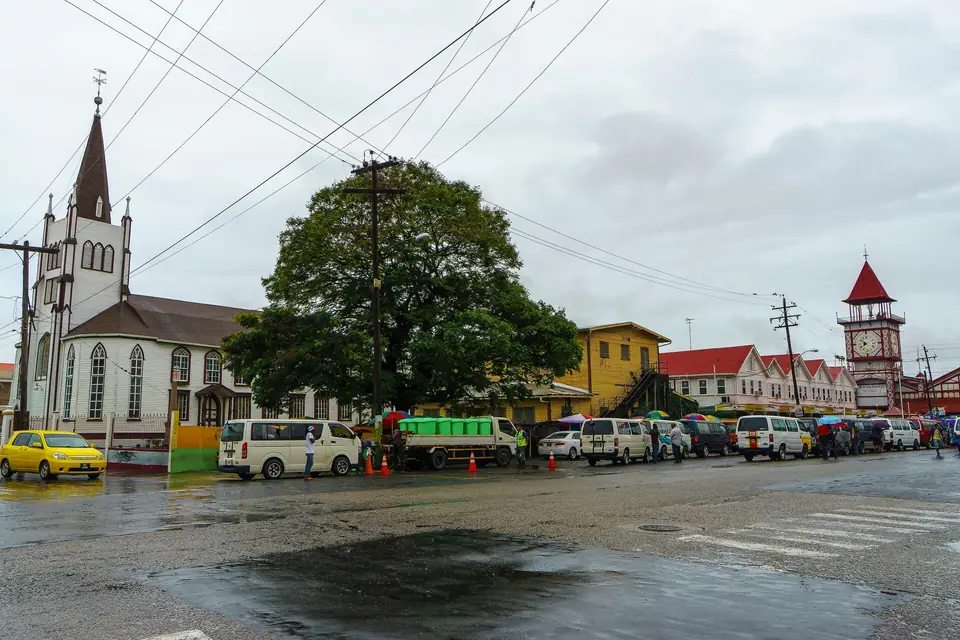
Walk through the western rear arches of Stabroek Market onto the wooden pier of the Stabroek Stelling (from the Dutch word stelling for landing wharf). From early morning until dusk, wooden lifejacketed passenger speedboats (water taxis) roar across the 1.2-kilometre-wide brown estuary of the Demerara River to Vreed-en-Hoop Stelling on the West Bank in under five minutes, passing ocean-going cargo ships, sugar barges, and the wooden sluice gates (kokers) that drain Georgetown's canals at low tide. Along adjoining Water Street, historic nineteenth-century timber trading houses and department stores line the oldest commercial street in the capital.
Bourda Market: Georgetown's Culinary Pantry
Fifteen minutes on foot east of Stabroek along Regent and Robb Streets lies Bourda Market (established in 1880 and expanded in 1902), where Caraqueño-style chaotic energy gives way to row upon row of fresh Guyanese farm produce from the Demerara and Berbice river valleys. Because Bourda is quieter and more open-air than Stabroek, it is the best place to photograph and taste Guyana's culinary ingredients: pyramids of cherry-like red and green wiri-wiri peppers, dark glass bottles of homemade cassava cassareep, giant hands of plantains, eddoes, breadfruit, starapples, sapodillas, golden apples, and aromatic bundles of medicinal bush teas. Visit both markets between 08:00 and 14:00, leave valuables at your hotel, and ask vendors before taking close-up portraits.
Traveller tips
Real advice from people who have been to Stabroek Market, Bourda Market and Water Street. Every tip is read by our team before it goes live.
No tips yet. Been here? Yours could be the first.
Thank you! Your tip will appear here after a quick review.
More in Georgetown
Continue exploring Georgetown with related neighbourhood, food, and planning guides
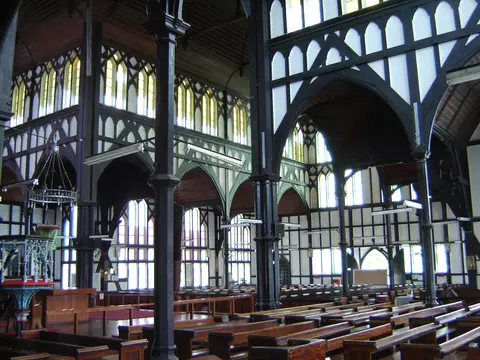
St. George's Cathedral, City Hall and Victorian Wooden Architecture Guide
Georgetown, Guyana
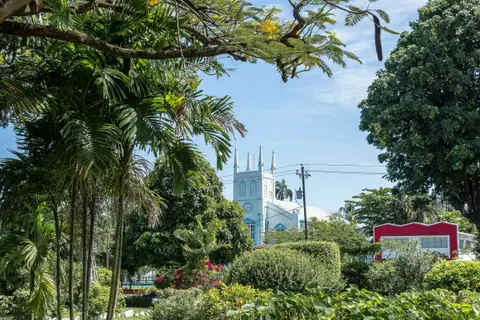
Georgetown Botanical Gardens, Manatees and Promenade Gardens Guide
Georgetown, Guyana
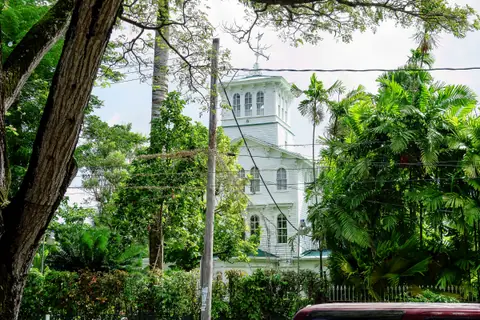
Main Street, Walter Roth Museum of Anthropology and National Museum Guide
Georgetown, Guyana
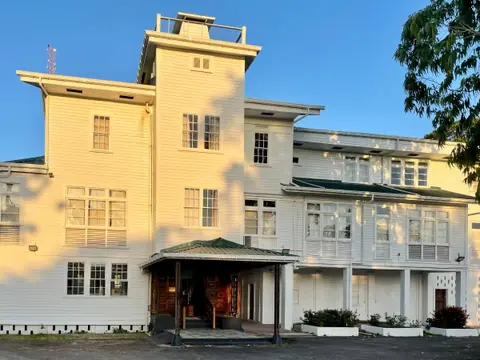
Castellani House, 1763 Cuffy Monument and Brickdam Cathedral Guide
Georgetown, Guyana
