


























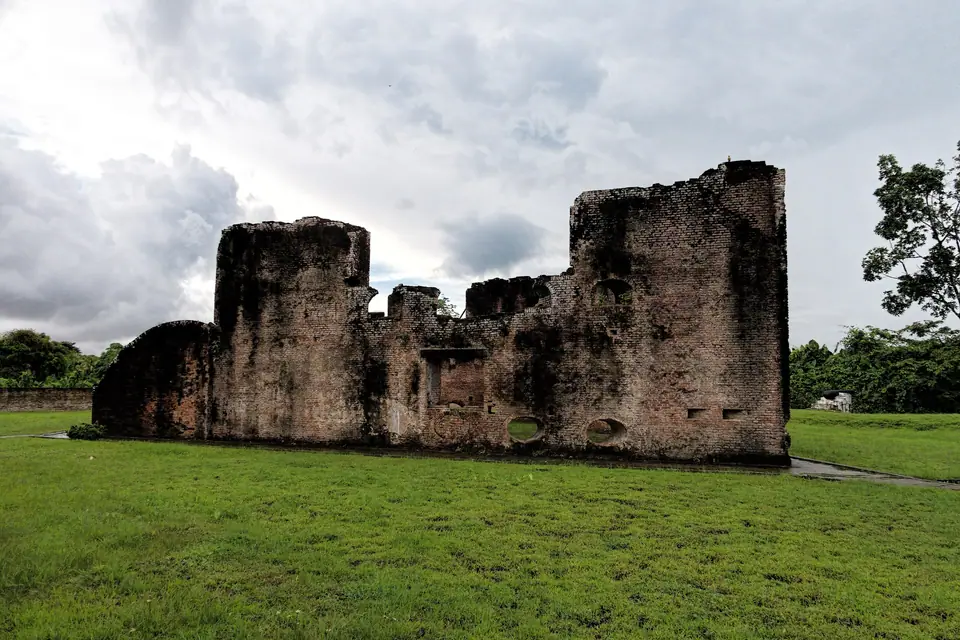
Demerara River, Fort Island and Essequibo River Day Trip Guide
Take a day trip west from Georgetown across the 1,851-metre floating Demerara Harbour Bridge to Parika and cruise the mighty Essequibo River to 1743 Dutch Fort Zeelandia on Fort Island.
Before the British moved the colonial capital to the mouth of the Demerara River in the late eighteenth century, the political and commercial heart of Dutch Guiana lay 40 kilometres west among the islands of the mighty Essequibo River. On a full-day excursion from Georgetown, you can cross one of the world's longest floating bridges, drive through West Coast Demerara villages to Parika, and ride a speedboat up the Essequibo estuary to the 1743 brick ruins of Fort Island and the river confluence town of Bartica.
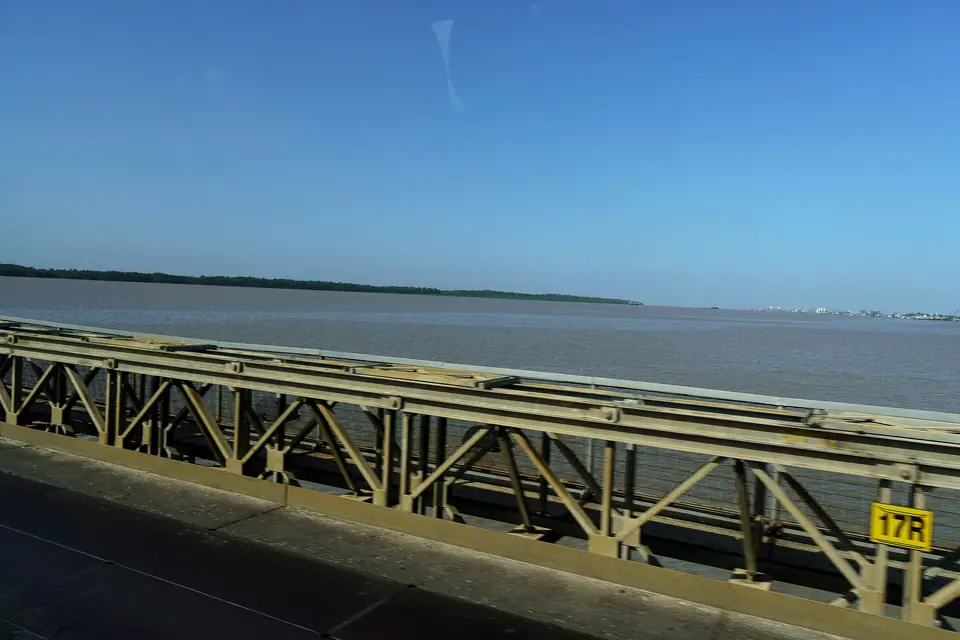
Crossing the Demerara Harbour Bridge (1978) to Parika
Eight kilometres south of Stabroek Market along the East Bank Highway, the Demerara Harbour Bridge connects Peter's Hall on the East Bank with Schoon Ord on the West Bank. Opened on 2 July 1978 and engineered by Thomas Storey, the 61-span structure stretches 1,851 metres (6,074 feet) across the tidal river on steel pontoons, with a high-level span for small craft and retractable central spans for ocean-going ships (now joined by the new cable-stayed Demerara River Bridge).
From the western end, the West Coast Demerara road runs 35 kilometres past Dutch- and French-named coastal villages (Vreed-en-Hoop, Windsor Forest, La Jalousie, Hague, and Leonora) to the riverside stelling of Parika on the Essequibo River.
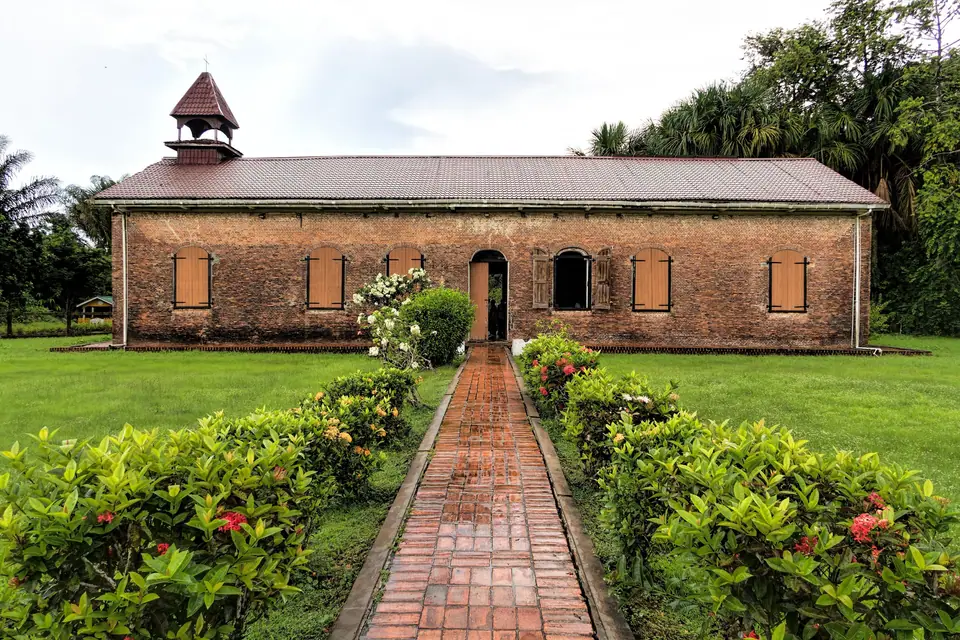
Fort Island: Fort Zeelandia (1743) and the Dutch Court of Policy (1752)
At Parika, the 1,014-kilometre-long Essequibo River opens into a 32-kilometre-wide estuary holding 365 forested islands. A 25-minute speedboat ride upstream reaches car-free Fort Island (Vlaggen Eiland), the mid-eighteenth-century capital of Dutch Essequibo under Governor Laurens Storm van 's Gravesande (1742 to 1772).
- Fort Zeelandia (1740 to 1744): Standing on the northern tip of the island, this star-shaped fortress was built between 1740 and 1744 out of yellow and red clay bricks shipped as ballast from Zeeland in the Netherlands. Its brick ramparts, vaulted magazine, and central watchtower remain remarkably intact.
- The Court of Policy and Dutch Church (1752): A five-minute walk leads to the whitewashed brick Court of Policy (completed in 1752), the oldest surviving non-military brick building in Guyana, preserving eighteenth-century Dutch tombstones set into the floor alongside the Dutch Heritage Museum.
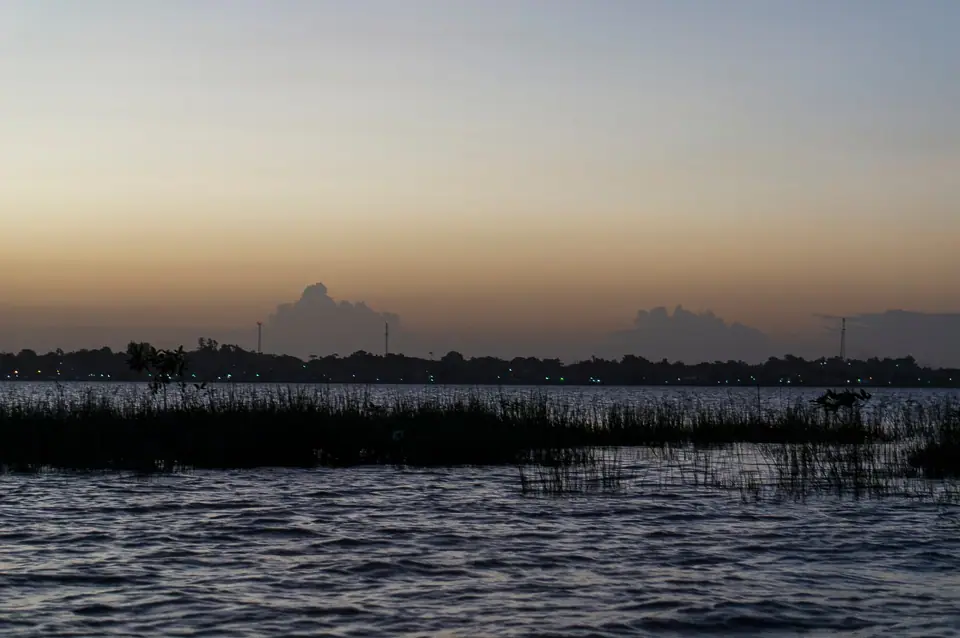
Continuing Upstream to Kyk-Over-Al (1616) and Bartica
Full-day boat tours continue up the Essequibo to the island ruins of Fort Kyk-Over-Al (founded by the Dutch in 1616 at the confluence of the Essequibo, Mazaruni, and Cuyuni rivers), before stopping for a lunch of curry and roti in Bartica and cooling off at Marshall Falls.
Traveller tips
Real advice from people who have been to Demerara River, Fort Island and Essequibo River Day Trip. Every tip is read by our team before it goes live.
No tips yet. Been here? Yours could be the first.
Thank you! Your tip will appear here after a quick review.
More in Georgetown
Continue exploring Georgetown with related neighbourhood, food, and planning guides
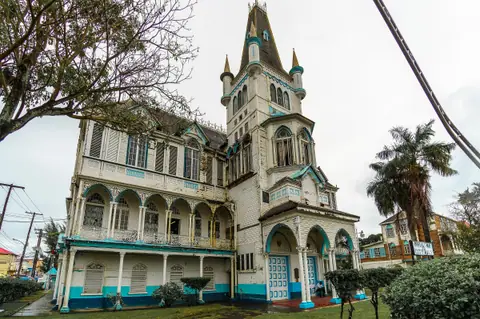
3 Days in Georgetown Itinerary: Victorian Timber Heritage, Markets and Kaieteur Flight
Georgetown, Guyana

What to Eat in Georgetown: Pepperpot, Cook-Up Rice, Seven Curry and Demerara Rum
Georgetown, Guyana
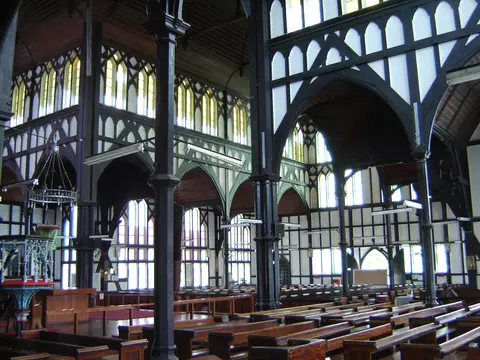
St. George's Cathedral, City Hall and Victorian Wooden Architecture Guide
Georgetown, Guyana
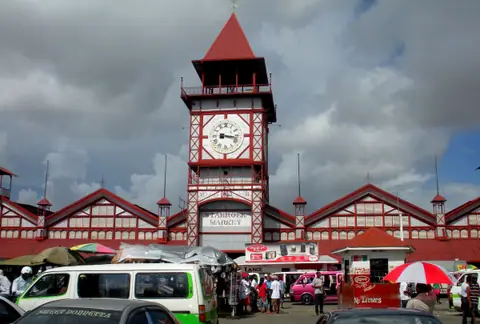
Stabroek Market, Bourda Market and Water Street Guide
Georgetown, Guyana
