Photo: Chabe01 · CC BY-SA 4.0
Leipziger Lerche, Allerlei and Coffee Houses
Story-led tour through Leipzig's edible institutions from 1876 bakery inventions and salted coriander beer to historic coffee-house rooms.
Leipzig's culinary identity comes straight from fair-merchant taverns, royal conservation bans and university coffee houses rather than heavy aristocratic feasts. Across a walkable day linking central squares and leafy Gohlis beer gardens, visitors sample bakery ingenuity, spring garden harvests and salted wheat beer. Three centuries of Saxon café etiquette round out the route. Space your stops slowly across bakeries, vaulted cellars and warm timber parlours between museum walks.
The Pastry Born From an 1876 Songbird Ban
Pass any traditional Saxon bakery window and small golden shortcrust tarts topped with crossed dough strips sit stacked beside dark rye loaves. Named the Leipziger Lerche (LAYP-tsig-er LER-kheh), this sweet treat hides an unexpected wildlife rescue inside crumbly almond pastry. Centuries ago, meadow larks netted across Saxon fields were stuffed with herbs and eggs for winter export. Roughly 400,000 songbirds changed hands in Leipzig in 1720 alone.
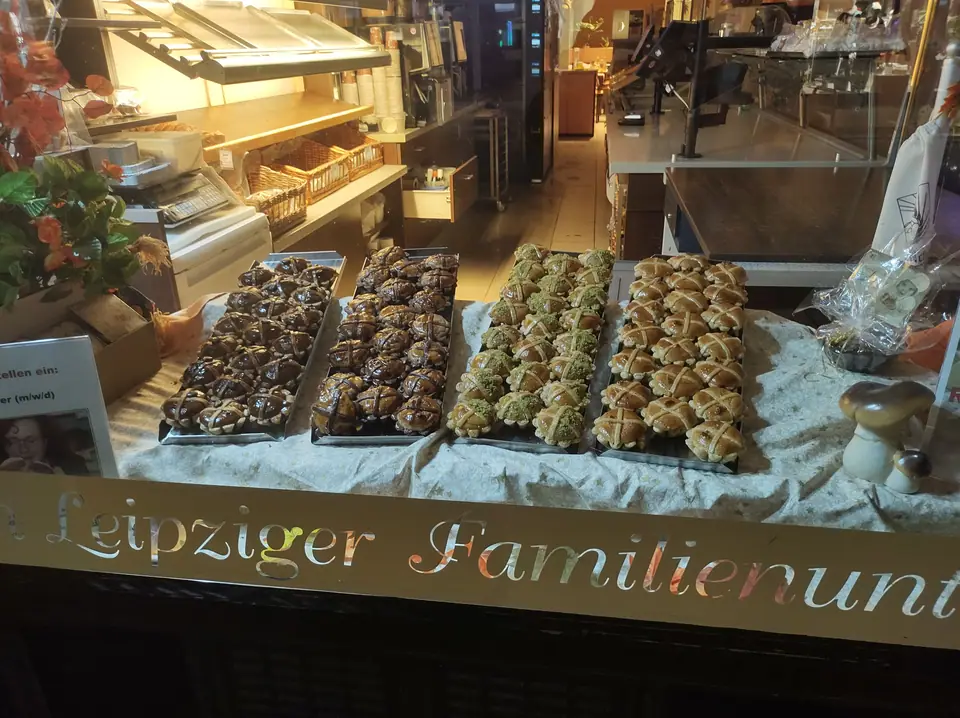
When King Albert banned songbird hunting across Saxony in 1876, inventive local bakers kept the seasonal habit alive using moulds instead of snares. Sweet marzipan, crushed almonds and a hidden dot of strawberry or cherry jam fill the cup to represent the lark's heart. Two crossed pastry ribbons seal the rim, echoing old kitchen twine. Bakeries fold fresh batches into crisp paper bags sturdy enough for afternoon walks through downtown arcades.
Spring Market Produce and Leipziger Allerlei
Popular tales often claim townspeople tossed leftover vegetables together after the 1813 battle to discourage French foragers from demanding meat. Old culinary archives tell a finer story. Leipziger Allerlei already stood documented in a 1745 Saxon cookbook celebrating tender early harvests gathered around Elster market gardens.
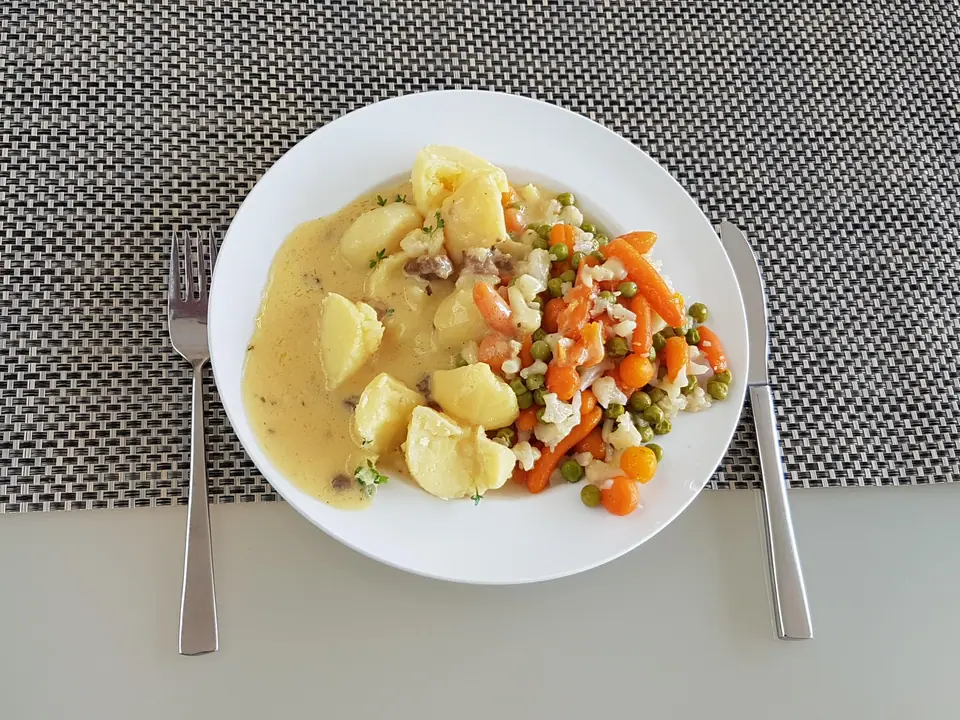
Authentic plates combine young peas, sweet carrots, green beans, cauliflower, kohlrabi, asparagus tips and wild morel mushrooms gently glazed in butter. Earthy morels balance bright green pods cleanly beside warm boiled potatoes or light herb broth. Traditional Saxon dining rooms still elevate the vegetable medley into a proper celebratory dish with sweet river crayfish tails, red crayfish butter and light semolina dumplings called Grießklößchen. Ordering it between April and June catches local white and green asparagus at crisp spring best.
Sour Wheat Beer in Former Rail Sheds and Taverns
Leipzig's native beer steps far away from standard German hop bitterness toward citrus tartness, spice and subtle sea salt. Originating centuries earlier around Goslar between 1181 and 1470, top-fermented Gose (GO-zeh) settled permanently in Leipzig by 1738. Dedicated Gosenschenken taverns numbered over 80 by 1900. Nationalised after 1945 and briefly interrupted in 1966, local brewers revived the style during the 1980s and 1999. Brewers now mark Happy Gose Day each 17 November since 2016.
Brewed with at least half malted wheat, coriander seeds and salt under a regional exemption from strict Reinheitsgebot rules, crisp unfiltered Gose pours pale gold at four to five percent alcohol, served in flared glasses or long-necked skittle bottles.
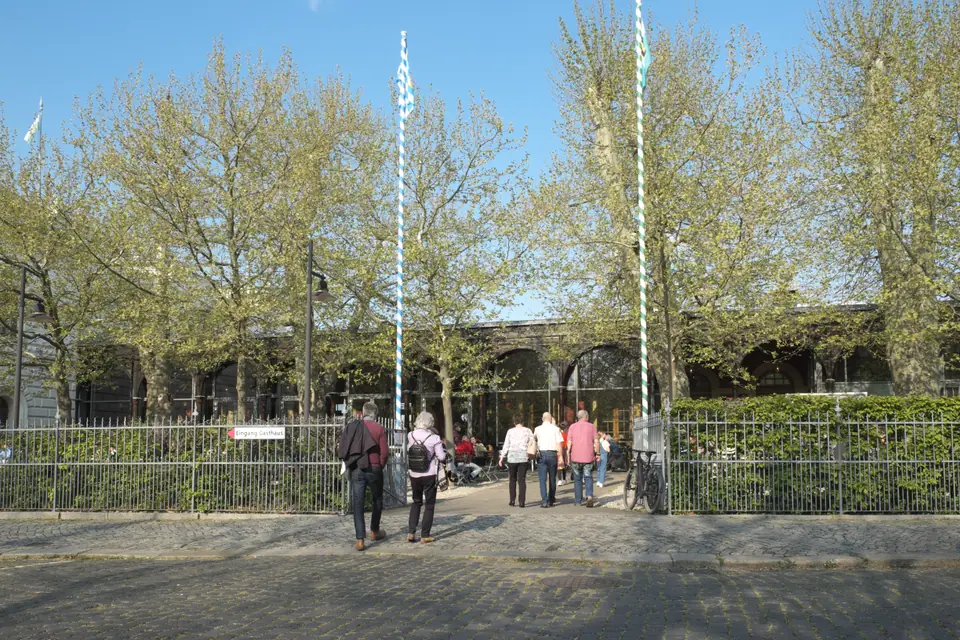
Bartenders happily pour a dash of caraway spirit or sweet woodruff syrup with tart pours to soften bright citrus acidity for newcomers. Two distinct institutions keep Gose brewing alive at opposite ends of town. Out in leafy Gohlis at Menckestraße 5, the 1899 Gosenschenke "Ohne Bedenken" ("Without Hesitation") pours inside its original tree-shaded beer garden, honouring a waiter's witty reply to cautious drinkers. Closer to downtown above the City-Tunnel's southern stop, Gasthaus and Gosebrauerei Bayerischer Bahnhof brews under lofty rail-hall arches beside the 1842 neoclassical portico of the world's oldest preserved terminus railway station (opened on 19 September 1842).
Five Centuries Under Auerbachs Keller Vaults
Walk down the broad sandstone stairwell off Mädlerpassage at Grimmaische Straße 2 to 4 to enter historic wine vaults. Tables here have welcomed drinkers and diners continuously since 1525. Celebrating 500 years in 2025, Auerbachs Keller gained lasting literary renown after young student Johann Wolfgang von Goethe drank beneath these arches. He famously set a drunken barrel-riding scene of Faust right inside the cool subterranean stone cellar.
Visitors photograph the 1913 bronze statues framing the passage mouth before descending past painted woodwork into glowing vaulted chambers below street cobbles. Pick between the theatrical subterranean Großer Keller and quieter carved-oak wine rooms tucked beside it. Candlelight plays across dark oak booth carvings while rich Saxon roasts such as braised ox cheeks, slow-roasted duck and warm pretzel loaves pair warmly with dry white wines from nearby Saale-Unstrut river slopes.
Coffee Culture Reborn at Zum Arabischen Coffe Baum
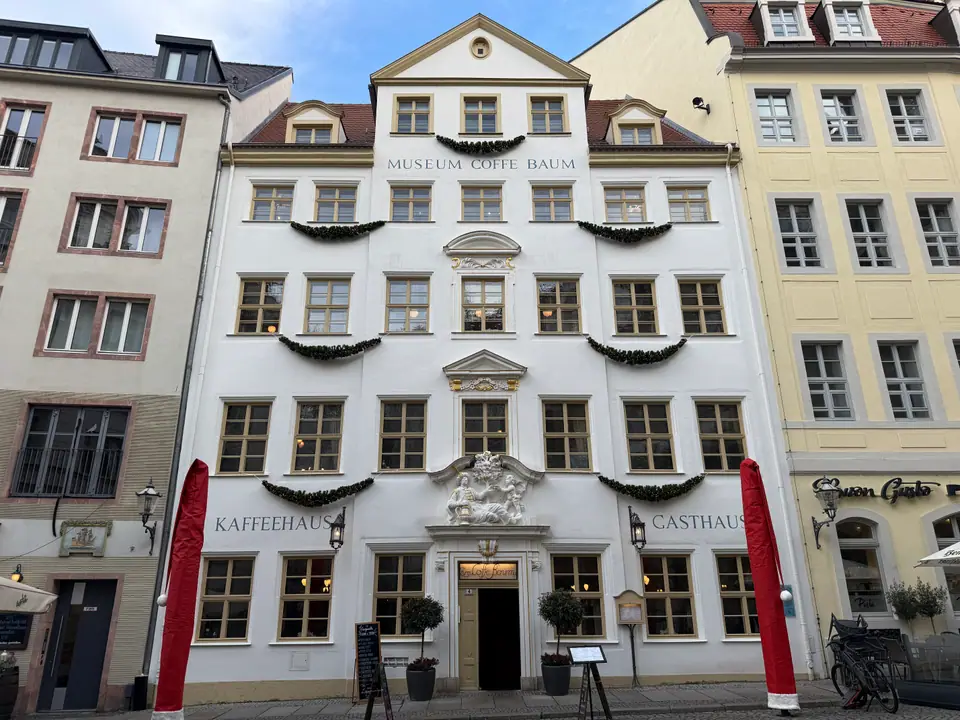
Walk briefly northwest onto Kleine Fleischergasse 4 to study a baroque carved sandstone lintel. It depicts an Ottoman figure seated beneath a fruiting coffee tree. Serving brewed cups continuously at this site since 1711, Zum Arabischen Coffe Baum ranks as Germany's oldest continuously rooted coffee house. Dark oak tables historically gathered Johann Sebastian Bach, Robert Schumann and Goethe over steaming porcelain pots.
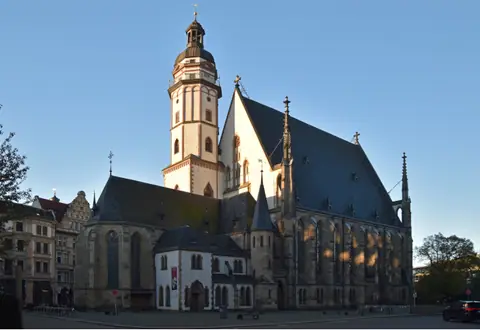
After closing roughly six years for comprehensive architectural restoration, both the ground-floor restaurant and coffee rooms reopened cleanly in April 2025. Rich dark filter roast aromas welcome visitors straight back inside those restored timber parlours. On 1 July 2025, the freshly redesigned 16-room Coffee Culture Museum upstairs opened again under Stadtgeschichtliches Museum Leipzig. Delicate porcelain cups, brass roasters and wooden café benches upstairs trace how Saxon scholars turned roasted beans into daily social ritual. Pair a warm slice of quark-and-poppyseed cake downstairs with late-afternoon recitals at Thomaskirche.
Where it is
- 1Leipzig
- Leipzig/Halle Airport (LEJ) · about 13 km from Leipzig in a straight line
- Berlin Brandenburg Airport (BER) · about 138 km from Leipzig in a straight line
- Directions in Google Maps
Stations and taxi ranks: OpenStreetMap. Airports: OurAirports. Distances are in a straight line.
Traveller tips
Real advice from people who have been to Leipzig. Every tip is read by our team before it goes live.
No tips yet. Been here? Yours could be the first.
Thank you! Your tip will appear here after a quick review.
More in Leipzig
Continue exploring Leipzig with related neighbourhood, food, and planning guides