Photo: Benjamin Smith · CC BY-SA 4.0
Alcazaba and Gibralfaro Castle Guide
Discover the Alcazaba fortress and Gibralfaro Castle above Málaga with practical advice on history, terrain, and city views.
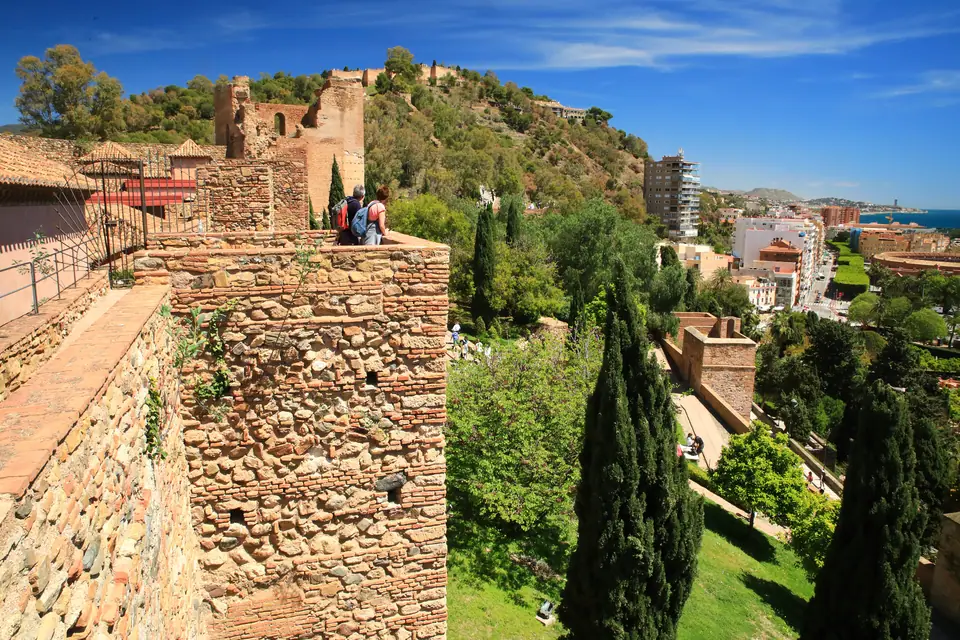
Málaga's coastal skyline is defined by the Alcazaba fortress and Gibralfaro Castle, two hilltop fortifications reflecting eight centuries of Islamic architectural rule.
Mount Gibralfaro and Ancient Maritime Settlement
Málaga developed around a protected natural bay framed by defensive heights. Mount Gibralfaro gave ancient seafarers an ideal observation post over Mediterranean maritime routes. Phoenicians established a permanent settlement on this prominent hilltop around 600 B.C. They chose the elevated ground to safeguard their families and goods from offshore threats.
Ancient writings confirm this prolonged maritime occupation. In the first century BC, Estrabon documented a Phoenician settlement positioned right where the fortress hill meets the lower city. Subsequent Roman settlers occupied the surrounding slopes to expand commerce. On the southern slope, archaeologists documented remains of an extensive Roman villa and industrial facilities constructed for salting fish.
Merchants shipped key commodities through the natural harbour. Local trade focused on exporting wine, oil, and garum, a prized sauce created from salted fermented fish. Roman masons also made use of the western hillside of Mount Gibralfaro. During the first century, workers built a theatre there, establishing civic life directly beneath the defensive bluffs.
Political control of the coastal territory altered dramatically over the following centuries. The Visigoth monarch Leovigildo captured the city in 571 during his campaigns across the peninsula. A much larger transition occurred during the early eighth century. An expeditionary force under Tarik navigated the maritime gap separating northern Africa from Iberia in 711 with almost 10,000 men. Tarik served as lieutenant to Muza ben Nusayr, governor of the north of Ifriquiya. Muslim forces took Málaga that same year, opening an eight-century chapter of Islamic government and culture. For a balanced holiday schedule, check our three-day itinerary for Málaga.
The Urban Fortress of the Alcazaba
The term Alcazaba comes from the Arabic word al-Qasba, meaning an urban fortress. The first records of the fortress date to 755 during the Umayyad Emirate of Abd al-Rahman I. At that time, historical sources mention the Alcazaba as a fortress protecting the developing city of Malaqa.
Over centuries of regional conflict, the stronghold expanded dramatically, ranking among Andalusia's most expansive Islamic military bastions. Political decentralisation emerged during the Taifa period. The year 1014 marked the beginning of independent governance by local rulers seeking autonomy from central power. Important structural changes followed when the Zirid ruler Badis took the city in 1056 from Granada.
Badis expelled the Hammudid leaders and annexed Málaga into his domain. His grandson documented in the Memoirs of Abd Allah that Badis equipped the Alcazaba with a double wall. Badis applied the technical and military advances of his era to strengthen the fortifications. Detailed records confirm that the complex covered 14,200 square metres, including 7,000 square metres of built space. Civil buildings occupied 3,478 square metres, and military installations accounted for 3,516 square metres.
By the end of the 13th century, Málaga was incorporated into the Nazari kingdom of Granada. Islamic rule fostered prosperity through trade, producing raisins, dried fruits, and golden lustre ceramics. Urban investment brought numerous mosques, naval storehouses known as the Atarazanas, and expanded civic halls. Travellers reviewing our guide to Málaga highlights and attractions will find the entrance at C/ Alcazabilla, 2, 29012. Comprehensive restoration work started in 1933, resulting in the outstanding recovery of this historic monument.
City Walls and Gibralfaro Castle
Gibralfaro Castle stands on the rocky summit of Mount Gibralfaro above the Alcazaba palace. During the era of Muslim occupation, builders erected massive city walls to encircle the entire urban settlement. The stone walls ran from the coastline directly to the Alcazaba. They climbed along the left bank of the River Guadalmedina towards modern Calle Alamos before turning toward Calle Granada. At that junction, an exit gate directed commercial traffic onto the road leading from Málaga to Granada.
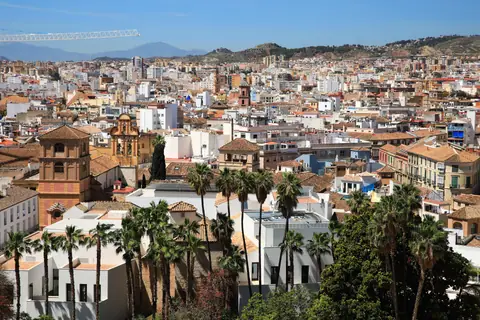
Gibralfaro Castle protected this extensive walled zone against maritime raids and land assaults. The summit fortress offers what official tourism records describe as the best views of the whole city. Defenders used these vantage points to monitor ship movements across the bay and track military advances across the valley below.
Christian armies under the Catholic Monarchs conquered Málaga in 1487 after a sustained siege. Following the conquest, administrators repopulated the damaged city with Christian families arriving from the Guadalquivir valley. Today, visitors walk the perimeter ramparts to admire the harbour, the coastline, and the mountain backdrop. Other regional monuments like the Alhambra, Generalife, and Albaycin in Granada are declared World Heritage Sites, demonstrating the deep historic resonance of the era. Similar international recognition applies to the Great Mosque and historic centre of Córdoba, as well as the Alcázar, Cathedral, and Seville Indias Archive.
The dual structure of the Alcazaba and Gibralfaro demonstrates classic medieval military engineering. The lower fortress served as the administrative centre and royal residence, while the upper castle functioned as an armed citadel. Thick stone masonry, staggered gates, and elevated lookout towers ensured security during protracted medieval warfare.
Hillside Footpaths and Public Transport
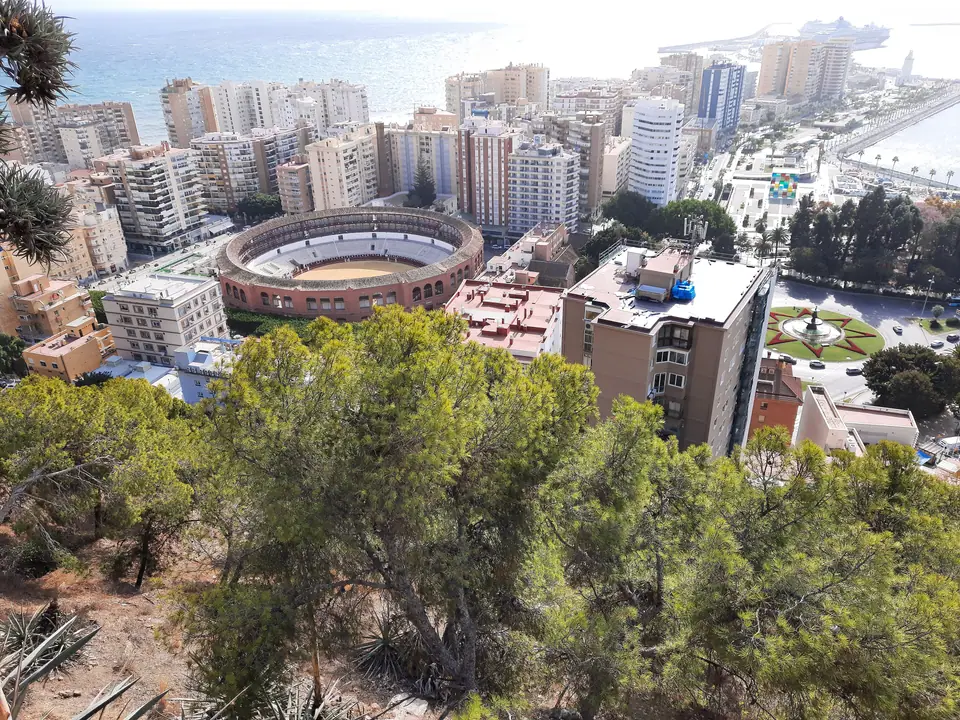
Ascending from the Alcazaba to Gibralfaro Castle involves navigating the steep slopes of Mount Gibralfaro. A continuous stone path connects the two fortifications, winding through pine trees and landscaped terraces. The route climbs steadily, providing changing perspectives over the bay, the bullring, and the port below. Because the trail surface features flagstones, sensible footwear with strong grip helps maintain traction on dusty or damp inclines.
The hillside trail receives direct sunlight throughout the middle of the day. We recommend walking the uphill section during cooler morning hours to avoid unnecessary fatigue. Carrying bottled water is wise, especially when visiting during warmer months. The walk down is considerably less taxing, making it an enjoyable descent back towards the historic quarter.
Visitors who prefer to avoid the uphill trek can take a local bus or licensed taxi up to the castle gates. Taking public transport to the summit allows visitors to view Gibralfaro and then descend downwards on foot. Málaga provides reliable, sustainable public transit. The metropolitan metro has achieved carbon neutral emissions since 2019, reflecting the city's commitment to modern environmental standards.
Ticketing Options and Sightseeing Strategy
Admission tickets can be purchased at the monument ticket desks, with combined entry tickets available for both the Alcazaba and Gibralfaro Castle. You should check the official website before visiting to confirm current entry arrangements and access regulations. Travellers planning extensive sightseeing can buy the official Málaga Pass. The pass is sold in durations of 24, 48, or 72 hours, or for a full week.
The card grants complimentary access to various cultural venues across town, plus reductions at selected shops and eateries. Using an official pass simplifies entry if you intend to visit multiple cultural institutions across the city centre. The pass covers admission to many museums and monuments throughout the municipality. Allow sufficient time to explore both fortresses thoroughly, as their scale and varied elevations require steady walking.
The Alcazaba features courtyards, decorative arches, and fountains set within ancient residential quarters. Cobbled ramps and narrow staircases connect the inner courtyards, requiring visitors to watch their footing. Gibralfaro Castle features wide battlements, defensive towers, and historical exhibits outlining its defensive role through centuries of conflict. Combining both sites with the adjacent Roman theatre provides an authentic look at the Phoenician, Roman, and Islamic origins of Málaga.
Where it is
- 1Málaga
- Málaga-Costa del Sol Airport (AGP) · about 9 km from Málaga in a straight line
- Directions in Google Maps
Stations and taxi ranks: OpenStreetMap. Airports: OurAirports. Distances are in a straight line.
Traveller tips
Real advice from people who have been to Málaga. Every tip is read by our team before it goes live.
No tips yet. Been here? Yours could be the first.
Thank you! Your tip will appear here after a quick review.
More in Málaga
Continue exploring Málaga with related neighbourhood, food, and planning guides