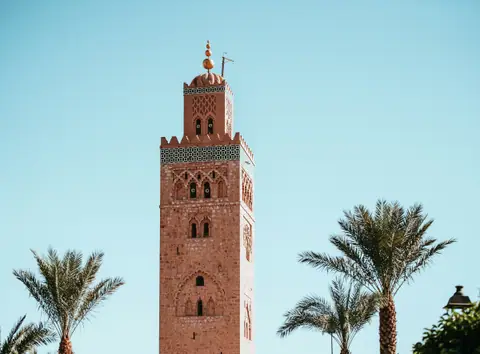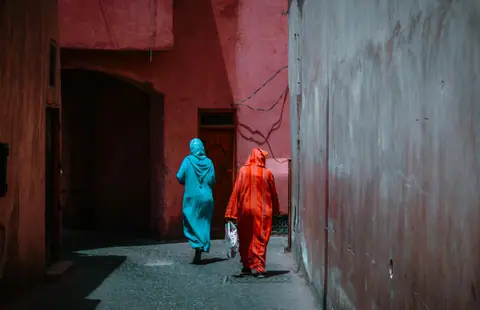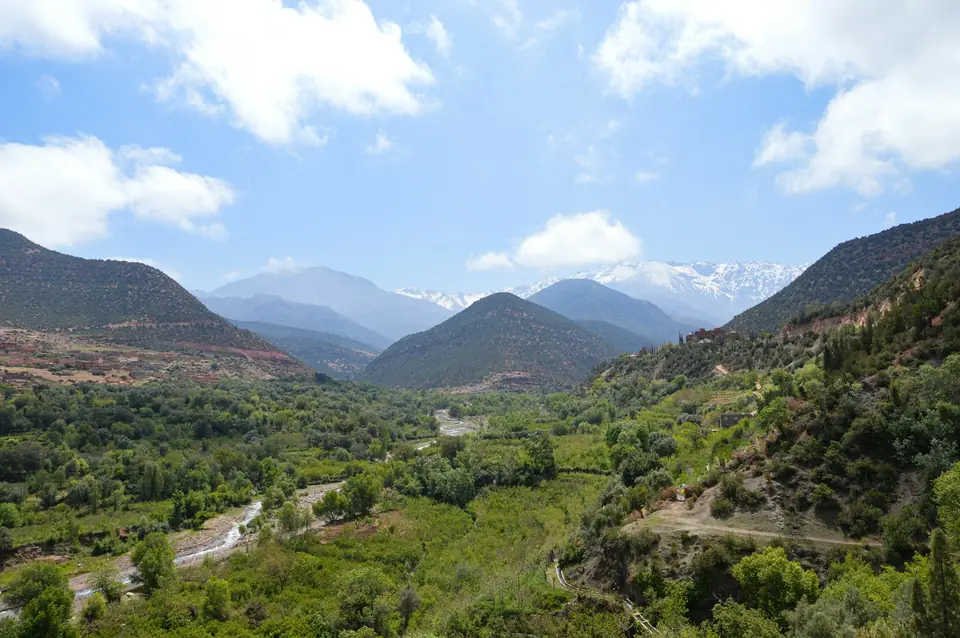
Photo by henry perks on Unsplash
Best Time to Visit Marrakech
Monthly temperatures and rainfall from official normals, plus the heat, Ramadan and mountain conditions that decide when to go.
Short answer: March to May and September to November. That is also the advice of Visit Morocco, the national tourist office. Days are warm, evenings are cool, and walking the medina is pleasant. Summer is very hot, and winter brings mild days with cold evenings.
The numbers behind the advice
The Japan Meteorological Agency publishes long-term averages for the Marrakech weather station, based on 1991-2020. The figures below are monthly mean temperatures and rainfall. Daytime highs are well above the mean, and nights well below it, so treat these as a guide to the month rather than the afternoon.
January has a mean temperature of 12.1°C and about 25.1 mm of rain, and February warms a little to 13.9°C with 21.9 mm. March reaches 16.7°C and brings 33.6 mm, which makes it the wettest month of the year in this record. April averages 18.7°C with 23.3 mm, and May climbs to 21.6°C while the rain falls to 11.3 mm.
The summer months are almost dry. June has a mean of 25.3°C and 3.4 mm of rain, July 28.7°C and 1.4 mm, and August 28.8°C and 3.5 mm, the warmest month on average. September eases to 25.1°C with 18.1 mm, October to 21.8°C with 17.7 mm, November to 16.6°C with 29.4 mm, and December to 13.3°C with 23.8 mm.
Spring: March to May
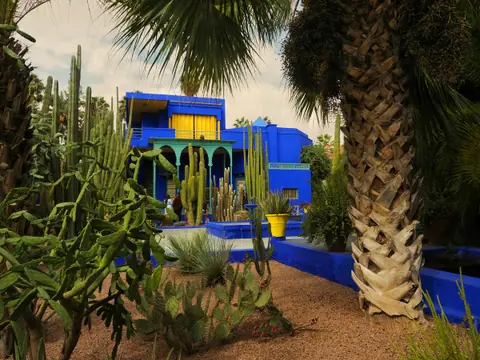
Spring is the favourite season. March averages 16.7°C and is the wettest month, with 33.6 mm of rain. April and May warm up to means of 18.7°C and 21.6°C. It is a fine season for the Jardin Majorelle and the Menara gardens. Book early, because spring is popular.
Summer: June to August
Visit Morocco describes summer as very hot. July and August have mean temperatures of 28.7°C and 28.8°C, and the afternoons are much hotter than that. Rain almost disappears, with just 1.4 mm in July. Sightsee early, rest through the middle of the day, and choose a riad with a pool or air conditioning.
The mountains offer relief. Toubkal National Park lies between the N'Fiss and Ourika valleys south of the city, and the higher villages are cooler. Our Atlas day trip guide explains the options.
Autumn: September to November
September is still warm, with a mean of 25.1°C, and the heat eases through October, at 21.8°C. November cools to 16.6°C and brings more rain, about 29.4 mm. Autumn light is soft, and the medina is busy but comfortable to walk.
Winter: December to February
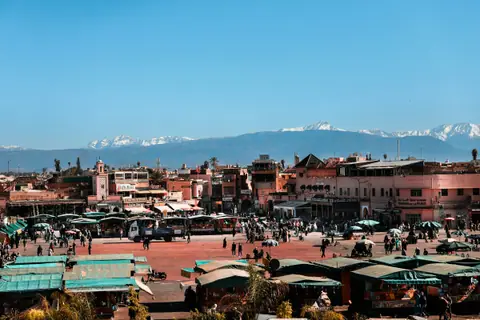
Visit Morocco says winter days are mild and evenings cool. January has a mean of 12.1°C, and nights can feel cold, especially in riads with tiled floors and open courtyards. Ask whether your room has heating. On clear days the High Atlas stands out on the horizon.
Ramadan
Ramadan follows the Islamic lunar calendar, so its dates move each year. Check them when you plan. During the holy month, the UK government advises that eating, drinking, smoking or chewing gum in public in the daytime may cause offence. Some cafés close by day, but evenings after the fast are lively. Visitors are not expected to fast, but discretion helps.
Matching the season to your plans
For sightseeing in comfort, choose March to May or September to November, the seasons Visit Morocco recommends. For mountain walks, spring and autumn work well, as long as you hire a professional guide as the UK government advises. If pool time matters most, June to September delivers the heat, but plan early starts for any sightseeing. Winter suits travellers who want quieter streets and are happy to pack warm layers for the evenings.
Planning around the heat
In any season, the medina is easiest to enjoy in the morning and the late afternoon. The souks, the Ben Youssef Madrasa and the palaces suit the morning. Jemaa el-Fna comes alive towards evening. Our three-day plan follows that rhythm.
Booking tips by season
Spring and autumn draw the most visitors, so book riads and the Jardin Majorelle well ahead. Jardin Majorelle tickets can only be bought online, so check slots before you fix your plans. Train seats can be booked 3 months before departure on oncf-voyages.ma. In summer, rooms are easier to find, but make sure air conditioning is included.
Packing for the season
Spring and autumn call for light layers and a warmer top for the evenings. Summer needs loose, light clothing, a hat and plenty of water. Winter needs a warm jumper and a jacket for the nights. Our what to wear guide has the full list.
Daily rhythm in the hot months
From June to September, the city follows a rhythm that visitors soon copy. People are out early in the morning, when the souks open and the air is still cool, and they retreat indoors through the hottest part of the afternoon. The streets and the square come back to life in the evening. If you plan your sightseeing around that pattern, even a summer visit can be comfortable.
Mountain conditions through the year
The High Atlas has its own weather. Jbel Toubkal rises to 4,167 metres, and the villages on its slopes are much cooler than the city in every season. Visit Morocco notes that the summit climb takes two days. In winter, ask your guide about trail conditions before you set off, and in summer, carry plenty of water, because the sun is strong at altitude.
Events and busy periods
Marrakech hosts conferences, festivals and sporting events through the year, and the city fills up around them. Check the dates of any major event before you book, and reserve your riad early if your trip overlaps with one. National and religious holidays can change opening hours, so confirm times locally for the palaces and gardens.
How long to stay in each season
In spring and autumn, three or four days let you see the medina at a relaxed pace and add a mountain trip. In summer, a shorter city stay works better, perhaps with a night in the cooler mountains. In winter, the mild days suit a longer, slower visit, with warm evenings spent indoors in your riad.
Where it is
- 1Marrakech
- Marrakesh Menara Airport (RAK) · about 6 km from Marrakech in a straight line
- Directions in Google Maps
Stations and taxi ranks: OpenStreetMap. Airports: OurAirports. Distances are in a straight line.
Traveller tips
Real advice from people who have been to Marrakech. Every tip is read by our team before it goes live.
No tips yet. Been here? Yours could be the first.
Thank you! Your tip will appear here after a quick review.
More in Marrakech
Continue exploring Marrakech with related neighbourhood, food, and planning guides