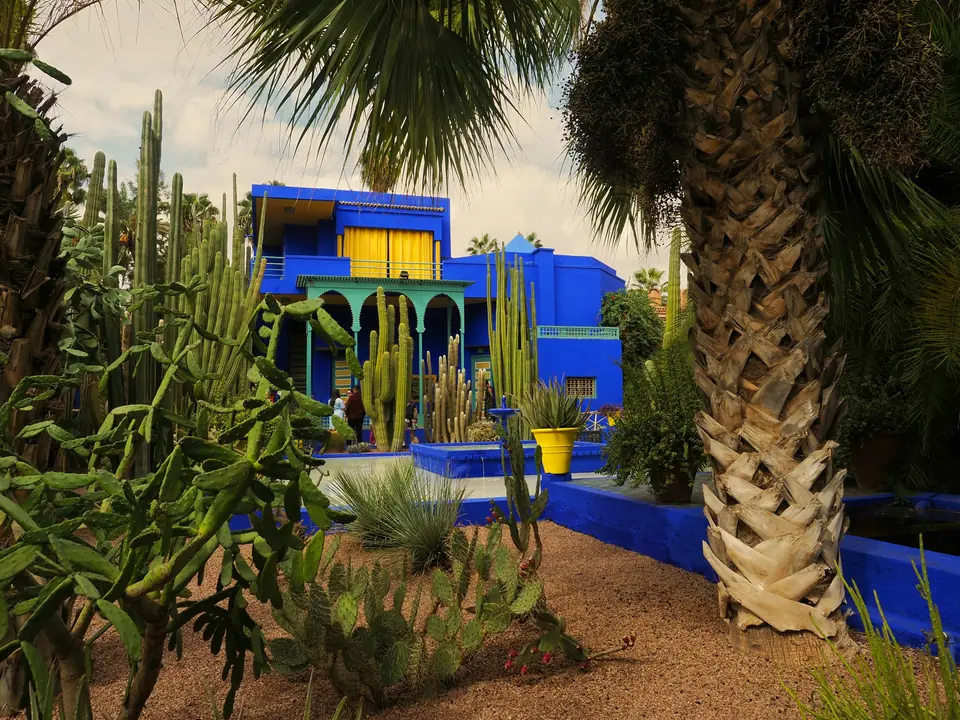
Photo by Bradley Pritchard Jones on Unsplash
Best Things to Do in Marrakech
Jemaa el-Fna, the souks, Ben Youssef Madrasa, Jardin Majorelle, the Koutoubia and the High Atlas: the Marrakech sights that shape a debut visit.
Short answer: watch Jemaa el-Fna fill up at dusk, get lost in the souks, and visit the Ben Youssef Madrasa. Book the Jardin Majorelle online, see the Koutoubia minaret from the square, and give a day to the High Atlas. Two or three sights a day is plenty, with a long rest at midday.
Jemaa el-Fna at dusk
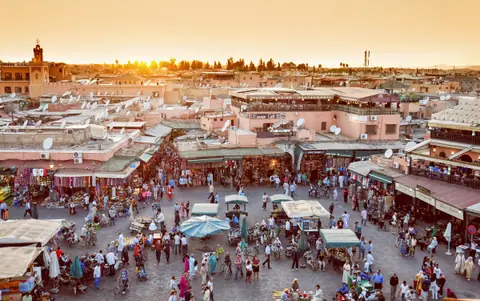
Visit Morocco lists Jemaa el-Fna as the city's most popular sight, and UNESCO recognises its performers as intangible heritage. UNESCO proclaimed the square in 2001 and inscribed it in 2008. UNESCO names storytellers, poets, snake-charmers, Berber musicians, Gnaoua dancers and players of the senthir among the people who bring it to life.
Come at different times of day, because it changes completely. Late afternoon and evening are the liveliest. Our Jemaa el-Fna guide explains how to enjoy it without the hassle.
The souks
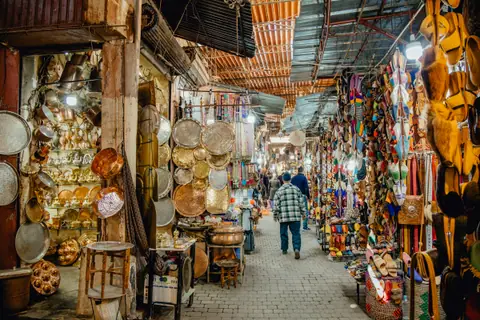
The covered lanes north of the square are the commercial heart of the medina. Each trade tends to cluster in its own area, from leather and slippers to lanterns, spices and carpets. Prices are a starting point for bargaining, so take your time and stay friendly. Our medina walk gives you a route through them.
Ben Youssef Madrasa
This former Koranic school was founded in 1565 under the Saadian dynasty by Sultan Abdellah Al-Ghalib. It takes its name from the Merinid sultan Abu al-Hassan, known as Ben Youssef. For centuries it worked as a theological faculty, with students from across North Africa. King Mohammed VI launched restoration works in 2017. Give yourself at least an hour for the courtyard and the student rooms.
Jardin Majorelle
The painter Jacques Majorelle began the garden in 1924, and it opened to the public in 1947. Yves Saint Laurent and Pierre Bergé bought it in 1980 to save it from a property project. Today the cobalt-blue villa and the cactus beds draw big crowds.
Tickets can only be bought online, on the official site. Your QR code covers the garden, the Pierre Bergé Museum of Berber Arts and the Musée Yves Saint Laurent Marrakech. Book an early slot, and remember that the Yves Saint Laurent museum closes on Wednesdays.
The Koutoubia Mosque
The Koutoubia's 77-metre minaret is the symbol of the city. Visit Morocco notes that its design inspired the Hassan Tower in Rabat and the Giralda in Seville. You see it from all over the medina, which makes it a handy landmark. Admire it from the gardens around it and from the square at sunset.
The palaces and the Saadian Tombs
UNESCO's Dutch commission names the Kasbah, the Badi Palace and the Saadian Tombs among the city's most impressive monuments. They lie close together in the south of the medina, so you can see them in one morning. The Bahia Palace is nearby too. Go early to beat the tour groups, and check opening hours locally, as they change.
The Menara gardens
The Menara gardens were founded by the Almohad dynasty, and Visit Morocco describes them as a vast garden with an emblematic basin. On a clear day the High Atlas rises behind the water. It is a calm place to walk in the late afternoon, away from the medina crowds.
A day in the High Atlas
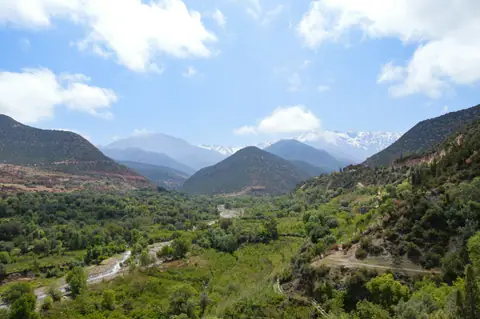
Visit Morocco notes that the city is surrounded by the Atlas Mountains. Toubkal National Park lies between the N'Fiss and Ourika valleys, and Jbel Toubkal rises to 4,167 metres. A day trip brings fresh air, terraced fields and mountain villages. Hire a professional guide for walks, as the UK government advises. Our Atlas day trip guide explains the options.
A hammam
A hammam, a steam bath with a scrub, is a relaxing way to end a day of walking. Many riads and hotels run their own spa hammams, which are quiet and private. Ask your hosts to recommend one.
Rooftop views
Many cafés and riads have roof terraces. From up there you see the medina's rooftops, the Koutoubia minaret and, in clear weather, the mountains to the south. A terrace above Jemaa el-Fna is the classic spot at sunset.
Trips further afield
With extra days, Morocco's other UNESCO sites are within reach. The Ksar of Ait-Ben-Haddou, inscribed in 1987, lies across the High Atlas. The Medina of Fez, inscribed in 1981, is reached by train via Casablanca and Rabat. Both need at least a night away.
How to plan your list
Mornings suit the souks, the madrasa and the palaces. Middays are for resting in your riad, especially in summer, when July's mean temperature is 28.7°C. Late afternoons belong to the Menara gardens and the square. Our three-day plan puts it all in order, and the best time to visit guide explains the seasons.
Shopping without stress
The souks sell leather, lanterns, ceramics, carpets, spices and much more, and browsing is part of the fun. Set a rough budget before you go, compare a few stalls, and bargain with a smile. The UK government warns that credit card fraud and scams are common, so cash is simpler for small purchases, and you should keep receipts for anything expensive.
Things to skip or approach with care
Be wary of free offers to show you a tannery or a special market, which usually end in a shop. The UK advice notes that people posing as official guides commonly harass tourists. Think carefully before paying for photos with animals on the square. If you want a guided visit, book a licensed guide through your riad.
Seeing the sights with children
Children usually enjoy the music and acrobats on Jemaa el-Fna, the colours of the Jardin Majorelle and the open spaces of the Menara gardens. The souks are exciting but crowded, and motorbikes pass close in the narrow lanes, so hold hands and keep visits short. Plan a pool or rest break every afternoon, especially in the hot months.
Evenings beyond the square
After a night or two on Jemaa el-Fna, try a quieter evening. Many riads serve dinner in their courtyards, and roof terraces are pleasant once the heat fades. Licensed restaurants serve alcohol, but remember that drinking in the street is illegal. Walking back through lamp-lit lanes is part of the experience, so ask your hosts for the safest route.
Where it is
- 1Marrakech
- Marrakesh Menara Airport (RAK) · about 6 km from Marrakech in a straight line
- Directions in Google Maps
Stations and taxi ranks: OpenStreetMap. Airports: OurAirports. Distances are in a straight line.
Traveller tips
Real advice from people who have been to Marrakech. Every tip is read by our team before it goes live.
No tips yet. Been here? Yours could be the first.
Thank you! Your tip will appear here after a quick review.
More in Marrakech
Continue exploring Marrakech with related neighbourhood, food, and planning guides