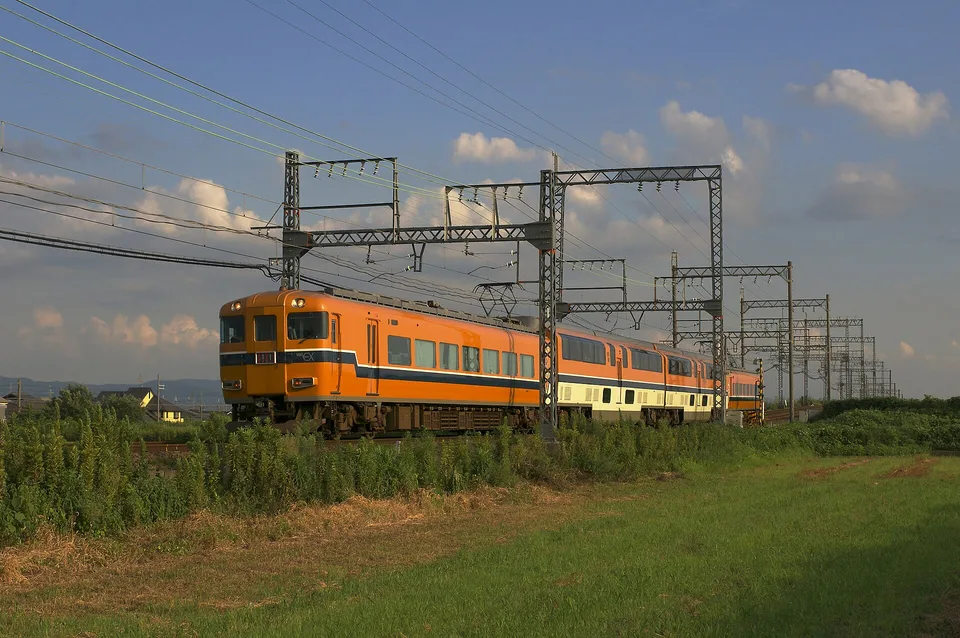
Photo: 5628n · CC BY-SA 3.0
Nara Transport, Deer Safety Rules and Seasonal Guide
We plan your Nara arrival through convenient railway stations, local loop buses, safe deer interactions, and seasonal festivals across the historic capital.
Arrival Stations and Regional Rail Navigation
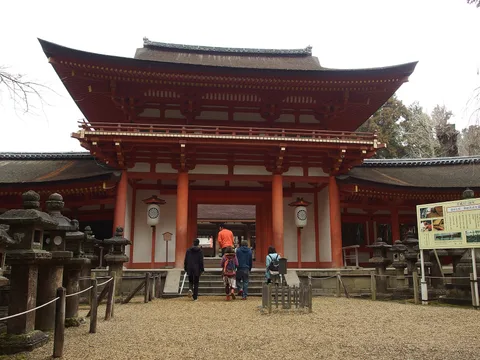
Picking the correct railway terminal simplifies walking routes considerably across the ancient capital. Kintetsu-Nara Station opens directly onto Higashimuki Arcade, sitting just a 5-minute walk west of Kofuku-ji and the open parkland. In contrast, JR Nara Station stands 15 to 20 minutes on foot further west from the core historic temples.
Kintetsu Railway offers the speediest links from nearby urban centres. Limited Express services run in 34 minutes from Osaka-Namba, while regular Rapid Express trains take around 40 mins without any seat supplement fee.
When departing from Kyoto, Limited Express services run south in 35 to 37 minutes, while standard Express trains take 45 to 50 minutes.
JR West services bring travellers directly into JR Nara Station via regional rapid corridors. The Miyakoji Rapid links Kyoto Station in roughly three-quarters of an hour, while the Yamatoji Rapid connects from Osaka through Tennoji in 50 to 52 minutes. Passengers travelling from Tokyo board the Tokaido Shinkansen Nozomi to Kyoto in 130 to 135 minutes before switching to southern commuter services.
Airport Transfers and Local City Loop Buses
Direct transport links connect both major Kansai flight hubs with Nara with minimal transfer friction. Kansai International Airport runs limousine buses from Bus Stop No. 9 to JR Nara and Kintetsu-Nara in 85 to 103 minutes, accepting contactless card payments. Rail travellers can instead take the JR Haruka Express to Tennoji for 35 minutes and board the Yamatoji Rapid for about half an hour.
Travellers flying through Osaka Itami Airport board joint Hankyu Kanko and Nara Kotsu limousine buses. These coaches reach JR Nara Station in around 80 minutes, accepting both transit IC cards and contactless credit cards for simple boarding.
Within the city, Nara Kotsu City Loop Buses No. 1 and No. 2 connect both railway terminals with prominent eastern landmarks. Route No. 1 travels anti-clockwise on the Uchimawari line, while Route No. 2 runs clockwise along the Sotomawari route. Board through the front door, tap an ICOCA or Suica card, and exit from the centre or rear door.
Leave rental cars behind when exploring central Nara Park. Streets flanking Kofuku-ji, Todai-ji, and the historic Takabatake district are narrow, crowded with pedestrians, and packed with wandering deer. Parking spaces remain scarce, creating long weekend traffic queues during April cherry blossom and November autumn foliage peaks.
Sika Deer Safety and Practical Temple Etiquette
Protected as a National Natural Monument, these historic animals roam freely across eastern temple grounds and park lawns. Feed them exclusively official sugar-free wheat-and-bran shika senbei crackers bought from local park stalls. Never offer human snacks, keep plastic wrappers out of reach, and raise both open palms to indicate that biscuits are finished.
Treat these animals with caution because they remain wild rather than domestic pets. Maintain 3 to 5 metres of calm space if an animal appears agitated, and never tease them or feed beside busy roads. Exercise heightened caution around protective mother deer with fawns from mid-May to early July, as well as rutting stags between September and November.
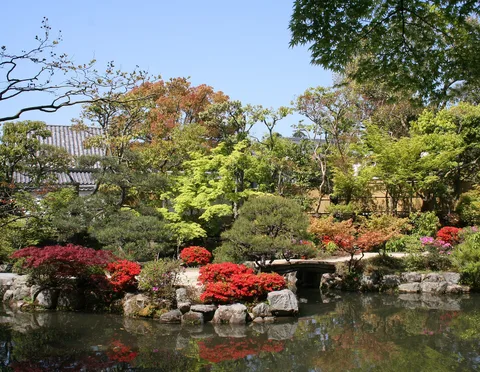
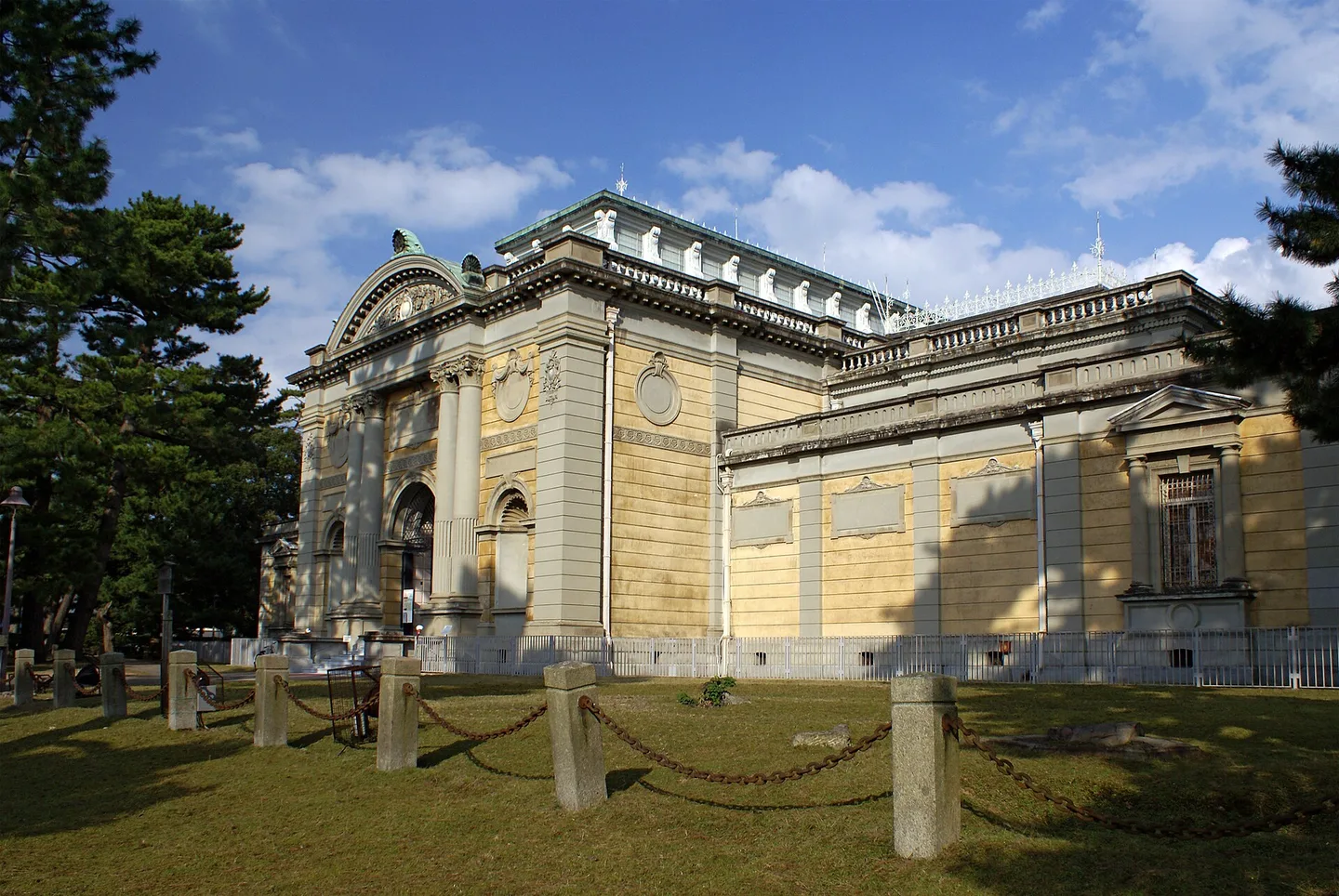
Organizing daily sightseeing requires careful attention to regional museum schedules and local payment customs. Nara National Museum and Heijo Palace Site Museum close on Mondays, shifting closures to Tuesdays following public holidays. Isuien Garden closes on Tuesdays, while entry counters at Horyu-ji and Kofuku-ji generally accept cash yen only.
Open-Meteo Climate and Key Annual Festivals
Ten-year Open-Meteo records show pleasant spring conditions and crisp autumn months across the Nara basin. April afternoons average 18.9°C with overnight lows of 8.4°C, while May warms pleasantly to 23.4°C. October brings comfortable 21.9°C days, followed by November averages of 16.6°C and nights cooling to 7.5°C alongside 90 mm of seasonal rain.
Summer brings warmer temperatures alongside heavier precipitation across the prefecture. June records 243 mm of rain, while July brings 254 mm alongside afternoon temperatures reaching 30.1°C. August peaks at 32°C with warm 24°C nights, whereas January drops to 8.2°C daytime highs and frosty -0.2°C nights.
Annual cultural gatherings alter local crowd levels and demand early lodging reservations:
- Mt. Wakakusa Yamayaki sets the hillside slopes ablaze in late January.
- Setsubun Mantoro on 3 February illuminates 3,000 stone and bronze lanterns across Kasuga Taisha.
- Omizutori sacred water rites draw nocturnal crowds to Nigatsu-do from 1 to 14 March.
- Chugen Mantoro re-lights the historic Kasuga Taisha lanterns between 14 and 15 August.
- The autumn Shoso-in Exhibition at Nara National Museum requires advance timed tickets.
Official prices and opening hours
- Kansai Airport (KIX) to Nara Limousine BusOfficial site ↗
- Nara National Museum (Shoso-in vs Regular Schedule)Official site ↗
- Yoshikien GardenOfficial site ↗
Where it is
- 1Nara
- Osaka Itami International Airport (ITM) · about 35 km from Nara in a straight line
- Directions in Google Maps
Stations and taxi ranks: OpenStreetMap. Airports: OurAirports. Distances are in a straight line.
Traveller tips
Real advice from people who have been to Nara. Every tip is read by our team before it goes live.
No tips yet. Been here? Yours could be the first.
Thank you! Your tip will appear here after a quick review.
More in Nara
Continue exploring Nara with related neighbourhood, food, and planning guides