


























Cimiez, Musée Matisse and Musée Marc Chagall: Roman Amphitheatre & Modern Masters
Explore the hilltop neighbourhood of Cimiez, combining the Roman ruins of Cemenelum, the 17th-century Villa des Arènes housing the Musée Matisse, the Franciscan Monastery, and the Musée Marc Chagall.
Rising northeast of central Nice along the tree-lined Boulevard de Cimiez (laid out in 1892 at the initiative of financier Henri Germain), the residential hill of Cimiez brings together three distinct chapters of Riviera history within a single olive-shaded park: the ancient Roman provincial capital of Cemenelum, a sixteenth-century Franciscan monastery, and two major museums dedicated to Henri Matisse and Marc Chagall.
1. Ancient Cemenelum and the Archaeological Museum
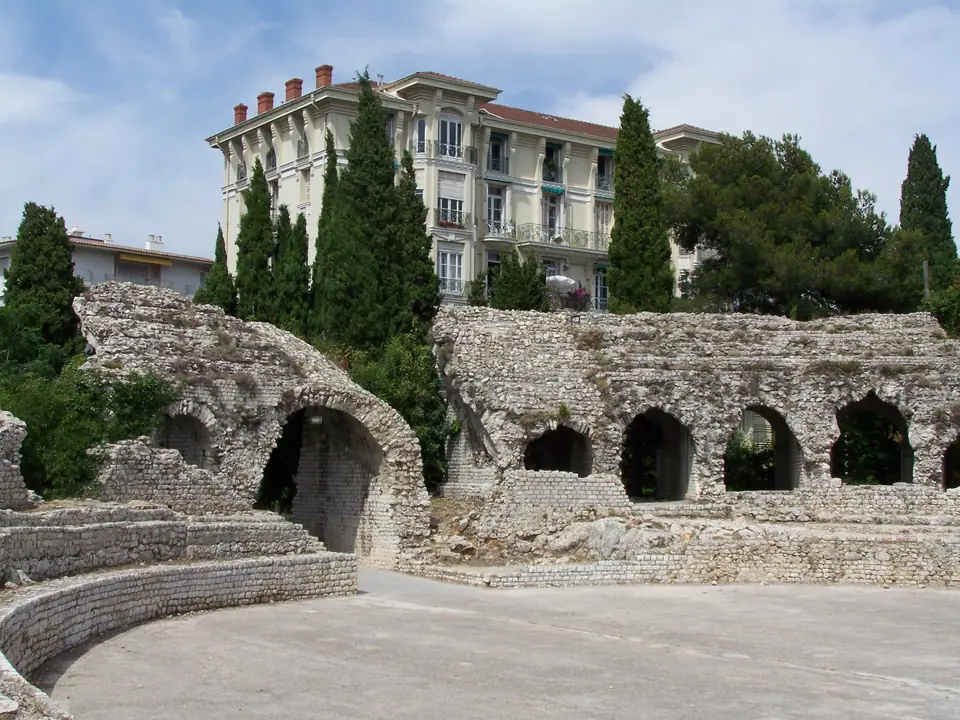
Before Roman colonisation, the Celto-Ligurian tribe of the Vediantii built a fortified hilltop oppidum on Cimiez, recorded by third- and second-century BC Greek writers as Kemenelon. Under the early Roman Empire (1st century AD), the Romans founded the city of Cemenelum at the foot of the oppidum as the prefecture of the province of Alpes Maritimae along the Via Julia Augusta. Following the martyrdom of Saint Pons here in 257 AD and the transfer of the provincial capital to Embrun in the fourth century, Cemenelum acquired a fifth-century bishopric before gradually declining in the sixth century.
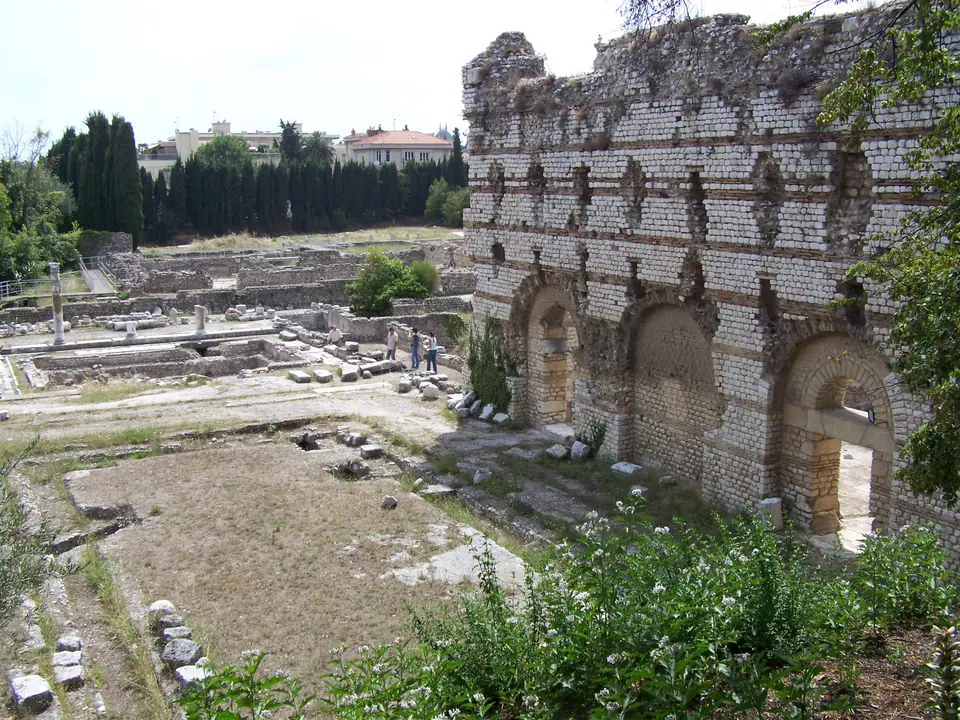
Today the open-air archaeological park and the Musée Archéologique de Nice-Cimiez (founded in 1960 and moved in 1989 into a modern building designed by architect Wladimir Mitrofanoff) preserve the elliptical Roman Amphitheatre (Arènes de Cimiez), which hosted the annual Nice Jazz Festival every July from 1974 to 2010, alongside three third-century Roman thermal bath complexes (where archaeologists unearthed a 1st-century statue of Antonia Minor in the North Baths frigidarium in 1957), paved streets (cardo and decumanus), and a fifth-century Paleochristian baptistery.
2. Musée Matisse in the Villa des Arènes
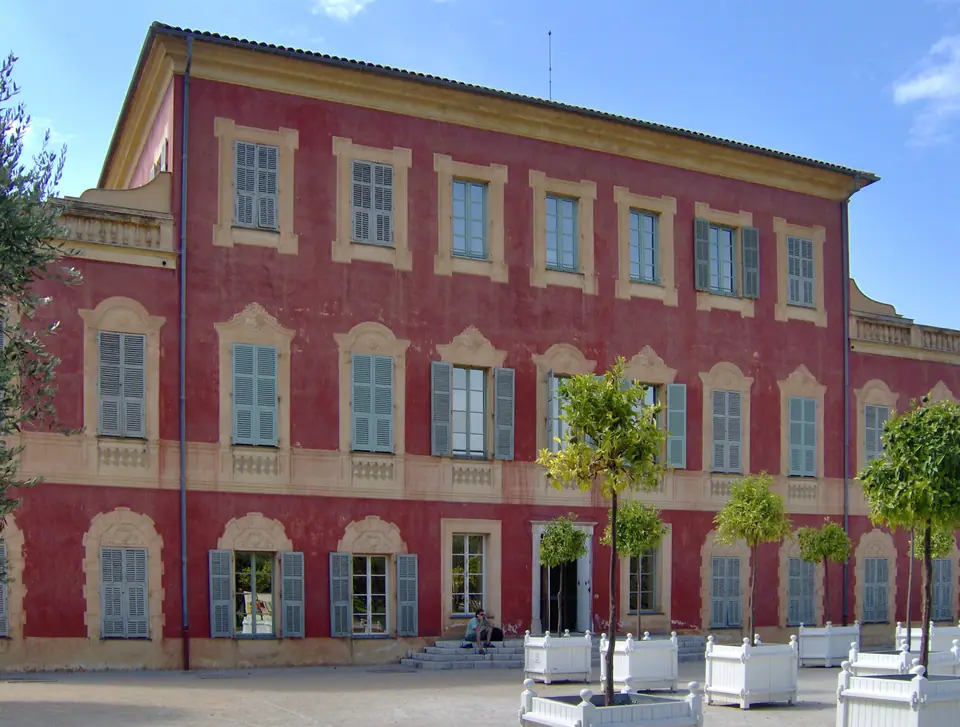
Standing directly beside the Roman baths and olive grove is the Villa des Arènes, a Genoese-style villa with trompe-l'œil painted facades built between 1670 and 1685 for consul Jean-Baptiste Gubernatis. Purchased by the City of Nice in 1950 to save it from demolition, the villa opened as the Musée Matisse in 1963 and was expanded with a modern subterranean wing in 1993.
Henri Matisse lived and worked in Nice from 1917 until his death in 1954 (staying at the Hôtel Beau-Rivage, Place Charles-Félix on Cours Saleya, and the former Excelsior Régina Palace in Cimiez). Formed through donations from the painter and his heirs, the permanent collection holds 68 paintings and gouaches, 236 drawings, 218 prints, 95 photographs, 57 sculptures, 14 illustrated books, and 187 personal objects belonging to Matisse, tracing his career from early still lifes to the coloured paper cut-outs (gouaches découpées) and designs for the Vence Chapel.
3. Franciscan Monastery of Cimiez
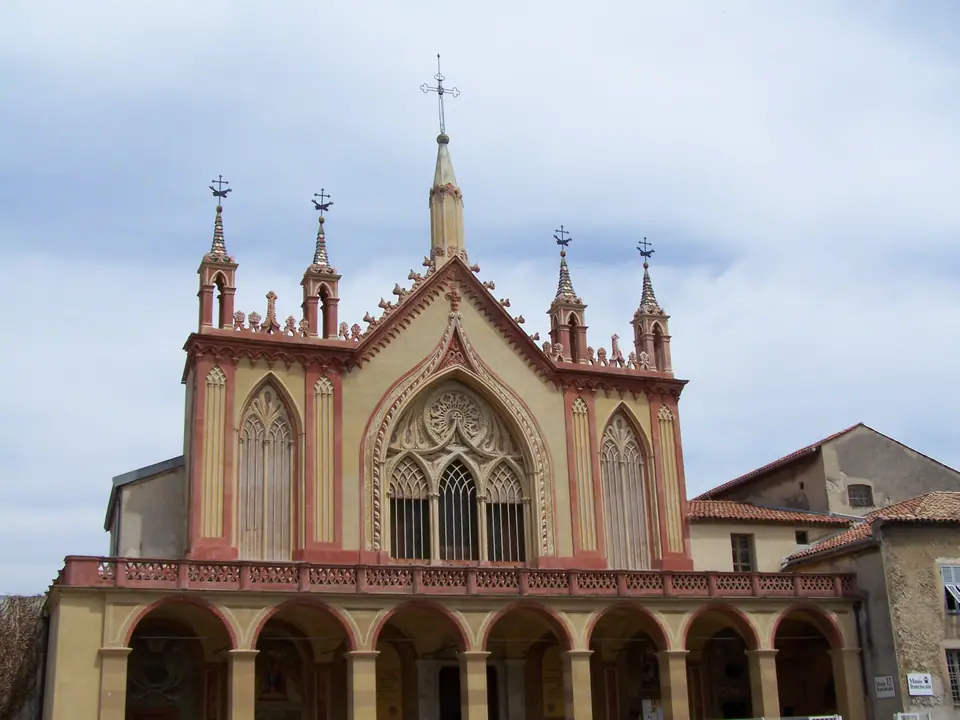
Built over the Benedictine chapel of Notre-Dame de Cimiez recorded in a Saint-Pons Abbey charter of 30 December 1010 and ceded to the Franciscan Friars Minor on 15 November 1546, the monastery complex (classified as a historical monument on 4 June 1993) includes a sixteenth-century cloister, terraced gardens where the friars invented mesclun salad, and the fifteenth-century church of Notre-Dame-de-l'Assomption. Inside hang a 1477 marble cross and three wood-panel masterpieces by Niçois primitive painter Louis Bréa: Pietà (1475), Crucifixion (1512), and Deposition (1515). In the adjoining cemetery lie Henri Matisse, painter Raoul Dufy, and 1937 Nobel Literature laureate Roger Martin du Gard.
4. Musée National Marc-Chagall
Down the hill on Avenue Docteur-Ménard (a fifteen-minute walk from Gare de Nice-Ville), this purpose-built national museum was created during Chagall's lifetime with the support of culture minister André Malraux and inaugurated in 1973. It houses the 17 monumental canvases of the Biblical Message (illustrating Genesis, Exodus, and the Song of Songs) donated by Chagall to France in 1966, along with preparatory sketches and stained glass donated in 1972 and ten additional paintings acquired in 1986.
Traveller tips
Real advice from people who have been to Cimiez, Musée Matisse and Musée Marc Chagall: Roman Amphitheatre & Modern Masters. Every tip is read by our team before it goes live.
No tips yet. Been here? Yours could be the first.
Thank you! Your tip will appear here after a quick review.
More in Nice
Continue exploring Nice with related neighbourhood, food, and planning guides
Promenade des Anglais and Baie des Anges: Seafront Walk, Hôtel Negresco & Pebble Beaches
Nice, France
Vieux-Nice, Cours Saleya and Cathédrale Sainte-Réparate: Baroque Churches & Flower Market
Nice, France
Colline du Château and Port Lympia: Hilltop Waterfall, Bellanda Tower & Genoese Basin
Nice, France
Place Masséna, Promenade du Paillon and Avenue Jean-Médecin: Red Arcades & Urban Park
Nice, France
