


























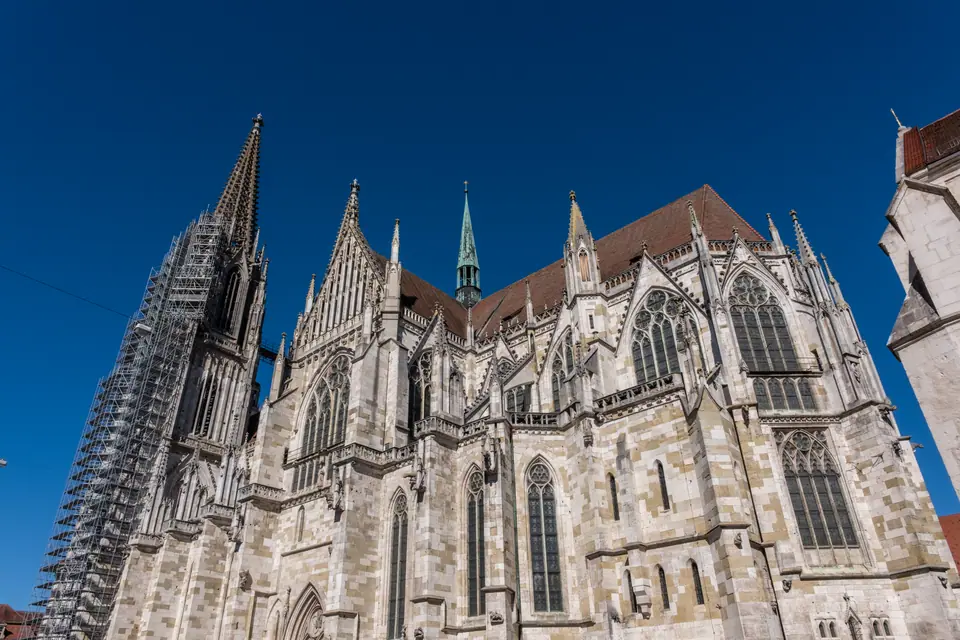
Photo: Dietmar Rabich · CC BY-SA 4.0
Dom St. Peter: Gothic Glass, Smiling Angel and 105-Metre Twin Spires
Bavaria's sole French-Gothic cathedral across 600 years of construction, 13th-century stained glass, the 37-tonne hanging organ, and 975 Domspatzen choir.
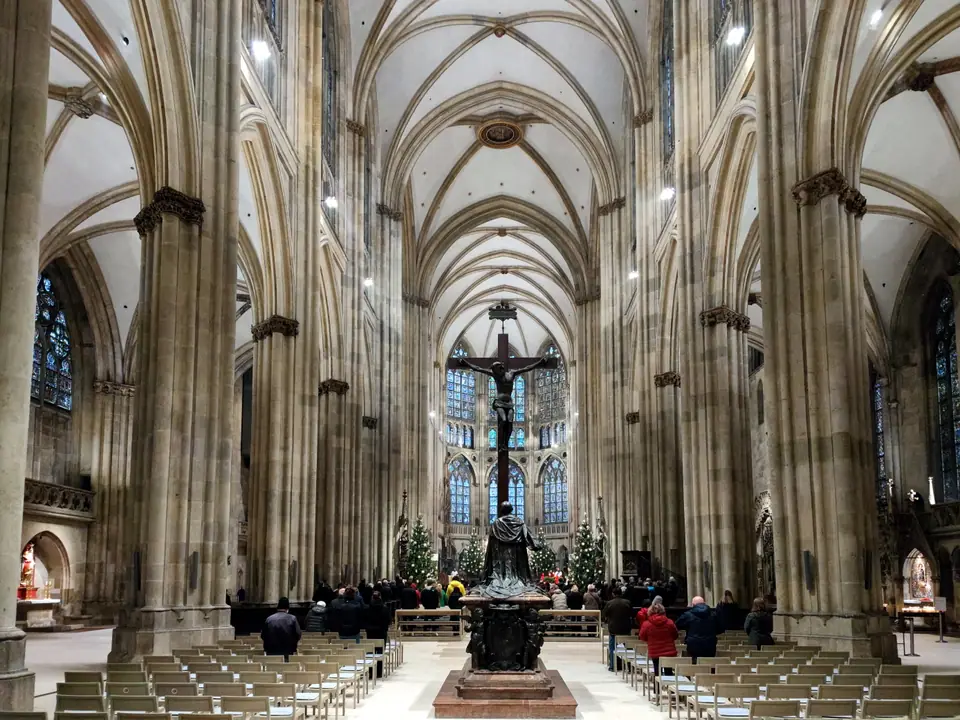
Rising sharply above red-tiled burgher roofs at Domplatz, Hoher Dom St. Peter (Regensburg Cathedral) serves as the seat of the Catholic Diocese of Regensburg (Bistum Regensburg) and the only French-influenced Gothic cathedral in Bavaria. Its paired 105-metre openwork stone spires anchor approaches across the Danube valley and guide walkers straight from the Stone Bridge. Inside, pale limestone piers and painted lancets make the nave feel airy compared with darker brick churches. Knowing how nearly 600 years separated medieval choir stones from nineteenth-century towers clarifies every vault you pass.
1273 Fire, French Gothic Plans and 350 Years of Stub Towers
Christian roots around the Cathedral close stretch deep into early Bavarian history. St Boniface re-established the Bishopric of Regensburg in 739 beside the older ducal chapel at neighbouring Niedermünster (around AD 700), steps south of the Roman Porta Praetoria. After a severe fire destroyed earlier Romanesque structures in 1273, bishops cleared the charred ridge to begin a bold French High Gothic basilica between 1273 and 1275. Three eastern choirs opened for worship by 1320, leaving behind darker round-arched Romanesque masonry seen next door at Niedermünster. Masons then finished the triangular west portal between 1385 and 1415.
Reformation tensions and depleted municipal funds halted major vaulting work around 1520, though interior additions arrived in 1550 and 1634. For over 350 years, Regensburgers stared upward at a soaring nave fronted by two flat-topped western tower stumps, broken up by 17th-century Baroque domes above the central crossing.
Franz Josef Denzinger and the 1859 to 1869 Twin Spires
Measured today, the sandstone basilica runs 85.4 to 86 metres long, 34.8 metres wide, and 31.85 metres high beneath crisp rib vaults. Romantic royal patronage finally finished what medieval guilds left open. Between 1828 and 1841, King Ludwig I funded neo-Gothic repairs stripping Baroque domes to restore Gothic rib vaults. Under master builder Franz Josef von Denzinger, masons raised both delicate openwork spires between 1859 and 1869. Those spires lifted the west front to 105 metres before final work wrapped up in 1872, nearly six centuries after the 1273 start. Today, that twin Gothic silhouette remains visible miles downstream from Walhalla.
Porous Bavarian limestone and sandstone demand steady upkeep against Danube rain and winter frost. Founded in 1923, the state cathedral stone workshop (Staatliche Dombauhütte Regensburg) employs full-time stonemasons carving replacement pinnacles and weathered finials year-round. Visitors regularly spot tidy conservation scaffolding tucked along one buttress or spire without ever blocking nave doors below.
Erminoldmeister's Smiling Angel and Germany's Medieval Stained Glass
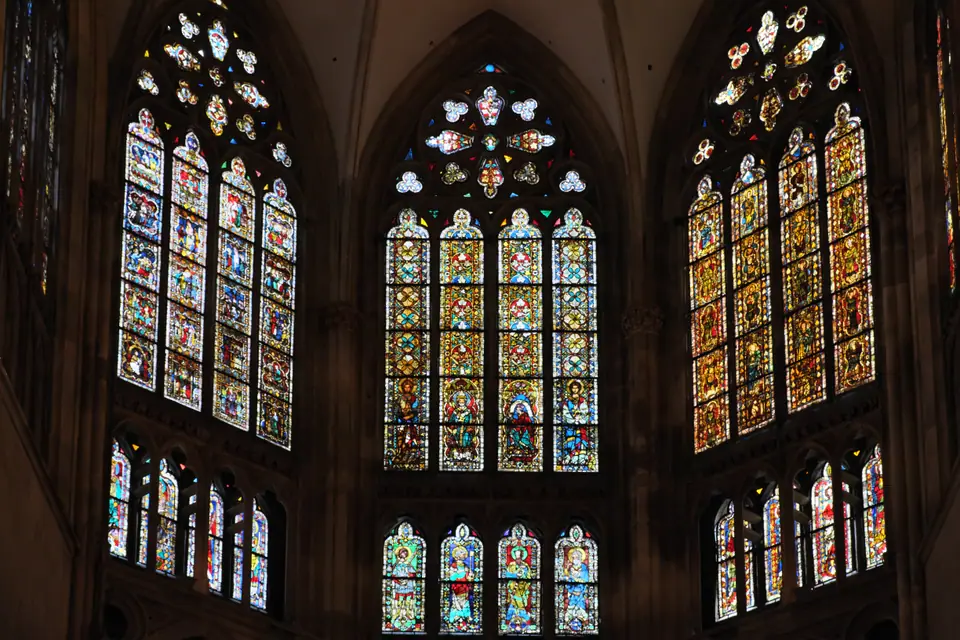
Walking down the bright nave explains why art historians rank Dom St. Peter beside Cologne Cathedral for medieval colour. Because Regensburg escaped Second World War carpet bombing, it preserves Germany's most extensive cycle of original 13th- and 14th-century stained glass. Early lancets from 1220 to 1230 and 1320 to 1370 flood the choir in jewel tones, joined by 19th-century west glass and 1967 to 1968 left chancel windows by Professor Josef Oberberger.
Pause beside the western crossing piers to spot the Annunciation figures carved around 1280 by the anonymous master called the Erminoldmeister. Facing a serene Virgin Mary stands the Archangel Gabriel, dubbed the Lachender Engel ("Smiling Angel") for the gentle grin chiselled across limestone cheeks rare in solemn Gothic sculpture.
The 37-Tonne Suspended Rieger Organ and 975 Domspatzen
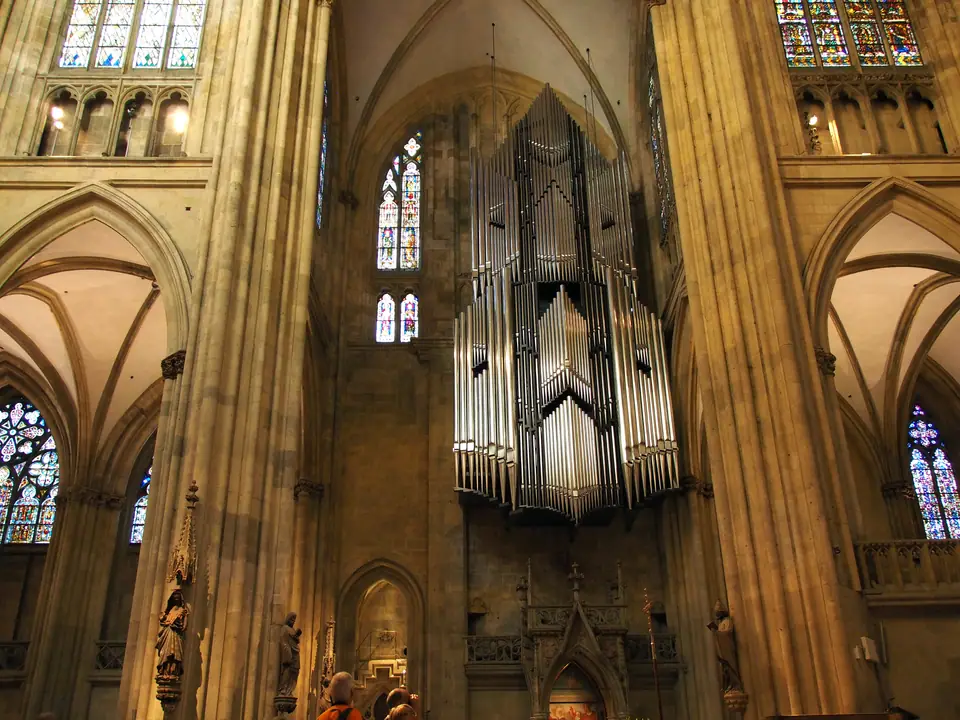
Look high against the north transept wall where stone churches normally hide heavy wooden organ lofts. Installed in 2009 by Austrian firm Rieger Orgelbau, the main instrument ranks as the world's largest and heaviest free-hanging pipe organ. Four high-strength steel cables suspend roughly 37 tonnes carrying 5,871 pipes across 80 stops straight into sanctuary air. A hidden internal lift inside the pillar casing raises the organist neatly to the console.
Music echoes through these vaults under an even older civic lineage. Founded back in 975 under Bishop St Wolfgang, the world-famous Regensburger Domspatzen (DOHM-shpat-sen, "Cathedral Sparrows") boys' choir sings Sunday High Mass during school terms. Right beside the bishop's courtyard at Krauterermarkt, rooms of the former Bischofshof shelter the Domschatzmuseum (Cathedral Treasury). Its display cases guard nearly 1,000 years of medieval church goldsmith work, precious liturgical textiles, the 14th-century butterfly reliquary, and the Ottokar Cross. Booking guided cloister and treasury tours through DOMPLATZ 5 opens historic rooms closed to casual nave visitors.
Domplatz 5 Tours, Domschatz and Tower Access Limits
Plan cathedral visits thoughtfully around services, treasury rooms, and access limits before strolling west from Domplatz toward Altes Rathaus and Neupfarrplatz or Rathausplatz coffee houses and checking Old Town lodging walks:
- No public tower climbs: Unlike Munich or Cologne, the 105-metre twin western spires of Dom St. Peter stay closed to public climbs; find city views from Brückturmmuseum or Walhalla instead.
- Free nave entry outside Mass: General entry to the main nave is free outside active services, though quiet behaviour applies and flash or Mass photography remains banned.
- Book via DOMPLATZ 5 Info Center: Arrange guided cathedral, cloister, and Domschatzmuseum treasury tours directly at the DOMPLATZ 5 visitor hub steps from the west facade, where guides unlock cloister walks closed to general foot traffic.
- Combine pre-Gothic neighbours: Walk past the AD 179 Roman Porta Praetoria to the 8th-century Alte Kapelle or west to the 12th-century Romanesque Schottenkirche St. Jakob.
Where it is
- 1Dom St. Peter
- Munich Airport (MUC) · about 77 km from here in a straight line
- Directions in Google Maps
Stations and taxi ranks: OpenStreetMap. Airports: OurAirports. Distances are in a straight line.
Traveller tips
Real advice from people who have been to Regensburg. Every tip is read by our team before it goes live.
No tips yet. Been here? Yours could be the first.
Thank you! Your tip will appear here after a quick review.
More in Regensburg
Continue exploring Regensburg with related neighbourhood, food, and planning guides
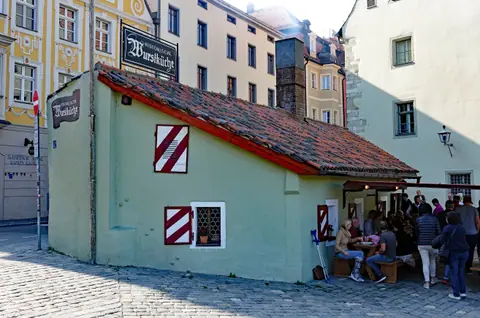
Wurstkuchl Charcoal Sausages, Regensburger Knacker and Sweet Mustard
Regensburg, Germany
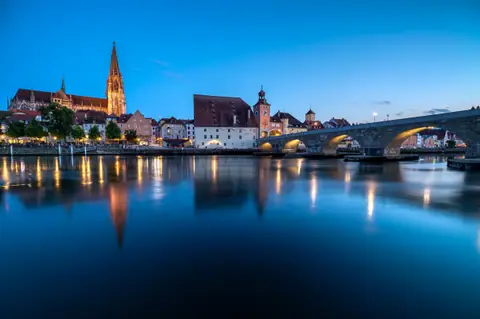
Steinerne Brücke: Sixteen Arches Across 850 Years on the Danube
Regensburg, Germany
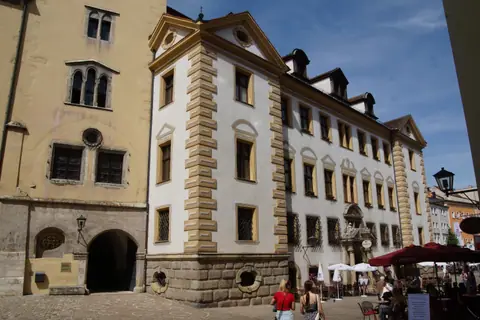
Altes Rathaus and the Perpetual Imperial Diet of 1663 to 1806
Regensburg, Germany
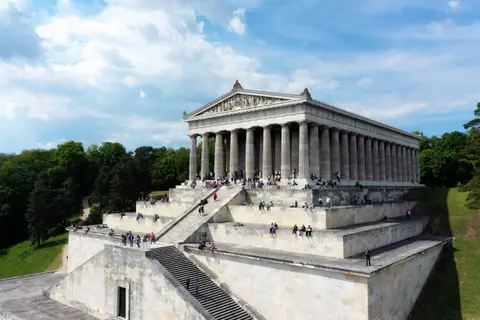
Walhalla at Donaustauf: 358 Steps, Marble Busts and Danube Cruises
Regensburg, Germany
