


























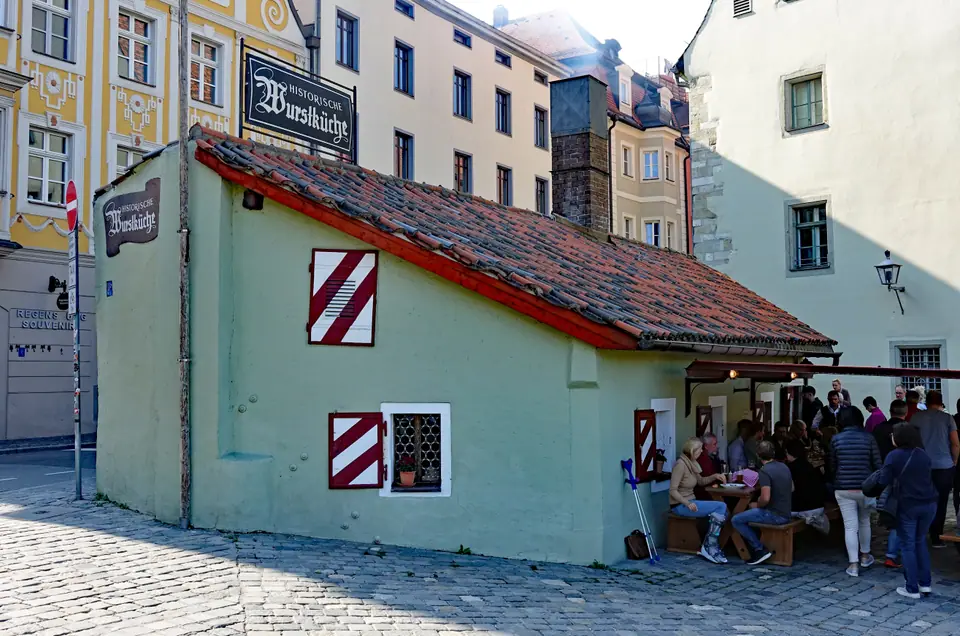
Photo: Allie_Caulfield · CC BY 2.0
Wurstkuchl Charcoal Sausages, Regensburger Knacker and Sweet Mustard
Why cash-only Historische Wurstkuchl queues move fast, separating grilled bridge bratwürste from smoked Regensburger Knacker, Händlmaier mustard, and Café Prinzess.
Food traditions in Regensburg revolve around historic river piers, monastic brewing charters, and one small stone cottage leaning against the medieval city wall. Visitors frequently blur two completely separate local sausages under one postcard stereotype. Separating beechwood-grilled bridge bratwürste from smoked butcher-shop Knacker turns riverfront snacks into genuine Bavarian food literacy. Pair them with sweet 1914 pantry mustard and Germany's oldest coffee house within a ten-minute walk.
Why Historische Wurstkuchl Remains Cash-Only Beside the Bridge
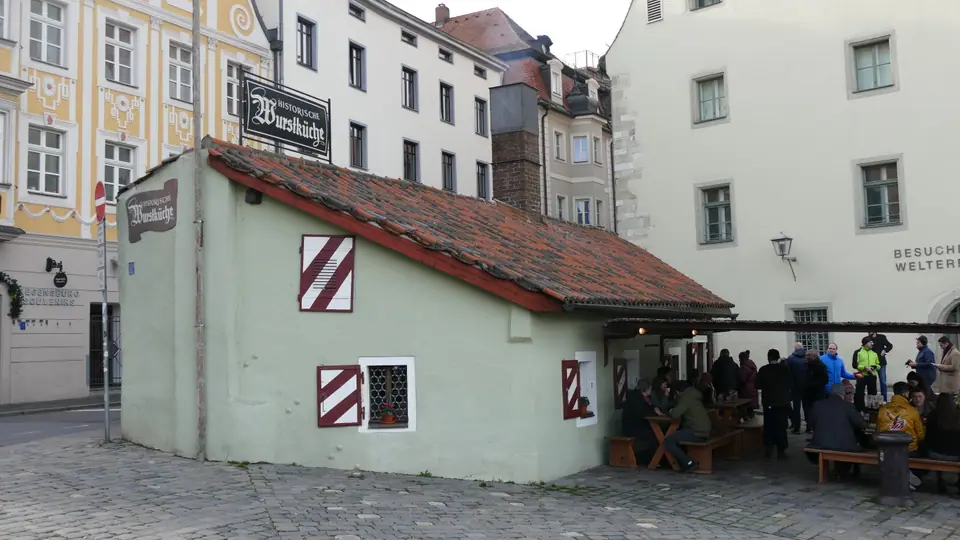
Tucked immediately beside the southern end of the Stone Bridge stands the green-walled Historische Wurstkuchl (VOORST-koo-khl), celebrated as one of the world's oldest continuously operating public restaurants. Popular local lore places a bridge building office here in 1135 to 1146. Archaeology confirms a 12th-century structure of matching dimensions, while stone walls against town defences date between the 14th and 17th centuries. After centuries of boiled meats, the Schricker family bought the kitchen in 1806, remaining in family hands under the Meier family today, and shifted wholly to beechwood charcoal-grilled pure pork sausages.
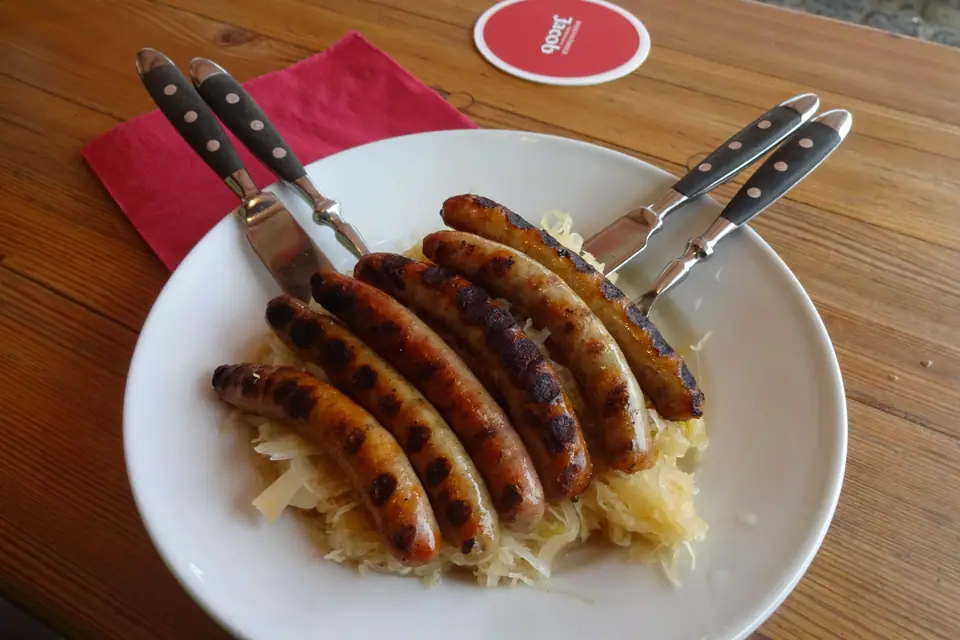
New arrivals quickly spot why queues spill onto river cobbles and why cash remains essential. Inside, the tiny vaulted dining room barely seats 35 people, sending warmer-season crowds onto outdoor wooden benches along the Danube quay. Keeping a traditional cash-only takeaway counter prevents card-terminal delays when walkers queue mid-afternoon. Arriving just ahead of midday or mid-afternoon trims waiting times beside the bridge steps. Staff plate slender butcher-shop bratwürsts made in-house in orders of 6, 8, or 10 atop pewter dishes with tangy barrel-cellar sauerkraut. House-made sweet mustard crafted to Elsa Schricker's historical recipe with subtle horseradish heat finishes every plate. Inside table hours occasionally add traditional dishes including Saure Zipfel (simmered in vinegar-onion stock), Krautwickerl, or Bavarian Sauerbraten.
Charcoal Bridge Bratwürste vs the Smoked Regensburger Knacker
Asking for a "Regensburger" inside a local butcher shop delivers a wholly different sausage from Wurstkuchl's slender charcoal links. Invented in Regensburg during the second half of the 19th century, the true Regensburger Wurst (known locally as a Knacker) measures roughly 10 centimetres long by 4 centimetres across. Butchers blend finely ground lean pork with diced pork, salt, and warm spices inside natural beef casings. Links are tied short, smoked gently over wood, and boiled through until firm.
Locals enjoy Knacker two classic ways depending on the hour and appetite. Sliced cold and dressed briskly with oil, vinegar, chopped onions, and mustard, it becomes crisp Regensburger Wurstsalat suited to shaded Stadtamhof beer gardens. Broiled hot and halved inside a crusty split roll with sweet mustard, fresh grated horseradish, and pickled gherkin, it turns into a savoury Regensburger Semmel built neatly for walking. Under regional production customs, authentic Regensburger sausages are still made inside the inner city ring.
Johanna Händlmaier and Regensburg's 1914 Sweet Mustard
Every plate of Bavarian white sausages or riverfront bratwurst meets Regensburg's proudest pantry export. In 1910, master butcher Karl Händlmaier and his wife Johanna opened a butcher shop downtown on Gesandtenstraße. Four years later, in 1914, Johanna Händlmaier blended coarse ground mustard seeds with sugar and caramelised spices to create her signature Hausmachersenf (sweet Bavarian mustard). After the Second World War, daughter-in-law Luise Händlmaier steered the family enterprise out of meat production into Luise Händlmaier GmbH. Rather than stinging like sharp French mustard pastes, this caramelised blend cuts rich smoked pork cleanly, making Händlmaier (HENDL-my-er) Germany's market-leading sweet mustard still rooted in Regensburg.
Café Prinzess Since 1686 and Monastic Danube Breweries
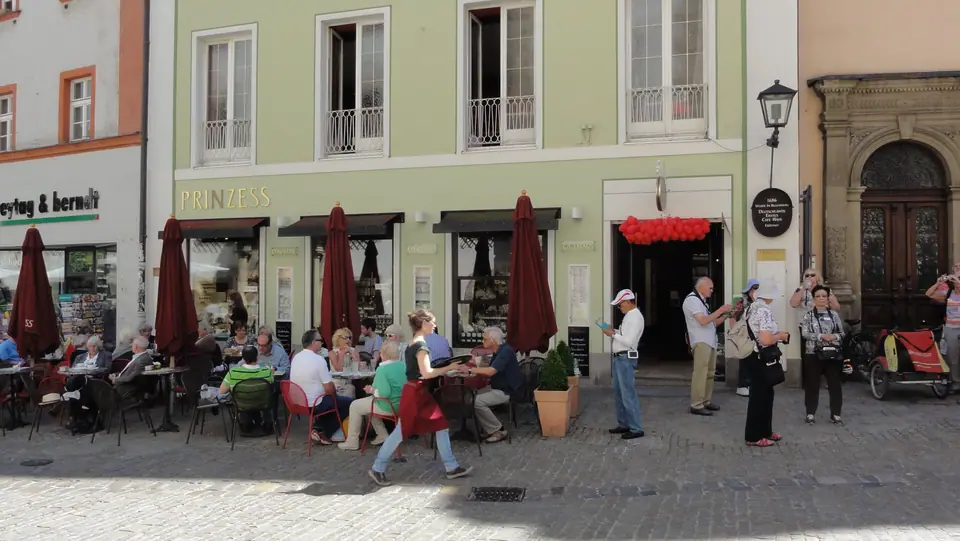
Cross from the riverfront counter into central Rathausplatz 2 directly opposite Altes Rathaus to visit Café Prinzess. Opened in 1686 as Imperial Diet diplomats crowded Regensburg, it stands as Germany's oldest coffee house. Multi-floor salons still serve classic layered tortes, crisp pastries, and handmade pralines steps from historic stone arches.
Evening tables balance smoky pork dishes cleanly with centuries-old regional brewing. Just across the pedestrian Stone Bridge in Stadtamhof, the Spitalbrauerei (part of St. Katharinenspital founded in 1226) pours crisp lagers beneath broad chestnut trees inside its waterfront Spitalgarten. Crossing the bridge after daytime sightseeing puts shaded riverside benches facing cathedral spires within an easy walk. Downtown, independent brewer Brauerei Kneitinger serves rich dark Kneitinger Bock beside traditional roast pork, gravies, and Bavarian dumplings. Those historic town taps complement episcopal brewery Brauerei Bischofshof (founded 1649) and upstream Weltenburger Kloster near Kelheim, revered since 1050 as the world's oldest monastic brewery.
Ordering Rules Along the Riverfront and Squares
- Carry cash for Wurstkuchl counters: Keep euro notes and coins ready at Historische Wurstkuchl, and arrive slightly ahead of midday or mid-afternoon to beat queues at its 35 indoor seats.
- Separate Wurstkuchl from Knacker: Order grilled sets of 6, 8, or 10 beside the bridge, and look for thick smoked Regensburger links in butcher shops or beer-garden Wurstsalat bowls.
- Spot the local mustard jars: Taste house-made sweet horseradish mustard beside the river and buy glass jars of 1914-recipe Händlmaier around downtown groceries Monday through Saturday.
- Plan around Sunday supermarket locks: Bavarian Sonntagsruhe closes grocery stores on Sundays, leaving bakeries, beer gardens, Café Prinzess, and Hauptbahnhof kiosks open.
- Pair meals with your walking route: Stop at Wurstkuchl right after walking Domplatz and the Stone Bridge, saving Spitalgarten or Kneitinger tables for unhurried twilight suppers.
Where it is
- 1Regensburg
- Munich Airport (MUC) · about 77 km from Regensburg in a straight line
- Directions in Google Maps
Stations and taxi ranks: OpenStreetMap. Airports: OurAirports. Distances are in a straight line.
Traveller tips
Real advice from people who have been to Regensburg. Every tip is read by our team before it goes live.
No tips yet. Been here? Yours could be the first.
Thank you! Your tip will appear here after a quick review.
More in Regensburg
Continue exploring Regensburg with related neighbourhood, food, and planning guides
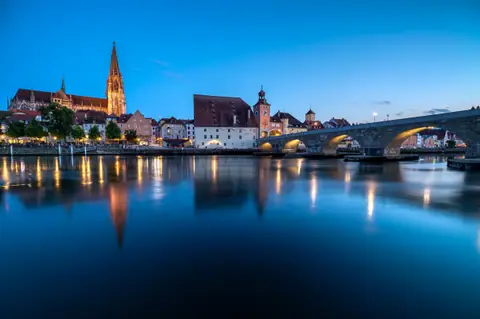
Steinerne Brücke: Sixteen Arches Across 850 Years on the Danube
Regensburg, Germany
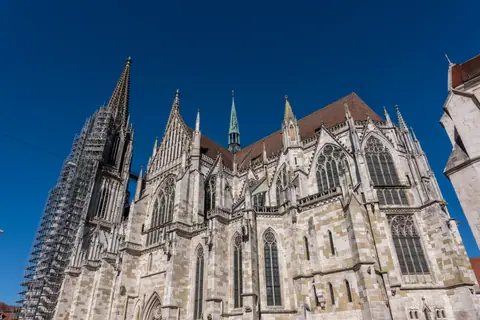
Dom St. Peter: Gothic Glass, Smiling Angel and 105-Metre Twin Spires
Regensburg, Germany
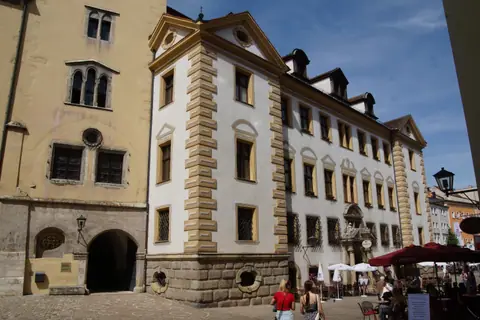
Altes Rathaus and the Perpetual Imperial Diet of 1663 to 1806
Regensburg, Germany

Walhalla at Donaustauf: 358 Steps, Marble Busts and Danube Cruises
Regensburg, Germany
