


























Photo: W. Bulach · CC BY-SA 4.0
Schloss St. Emmeram to the Stone Bridge: Walking Regensburg
A five-stop walking circuit connecting Thurn und Taxis Palace, Schottenkirche, Altes Rathaus, Porta Praetoria, Dom St. Peter, Stadtamhof, and Walhalla.
Walking links Regensburg's dense historic quarters far more cleanly than city buses. Its 182.8-hectare UNESCO core (inscribed July 2006 under Reference 1155) packs Roman gates, Gothic vaults, and river islands inside compact pedestrian blocks. Stepping north from Regensburg Hauptbahnhof traces two millennia sequentially uphill toward the Danube. Walking this linear south-to-north chain avoids tiring cross-town detours between distant monuments and timed entry tickets. Put on sturdy flat shoes for rounded river cobbles and reserve timed interior tours ahead where required.
Schloss St. Emmeram and the Southern Alleengürtel
Start five minutes north-west of the station concourse across the leafy 1779 Fürst-Anselm-Allee at Schloss St. Emmeram (Emmeramsplatz 5). Grown atop a historic Benedictine abbey, this 500-room seat of the Princely House of Thurn und Taxis remains Germany's largest inhabited private palace. State apartments and the vaulted medieval cloister open strictly on guided tours paired with English audio guides. Daily tour slots shift seasonally around summer concerts and winter markets, so verify entry windows on thurnundtaxis.de before setting out.
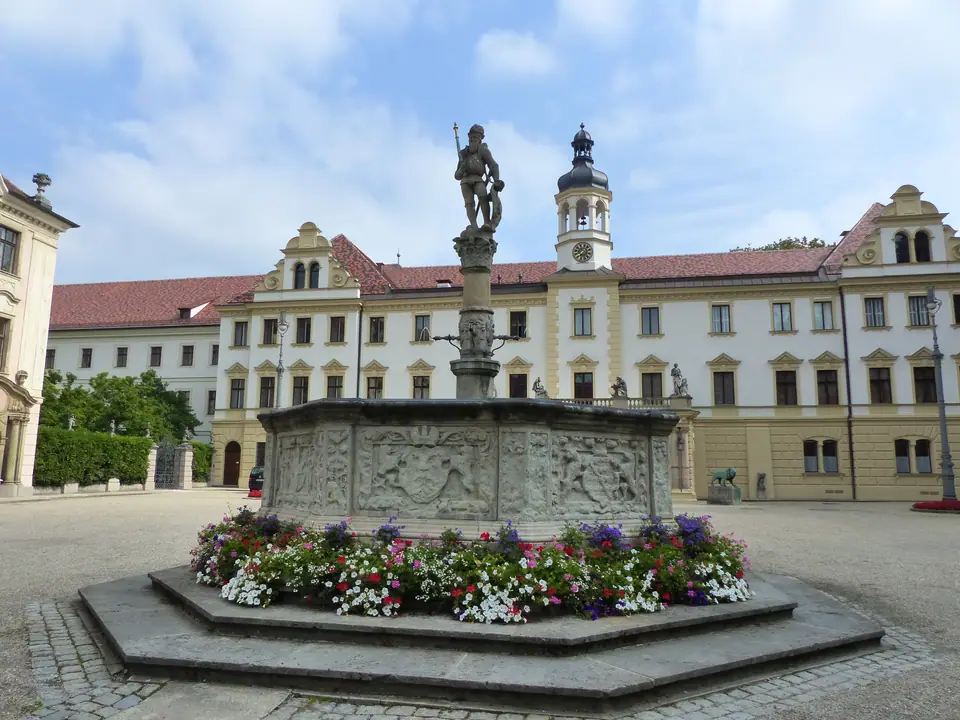
Visitors without tour tickets can still enter the former stables independently for the neo-classical Marstallmuseum (built 1829 to 1832) and the Fürstliche Schatzkammer (Princely Treasury), a branch of the Bavarian National Museum. Lavish court coaches, ceremonial sledges, goldsmith work, and rare porcelain fill quiet ground-floor rooms behind courtyard walls. Step inside the adjacent 13th-century St. Emmeram Basilica afterward to see Baroque stucco and its detached Romanesque bell tower before walking north-west.
Schottenkirche St. Jakob and Bismarckplatz Galleries
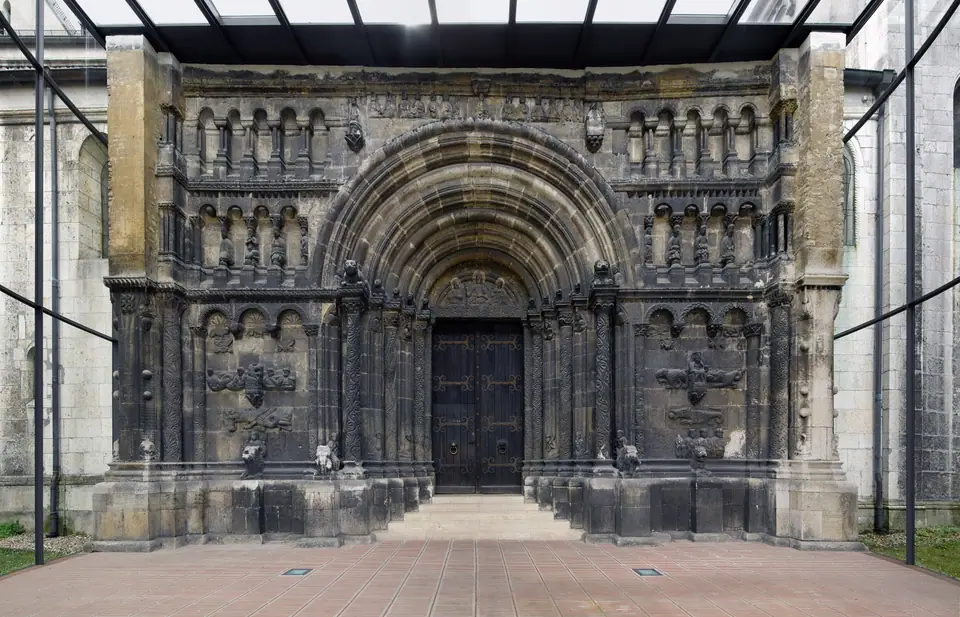
Follow shaded paths around the western Alleengürtel past classical theatre colonnades on Bismarckplatz to the 12th-century Romanesque Schottenkirche St. Jakob (SHOT-en-keer-kheh). Founded by Irish Benedictine monks (Scoti), the church draws architecture fans specifically for its north facade Schottenportal. Sheltered beneath a deep porch roof from Danube frost and rain, deeply undercut sandstone arches preserve enigmatic carvings of mythical beasts, royal figures, and moral allegories.
Stroll east down Gesandtenstraße where historic patrician facades shelter quiet cafés, bookshops, and small specialist bakers. Steps north along this western edge sits calm Herzogspark, a 1.5-hectare former palace garden perched beside medieval ramparts along the Alleengürtel overlooking where Danube channels fork.
Haidplatz, Altes Rathaus and Neupfarrplatz
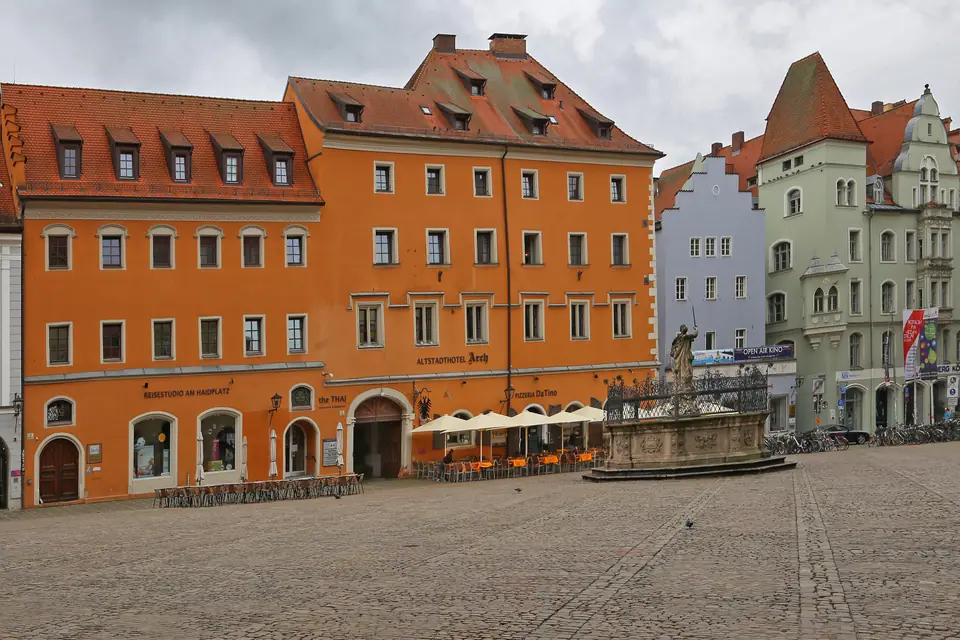
Continue east onto triangular Haidplatz, bordered by the Justiziabrunnen fountain and medieval tournament townhouses. Steps away stands Altes Rathaus (Rathausplatz 4), where the Holy Roman Empire's Perpetual Diet convened from 1663 to 1806. Book a mandatory guided tour inside Tourist Information to see the 14th-century Reichssaal and basement Fragstatt torture cellar. Directly opposite opens Café Prinzess (1686), while around the corner on Zieroldsplatz stands a bronze monument to 1547 Regensburg native Don Juan de Austria.
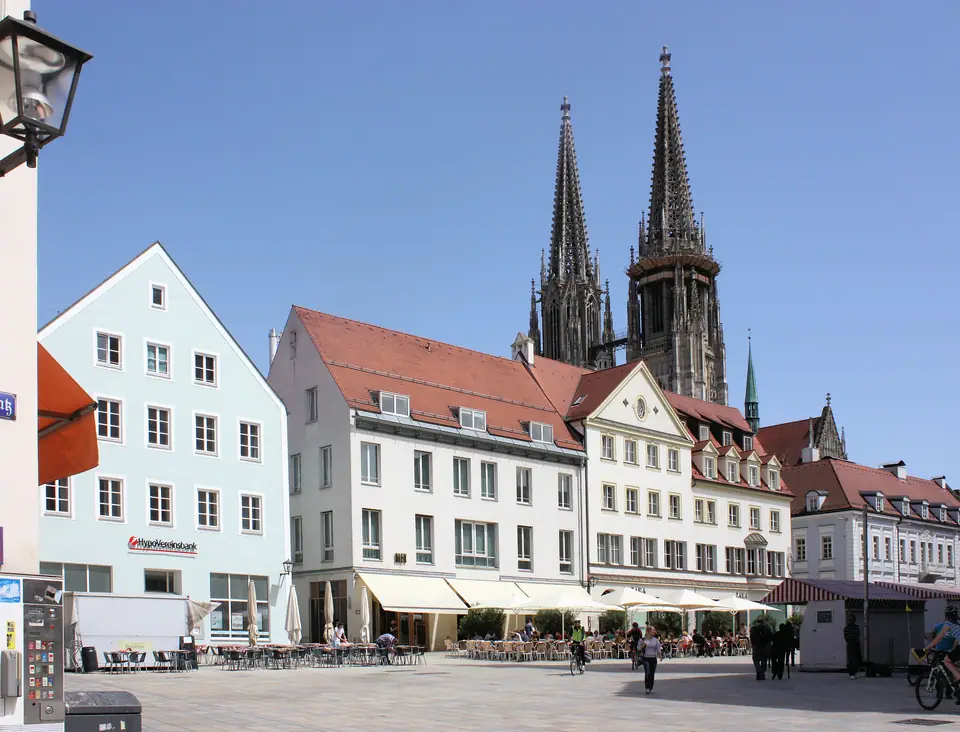
Duck south-east past the nine-storey, 50-metre Goldener Turm (1260 on Wahlenstraße) onto open Neupfarrplatz. White stone pavement lines of Dani Karavan's Misrach memorial map the exact footprint of the medieval synagogue destroyed in 1519. Descending beneath those flagstones on guided Document Neupfarrplatz cellar tours exposes medieval house basements resting directly atop Roman legionary barracks foundations.
Porta Praetoria, Dom St. Peter and Donaumarkt
Walk north onto Domplatz to enter Bavaria's only French-influenced Gothic cathedral, Dom St. Peter, rising behind 105-metre western spires added between 1859 and 1869. Luminous 13th- and 14th-century stained glass, the c. 1280 Lachender Engel, and the 37-tonne suspended 2009 Rieger pipe organ anchor a bright limestone nave. Book cloister and Domschatz treasury access at the DOMPLATZ 5 visitor centre before stepping outside the north transept. Behind the sanctuary, the 8th-century roots of neighbouring Alte Kapelle contrast sharply against massive limestone blocks of the AD 179 Roman Porta Praetoria.
Stroll two minutes east toward riverside Donaumarkt to visit the state Haus der Bayerischen Geschichte, opened in 2019. Leaving dark medieval stonework for bright glass walls brings Bavarian history cleanly up to modern decades. Multimedia galleries trace Bavarian statehood from 1806 onward below a sweeping 360-degree panorama gallery gazing straight across cathedral spires, river islands, and hillside roofs.
Steinerne Brücke, Stadtamhof and Boats to Walhalla
Finish downtown near the southern bridgehead past the painted 1573 Goliathhaus fresco, the early 16th-century Amberger Salzstadel, and the 1616 to 1620 Regensburger Salzstadel. Pause at the c. 1300 South Bridge Tower (Brückturm), where steep stairs climb into the tiny Brückturmmuseum above river piers. Stop for charcoal-grilled sausages at Historische Wurstkuchl before walking the 308.7-metre Steinerne Brücke past the 1854 Bruckmandl statue. Across the water lies 66-hectare (163-acre) Stadtamhof (postcode 93059), smallest of Regensburg's 18 districts. Once an independent Bavarian town, its sunny riverside lane anchors the 1226 Spitalgarten beer garden. Keep a dedicated third morning free for Walhalla in Donaustauf via RVV Bus 5 or seasonal Danube excursion boats.
- Monday closures vs open streets: Municipal museums and certain exhibition halls regularly close Mondays, whereas Dom St. Peter (outside Mass), Porta Praetoria, Neupfarrplatz, Herzogspark, and the Stone Bridge stay accessible every day.
- Mandatory guided interiors: Altes Rathaus (Reichssaal and Fragstatt), Document Neupfarrplatz, and Schloss St. Emmeram state rooms require booked guided tours rather than independent wandering.
- Two-day vs three-day pacing: Fit Old Town churches, Altes Rathaus, Dom St. Peter, and the Stone Bridge across two days; keep a third half-day open for Danube cruising and the 358 steps at Walhalla.
- Wet-weather backups: Shift rainy afternoons covered in our seasonal climate guide indoors to Haus der Bayerischen Geschichte, Marstallmuseum, and Cathedral Treasury rooms.
Where it is
- 1Regensburg
- Munich Airport (MUC) · about 77 km from Regensburg in a straight line
- Directions in Google Maps
Stations and taxi ranks: OpenStreetMap. Airports: OurAirports. Distances are in a straight line.
Traveller tips
Real advice from people who have been to Regensburg. Every tip is read by our team before it goes live.
No tips yet. Been here? Yours could be the first.
Thank you! Your tip will appear here after a quick review.
More in Regensburg
Continue exploring Regensburg with related neighbourhood, food, and planning guides
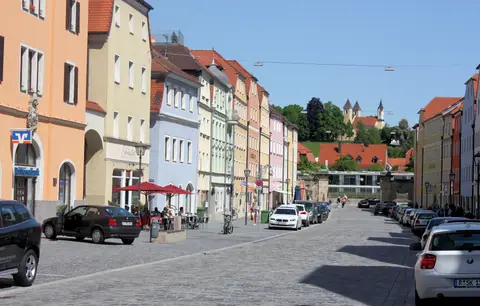
Altstadt 93047 to Island Stadtamhof: Where to Stay in Regensburg
Regensburg, Germany
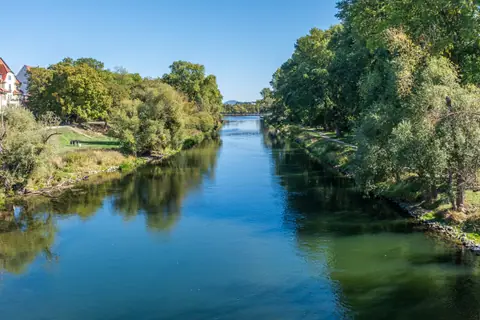
April Calm, May Dult and Four Advent Markets: Regensburg Seasons
Regensburg, Germany
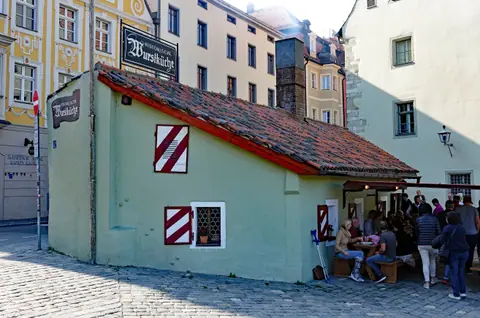
Wurstkuchl Charcoal Sausages, Regensburger Knacker and Sweet Mustard
Regensburg, Germany
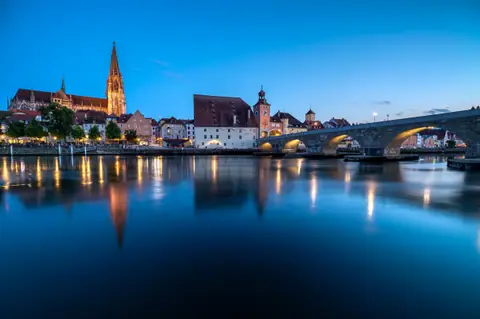
Steinerne Brücke: Sixteen Arches Across 850 Years on the Danube
Regensburg, Germany
