


























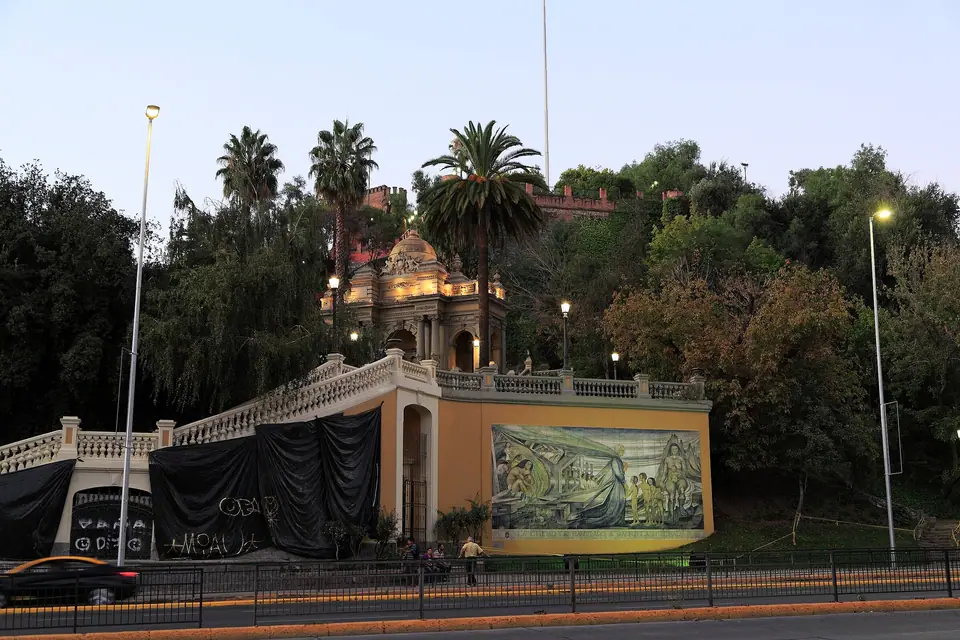
Cerro Santa Lucía, Barrio Lastarria and Parque Forestal
Climb the 1872 terraces and Neptune Fountain of Cerro Santa Lucía, then stroll through Barrio Lastarria, the GAM cultural centre, and Parque Forestal.
On the eastern edge of Santiago Centro, a 15-million-year-old outcrop of columnar basalt rises 68 metres above the Alameda, separating the historic business grid from the leafy cultural quarters of Lastarria and Bellas Artes. Walking from the summit turret of Cerro Santa Lucía down into the cafés of Calle José Victorino Lastarria and across the plane-tree avenues of Parque Forestal forms a classic half-day architectural walk.
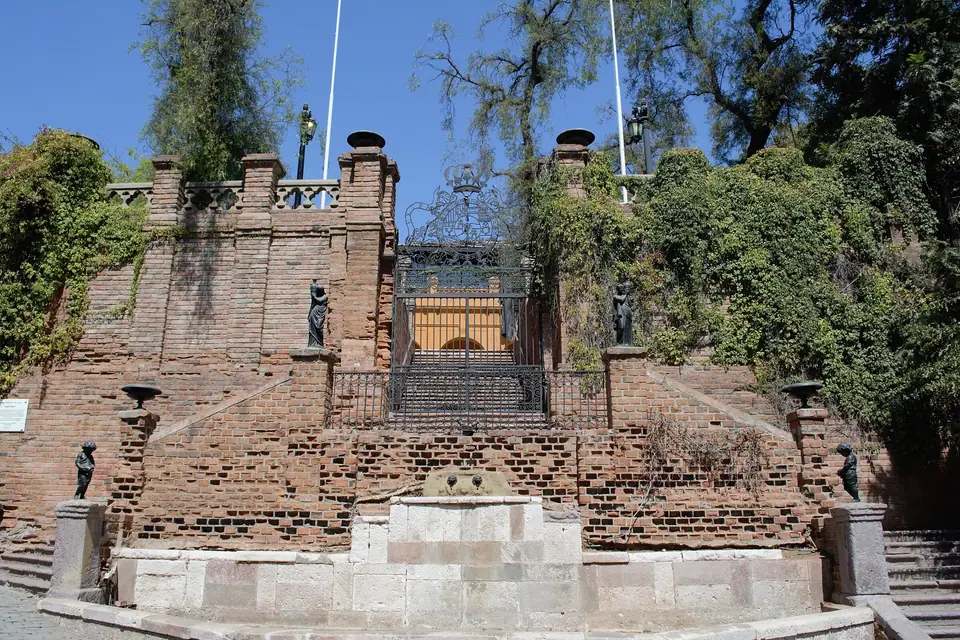
Cerro Santa Lucía (Cerro Huelén): From Battery to 1872 Promenade
Known to the pre-Hispanic Picunche inhabitants as Huelén, the 629-metre hill was the lookout from which Pedro de Valdivia surveyed the basin in February 1541. Between 1814 and 1817, royalist governor Casimiro Marcó del Pont built two stone artillery forts on its slopes, including Castillo Hidalgo. In 1872, Intendente Benjamín Vicuña Mackenna transformed its 65,300 square metres into a European-style vertical promenade.
Entering from the semicircular colonnade on the Alameda (at Santa Lucía Metro station), visitors climb past the monumental French-styled Terraza Neptuno fountain, the bronze statue of Mapuche leader Caupolicán on Terraza Caupolicán, the neo-Gothic chapel holding Vicuña Mackenna’s tomb, and hexagonal volcanic basalt columns. A final flight of rock-cut steps leads to the crenellated Torre Mirador at the summit, with views down the Alameda toward La Moneda and east to the Andes.
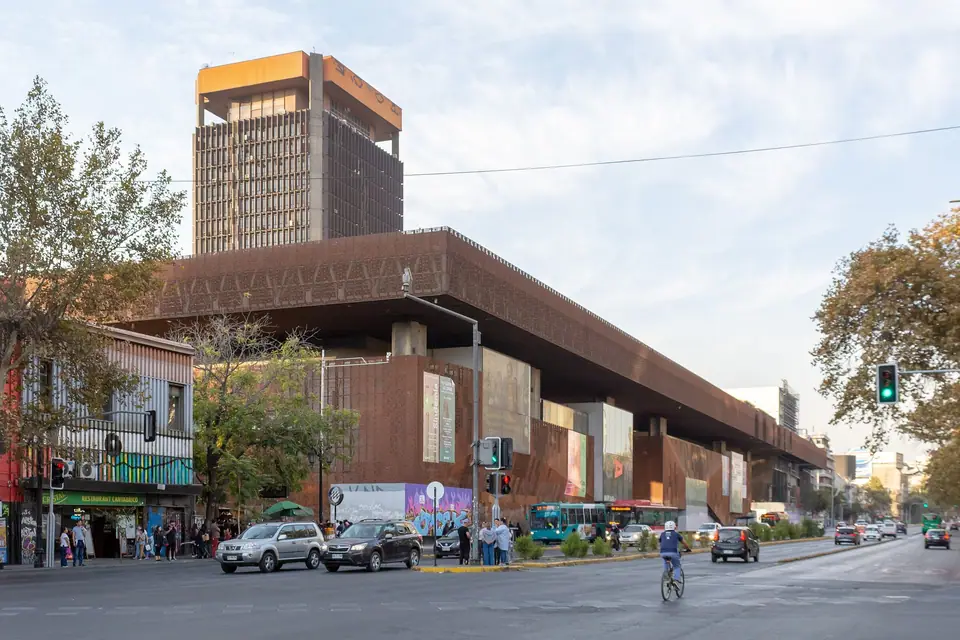
Barrio Lastarria, Plaza Mulato Gil de Castro and GAM
Exit Cerro Santa Lucía by its eastern steps to enter Barrio Lastarria, declared a protected Zona Típica in 1996. Built around the 1857 Iglesia de la Vera Cruz, Calle José Victorino Lastarria and curving Calle Rosal preserve early 20th-century townhouses by architects such as Luciano Kulczewski alongside book stalls, wine bars, and Plaza Mulato Gil de Castro (home to the Museo de Artes Visuales, MAVI). At the southern entrance on the Alameda stands the Centro Cultural Gabriela Mistral (GAM): constructed in 275 days in 1972 under President Salvador Allende for the UNCTAD III conference, the Corten-steel and glass complex reopened in 2010 as a major theatre, dance, and exhibition venue.
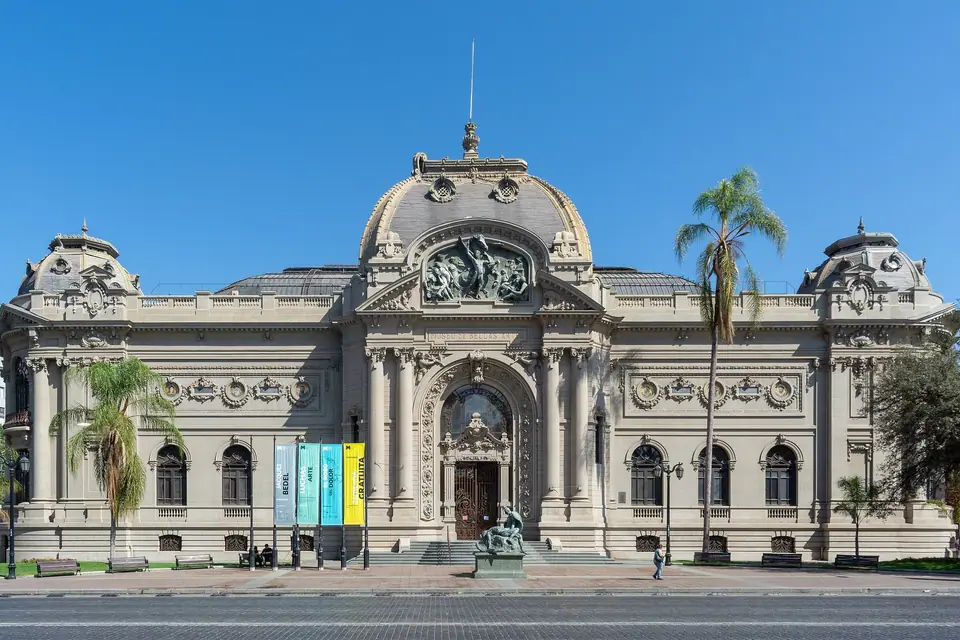
Parque Forestal and the Palacio de Bellas Artes
At the northern end of Lastarria lies Parque Forestal, a 17-hectare riverside park laid out between 1900 and 1905 by French landscape architect Jorge Dubois beside the canalised Mapocho River. Anchoring the park at Bellas Artes Metro station is the Palacio de Bellas Artes, designed by Franco-Chilean architect Émile Jéquier for the 1910 Centenary and modelled on the Petit Palais in Paris with a 2,400-piece Belgian glass cupola. Its eastern wing houses the Museo Nacional de Bellas Artes (MNBA) (founded in 1880, the oldest fine arts museum in Latin America), while its western wing houses the Museo de Arte Contemporáneo (MAC), just across the river from Barrio Bellavista.
Traveller tips
Real advice from people who have been to Cerro Santa Lucía, Barrio Lastarria and Parque Forestal. Every tip is read by our team before it goes live.
No tips yet. Been here? Yours could be the first.
Thank you! Your tip will appear here after a quick review.
More in Santiago
Continue exploring Santiago with related neighbourhood, food, and planning guides
Palacio de La Moneda, Barrio Cívico and Barrio París-Londres
Santiago, Chile
Cerro San Cristóbal, Parque Metropolitano, Funicular and Teleférico
Santiago, Chile
Barrio Bellavista and Pablo Neruda’s House-Museum, La Chascona
Santiago, Chile
Mercado Central, La Vega Central and the Mapocho River Markets
Santiago, Chile
