


























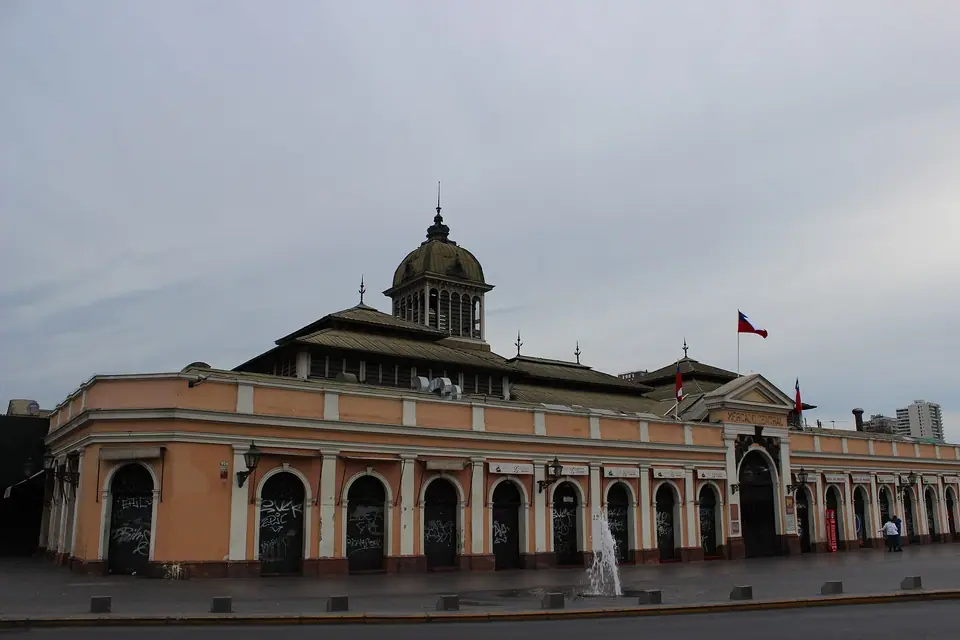
Mercado Central, La Vega Central and the Mapocho River Markets
Walk Santiago’s historic market corridor from the 1872 Glasgow cast-iron roof of Mercado Central across the Mapocho River to La Vega Central.
Four blocks north of Plaza de Armas along Paseo Puente, the colonial grid reaches the canalised banks of the Mapocho River, where farmers and fishmongers have traded since the 16th century. Walking a 1.2-kilometre loop from the Victorian iron arches of Mercado Central past the former Estación Mapocho railway terminal and over the pedestrian bridges into Recoleta’s La Vega Central reveals the full abundance of Chile’s Pacific fisheries and Central Valley orchards.
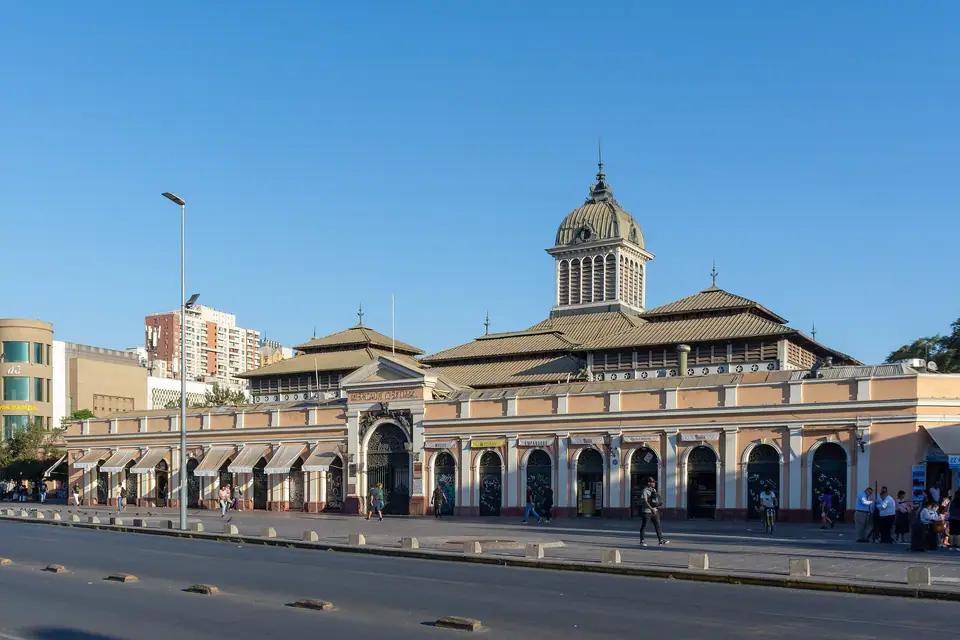
Mercado Central de Santiago: 1872 Scottish Cast Iron
After an 1864 fire destroyed the old Plaza del Abasto, Chilean architect Fermín Vivaceta oversaw the construction of the covered Mercado Central de Santiago, inaugurated in 1872 and declared a Historic Monument in 1984. Its centrepiece is a prefabricated wrought- and cast-iron structure designed by British engineers Edward Woods and Charles Henry Driver and cast in Glasgow, Scotland between 1868 and 1872 by R. Laidlaw & Sons. Supported on fluted columns with Corinthian capitals and filigree spandrels, the square iron hall rises to a central two-tier pyramidal mansard dome ringed by eight smaller skylights.
While the central dining hall caters heavily to visitors, the outer ring of wet-fish counters (pescaderías) displays cold Humboldt Current marine species: pink and black congrio (conger eel), reineta, southern king crab (centolla), sea urchins (erizos), razor clams (machas), and giant barnacles (picorocos); see our Santiago food guide for what to order.
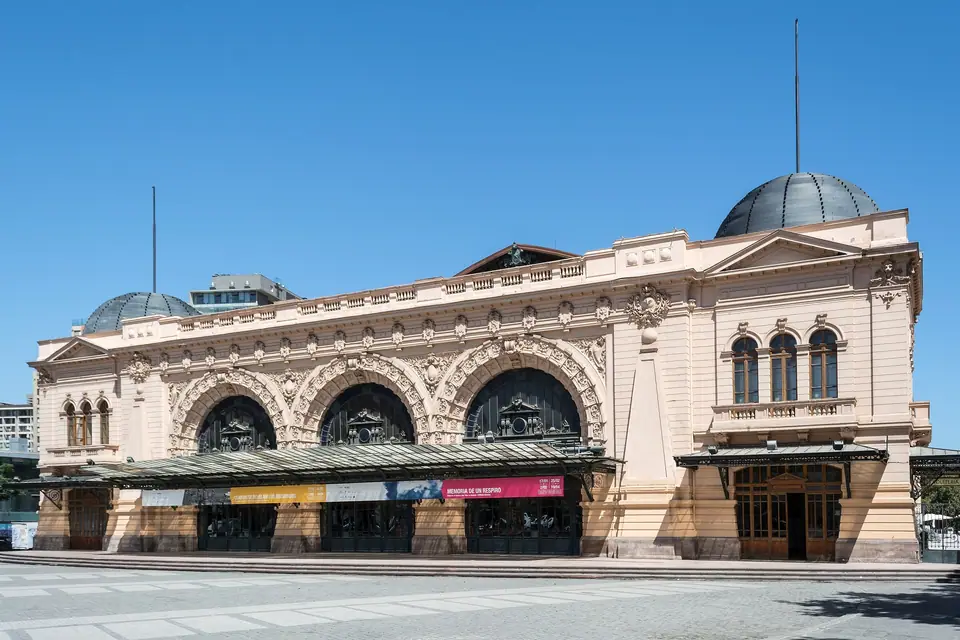
Estación Mapocho and the Pérgola de las Flores
Outside the western doors of Mercado Central beside Puente Cal y Canto Metro station (Lines 2 and 3) stands the Centro Cultural Estación Mapocho. Designed by Franco-Chilean architect Émile Jéquier (who also built the Palacio de Bellas Artes) and inaugurated in 1912, this Beaux-Arts terminal served trains to Valparaíso until 1987 before reopening in 1994 as a 20,000-square-metre cultural and book-fair venue beneath a Belgian steel-and-glass train shed.
Cross the pedestrian bridge over the Mapocho River into La Chimba (Recoleta). On your left stands the Pérgola de las Flores de San Francisco flower market, and on your right rises the modern roof of the Mercado de Abasto Tirso de Molina, whose upstairs mezzanine is lined with fresh-fruit juice blenders and lunchtime cocinerías.
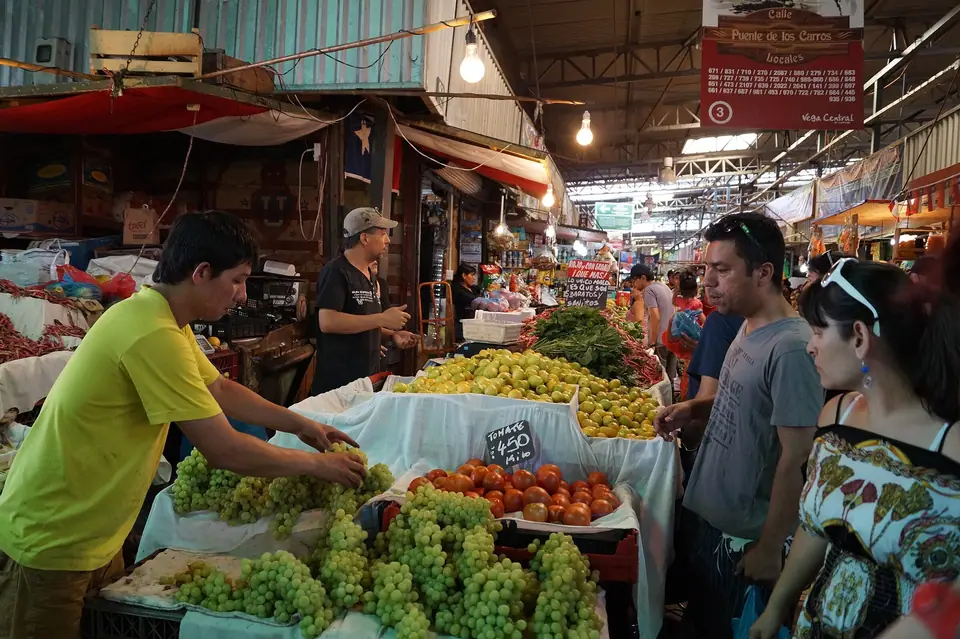
La Vega Central: The Agricultural Heart of the Capital
One block north across Avenida Artesanos lies La Vega Central (Calle Dávila Baeza 700), founded by Agustín Gómez García in 1895 with brick warehouse halls inaugurated in 1916. Beneath its numbered galpones, vendors stack pyramids of Chilean Hass avocados (paltas), giant corn cobs for pastel de choclo, cherimoyas, lucumas, smoked Mapuche merkén chilli flakes, Azapa olives, and fresh basil. Visit on a weekday morning when the aisles are lively and well-lit.
Traveller tips
Real advice from people who have been to Mercado Central, La Vega Central and the Mapocho River Markets. Every tip is read by our team before it goes live.
No tips yet. Been here? Yours could be the first.
Thank you! Your tip will appear here after a quick review.
More in Santiago
Continue exploring Santiago with related neighbourhood, food, and planning guides
Sky Costanera, Providencia, Parque Bicentenario and Cajón del Maipo
Santiago, Chile
Santiago: Layout, Communes and Planning Essentials
Santiago, Chile
Best Things to Do in Santiago: Hilltop Parks, Museums and Markets
Santiago, Chile
How to Get to Santiago: SCL Airport, Metro Lines and Bus Terminals
Santiago, Chile
