


























Palacio de La Moneda, Barrio Cívico and Barrio París-Londres
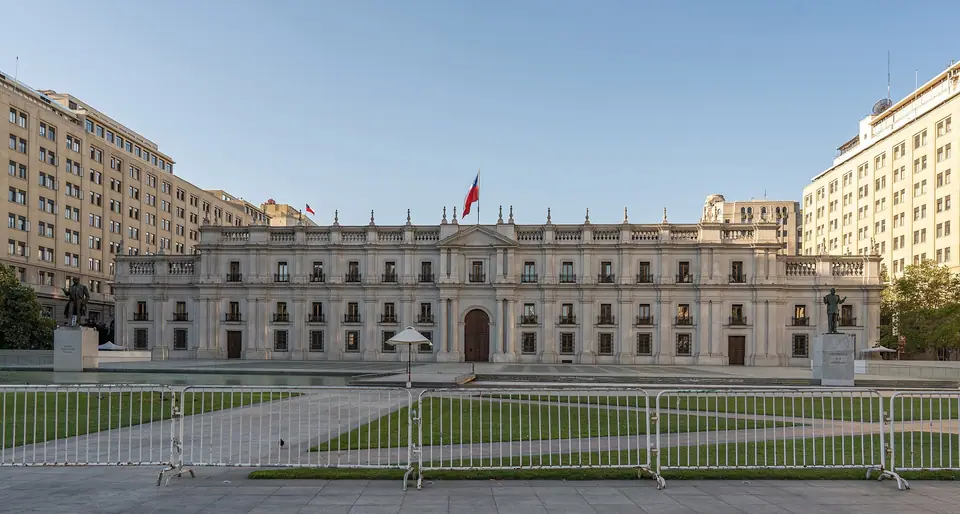
Visit Joaquín Toesca’s neoclassical Palacio de La Moneda, Plaza de la Constitución, Centro Cultural La Moneda, and cobbled Barrio París-Londres.
Five blocks southwest of Plaza de Armas along Calle Morandé or Paseo Bandera, Santiago’s colonial grid opens into the austere stone symmetries of the Barrio Cívico. At its centre stands the white neoclassical facade of Palacio de La Moneda, designed at the end of the 18th century as the Spanish Empire’s Royal Mint and serving since 1846 as the seat of the President of the Republic of Chile.
Joaquín Toesca’s Royal Mint and 1973 History
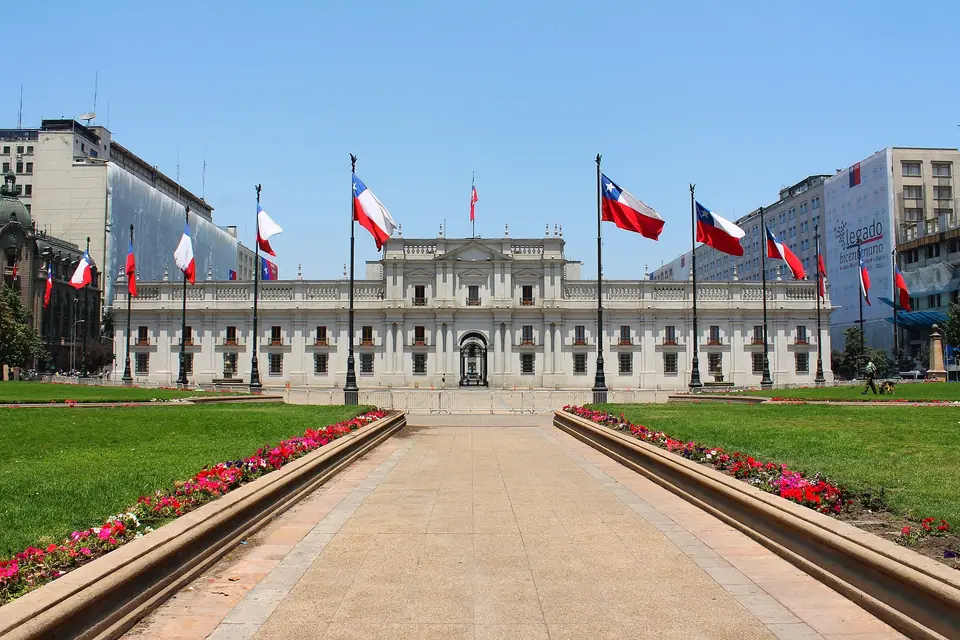
Born in Rome in 1752 and trained in Madrid under Francisco Sabatini, Joaquín Toesca arrived in Santiago in 1780 before Governor Agustín de Jáuregui commissioned him to design the Royal Mint (Real Casa de Moneda). Construction began in 1784 using thick lime-mortared brick walls, stone pilasters from Cerro San Cristóbal, and wrought-iron grilles forged in Biscay. Inaugurated in 1805, it became the presidential seat under President Manuel Bulnes in 1846 while striking Chilean coins until 1929.
On 11 September 1973, Hawker Hunter jets and ground troops bombed the palace during the military coup against President Salvador Allende, who died inside the Salón Independencia. Following restoration in 1981 and the reopening of its courtyards to the public in 2000, visitors can walk through the Patio de los Cañones and the orange-tree-lined Patio de los Naranjos, and see the statue of Salvador Allende outside the historic Morandé 80 side door.
Plaza de la Constitución and Centro Cultural La Moneda
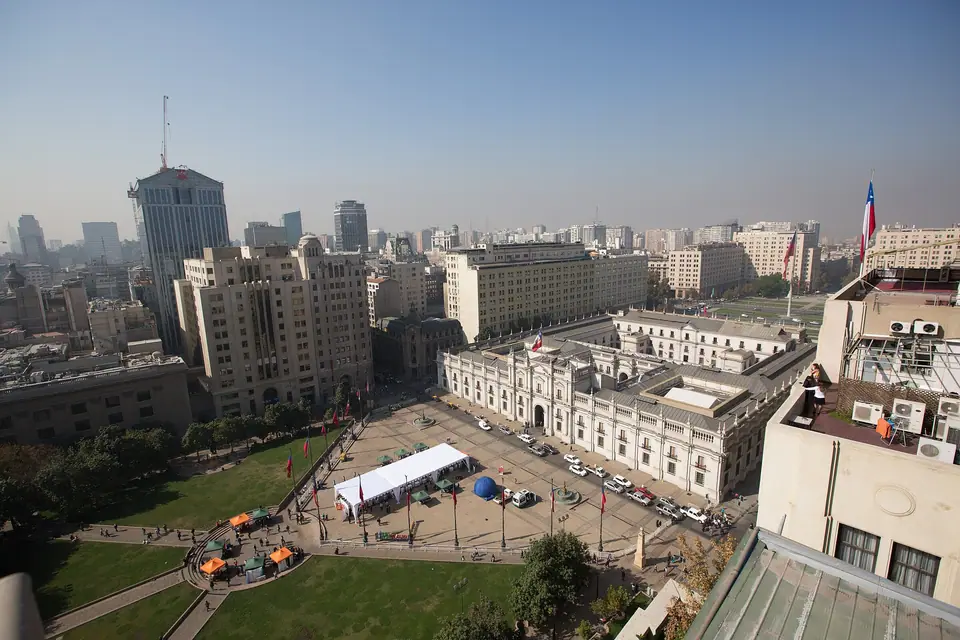
In the 1930s, Austrian urban planner Karl Brunner framed Toesca’s palace within the stone ministries of the Barrio Cívico, opening two broad squares north and south. To the north, Plaza de la Constitución displays bronze statues of 20th-century Chilean presidents and hosts the Changing of the Guard ceremony performed by the Carabineros de Chile every second morning; check the official site for the monthly schedule. To the south across the Alameda, Plaza de la Ciudadanía roofs the subterranean Centro Cultural La Moneda (CCLM), inaugurated in 2006 with major exhibition halls and the National Cinematheque.
Iglesia de San Francisco and Barrio París-Londres
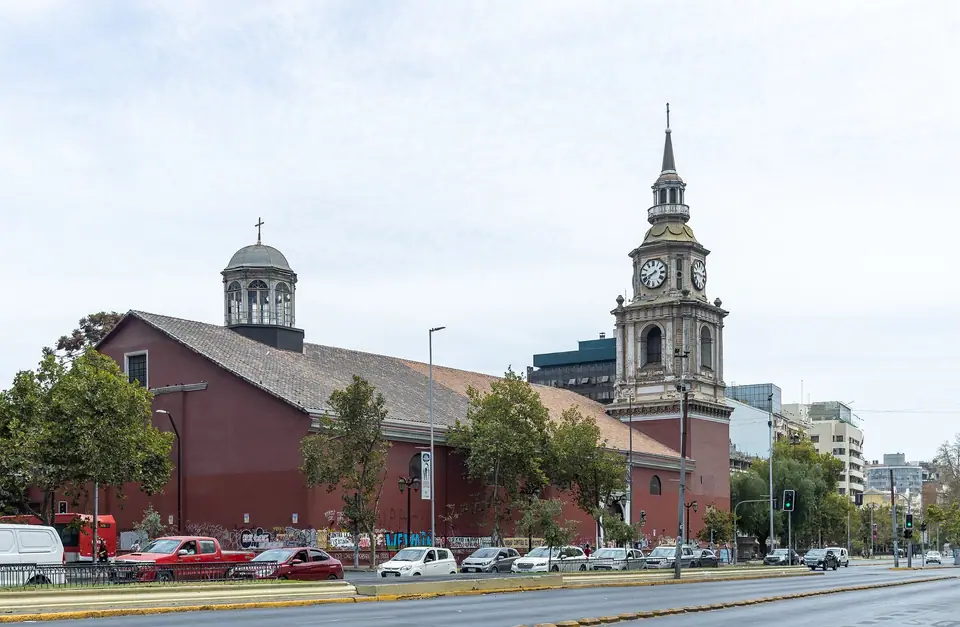
Four blocks east along the Alameda stands the Iglesia y Convento de San Francisco. Begun in 1586 and consecrated in 1622, its stone walls survived every colonial earthquake, making it the oldest standing building in Santiago; its cloister museum displays 54 large 17th-century Cuzco School canvases. Directly behind the church, the former monastery orchards were subdivided in the 1920s into Barrio París-Londres, where curving cobbled lanes wind beneath wrought-iron lamps toward Cerro Santa Lucía.
Traveller tips
Real advice from people who have been to Palacio de La Moneda, Barrio Cívico and Barrio París-Londres. Every tip is read by our team before it goes live.
No tips yet. Been here? Yours could be the first.
Thank you! Your tip will appear here after a quick review.
More in Santiago
Continue exploring Santiago with related neighbourhood, food, and planning guides
Where to Stay in Santiago: Best Neighbourhoods and Communes
Santiago, Chile
Santiago 3-Day Itinerary: Historic Plazas, Hilltop Parks and the Andes
Santiago, Chile
What to Eat in Santiago: Pastel de Choclo, Seafood and Fuentes de Soda
Santiago, Chile
Plaza de Armas, Metropolitan Cathedral and the Pre-Columbian Art Museum
Santiago, Chile
