


























Photo: Wolfgang Moroder · CC BY-SA 3.0
Siena: Terzi Spurs, 17 Contrade and Hill Orientation
How Siena fits together across its Y-shaped ridge: three terzi spurs, 17 contrade boundaries, UNESCO walls and everyday ZTL rules on foot.
Siena sits 322 metres above sea level on a narrow ridge where three Tuscan valleys converge. Unlike flat river towns laid out on Renaissance grids, every street inside Siena tilts away from one high crest. Three historic quarters called terzi meet just above the scalloped basin of Piazza del Campo (pyaht-sah del KAHM-poh).
In 2026, 53,180 residents live across Siena's 118.53 square kilometres. Daily foot traffic remains compact inside seven kilometres of stone fortifications that UNESCO listed in 1995. Reading the ridge layout before setting off saves exhausting uphill climbs back from outer gates. Follow our Siena sightseeing order next, and check arrivals on our how to get to Siena page.
The Y-Shaped Ridge and Three Terzi Explained
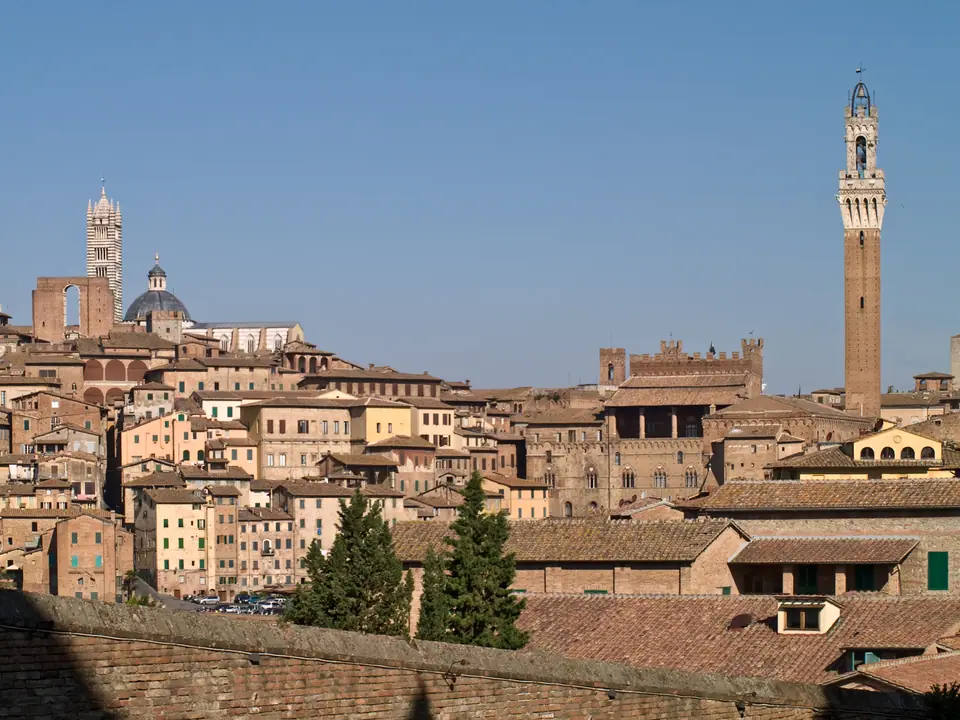
Three branching spurs divide old Siena into administrative thirds named terzi. They join at Croce del Travaglio, one block north of Piazza del Campo. Walking along high crest streets keeps grades easy, while branching alleys plunge down to valley gates.
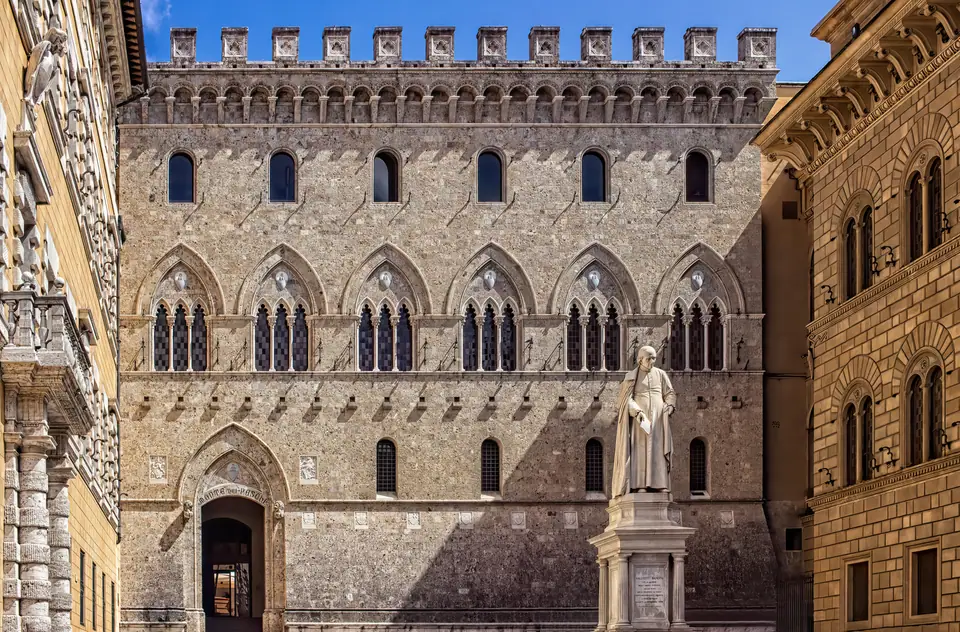
- Terzo di Camollia (North Spur): Follows Via Banchi di Sopra and Via Camollia north to Porta Camollia. This flat spine connects rail arrivals, regional coaches at Piazza Gramsci and historic banking seat Palazzo Salimbeni.
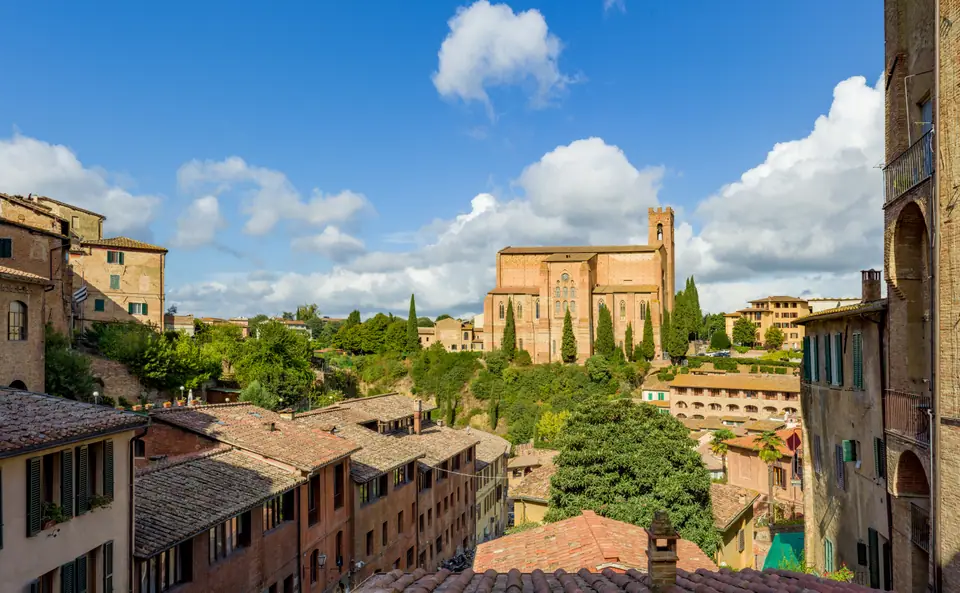
- Terzo di Città (South-West Ridge): Runs past Via di Città to Piazza del Duomo. It links Siena Cathedral, Santa Maria della Scala and brick San Domenico above medieval Fontebranda spring.
- Terzo di San Martino (South-East Spur): Curves past Via Banchi di Sotto and Via Pantaneto toward Porta Romana. Quiet artisan housing borders university halls and the green valley around Orto de' Pecci.
Journeys between north and south gates stay gentle when you stick to upper ridge streets. Stepping down toward Fontebranda, Porta Ovile or Porta Tufi forces a sharp return climb. Covered municipal escalators bypass the hardest valley slopes on the western and northern edges.
New visitors quickly notice how street names swap around central intersections. Banchi di Sopra becomes Via di Città heading west, or drops immediately down Via di Calzoleria into Piazza del Campo. Keeping simple skyline markers in mind, like cathedral towers west, Palazzo Pubblico south and Fortezza trees north-west, beats watching spinning map arrows between tall brick houses.
Seventeen Contrade and Heraldic Identity
Beneath the three terzi sit 17 independent neighbourhood wards called contrade (singular contrada, pronounced kon-TRAH-dah). Princess Violante of Bavaria fixed their borders in 1729, reducing older rivalries into permanent parish units. Every ward maintains its own square, parish church, baptismal fountain, banner colours and archival museum.
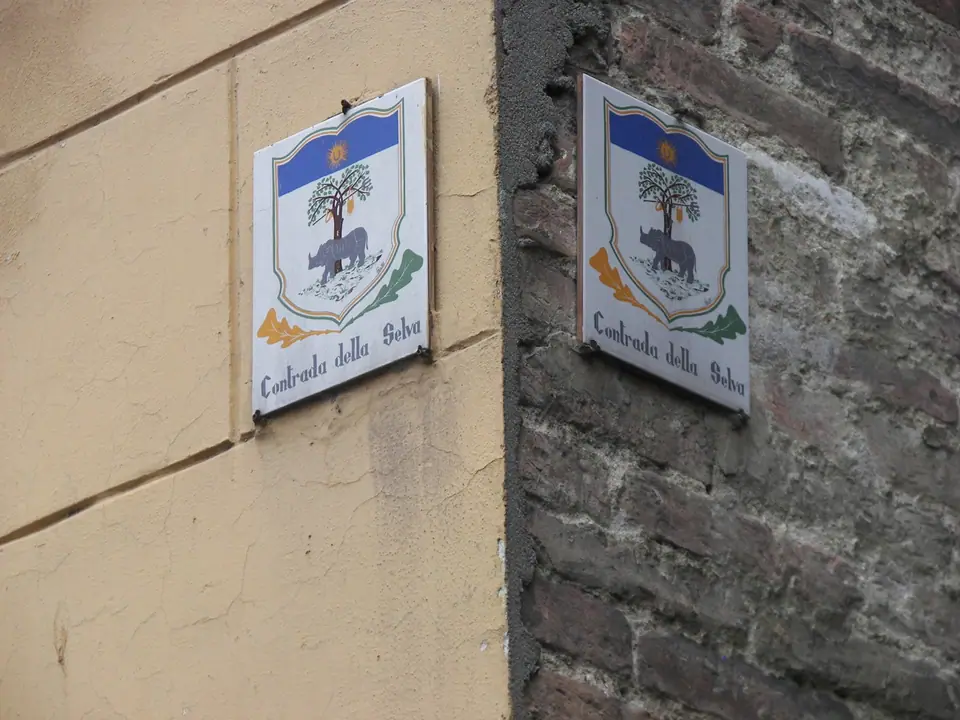
Membership passes down through family roots or local parish baptism rather than short-term apartment leases. Bankers, bakers and students dine together at long street tables during summer parish feasts before races. Look beside old wrought-iron lamps at alley corners for glazed ceramic animal tiles showing exact contrada borders.
Visiting a contrada museum adds sharp depth beyond famous art galleries, displaying rows of hand-painted silk winner banners and riding helmets. Always contact individual Società di Contrada offices directly ahead of your walk. Dedicated ward volunteers unlock display rooms by appointment rather than keeping daily museum desk schedules. Read how ten of these wards qualify for summer races on our Palio di Siena guide.
Republic Survival, Plague Freeze and UNESCO Footprint
Self-rule took root in Siena during the 12th century after Countess Matilda died in 1115. Civic prosperity funded Siena's university (Studium Senese) in 1240 and Monte dei Paschi bank in 1472, cited as Europe's oldest surviving bank in continuous trade. Grand brick palaces rose along every crest while wool merchants and money-changers financed a soaring marble cathedral.
Expansion halted brutally in 1348 when the Black Death halved a city of roughly 50,000 inhabitants. Masons abandoned huge limestone arches halfway up beside the Duomo, leaving the dramatic unfinished ruins standing today. An 18-month Spanish siege forced city surrender in 1555 before Siena passed to Medici rule in 1559. Because later centuries added modest new industry, medieval brick facades stayed strikingly coherent across the hilltop.
UNESCO inscribed the Historic Centre of Siena in 1995, protecting 107 to 170 hectares inside a 9,907-hectare buffer zone wrapping seven kilometres of 14th-to-16th-century walls and the 1560 to 1580 Medici fortress at Santa Barbara. In October 2025, Siena won the European Green Leaf Award for 2027, recognising sustainable urban parkland circling its 360-hectare Parco del Buongoverno.
Everyday City Logistics, Drinking Fountains and ZTL Discipline
Italy uses the euro (EUR) and supplies 230 V / 50 Hz electricity through Type L, Type F and Type C outlets. Dial 112 anywhere in Siena for unified emergency police, fire and medical dispatch. Non-EU visitors travelling under standard Schengen rules stay up to 90 days in any 180-day window. Keep a passport issued under ten years before arrival, valid three months past exit, plus photo identification during spot checks.
Siena closed Piazza del Campo to private cars in 1966, creating Europe's earliest car-free central square. Electronic ZTL camera gates (varchi attivi) watch historic entry arches 24 hours a day. Driving past lit red ZTL monitors without pre-registered hotel clearance generates steep automated fines sent months later. Urban buses operated by Autolinee Toscane link perimeter garages and the valley train station smoothly up into Piazza Gramsci.
Across central streets, public cast-iron drinking fountains (fontanelle) pour cold safe municipal water into reusable bottles at no charge. Shops along Banchi di Sopra follow classic midday breaks on quiet weekday afternoons, reopening into lively evening passeggiata strolls past dusk. Wednesday mornings bring Siena's main open-air weekly market circling La Lizza park beside the Medici Fortress, selling Tuscan cheeses, fruit, leather handbags and everyday textiles. Plan hotel zones on our Siena where to stay page, pick comfortable clothing using best time to visit, and explore dining traditions on our Siena food page.
Where it is
- 1Siena
- Florence Airport, Peretola (FLR) · about 55 km from Siena in a straight line
- Directions in Google Maps
Stations and taxi ranks: OpenStreetMap. Airports: OurAirports. Distances are in a straight line.
Traveller tips
Real advice from people who have been to Siena. Every tip is read by our team before it goes live.
No tips yet. Been here? Yours could be the first.
Thank you! Your tip will appear here after a quick review.
More in Siena
Continue exploring Siena with related neighbourhood, food, and planning guides
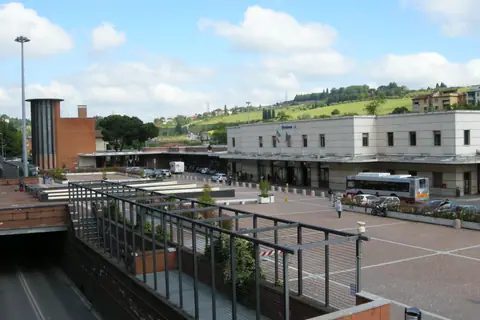
How to Get to Siena: Express 131R Bus, Rail Escalators and ZTL Parking
Siena, Italy
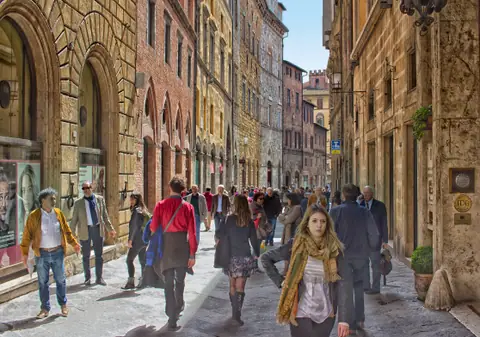
Where to Stay in Siena: Contrada Streets, North Ridge and Car Bases
Siena, Italy
Best Time to Visit Siena: Monthly Weather, Cathedral Floor and Crowds
Siena, Italy
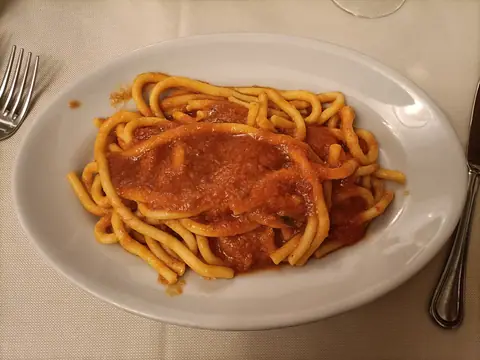
What to Eat in Siena: Pici Pasta, Panforte IGP, Cinta Senese and Chianti
Siena, Italy
