


























Photo: Superchilum · CC BY-SA 4.0
What to Eat in Siena: Pici Pasta, Panforte IGP, Cinta Senese and Chianti
Where Siena food traditions come from: pici pasta shapes, medieval honey-spice panforte, ricciarelli biscuits, Cinta Senese pork and Gallo Nero wine.
Siena's kitchen carries seven centuries of spice-route trade layered cleanly over Tuscan grain and oak-forest pork. Medieval pilgrims hiking down the Via Francigena brought Asian pepper, cloves and cinnamon past Palazzo Salimbeni desks. Monastic honey loaves grew into sweet landmarks across our UNESCO-listed town long after Republican rule ended. While Florence celebrates grilled beefsteak, Siena turns round hand-rolled flour noodles, striped pork and holiday confections.
Learning genuine Sienese dish names separates quiet trattorie near Via di Salicotto from hurried menus facing Piazza del Campo. Plan leisurely meals smoothly beside gallery walks using our Siena sightseeing guide.
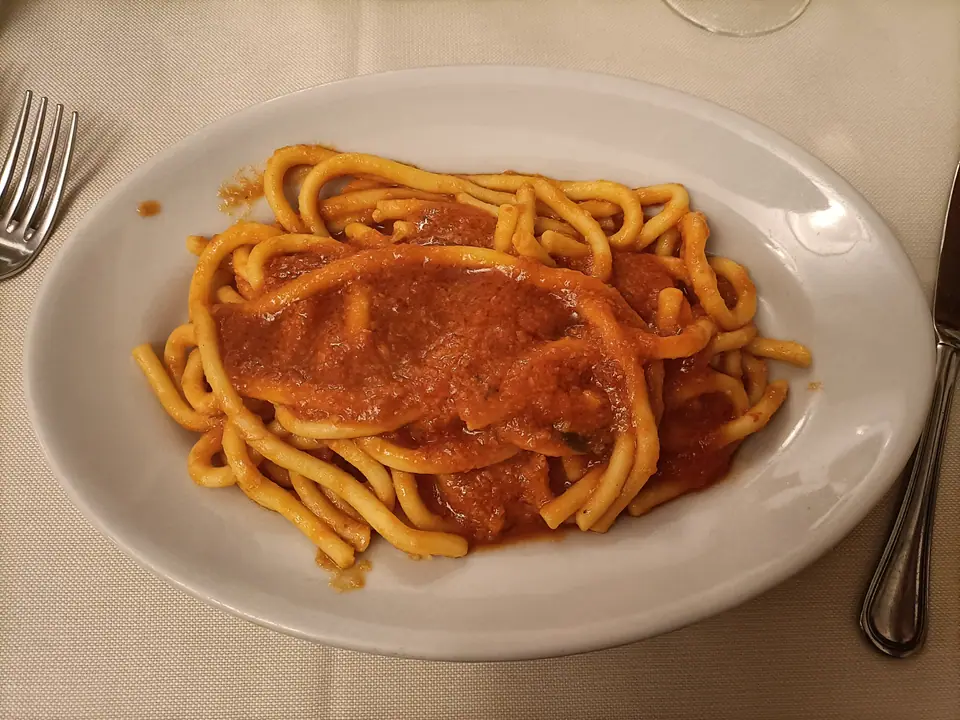
Hand-Rolled Pici Pasta and Local Sauces
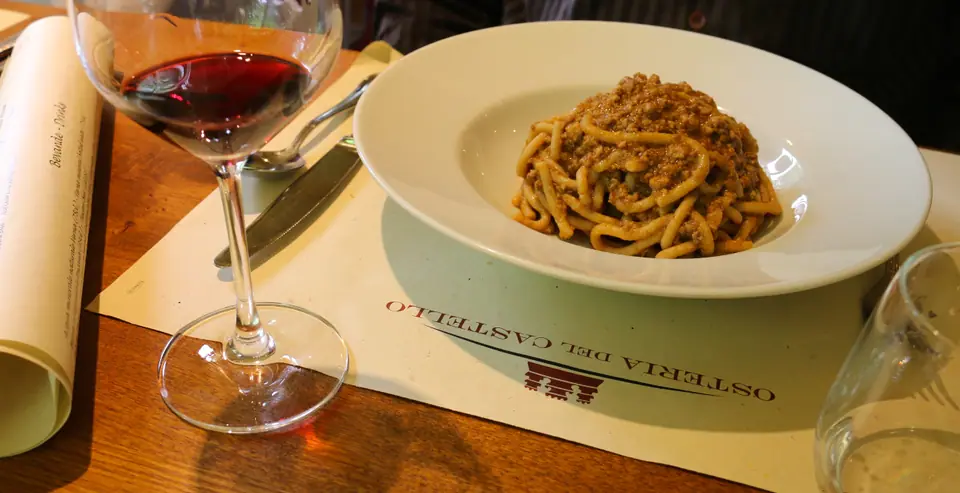
Pici (PEE-chee) anchors everyday pasta tables across Siena province, called pinci round Montalcino hills. Cooks knead coarse wheat flour and water into firm dough, slice strips and roll strands by palm on timber boards. Each thick noodle emerges slightly thinner than a pencil, trapping chunky sauces effortlessly. Family kitchens treat egg as optional, though commercial entries sometimes note egg white.
- Pici all'Aglione: Mild sweet giant Tuscan garlic melts gently down into crushed peeled tomatoes. Creamy tomato garlic sauce coats dense pasta smoothly without raw heat.
- Ragù di Cinghiale or Chiantigiano: Slow-braised wild boar or local beef simmers quietly for hours with red wine, juniper berries and woody rosemary.
- Cacio e Pepe or Briciole: Coarse black pepper folds sharply into aged sheep pecorino, or toasted stale breadcrumbs fried crisp in olive oil.
Share pasta starters when ordering heavy braised meats afterwards. Hand-rolled pici packs thick flour weight far heavier than thin factory ribbons. Traditional kitchens prepare limited fresh batches each morning before noon service.
Panforte di Siena IGP: Honey and Spice Since 1205
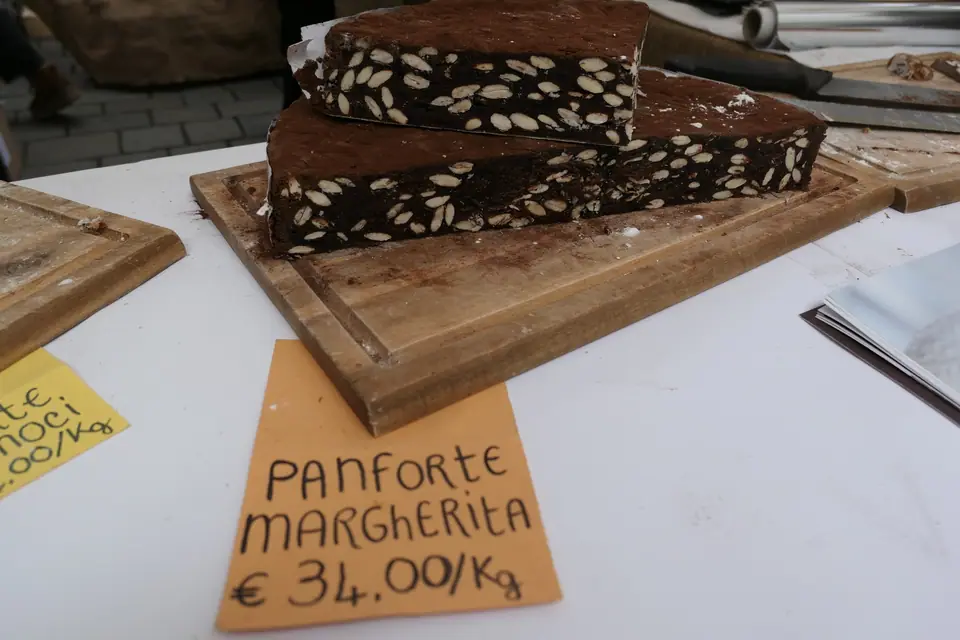
Few European sweets hold an older written invoice than panforte (pahn-FOR-teh), recorded inside Siena's State Archive on 7 February 1205. Tax ledgers log payments of panes melati et pepati (honey and pepper bread) given to Montecellesi nuns and monks. Protected under EU IGP origin status since 2013, dense discs pack candied citron, orange peel, whole almonds, coriander, nutmeg, flour and warm wildflower honey baked onto edible wafer sheets.
Pastry counters along Via Banchi di Sopra offer two sharp styles. Dark traditional Nero or panpepato carries bold pepper and cocoa heat. Milder white Margherita arrives generously dusted in vanilla icing sugar. Counter assistants slice thin tasting wedges directly off whole foil-wrapped cakes by weight so you can test both easily. Sealed round foil packs slip neatly inside carry-on bags for flights home.
Ricciarelli, Cavallucci and Seasonal Autumn Bakes
Beside panforte stack soft oval almond biscuits called ricciarelli, traced back to 14th-century apothecaries. Medieval bakers named them marzapanetti alla senese or morzelletti before current spelling settled during the 1800s. Ground sweet almonds, honey, sugar and egg white rest two full days before gentle baking into 20-gram crackled treats. Bakers cool finished biscuits for 15 minutes before stacking them beside sweet Vin Santo or Moscadello di Montalcino bottles.
Chewier spiced cavallucci link to Lorenzo de' Medici's reign (1449 to 1492, then termed biriquocoli). Biscuits mix aniseed, candied citron and Tuscan wildflower honey with either almonds or walnuts across family recipes. Around 1 and 2 November, local ovens also lift round walnut-and-raisin loaves known as pane co' santi onto warm shelves.
Cinta Senese DOP Pork and Crete Pecorino
Oak groves across the Montagnola Senese hills rear Cinta Senese DOP (CHEEN-tah seh-NEH-zeh), a dark ancient breed sporting a pale pink band across shoulders and forelegs. Woodland acorn foraging builds richly marbled prosciutto, melting white lardo, cured neck coppa and fennel-laced finocchiona IGP salami. Pair cured cuts with aged Pecorino delle Crete Senesi sheep cheeses ranging from soft spring wheels to nutty sharp cellar vintages. Wednesday markets at La Lizza beside Fortezza Medicea showcase seasoned pecorino counters beside fresh seasonal fruit.
Bread Soups for Cool Ridge Evenings
Zero-waste Tuscan peasant cooking warms misty nights between October showers and February frosts through two thick unsalted-bread dishes. Black kale and white bean ribollita simmers slow until thick enough to stand a wooden spoon. Velvety crushed tomato soup pappa al pomodoro shines brightest finished cleanly with peppery local olive oil.
Historic Cafes and Sienese Trattorie
Operating steadily since Guido Nannini opened coffee roasters in 1911 before Danilo Nannini scaled sweet exports in 1948, Pasticceria Nannini at Via Banchi di Sopra 24 and Piazza Matteotti 29 keeps glass cases packed. Step in for quick counter espresso beside sliced panforte and wrapped ricciarelli packets. Near Piazza del Campo, Osteria Le Logge turns seasonal regional plates like pici inside timbered rooms. Vaulted cellar Enoteca I Terzi along Via Chiassolino matches Tuscan dishes against thoughtful local wine bottles.
Expect a printed seated cover charge (coperto) on menus citywide whenever table linens replace standing bar counters. Look one alley behind Via di Città or down toward San Martino when evening dining seats fill around central squares. Waiters serve water beside unsalted Tuscan bread automatically once tables settle.
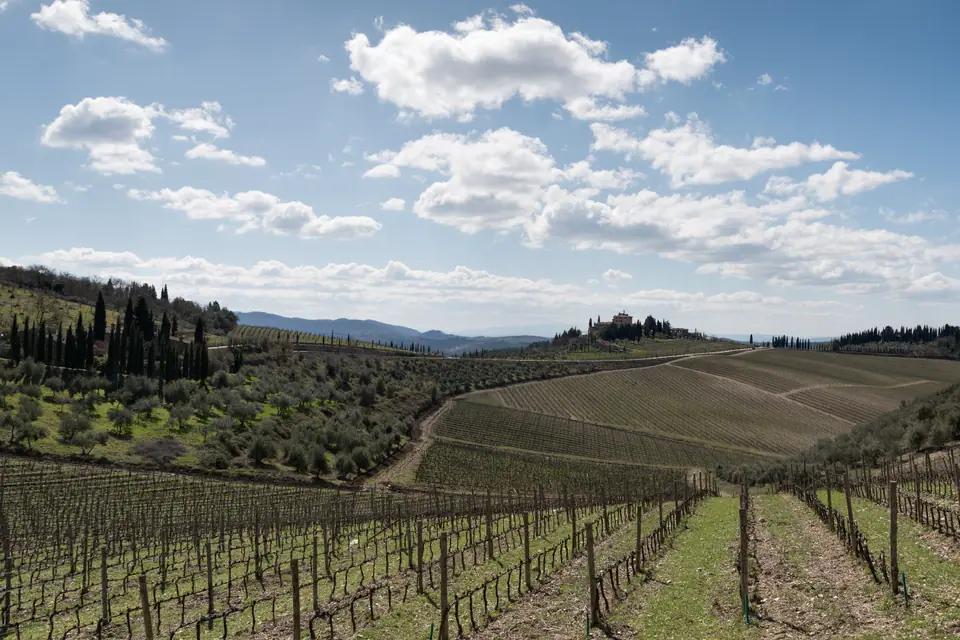
Chianti Classico DOCG and Regional Bottles
Northward between Siena and Florence run 260 square kilometres of Chianti Classico DOCG slopes (250 to 610 metres altitude). Wine rules trace back to Cosimo III de' Medici's 1716 edict naming Castellina, Gaiole, Radda and Greve. Every bottle carrying the black rooster seal (gallo nero) follows Sangiovese-led baselines across crisp annual reds, two-year Riserva bottles and 2014-created Gran Selezione.
Modern Chianti Classico DOCG regulations stipulate at least 80 percent Sangiovese across blends (within historic allowances spanning 75 to 100 percent) around estates between Florence and Siena. Choosing authentic Gallo Nero labels still guarantees true Siena hills provenance reliably. Crisp white Vernaccia di San Gimignano DOCG north-west and structured Brunello di Montalcino DOCG south complete cellar choices cleanly. Always verify kitchen opening hours ahead, since quiet trattorie close between noon lunch and late dinner seatings. Match courtyard dining clearly with dry weather on our Siena weather guide.
Where it is
- 1Siena
- Florence Airport, Peretola (FLR) · about 55 km from Siena in a straight line
- Directions in Google Maps
Stations and taxi ranks: OpenStreetMap. Airports: OurAirports. Distances are in a straight line.
Traveller tips
Real advice from people who have been to Siena. Every tip is read by our team before it goes live.
No tips yet. Been here? Yours could be the first.
Thank you! Your tip will appear here after a quick review.
More in Siena
Continue exploring Siena with related neighbourhood, food, and planning guides
Piazza del Campo: Nine Brick Wedges, Fonte Gaia and Civic Palaces
Siena, Italy
Siena Cathedral Complex: Opa Si Pass, Marble Floor and Facciatone
Siena, Italy
The Palio di Siena: 17 Contrade, Trial Days and Square Logistics
Siena, Italy
Palazzo Pubblico and Torre del Mangia: Civic Art and the Tower Climb
Siena, Italy
