


























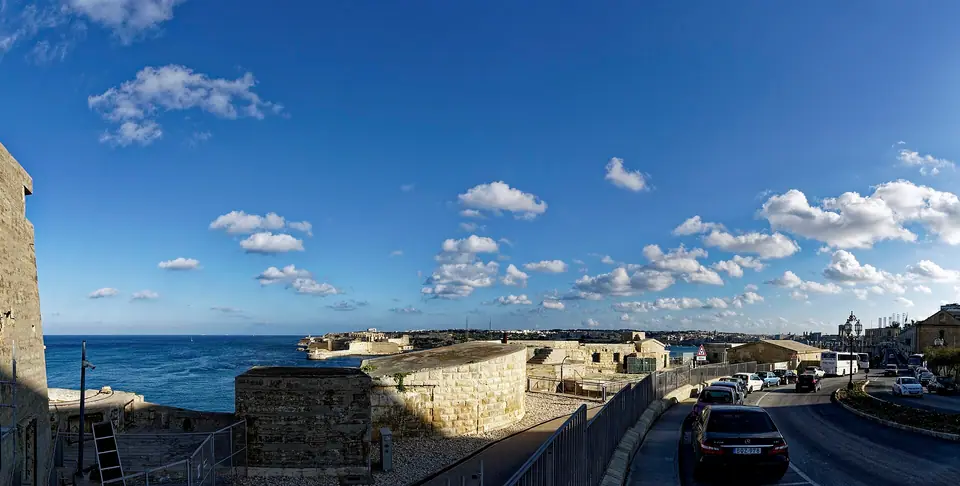
Fort St Elmo, National War Museum & Lascaris War Rooms Guide
Explore Valletta's two greatest military sites: star-shaped Fort St Elmo at the tip of the peninsula (with the 1942 George Cross) and the underground WWII Lascaris War Rooms.
Few square kilometres on earth have stood at the centre of two world-shaping sieges four centuries apart. First came the Great Siege of 1565, when 600 Knights and 6,000 Maltese militia withstood 30,000 Ottoman troops. Four centuries later came the Siege of Malta (1940 to 1943), when the island survived more than 3,300 Axis air raids to become the most heavily bombed place of World War II. Two remarkable monuments in Valletta, Fort St Elmo (housing the National War Museum) at the seaward tip of the peninsula and the subterranean Lascaris War Rooms beneath the Upper Barrakka Gardens, bring both sieges vividly to life. Pair this guide with our Upper Barrakka and Siege Bell guide and our Fort St Angelo and Birgu guide.
| Military / Subterranean Site | Ticket Price (Nov 2026) | Opening Hours | Star Historical Artefact Inside |
|---|---|---|---|
| 1. Fort St Elmo & National War Museum. | €10.00 adult / €7.50 youth & senior (or Heritage Malta Pass). | Daily 09:00 to 17:00 (Summer until 18:00). | 1942 silver George Cross, Gloster Sea Gladiator "Faith" & 1565 Siege chapel. |
| 2. Lascaris War Rooms (Lascaris Ditch). | €14.00 adult / €6.50 child (includes audio or live guide). | Mon to Sat 10:00 to 16:30 (Closed Sundays). | 1940 RAF Fighter Control Room & General Eisenhower's 1943 Operation Husky HQ. |
| 3. Malta at War Museum (Couvre Porte, Birgu). | €14.00 adult (or €24.00 combo with Lascaris & Saluting Battery). | Mon to Sat 10:00 to 16:30. | Vast network of hand-dug civilian WWII rock-cut family air-raid shelters in Birgu. |
| 4. Underground Valletta (St John's Cavalier). | €15.00 adult (booked timed tour via Heritage Malta). | Selected days; pre-booking essential. | 16th-century Knights' grain silos, water aqueducts & WWII subterranean refuge. |
Fort St Elmo: The 31-Day Stand of 1565 and the Chapel of St Anne
Star-shaped Fort St Elmo (€10.00 adult as of November 2026) occupies the rocky headland of Mount Sciberras splitting Marsamxett Harbour and the Grand Harbour. Erected in 1552, it is the oldest structure in Valletta, predating the city itself by fourteen years. When Sultan Suleiman the Magnificent's fleet of 180 ships arrived in May 1565, Ottoman commanders expected to capture tiny Fort St Elmo in four days. Instead, its garrison of Knights and Maltese soldiers held the shattered ramparts for 31 days under 24,000 cannonballs, costing the life of famed Ottoman corsair admiral Dragut (Turgut Reis). Their defence bought critical weeks for Grand Master La Valette to fortify Birgu before St Elmo finally fell on 23 June 1565.
As you walk across the central Parade Ground, step inside the vaulted 15th- and 16th-century Chapel of St Anne, where the wounded last defenders received communion on the night before the final assault. Outside, fallen Knights were floated across the Grand Harbour on wooden crosses toward Fort St Angelo. From the upper 17th-century Carafa Enceinte ramparts, you look straight down at the 1908 St Elmo Breakwater footbridge and across the open Mediterranean toward Sicily.
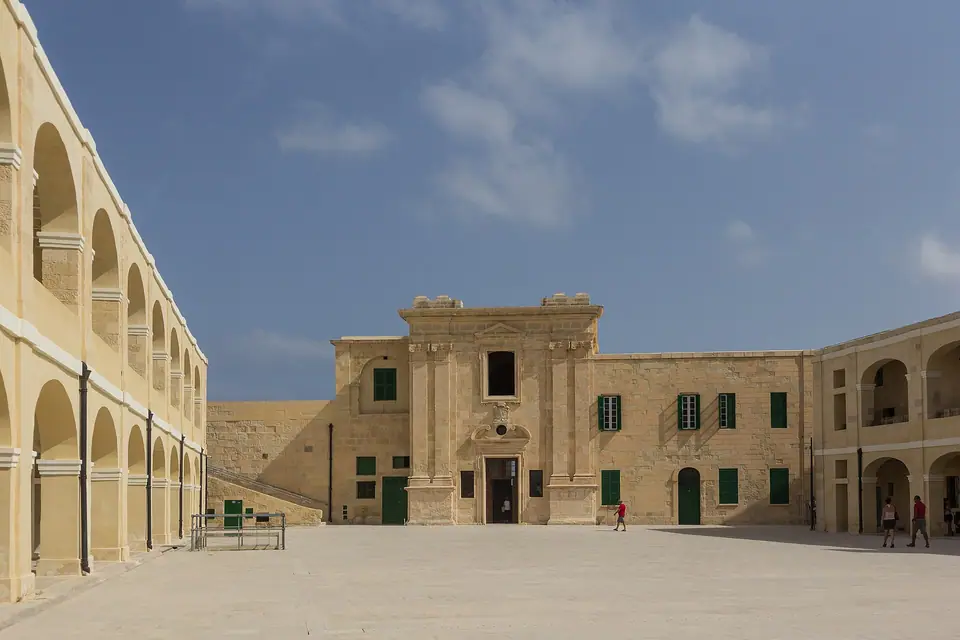
Inside the National War Museum: Gladiator "Faith" and the George Cross
Spread across six chronological pavilions inside the former British military barracks of Fort St Elmo, the National War Museum traces 7,000 years of military history from Bronze Age daggers to the 1565 Great Siege. Later rooms continue through Napoleon's 1798 occupation to the Battle of the Mediterranean (1940 to 1943). In the World War II halls stand three unforgettable treasures:
- The Original 1942 George Cross and King George VI's Handwritten Letter. In April 1942, Luftwaffe and Regia Aeronautica bombers dropped more ordinance on the Grand Harbour in a single month than fell on London at the peak of the Blitz. On 15 April 1942, King George VI awarded Britain's highest civilian decoration for gallantry, the silver George Cross, to the entire island of Malta. His citation praised "a heroism and devotion that will long be famous in history", and the cross remains on Malta's national flag today.
- Gloster Sea Gladiator N5520 "Faith". The surviving fuselage of one of the famous trio of obsolete British biplanes, affectionately christened Faith, Hope, and Charity, that defended Maltese skies in June 1940 before Hurricane and Spitfire squadrons arrived.
- The Husky Jeep and Operation Pedestal ("Il-Konvoj ta' Santa Marija"). Together with the Willys Jeep used by President Franklin D. Roosevelt and General Dwight D. Eisenhower in Malta in 1943, moving exhibits tell the story of the August 1942 Operation Pedestal convoy. During that battle, the crippled American oil tanker SS Ohio, lashed between two British destroyers, limped into the Grand Harbour on 15 August 1942 to save the island from surrender.
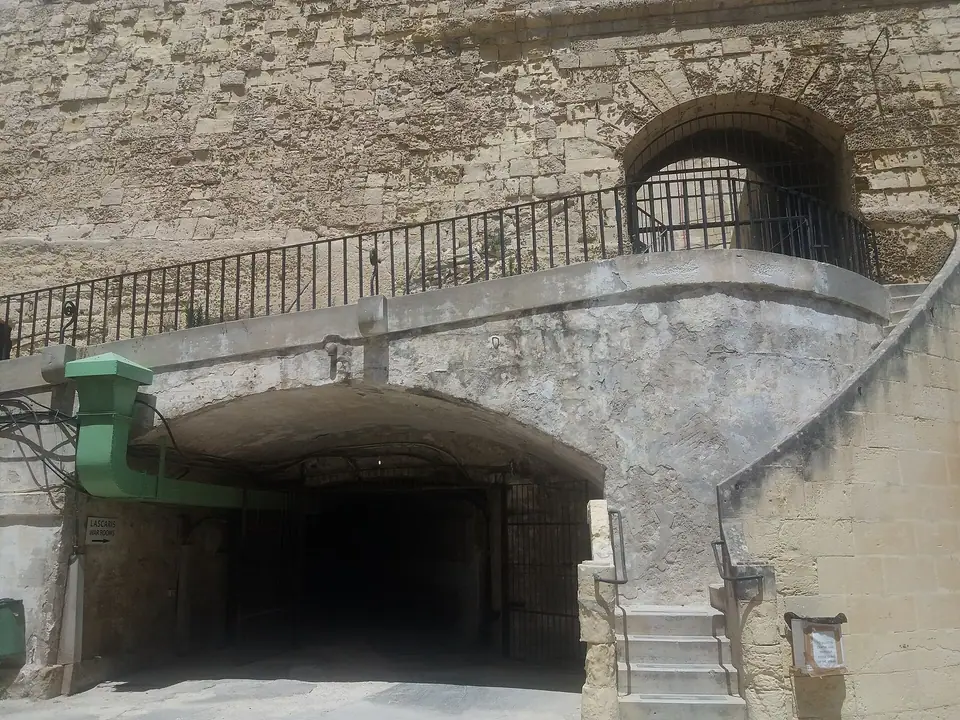
The Lascaris War Rooms: 45 Metres Beneath Upper Barrakka
From the Upper Barrakka Gardens, walk down into the shaded trench of Lascaris Ditch (or stop halfway on your way down to the Grand Harbour ferry) . Here you enter the Lascaris War Rooms (€14.00 adult as of November 2026; open Monday to Saturday 10:00 to 16:30). Dug 45 metres (150 feet) into solid limestone directly beneath the Saluting Battery and the Auberge de Castille, this top-secret complex of blast-proof tunnels served as Britain's combined military headquarters during the Siege of Malta.
Walking through the subterranean chambers with a live guide or audio handset takes you into the RAF Fighter Control Room, where WAAF plotters used magnetic rods around a giant map table of Malta and Sicily. They tracked incoming waves of Junkers Ju 88 bombers detected by the island's coastal radar stations, scrambling Spitfires from Ta' Qali and Luqa in minutes. In July 1943, General Dwight D. Eisenhower and Admiral Sir Andrew Cunningham used these exact underground rooms as their Allied Supreme Headquarters. Together with Field Marshal Bernard Montgomery, they directed Operation Husky, the amphibious invasion of Sicily. Later in 1967, the complex served as NATO's Mediterranean submarine-tracking centre during the Cold War. Outside the Fort St Elmo gate, visitors can also walk out along the limestone rampart overlooking the 1908 St Elmo Breakwater and the bronze memorial to the defenders of the 1942 Santa Marija Convoy.
Where it is
- 1Fort St Elmo, National War Museum & Lascaris War Rooms
- Malta International Airport (MLA) · about 7 km from here in a straight line
- Directions in Google Maps
Traveller tips
Real advice from people who have been to Valletta. Every tip is read by our team before it goes live.
No tips yet. Been here? Yours could be the first.
Thank you! Your tip will appear here after a quick review.
More in Valletta
Continue exploring Valletta with related neighbourhood, food, and planning guides
Valletta: How to Navigate Malta's Baroque Fortress Capital
Valletta, Malta
Best Things to Do in Valletta: Caravaggio, Grand Harbour, Knights' Palaces & Boats
Valletta, Malta
How to Get to Valletta: Malta Airport Transfers, Ferries, Buses & CVA Parking
Valletta, Malta
Best Time to Visit Valletta: 300 Sunny Days, Festas, Baroque Festival & Weather
Valletta, Malta
