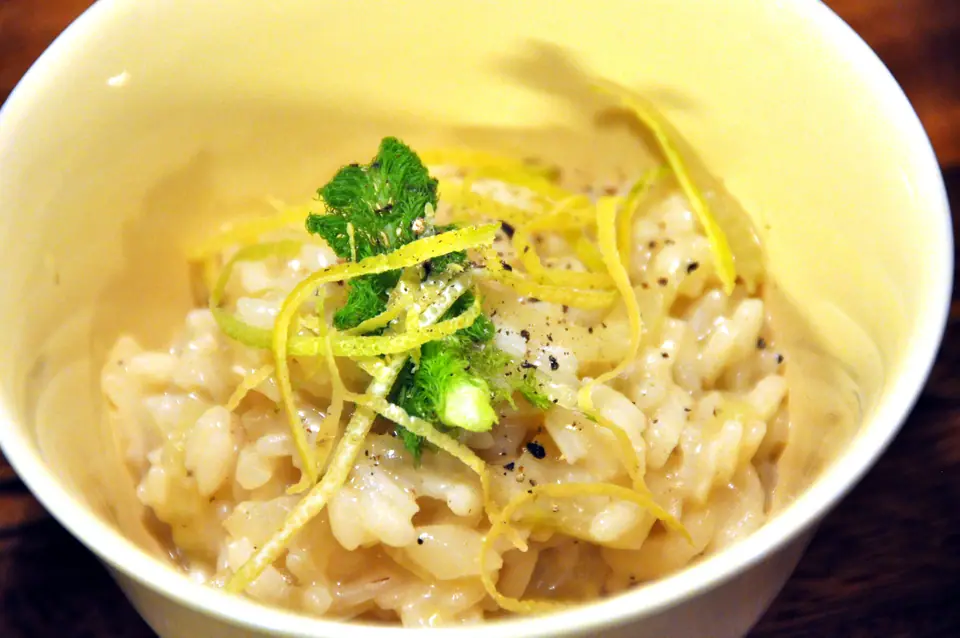
Photo: cyclonebill · CC BY-SA 2.0
What to Eat in Verona
Pastissada, risotto all'isolana, pandoro, Amarone, Soave and the tortellini of Valeggio.
Verona draws its kitchen from three nearby landscapes. Irrigated Vialone Nano rice paddies stretch across the southern plain, terraced vineyards climb north and east of the river, and dairy pastures cap the Lessini Mountains. Together they shape a menu built around cinnamon-scented risotto, thick extruded bigoli pasta with rich duck ragù, horse stew, alpine cheese and winter pandoro. Use this food and wine guide with the excursions guide when pairing historic central osterie with vineyard visits.
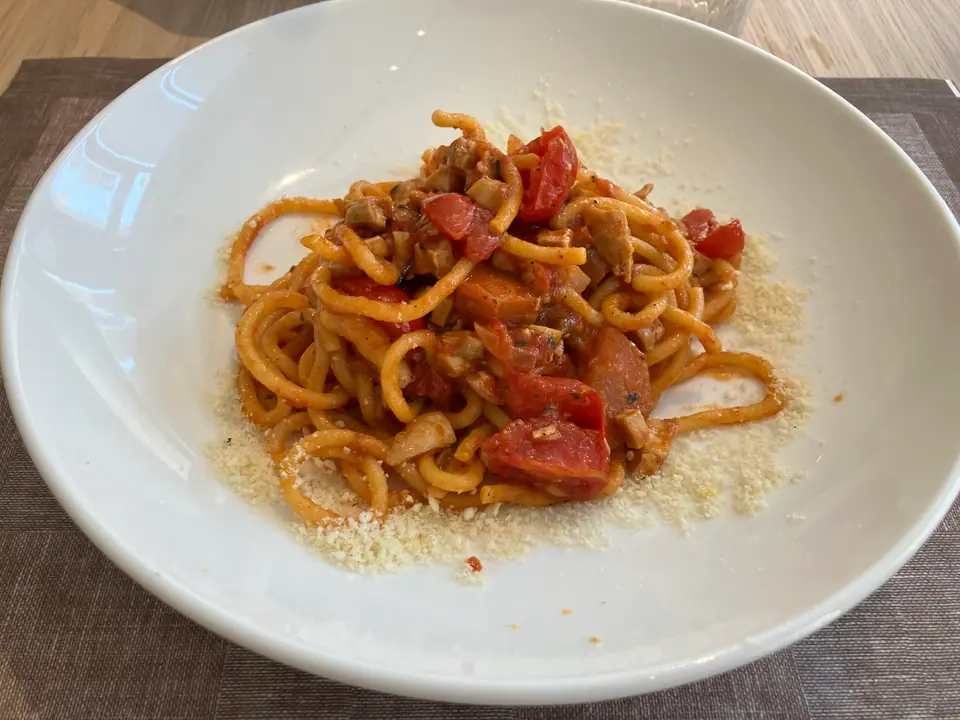
Bigoli con l'anatra and risotto all'isolana
Bigoli are Verona's classic fresh pasta. Cooks press thick, rough wheat or wholewheat strands through a brass extruder so rich sauces cling easily. Traditional osterie serve bigoli con l'anatra in slow-simmered duck ragù, or coastal-style with salted Lake Garda sardines.
For rice, Verona turns south to Isola della Scala, home of Vialone Nano Veronese paddies. Chefs dice lean veal and pork loin, rest the meat with salt and pepper for an hour, and brown it in rosemary butter. Broth-simmered rice folds in the meat with cinnamon-scented grated cheese. Isola della Scala's autumn Fiera del Riso began in 1967 with Pietro Secchiati's codified recipe and celebrated its 50th edition in 2016.
Pastissada de caval and winter bollito con la pearà
Pastissada de caval is Verona's slow-cooked casserole of horse meat marinated in Valpolicella red wine, vegetables and spices until tender, traditionally spooned over steaming polenta or soft gnocchi. Local storytelling traces it nearly 1,500 years back to the AD 489 battle between Theodoric and Odoacer, though treat that battlefield tale as folklore rather than historical record.
In colder months order bollito misto with pearà, a velvety peppered sauce simmered slowly from breadcrumbs, beef and hen stock, beef marrow and generous black pepper, finished with Parmesan or Grana Padano. Unlike pevarada, which adds chicken livers, true Veronese pearà stays deeply savoury around marrow and pepper. Both rich plates belong to crisp autumns and foggy winters covered in the best time to visit guide.
Verona's star-shaped pandoro tradition
No festive Veronese bakery skips pandoro, an eight-pointed golden yeast cake rich with butter, egg yolks and sugar whose name dates from the 18th century. Pastry maker Domenico Melegatti received his industrial baking patent on 30 October 1894, turning a festive local recipe into Verona's enduring winter bake. During November and December pastry shops pile boxed loaves high, dusted with vanilla icing sugar to slice beside morning espresso or sweet Recioto wine.
Valeggio handmade tortellini and Monte Veronese cheese
Valeggio sul Mincio lies about 25 kilometres south-west of Verona below its 650-metre Ponte Visconteo dam of 1393. Local kitchens here roll paper-thin handmade tortellini celebrated across northern Italy. Up in the Lessini Mountains, dairies craft Monte Veronese from unpasteurised cow's milk, granted Italian protection in 1993 and EU PDO status in 1996. Wheels measure 25 to 35 centimetres across, weigh 6 to 10 kilograms and mature in three savoury stages.
| Cheese form | Milk | Ageing |
|---|---|---|
| Monte Veronese Intero | Whole cow's milk | 25 to 60 days |
| Monte Veronese D'allevo | Semi-skimmed cow's milk | More than two months, up to about six |
| Monte Veronese Stravecchio | Cow's milk | Up to 24 months |
Valpolicella reds and dried-grape Amarone
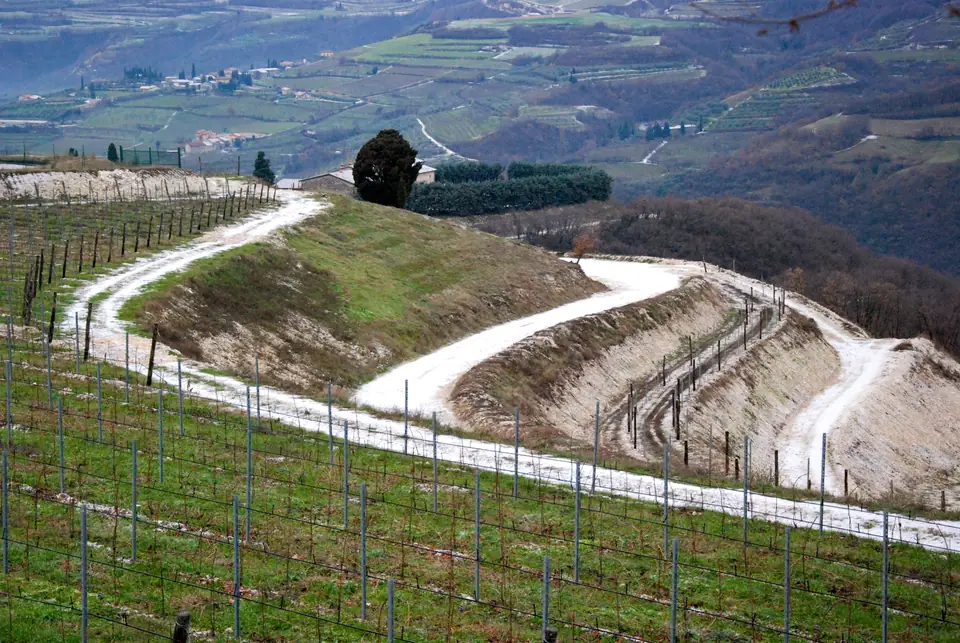
North of the Adige, Valpolicella vines climb terraced stone ridges between 150 and 460 metres above sea level. Granted DOC status in 1968, the Classico blend pairs Corvina, Corvinone and Rondinella, with Molinara optional since 2003. Bright Classico reds deliver juicy sour cherry and gentle pepper against salumi boards and rich pasta.
For flagship Amarone, picked bunches dry on loft racks for roughly 120 days, losing 35 to 45 per cent of berry weight in Corvina grapes before a slow 30-to-50-day fermentation. Wine must age at least two years from 1 January after harvest, and top estates often mature bottles for five years. Dry Amarone exceeds 14 per cent and frequently 15 per cent alcohol, earning DOC status in December 1990 and DOCG recognition on 4 December 2009.
| Wine | What it is |
|---|---|
| Valpolicella Superiore | Aged at least one year, with at least 12 per cent alcohol |
| Ripasso | Valpolicella re-fermented on the skins of Amarone or Recioto, with its own DOC from late 2009 |
| Recioto | A sweet red from dried grapes, historically the region's signature |
| Amarone | A strong, dry red, often released about five years after the vintage |
Volcanic Garganega whites in Soave and Garda Bardolino
Twenty-three kilometres east of Verona beneath medieval ramparts, Soave yields crisp mineral white wines anchored by at least 70 per cent Garganega grapes. The DOC dates from 1968 around historic 1931 Classico hillsides in Soave and Monteforte d'Alpone. Sweet Recioto di Soave gained DOCG status in 1998, followed by Soave Superiore in 2001.
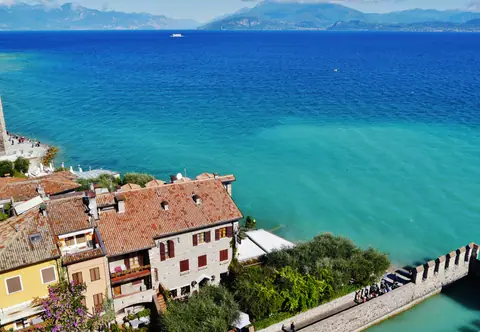
Roughly 25 kilometres west on Lake Garda's sunny eastern shore, Bardolino yields juicy, chillable red and pale rosé DOC wines best paired with lake fish and antipasti. Stop by the Zeni Wine Museum inside the Zeni winery (opened in 1991), where individual visitors enter free while groups book ahead.
How to balance dishes and glasses at table
- Hearty pasta or rice starter: Follow bigoli con l'anatra or risotto all'isolana with supple Valpolicella Superiore or Ripasso.
- Alpine cheese board: Pair aged Monte Veronese Stravecchio with rich Amarone or a sweet sip of Recioto.
- Warm lakeside lunch: Choose a chilled glass of Soave Classico with grilled trout, starters or roasted vegetables.
- Festive sweet course: Serve light, buttery pandoro with aromatic Recioto di Soave after winter dinner.
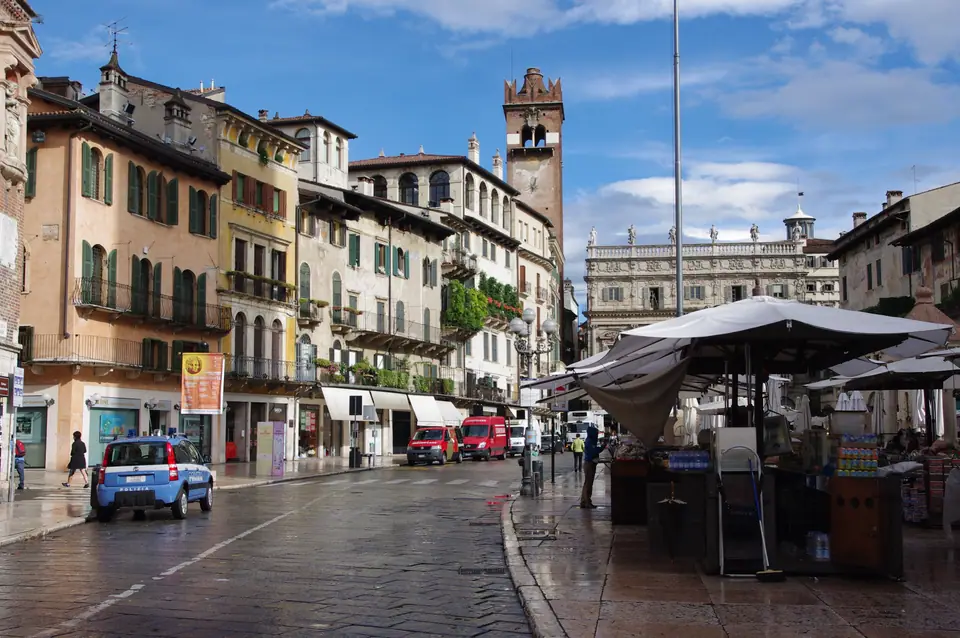
Counter cicchetti and historic osterie near Piazza delle Erbe
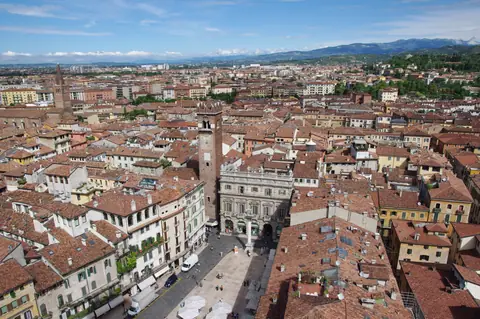
Verona's aperitivo hour revolves around standing wooden wine counters where locals order a small glass called a goto. Pair it with soft-bread tartine topped with creamed salt cod, soppressa salami or horse meat, plus warm fried polpette. Off Via Mazzini on Via Scudo di Francia, Antica Bottega del Vino pours deep Valpolicella and Amarone lists with Veronese classics. Along Corso Porta Borsari, Osteria del Bugiardo, run by Buglioni winery, pairs by-the-glass pours with cold-cut taglieri and counter tartine.
Harvest wine festivals in April and October
Osteria alleys crowd twice a year during events covered in the old centre guide. April draws crowds for Vinitaly, founded in 1967 and showcasing roughly 3,000 wines. Mid-October brings Hostaria Verona, lining Piazza dei Signori and Piazza delle Erbe with open-air tastings of local vintages and Monte Veronese.
Where it is
- 1Verona
- Verona Villafranca Valerio Catullo Airport (VRN) · about 9 km from Verona in a straight line
- Directions in Google Maps
Stations and taxi ranks: OpenStreetMap. Airports: OurAirports. Distances are in a straight line.
Traveller tips
Real advice from people who have been to Verona. Every tip is read by our team before it goes live.
No tips yet. Been here? Yours could be the first.
Thank you! Your tip will appear here after a quick review.
More in Verona
Continue exploring Verona with related neighbourhood, food, and planning guides