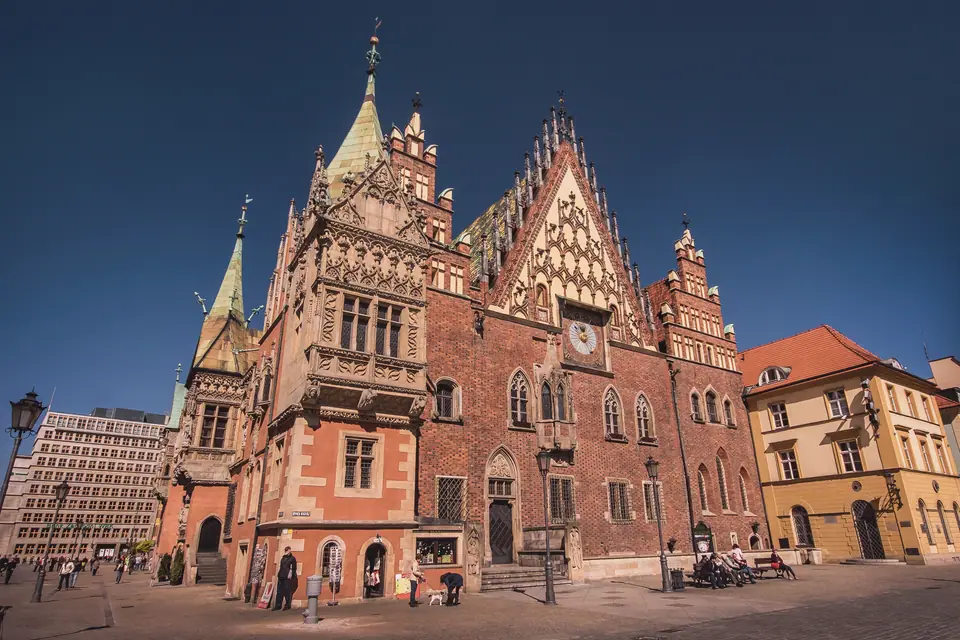
Photo: Aneta Pawska · CC BY-SA 4.0
Rynek Gables, Plac Solny and the Gothic Old Town Hall
Urban architecture of Rynek Market Square: Stary Ratusz, 1580 clock, Stüler Nowy Ratusz, 24-hour Plac Solny and medieval Stare Jatki.
Stepping out onto Wrocław's historic Rynek reveals clear medieval town planning doubled by a dense built core occupying the heart of the plaza. Measured across outer merchant blocks at 213 by 178 metres, this grand rectangle ranks among Europe's largest medieval market squares. Town founders laid it out under Magdeburg Law charters sealed in 1241 and 1261. Rather than leaving an empty parade ground, generations packed cloth halls, municipal courts and cellar taverns neatly into the central śródrynek block. Stepping round every outer flank shows how centuries of trade shaped a vivid civic room without turning it sterile. Morning light washes tall painted merchant gables cleanly before terrace parasols open across pale flagstones.
Magdeburg Grids and Multi-Century Stary Ratusz
Walking through narrow lanes cutting straight across the śródrynek shows why Stary Ratusz (the Old Town Hall) anchors every viewpoint without classical symmetry. Master masons enlarged the brick-and-sandstone complex incrementally between the thirteenth and sixteenth centuries. They grafted Gothic vaulted council chambers onto carved limestone bay windows, stepped terracotta gables and soaring ornate pinnacles. Rather than hiding older stonework behind uniform plaster, builders preserved changing civic fashions side by side in brick and pale stone. Corner turrets, stepped roofs and carved sandstone badges announce each prosperous guild era directly along street level.
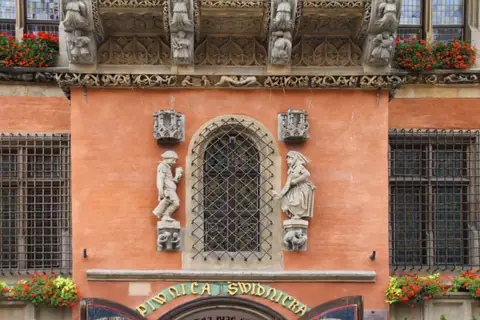
Trace the sunny southern elevation above Piwnica Świdnicka cellar stairs unhurriedly on foot. Medieval stone carvers tucked lively narrative reliefs right along sandstone window brackets. Bears, knights, guild musicians and cheerful burghers peek down above granite cobbles in crisp detail. Inside, restored vaulted halls house the Museum of Bourgeois Art (Muzeum Sztuki Mieszczańskiej), safeguarding civic guild banners, wrought-iron chests and silver tankards beneath leaded windows. Cool brick halls show visitors how town aldermen ran markets, trials and receptions directly overhead.
Post-1945 Conservation Along the Gables
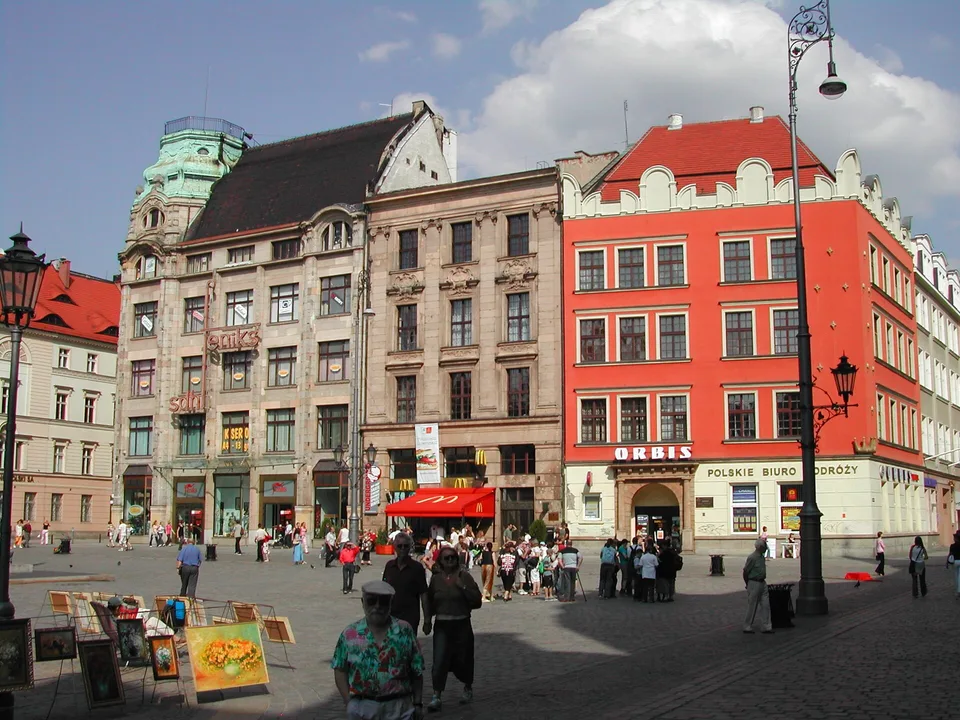
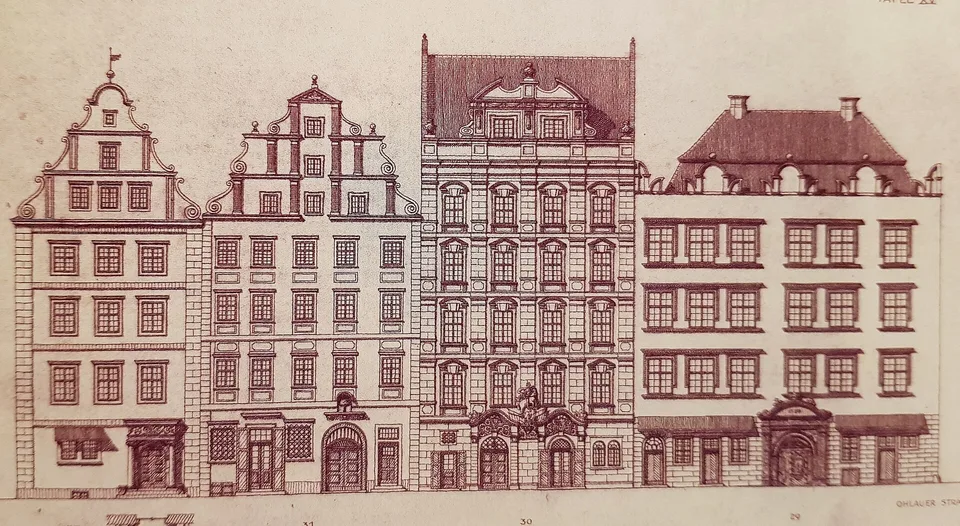
Facing out toward every surrounding frontage highlights patient post-1945 conservation across shattered merchant lots. Artillery fire gutted long townhouse rows in 1945 before Polish conservators reconstructed tall stepped Gothic roofs, Baroque volutes and painted gable medallions facade by facade. Ground-floor cafe umbrellas stay tucked discreetly back from stone portals so narrow pastel elevations stay crisp across the central Old Town.
Morning walkers notice subtle height shifts where tall Baroque merchants' fronts squeeze snugly beside narrower Renaissance plots. That varied roofline stops the vast rectangle from feeling rigid, guiding eyes neatly upward toward belfries behind outer chimneys. Deep vaulted cellars still stretch beneath modern shopfronts and busy daytime restaurant tables. Richly painted house names, stucco wreaths and sandstone doorways reward gazing up slowly past second-floor sills.
Neo-Gothic Nowy Ratusz and the 1580 Astronomical Dial
Circle round to the eastern gable of Stary Ratusz for Wrocław's sharp late-medieval stone silhouette. Set prominently beneath Gothic brick ribs glows the gilded astronomical clock installed in 1580. Rather than bare modern numerals, its central face tracks lunar phases round a golden sunburst hand framed cleanly inside sculpted stonework. Early sunlight warms those gilded dials brightly before midday awnings drop open across eastern cafe terraces. Passers-by often pause beneath the ornate sandstone portal below to catch soft chime echoes bouncing off outer merchant walls.
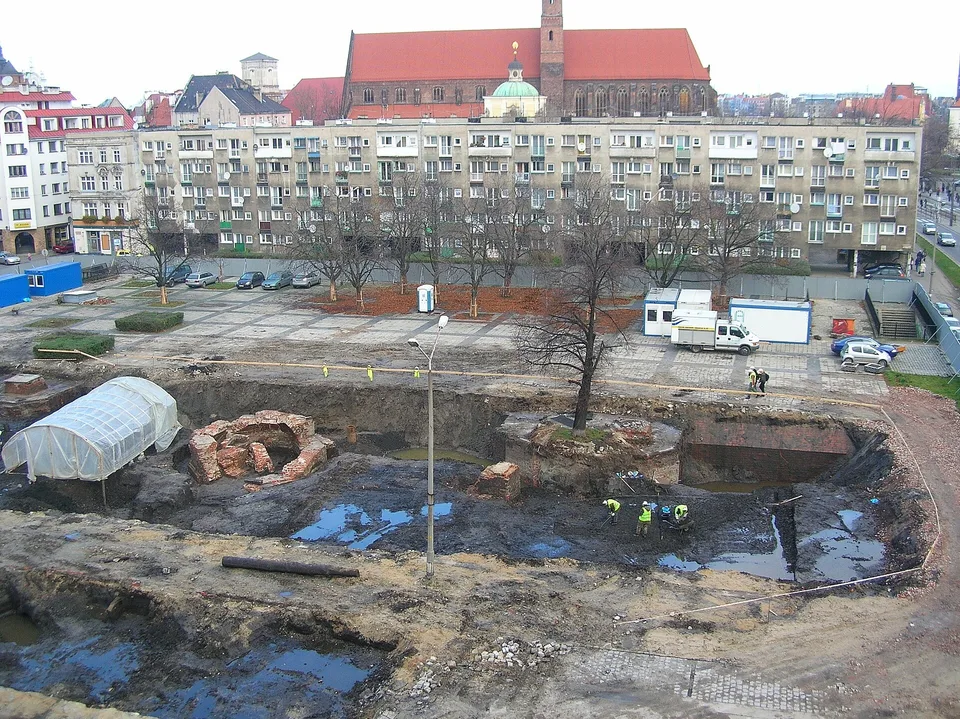
Walk immediately past the western flank of the middle island block where Friedrich August Stüler designed Nowy Ratusz (the New Town Hall) between 1860 and 1864. Built in crisp Historicist Neo-Gothic and Neo-Renaissance brickwork to house expanding nineteenth-century civic offices, Stüler's wing connects quietly back to Stary Ratusz. Tall pointed arcades soften its formal administrative mass along the square floor. Upper chambers still seat Wrocław's Mayor and City Council right on the historic plaza.
Out across the broad western esplanade stands Aleksander Fredro's bronze monument, relocated west from Lwów after the war. The sculpted Polish playwright faces quietly across granite cobbles toward side streets near Włodkowica and evening theatre crowds. Nearby wooden benches frame open views across painted eastern facades and gilded merchant house signs. Wide open granite space invites evening buskers and relaxed walking loops before supper tables fill round the central hall.
Plac Solny Flowers, Jaś i Małgosia and Stare Jatki
Slip cleanly off the southwest corner of Rynek through short narrow lanes into diagonal Plac Solny (Salt Square). Medieval salt merchants stacked wooden sacks here beneath classical nineteenth-century colonnades including the dignified Stara Giełda corner. Neat glass flower pavilions lining its eastern walk operate twenty-four hours a day. Bucketed tulips, white roses and pine wreaths scent cold night strolls even when nearby boutiques sit shut behind dark shutters. Wide café patios along the opposite pavement pick up sunny afternoon shade smoothly.
Circle clockwise back toward the towering brick spire of St Elizabeth's Church framing the northwest square corner. Leaning gently inward beside church steps stand Jaś i Małgosia ("Hansel and Gretel"), twin slender medieval altarists' cottages joined overhead by an arched Baroque stone gateway. Those small gable walls mark a surviving corner of a ringed churchyard enclosure that once separated quiet parish graves from loud market booths. Climbing slightly off busy Rynek pavement reveals crisp stone vault details directly overhead.
Walk one narrow block north past the church toward Stare Jatki, where restored butcher stalls shelter ceramicists and print shops beside the 1997 bronze farmyard animals sculpture. Pause near low cellar windows to spot bronze dwarfs guarding drain grilles before heading north toward river bridges. Stepping two corners off Rynek trades busy terrace tables for quiet brick arches echoing softly under footsteps. Early morning light skips straight across weathered sandstone kerbs before delivery vans finish morning rounds.
Where it is
- 1Rynek Gables, Plac Solny and the Gothic Old Town Hall
- Copernicus Wrocław Airport (WRO) · about 10 km from here in a straight line
- Directions in Google Maps
Stations and taxi ranks: OpenStreetMap. Airports: OurAirports. Distances are in a straight line.
Traveller tips
Real advice from people who have been to Wrocław. Every tip is read by our team before it goes live.
No tips yet. Been here? Yours could be the first.
Thank you! Your tip will appear here after a quick review.
More in Wrocław
Continue exploring Wrocław with related neighbourhood, food, and planning guides