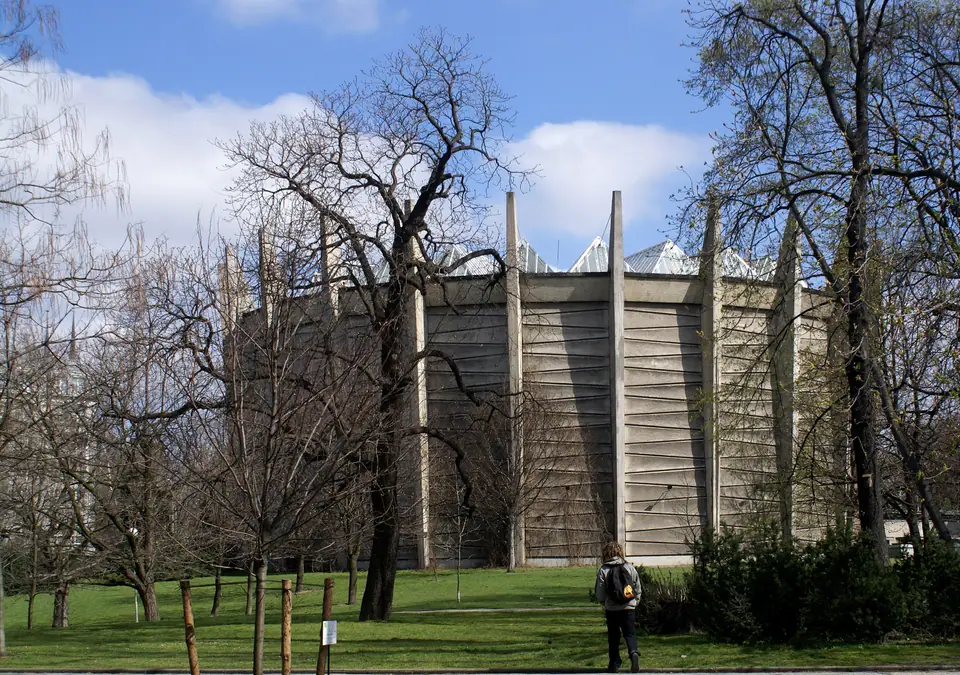
Photo: Barbara Maliszewska · CC BY-SA 3.0 pl
Lwów's 114-Metre Cyclorama and the Krasnale Trail
Inside the 114-metre Racławice Panorama rotunda, MNWr Four Museums ticket inclusion, Orange Alternative origins and Tomasz Moczek bronze dwarfs.
Two beloved Wrocław landmarks define the city from sharply contrasting scales: an immense circular battlefield painting sheltered inside park trees and hundreds of tiny bronze figurines crouching near street gutters. Separate on the surface, both tell crisp stories of Polish persistence across shifting twentieth-century borders and fearless public wit. Pairing a timed rotunda ticket inside Panorama Racławicka with a bronze dwarf walk links Juliusz Słowacki Park cleanly back to Rynek. Walking slowly reveals how grand national history and mischievous street humour occupy shared central blocks. Park trees cast calm shade outside right before busy downtown cobbles begin.
Styka, Kossak and the 1946 Move from Lwów
Painters Jan Styka, Wojciech Kossak and collaborator assistants completed the immense 114-by-15-metre 360-degree canvas between 1893 and 1894 in Lwów to commemorate Tadeusz Kościuszko's 1794 victory at Racławice. Rolled safely into timber crates after wartime air raids and transferred west to Wrocław during 1946 border changes, the painting waited silently inside museum stores for decades. Post-war political censors feared its anti-Russian battle triumph until architects Ewa and Marek Dziekoński completed this sculpted Brutalist concrete rotunda at ul. Jana Ewangelisty Purkyniego 11 in 1985. Thick curved perimeter concrete walls mirror the wide drum geometry hidden smoothly inside. Low moat-side park paths approach the quiet concrete entry plaza beneath tall chestnut crowns.
Stepping Inside the Darkened 114-Metre Rotunda
Ascending dimmed curved corridors onto the central viewing gallery strips away external architectural scale instantaneously. Warm concealed skylight illumination washes evenly across the vertical oil canvas down into sculpted foreground terrain littered with broken carts, split-rail fences and brushwood below the railing. That clever artificial terrain erases the edge between physical sand and painted horizon completely round the circle. Strolling a full loop lets viewers follow distant smoke columns, peasant scythe regiments and charging horses seamlessly without dead corners. Overhead cloth screens mask hidden lights so oil highlights glow naturally as sunlit meadow haze.
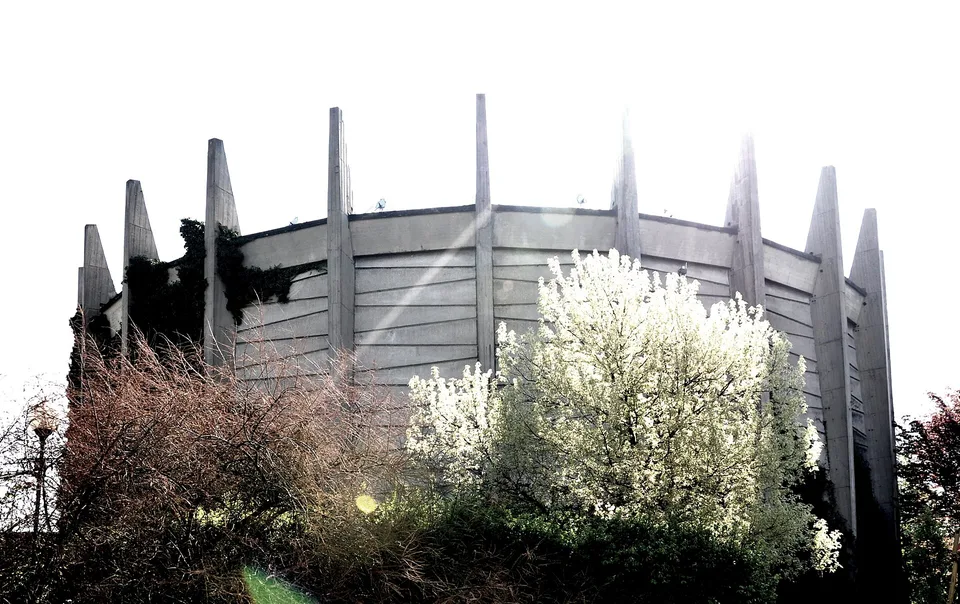
Timed passes regulate crowd flow neatly by admitting scheduled groups onto the viewing deck for 30-minute visits. Synchronised multilingual audio commentary guides eyes calmly across cavalry formations and rural hillsides without jostling elbows. Coats and large backpacks check effortlessly into ground-floor lockers prior to entering the darkened circular hall. Exiting back down cool stone stairs drops guests straight beside shaded park benches and fountains.
One Ticket, Four Museums Across MNWr Branches
Hold tightly onto your Panorama Racławicka entry stub after stepping outside into Juliusz Słowacki Park lawns. Under the National Museum in Wrocław (MNWr) "One Ticket, Four Museums" rule, every timed Panorama pass unlocks free admission for up to three months to permanent exhibitions across all four branches.
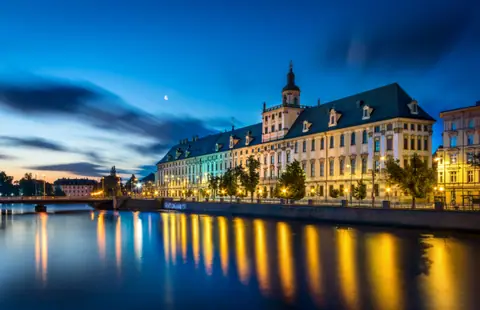
Show that same paper ticket at the riverside National Museum Main Building (Plac Powstańców Warszawy 5), Hans Poelzig's Four Domes Pavilion, and the Ethnographic Museum at ul. Traugutta 111 to 113. Ivy-wrapped Neo-Renaissance brickwork along the Odra shelters centuries of Silesian stone carving, religious woodwork and Polish painting within minutes on foot. Meanwhile, Great Island galleries highlight contemporary sculpture inside flooded daylight courtyards. Splitting those four sites across calm rainy or sunny afternoons avoids gallery fatigue cleanly. Paper stubs keep full value even when returned across separate weekend trips months apart.
| Wrocław Icon | Core Origins | Practical Visit Rule | Key Location |
|---|---|---|---|
| Panorama Racławicka | 1893 to 1894 Lwów canvas; 1985 rotunda | 30-min timed slot; unlocks 4 MNWr branches 3 months | ul. Jana Ewangelisty Purkyniego 11 |
| National Museum & Siblings | 1883 to 1886 brick hall, Four Domes, Ethnographic | Permanent galleries free on Panorama ticket stub | Plac Powstańców Warszawy 5 & Great Island |
| Papa Krasnal Monument | 2001 bronze honouring 1980s Orange Alternative | Open-air sidewalk plaque, round-the-clock view | ul. Świdnicka pedestrian zone |
| Moczek Street Bronzes | First 5 cast Aug 2005; hundreds added since | Scan plinths, curbs, window sills & drains | Rynek, Stare Jatki & Ostrów Tumski |
Orange Alternative Street Theatre and Papa Krasnal
Stroll west from park lawns onto pedestrian ul. Świdnicka for Wrocław's sharpest sidewalk joke against solemn monuments. During the 1980s, Waldemar "Major" Fydrych led the surrealist anti-authoritarian Orange Alternative (Pomarańczowa Alternatywa). Activists painted cheeky orange dwarf stencils directly over grey state paint covering banned political graffiti. Wearing cardboard elf hats at peaceful street happenings mocked heavy-handed patrols through absurdity rather than street brawls. Bystanders joined cheerful marches carrying bright orange banners down wide central boulevards.
Residents cast the larger bronze monument of Papa Krasnal atop a sculpted thumb pedestal on ul. Świdnicka in 2001 right over historic rally crossroads. That weathered figure permanently anchored Wrocław's civic irony in downtown flagstones.
Spotting Moczek's 2005 Bronzes Across Sidewalks
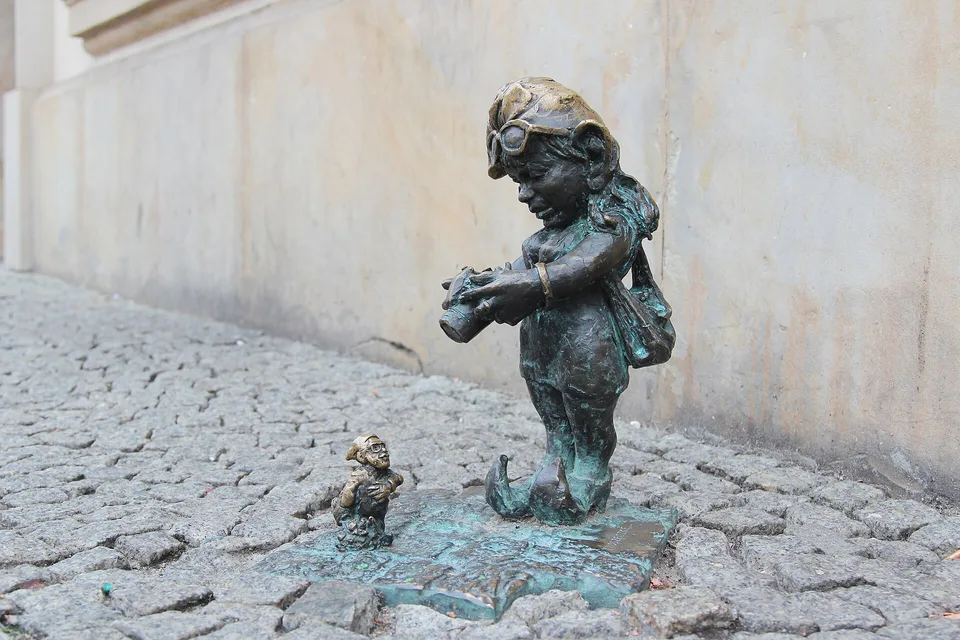
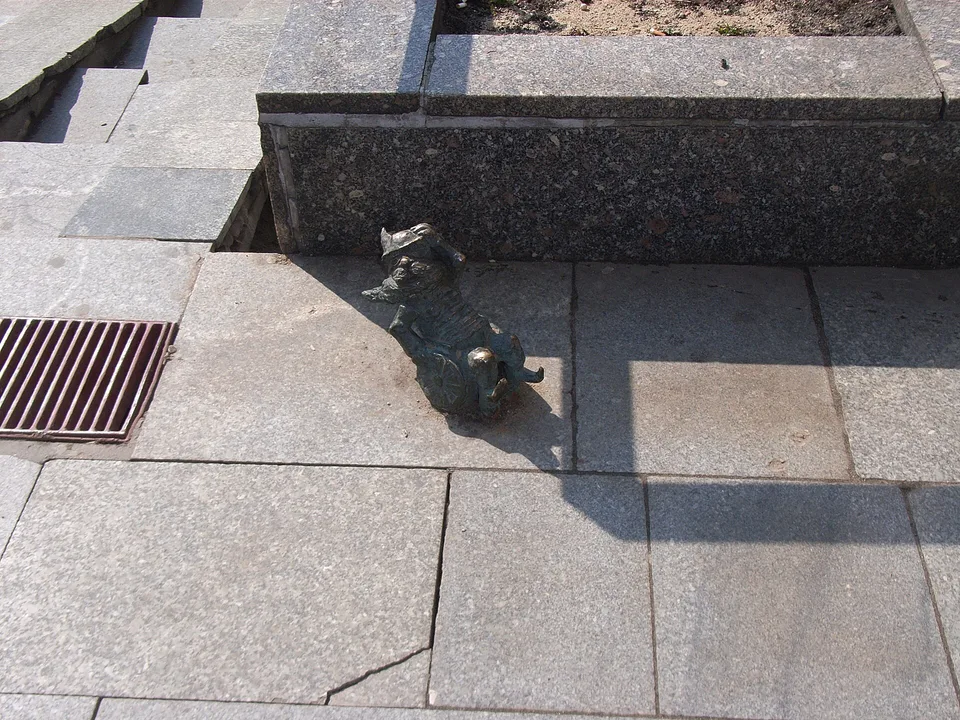
Street-level dwarf hunts blossomed citywide from August 2005 onward, when sculptor Tomasz Moczek placed his first five miniature bronze krasnale across central corners. Today hundreds of tiny cast figures guard bookshops, bank vaults, pastry windows, butcher lanes and university milk-bar steps, turning routine walks into spontaneous sidewalk treasure hunts:
- Drop your gaze below waist height: Scan rainwater downspouts, stone ledges, cafe railings and tram-stop plinths rather than upper cornices. Tiny hammers, open books and café trays often perch beside doorway thresholds.
- Spot early icons together: Link Papa Krasnal on Świdnicka with Moczek's pioneers near Ossolineum, the Laundry Washer by Piaskowy Bridge and the Butcher Dwarf on Stare Jatki. Look near weathered riverside iron railings for tiny figures lifting imaginary baskets.
- Sequence museum stops wisely: Book weekend Panorama Racławicka slots online ahead, then walk north across park lawns to enter the 1883 to 1886 National Museum galleries free with your saved stub. Early morning entries clear out noisy school groups before noon.
Where it is
- 1Lwów's 114-Metre Cyclorama and the Krasnale Trail
- Copernicus Wrocław Airport (WRO) · about 11 km from here in a straight line
- Directions in Google Maps
Stations and taxi ranks: OpenStreetMap. Airports: OurAirports. Distances are in a straight line.
Traveller tips
Real advice from people who have been to Wrocław. Every tip is read by our team before it goes live.
No tips yet. Been here? Yours could be the first.
Thank you! Your tip will appear here after a quick review.
More in Wrocław
Continue exploring Wrocław with related neighbourhood, food, and planning guides