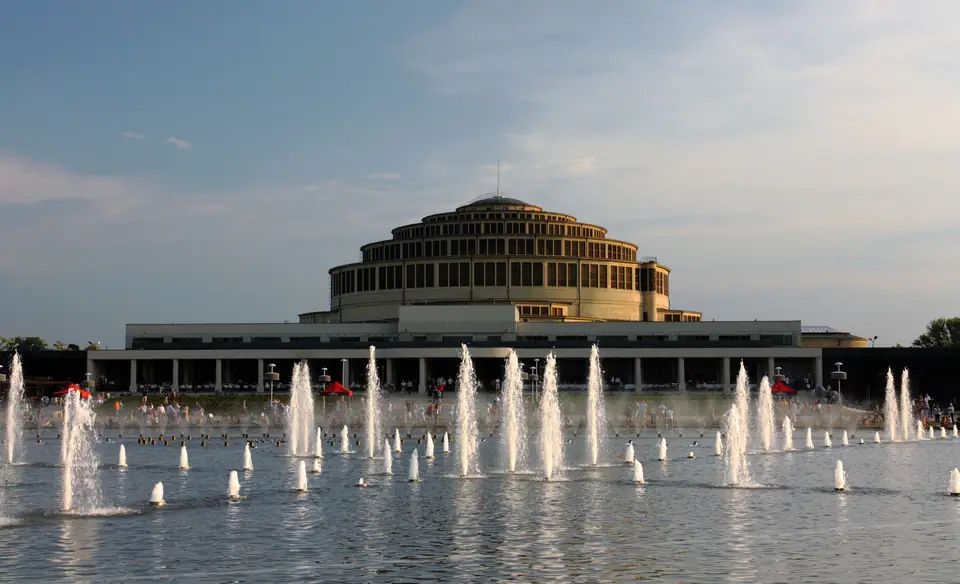
Photo: Rdrozd · CC BY-SA 4.0
Warmest Polish Summers, July Downpours and Odra Frost
IMGW 1991 to 2020 climate rhythms across Wrocław, highlighting May garden blooms, July thunderstorm peaks, film weeks and frost on Rynek.
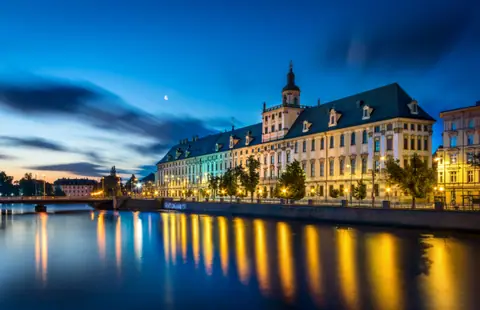
Sheltered across the Silesian Lowlands just north of the Sudetes mountains, Wrocław posts an annual mean temperature of 9.7 °C under 1991 to 2020 IMGW-PIB Station 12424 normals. That mild shelter marks it as Poland's warmest tracked lowland regional capital. Annual rainfall totals 541.1 millimetres unevenly across seasons. Weighing sunny river lawns against sudden July thunderheads or December frost helps every walking plan run cleanly.
March and April Thaw Along the Boulevards
Spring thaws snow swiftly across Lower Silesia weeks ahead of coastal Gdańsk. March warms to 9.0 °C daytime highs around 0.0 °C nights with 35.0 millimetres of precipitation across 13.50 wet days. April climbs briskly to 15.3 °C afternoons and 3.8 °C mornings with just 31.2 millimetres over 10.90 wet days. Clear morning rays pick out Gothic brickwork on Ostrów Tumski without summer tour queues.
Green buds spread fast along Old Town moat trees during crisp dry lunches. Café tables begin appearing outside sunny Plac Solny facades around midday. Even so, cool river breezes linger along wide Odra embankments after sundown, rewarding light windshells over bridges to Sand Island.
May Gardens, 3-Majówka and Outdoor Cafés
May dresses every park in rich spring foliage as highs touch 20.0 °C beside comfortable 8.3 °C nights. Huge open-air crowds gather around Hala Stulecia and the Pergola during 1 to 3 May for the 3-Majówka music weekend. That spring opening triggers the 300-nozzle Multimedia Fountain (opened 2009), lifting choreographed water columns into autumn.
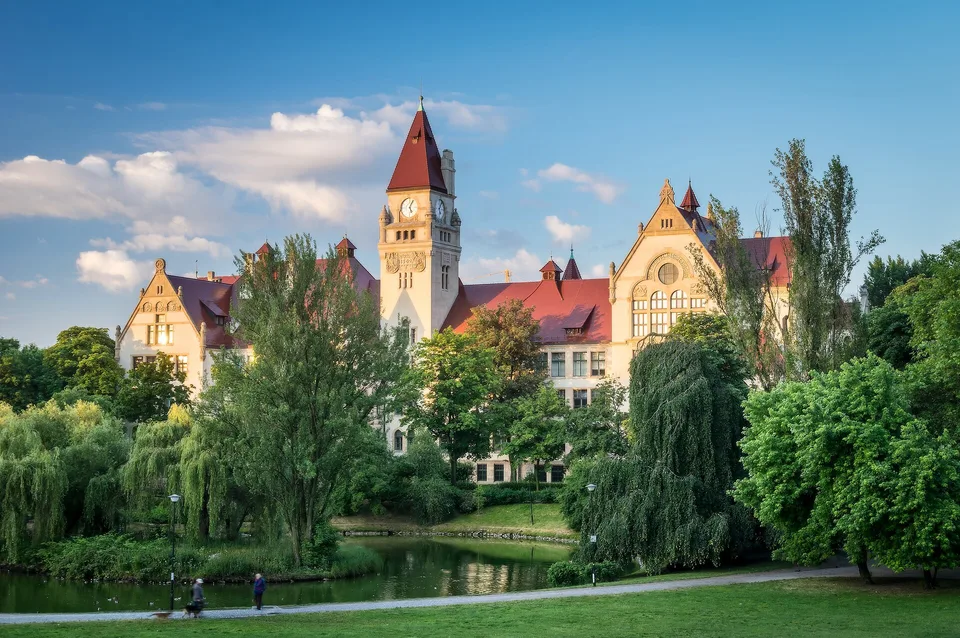
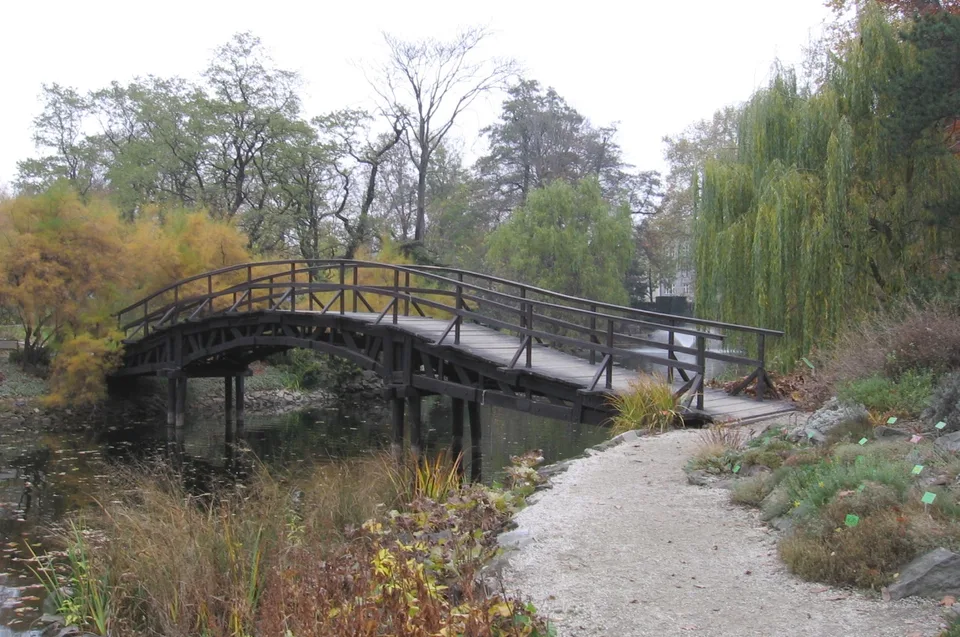
Rainfall picks up to 59.6 millimetres across 13.03 wet days in May, arriving mostly in passing afternoon showers between bright patches. Wooden tea bridges inside Szczytnicki Park's Japanese Garden glisten beneath damp maples and iris beds. Long daylight stretches let island walkers linger outdoors past supper without coats.
June Long Evenings and Craft Beer Festivals
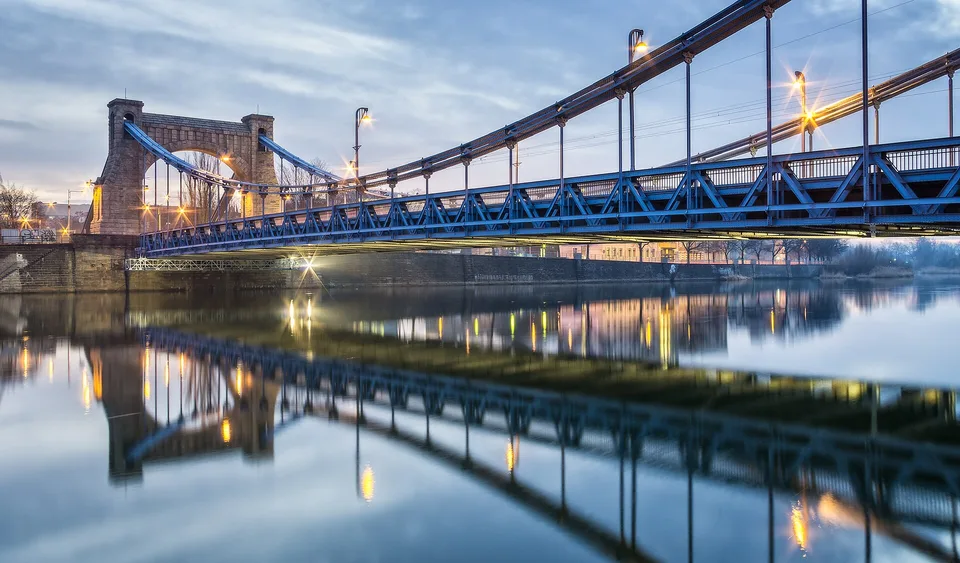
June brings long northern twilight hovering late over Malt Island riverbanks, averaging 23.4 °C daytime highs and 12.0 °C nights across 65.4 millimetres (12.97 wet days). Warm dusk air encourages leisurely bridge walks past Hala Targowa and Sand Island prior to outdoor courtyard dinners. Each June, Polish brewers gather on Tarczyński Arena lawns for Festiwal Dobrego Piwa (Good Beer Festival), pouring small-batch wheat styles and Baltic porters. Riverfront lawns fill steadily with students reading and chatting above stone flood walls until dark.
July Downpours, August Heat and Nowe Horyzonty
High summer combines Wrocław's liveliest patios with its heaviest rainstorms. July posts 25.6 °C highs and 13.9 °C nights and brings the calendar's sharp rainfall peak of 91.4 millimetres across 14.00 wet days, driven by fast convective thunderstorms sweeping off southern hills. August eases rain back down to 59.5 millimetres (11.80 wet days) with 25.4 °C highs and 13.4 °C lows. Heatwaves still spike sharply, reaching an all-time IMGW station record of 37.9 °C on 8 August 2015.
Film lovers pack central screening halls across late July and early August for the Nowe Horyzonty International Film Festival. Compact umbrellas slip neatly inside daypacks whenever dark afternoon thunderheads gather fast over cathedral towers before clearing smoothly by supper. Stepping into brick interiors or vaulted cellars during brief squalls keeps museum plans moving smoothly.
September Wratislavia Cantans and Clear Walks
Early autumn trades storm gusts for crisp dry visibility ideal for unhurried architectural walks. September settles at 20.0 °C highs and 9.4 °C nights on 48.4 millimetres across 11.30 wet days. Music lovers fill the National Forum of Music and soaring Gothic naves each September for Wratislavia Cantans, an acclaimed choral and early-music festival founded in 1966. Daytime humidity drops nicely, making afternoon climbs up the cathedral north tower clear and crisp.
October Golden Oaks and Autumn Drizzle
October cools gently to 14.3 °C highs and 5.2 °C mornings on 37.6 millimetres across 12.27 wet days. Tall oaks across Szczytnicki Park turn copper and gold over quiet wooden bridges. Shorter queues greet visitors at Panorama Racławicka and warm soup tables inside Bar Miś before damp dusk settles early. Crisp low sun reflects softly off damp granite cobbles along narrow Stare Miasto streets.
November Frost and Jarmark Bożonarodzeniowy
Brisk damp air returns in November at 8.3 °C highs, 1.3 °C nights and 31.4 millimetres across 13.17 wet days. Winter snow cover of at least 1 centimetre lingers an average 27.5 days per year. January dips to 3.0 °C highs and minus 3.3 °C lows (28.3 millimetres, 15.50 wet days). February marks 4.7 °C by minus 2.5 °C (25.6 millimetres, 12.99 wet days), while December sits at 4.1 °C by minus 2.1 °C (27.9 millimetres, 14.77 wet days).
From late November into early January, lit timber huts transform Rynek and Plac Solny into Jarmark Bożonarodzeniowy. Steam rises off spiced mulled wine cauldrons and roasted chestnut trays beneath pine boughs draping medieval gable corners. Short winter days end early beside warm bakery counters across Stare Miasto. Pack grippy waterproof boots for slick winter cobbles and warm wool layers between outdoor market stalls:
- Spring (April to May): Crisp 15 °C to 20 °C days bring fresh park lawns, uncrowded bridges and the 3-Majówka Pergola concerts. Light raincoats handle passing afternoon showers over Szczytnicki Park.
- Summer (June to August): Expect 23 °C to 26 °C highs, lit Pergola fountains, Nowe Horyzonty screenings and July's 91 mm rain peak. Early mornings reward walkers before humid midday heat gathers.
- Autumn (September to October): Smooth 14 °C to 20 °C afternoons match amber park paths with Wratislavia Cantans choral concerts.
- Winter (November to February): Freezing river nights pair grey skies and 26 to 31 mm precipitation with festive timber stalls and hushed gas-lit island walks.
Where it is
- 1Wrocław
- Copernicus Wrocław Airport (WRO) · about 11 km from Wrocław in a straight line
- Directions in Google Maps
Stations and taxi ranks: OpenStreetMap. Airports: OurAirports. Distances are in a straight line.
Traveller tips
Real advice from people who have been to Wrocław. Every tip is read by our team before it goes live.
No tips yet. Been here? Yours could be the first.
Thank you! Your tip will appear here after a quick review.
More in Wrocław
Continue exploring Wrocław with related neighbourhood, food, and planning guides